


Dubai Gold Shopping Unpacked: Your Go-To Guide for Smart Buys in 2026
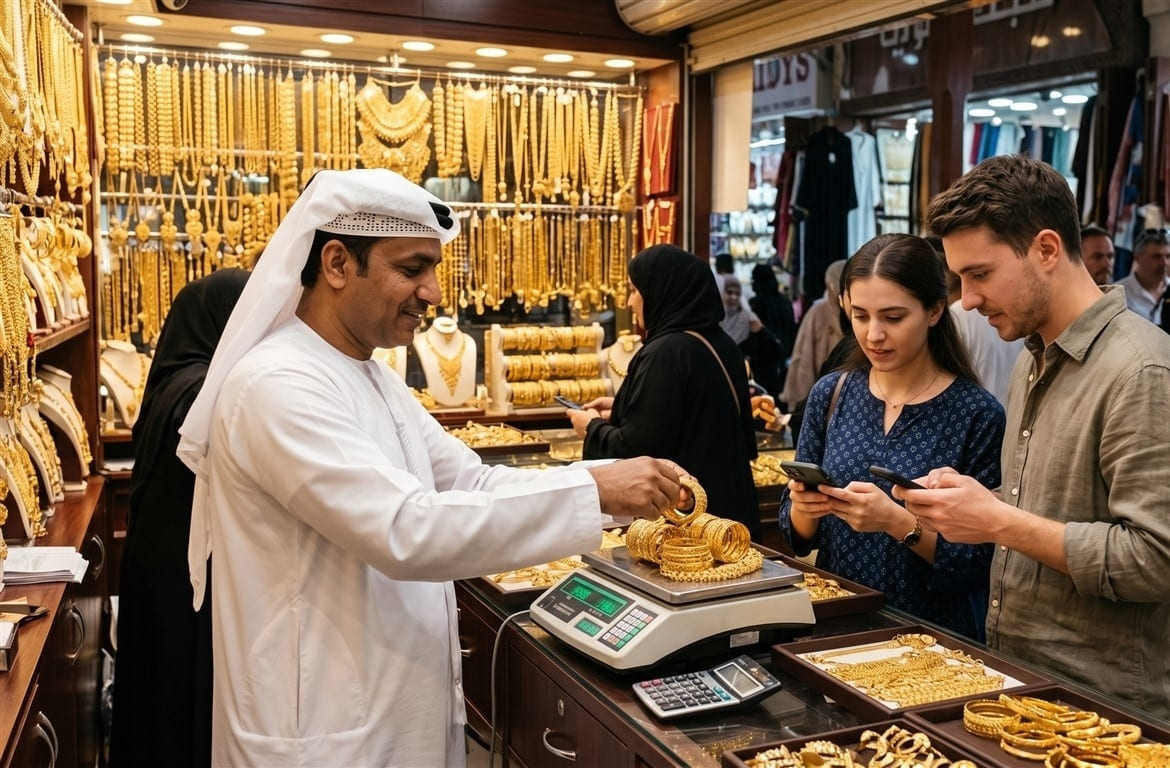
Gold shopping in Dubai? It still carries that classic, slightly dramatic allure. Think bright shopfronts lighting up Deira, necklaces so heavy they almost make you gasp, calm salesmen weighing bangles with practiced ease, and tourists—phones out—doing lightning-fast mental math. You see, this city didn’t just stumble into being called the “City of Gold.” Oh no. It built its entire gold retail scene around high sales volumes, transparent daily pricing, an unbelievably vast selection of designs, and a shopping culture where a bit of friendly haggling isn’t just allowed, it’s pretty much expected.
For us travelers, the appeal is super simple. Dubai puts a whole world of gold right at your fingertips: 18K, 21K, 22K, and 24K jewelry, actual bullion bars, coins, stunning diamond-set pieces, full-blown bridal sets, and even custom-made treasures—all available in one spot. The better stores? They totally get international buyers. Things like invoices, purity marks, exchange policies, those all-important VAT refund forms, card payments, and even questions about packing your gold for the airport are just business as usual. The trick, though? A fantastic deal doesn’t just fall into your lap. The gold’s actual value, the ‘making charges,’ VAT, its purity, potential resale terms, and customs rules all play a big part in that final price tag.
Why Everyone Loves Buying Gold in Dubai
Seriously High Gold Purity Standards
Dubai’s gold trade thrives on trust in its purity. When you buy retail jewelry here, it’s typically 18K, 21K, 22K, or 24K. You’ll see the karat stamped right on the item or clearly written on your invoice. A 24K piece is as close as you get to pure gold, while 22K and 21K are super popular for everyday wear because they’re tougher and won’t bend easily. 18K pops up more often in diamond jewelry and trendier pieces; it just makes for stronger settings and lets designers play with a wider color palette.
Reputable sellers here operate under strict local rules for precious metals. And you, as the buyer, can totally ask about purity details without feeling like you’re being a pain. Go ahead. Ask! Always. A serious shop won’t even flinch when you request the karat, the exact gram weight, any certification info for stones, and a proper invoice. If their answers get vague or fuzzy? Just walk out. Dubai has way too many excellent shops to waste your time on someone who just shrugs.
Killer Prices and Low Making Charges
The actual gold part of what you pay is directly linked to the live market rate. You’ll usually see this displayed in stores, updated throughout the day. The part you can haggle over? That’s the making charge. People call it a bunch of things: labor charge, wastage, design charge, or craftsmanship charge. Simple bangles, coins, and bars usually have lower extra fees. Intricate necklaces, elaborate bridal sets, delicate filigree work, enamel pieces, and gemstone settings will naturally cost more.
Dubai often *feels* cheaper than many places back home, and that’s because retail competition is fierce, and taxes are generally lower than in a bunch of other gold-buying countries. But let’s be real, “cheap gold in Dubai” is a bit of an oversimplification. A delicate chain with a super high making charge might actually be a less savvy purchase than a heavier, plainer bangle with a modest making charge. The scale only tells half the story. Your invoice? That’s where the rest of it lives.
An Epic Selection of Jewelry, Bars, and Coins
The sheer choice is where the real excitement kicks in. Seriously, one window might be bursting with Indian bridal gold, while the next showcases sleek Italian chains. Then you’ll find Arabic calligraphy pendants, Turkish sets, minimalist 18K earrings, Swiss bars, UAE bullion coins, tiny baby bracelets, chunky men’s rings, and cute gift pieces shaped like palm trees or the Burj Khalifa. It’s magnificent. It can also turn into a total blur after, oh, twenty minutes.
So, walk in with a game plan. Are you looking for daily-wear jewelry, something for a wedding, investment gold, a special gift, or just a keepsake from Dubai? Browsing without a clear idea sounds wonderfully romantic until every single necklace starts looking like “the one.”
The Best Spots to Score Gold in Dubai
The Famous Dubai Gold Souk
The Dubai Gold Souk in Deira is absolutely the classic must-see. It’s right by Dubai Creek, nestled among ancient trading routes, spice shops, perfume vendors, abra boat stations, and that buzzing market energy everyone pictures before they even land in the UAE. The Gold Souk is completely free to wander through, and it’s absolutely packed with retailers selling every kind of ornament, gemstone, coin, and high-karat jewelry you can imagine.
This is *the* spot for comparison shopping. Seriously, check out three or four shops before you even think about paying. Take a good look at the daily rate board. Ask about the gram weight. Find out how much is the actual gold value and how much is the making charge. Then? Haggle on the making charge. Not the market gold rate; that’s usually fixed. A seller might trim down those labor fees, round the total down a bit, or even offer a better deal if you buy a second item. Not every shop will budge much. But some will. That’s the fun of the game.
Gold & Diamond Park
The Gold & Diamond Park feels a lot less hectic than the Deira souk. It’s a much better fit for shoppers who crave air-conditioning, are looking for custom designs, engagement rings, diamond settings, repairs, resizing, or simply want to sit down and actually chat about a piece. Prices still need checking, though. The vibe is calmer, but it’s not magically cheaper.
If you’re buying diamond jewelry, always ask for the stone grading certificate, not just a verbal promise. For custom gold work, make sure you get the design, karat, estimated weight, making charge, delivery date, refund terms, and alteration policy all written down before you leave any deposit.
Dubai International Airport
Yes, Dubai International Airport has jewelry counters, and the convenience is pretty obvious: perfect for a last-minute gift, a super clean invoice, and zero detours across town. The trade-off, however, is choice. Airport shopping rarely beats the souks or specialist dealers when it comes to variety and the chance to negotiate. It’s best for straightforward purchases, not serious comparison shopping.
If you’re pressed for time and buying at the airport, stick to simple stuff: coins, small bars, basic chains, earrings, or a branded piece with clear, upfront pricing. Do NOT rush into buying a massive bridal set between boarding calls. That’s a recipe for an expensive mistake.
Trusted Jewelry Stores and Bullion Dealers
Going with large jewelry chains and well-established bullion dealers usually means a smoother experience, especially for first-time buyers who might feel a little nervous. They often have printed rates, standardized invoices, clear buyback rules, product certificates, and generally better after-sales service. Independent stores can be brilliant too, especially in Deira, but you’ll need to ask sharper questions there.
For investment gold, stick with dealers who clearly list the bar manufacturer, its purity, serial number, packaging status, buyback spread, and payment terms. For jewelry, use stores that break down the gold price and making charge separately on the invoice. A blurred, single total price is a huge red flag.
The Kinds of Gold You Can Snag in Dubai
Gold Jewelry
Jewelry is truly Dubai’s main event: bangles, chains, rings, earrings, stunning bridal sets, anklets, pendants, waist belts, cute children’s jewelry, and all sorts of modern everyday pieces. Tourists most commonly pick up 22K jewelry, with 18K being popular for diamond-set designs. While 24K jewelry exists, pure gold is super soft, making it less practical for tough daily wear.
Design really impacts the cost. A plain 22K bangle, priced close to the daily rate, might be easier to resell than a gem-studded necklace with sky-high labor fees. A handmade piece can absolutely be worth the premium if you’re chasing beauty. But for pure investment? That beauty charge doesn’t always come back.
Gold Bars
Gold bars are perfect for buyers who care more about the bullion value than about looking fancy. You can find bars in all sorts of weights, from tiny gram bars to much larger investment pieces. The cleanest purchase is a sealed bar from a well-known refinery, with its purity, weight, serial number, and packaging all perfectly intact.
Bars usually come with lower premiums than intricate jewelry, though these premiums can change based on weight, brand, and the dealer. The buyback spread is crucial. Ask what the dealer would actually pay for that exact same bar if you walked in to sell it on the very same day. That answer tells you way more than any smiling “discount.”
Gold Coins
Coins sit somewhere between jewelry and bars. They make fantastic gifts, family keepsakes, religious purchases, and neat, compact investment items. Dubai offers both UAE bullion coins and various international coins, plus some decorative coins purely aimed at tourists. It’s important for buyers to distinguish between genuine bullion coins and those souvenir coins. A souvenir coin might be charming, but the resale market might treat its fancy packaging as absolutely worthless.
Wearable Gold and Gift Designs
Wearable gifts are HUGE in Dubai: think name pendants, adorable baby bangles, Arabic initial charms, evil-eye bracelets, delicate slim chains, and small 18K earrings. For gifts, seriously prioritize durability and the exchange policy. A delicate chain looks utterly charming under those bright store lights, then snaps after three weeks of real life. Always ask if resizing, polishing, repair, or exchange options are available, especially after you’ve traveled home. So many tourists forget this bit!
How Gold Pricing Really Works in Dubai
The Daily Gold Rate
The daily gold rate is your starting point, the absolute baseline. Retailers in Dubai typically quote prices per gram, broken down by karat—usually 24K, 22K, 21K, and 18K. This rate shifts with international gold prices and currency fluctuations. No shop should be inventing its own gold rate out of thin air! The visible rate board gives you your solid starting figure.
Just looking at May 21, 2026, live Dubai retail gold rate snapshots showed prices moving throughout the day. It’s a sharp reminder that gold shopping is all about market timing, not some fixed souvenir price.
| Gold purity | Typical use | Dubai retail rate snapshot on May 21, 2026 |
|---|---|---|
| 24K | Bullion, coins, some really high-purity pieces | Around AED 543-548 per gram during live updates |
| 22K | Traditional jewelry, those beautiful bangles, chains, bridal sets | Around AED 503-507 per gram during live updates |
| 21K | Classic Arabic jewelry, regional designs | Around AED 482-486 per gram during live updates |
| 18K | Diamond jewelry, fashion-forward pieces, stronger settings | Around AED 413-417 per gram during live updates |
| 14K | Lower-purity fashion jewelry | Around AED 322-325 per gram during live updates |
Making Charges
Ah, making charges! This is where Dubai gold shopping truly gets fascinating. You could have two necklaces with the exact same karat and weight, but their final prices might be wildly different because the labor fees vary so much. A machine-made chain? That’ll likely have a lower charge. But a handcrafted bridal necklace? That can add a serious premium. Diamonds, enamel, custom motifs, hollow work, and complex clasps all rack up extra costs, too.
Always ask the shop to break down the price: gold value, making charge, VAT, and any stone value. If the seller just gives you one big grand total, calmly ask again. No need for drama, just clarity.
VAT and Any Extra Fees
The UAE adds a 5% VAT to most retail purchases, and yes, that includes jewelry sold to you, the final consumer. Good news for tourists 18 and up: you can usually use the UAE tourist tax refund scheme for eligible purchases when you leave the country. Just make sure the store participates and you complete the validation process at the airport. Remember, the refund isn’t your full shopping bill; it’s related to the VAT and processing rules.
For expensive gold, keep the item unused, sealed if required, and easy to show for inspection at departure. Have your passport details, the tax-free form or digital record, the original invoice, and the payment card you used ready if they ask. Airport counters can get really busy. Nobody wants to sprint through departures with a gold receipt in one hand and a boarding pass in the other.
How to Figure Out That Final Price
The clean formula is actually pretty simple: it’s the gold weight multiplied by the per-gram rate for your chosen karat, then you add the making charge, then the VAT, and finally any stone or certification cost. For jewelry with diamonds or other gemstones, ask if the stones are billed separately or if they’re included in one blended price. Blended prices are much trickier to compare, trust me.
Here’s a mental shortcut for you. A 20-gram 22K bangle isn’t priced based on 24K gold. Use the 22K rate. THEN add the labor fee. THEN the tax. If a “discount” magically appears, ask exactly what part got discounted. Was it the gold rate? The making charge? The total? Vague discounts are like glitter: pretty, but they have no real weight.
How to Buy Gold Safely in Dubai
Always Check the Current Market Rate
Check the live gold rate *before* you even walk into a shop, and then again right before you pay, especially if it’s a big purchase. Rates can definitely move throughout the day. A small shift might not matter much on a tiny pendant, but it absolutely matters on a heavy set or a bullion purchase.
Compare Prices Across Sellers
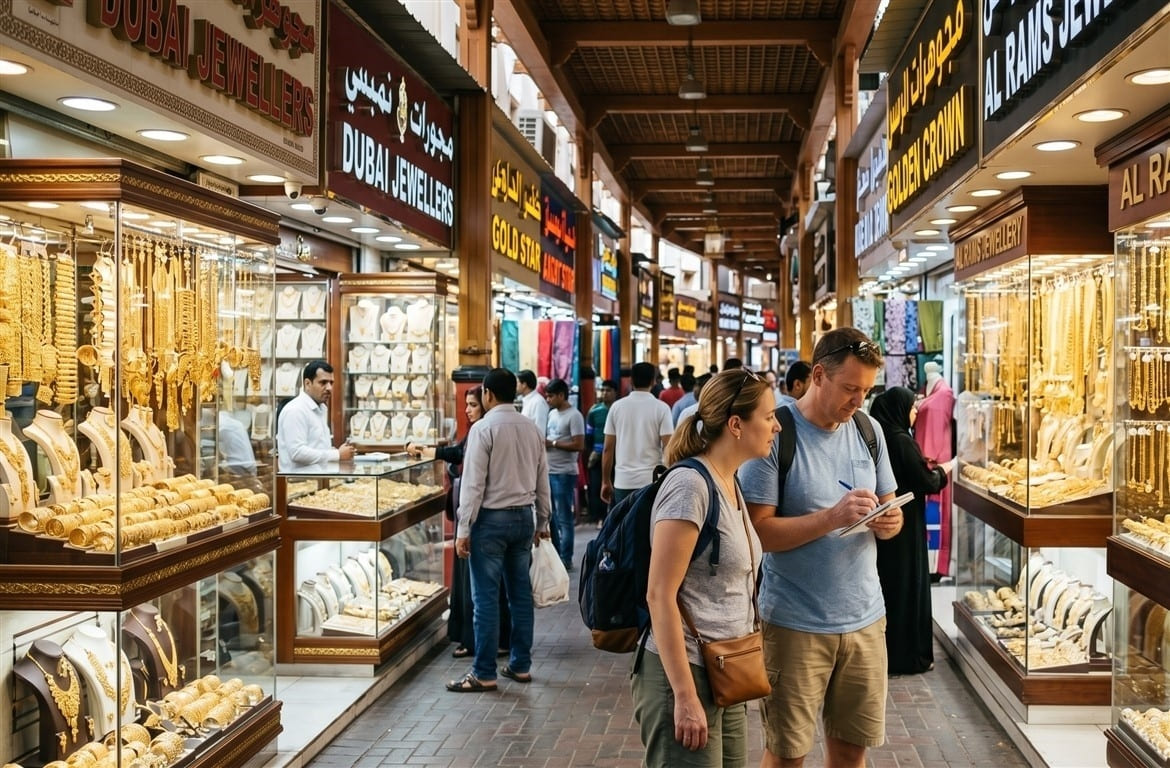
In Deira, comparing prices is just part of the whole experience. Don’t buy from the very first window you see unless that piece is truly unique, the price is super clear, and you’re totally fine with paying a convenience premium. For common items like chains, bangles, coins, and small bars, compare at least three different sellers.
-
Stick to the same specs when comparing.
Ask each shop for the exact same karat, roughly the same weight, and the same style. Comparing a 22K handmade bangle with a lighter, machine-made bangle isn’t a real comparison; it just makes the cheapest one *seem* like the smart choice.
-
Write down the breakdown of the price.
Jot down the gold rate, gram weight, making charge, VAT, and the final price. A note on your phone works perfectly. Sellers are totally used to it. If they look annoyed by basic math, well, that’s useful info for you too.
Verify Purity and Hallmarking
Always look for the karat marking and ask how the purity is certified. For 18K, 21K, 22K, and 24K, the invoice should absolutely match the stamp on the item and what the seller tells you. If the piece has diamonds or gemstones, ask for grading documents, especially for higher-value stones. Tiny accent stones might not come with full grading, but the seller should still be able to explain what they are.
Demand Certification and an Invoice
A proper invoice is not negotiable. Period. It should clearly show the seller’s name, the date, a detailed item description, the karat, weight, price, VAT, and payment specifics. For bars, keep the packaging and certificate untouched. For coins, hang onto any assay card or mint packaging. For jewelry, snap a photo of the item and its invoice before you pack it for your trip. Paper has a nasty habit of vanishing at the worst possible time.
Haggle Those Making Charges
Bargaining in Dubai gold shops usually focuses on those making charges. Keep it friendly and to the point. Something like, “What’s your absolute best making charge on this one?” works way better than a dramatic complaint about the price. Buying more than one item can often help your case. Cash might not always get you a better deal, and card fees or limits could apply, so ask about those before you just assume.
-
Start with the daily rate.
Confirm the per-gram price for the karat you want. This sets a clear floor and keeps the whole conversation honest.
-
Ask for the item’s weight.
The weight should be displayed on a scale or clearly written. For stone-set jewelry, ask for the net gold weight if they can provide it.
-
Separate labor from metal.
Request the making charge as a clear number, not just a smile and a vague “special price.”
-
Negotiate the labor.
Ask for a lower making charge, a rounded total, or a better deal if you’re taking two pieces.
-
Read the invoice before payment.
The final printed details absolutely *must* match the deal you discussed. Boring? Yes. Incredibly useful? You bet.
Gold Jewelry vs. Gold Bars in Dubai: What’s Your Play?
Best Option for Personal Use
Jewelry is the clear winner for wearing, gifting, weddings, religious ceremonies, and family traditions. Its value isn’t just the metal. Design, memories, craftsmanship, and emotional weight are all tied into that purchase. A wedding bangle bought in Dubai might never be judged solely by its resale price, and honestly, that’s perfectly fine.
Best Option for Investment
Bars and recognized bullion coins are much cleaner for investment purposes. They typically have lower premiums, super clear purity, easier storage, and a more direct path to resale. Jewelry comes with making charges that might not ever come back when you sell it. Gemstones? They just complicate liquidation even further. A dealer buying back gold will probably value only the metal and ignore whatever you paid for the labor.
| Gold jewelry | Gold bars and bullion coins |
|---|---|
| Fantastic for wearing, gifting, weddings, and those visible keepsakes. | Perfect for buyers focused purely on metal value and clear resale potential. |
| Making charges can run high, especially for handmade or stone-set pieces. | Premiums are generally more transparent, though brand and weight still matter. |
| Resale might not recoup labor charges and often values stones quite conservatively. | Resale usually tracks bullion purity, weight, brand, and the going market spread. |
| Easy to store small items, but wear and tear cause scratches and require repairs. | Sealed packaging should remain intact for the best resale confidence. |
| The design choice is massive; emotional value can be the key reason to buy. | Design hardly matters here; documentation and purity are everything. |
Storage, Resale, and Liquidity Considerations
Gold is compact, which is definitely part of its charm. But compact value needs real care. Hotel safes are fine for a short trip, but they’re not a storage plan. At home, buyers should really think about insurance, bank lockers, personal safes, and keeping all their documentation organized. For resale, a clean invoice, original packaging, and a recognized dealer name really help. For jewelry, its condition is paramount. Bent clasps, missing stones, or heavy polishing can seriously reduce its perceived value.
Getting Your Gold Home From Dubai
Local Rules for Buying and Carrying Gold
Buying gold in Dubai? Totally legal. Carrying it out? Also legal, provided you follow declaration rules and your destination country’s customs laws. The UAE actually requires declarations for cash, gold, jewelry, precious stones, and other valuables that exceed certain official thresholds when you enter or leave. If you’re buying something really valuable, you absolutely should check those declaration requirements well before your airport day—not while you’re standing in the security line.
Customs Limits in Your Destination Country
This is where a lot of tourists trip up. Dubai might legally sell you the gold, but your *arrival country* gets to decide on duty-free allowances, import duty, declaration forms, and potential penalties. India, the United Kingdom, the United States, the European Union, Pakistan, Bangladesh, and many other places all treat gold differently. Jewelry might be handled differently from bars. Personal use might be treated differently from commercial quantities. A family carrying several heavy sets of jewelry can definitely attract questions, even if every single item was bought honestly.
Check your destination country’s customs website *before* you make your purchase. If the allowance is low, that “Dubai bargain” can vanish pretty quickly once you factor in duty, tax, potential fines, or even the risk of confiscation. Airport folklore isn’t law. And that story your cousin told you from 2018? Also not law.
Documents You MUST Keep When Traveling with Gold
Carry your original invoices, VAT refund documents, any certificates, packaging for bars or coins, gemstone grading papers, and proof of payment. Make sure you also have digital copies in cloud storage and photos on your phone. Pack your gold in your hand luggage if it’s legally allowed and practical; checked luggage is generally a terrible place for high-value items. And when required, declare it. That red channel at customs isn’t there for decoration.
Common Screw-Ups to Avoid When Buying Gold in Dubai
Buying Without Checking the Daily Rate
Tourists who skip checking the live rate are practically begging for confusion. Even honest shops might quote fast, rounded numbers and bundled prices. Knowing the rate gives you a backbone. It also makes negotiations much cleaner.
Ignoring Those Pesky Making Charges
A low gold rate won’t save a purchase if the labor fees are outrageously high. Making charges can easily turn a fair deal into an expensive one. Always ask for the charge per gram or the total labor cost. If the shop refuses to separate it, go compare somewhere else.
Skipping Purity Verification
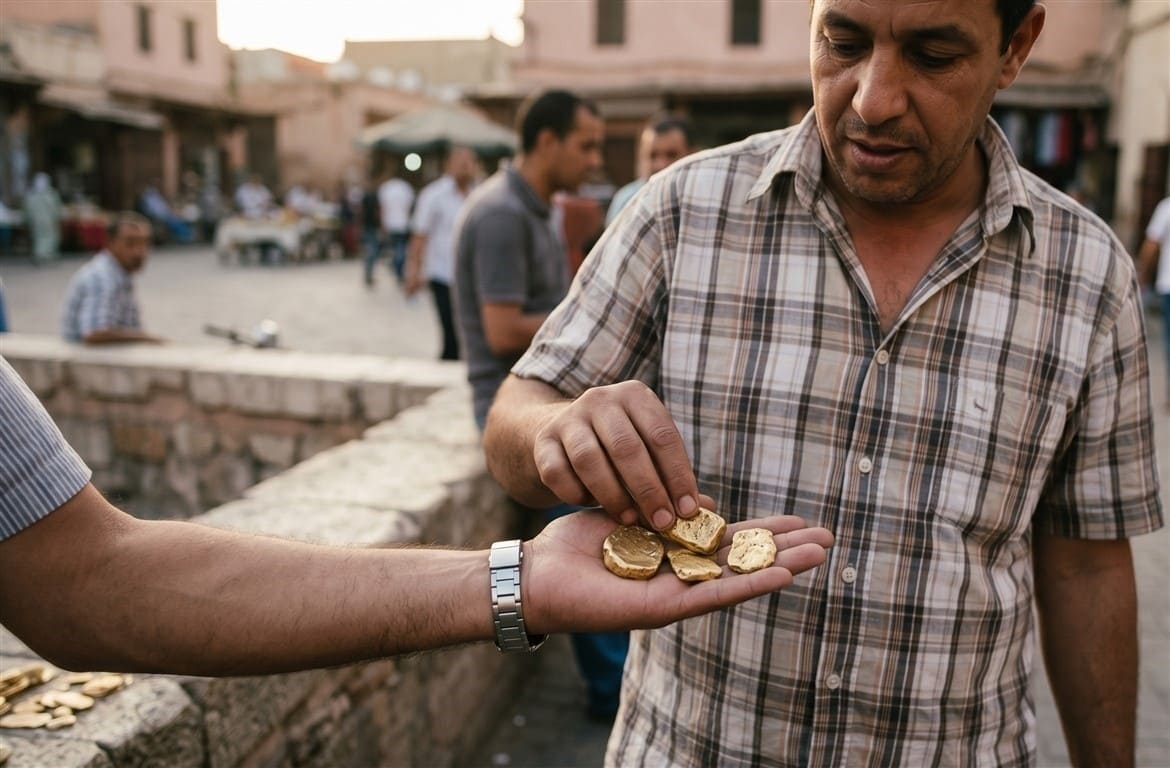
Never, ever buy unmarked gold from informal sellers, random hotel-room contacts, people approaching you on the street, or those sketchy “friend of a friend” setups. Dubai has a super strong, formal retail market. Use it! A licensed shop with an invoice beats a whispered deal every single time.
Not Understanding Return and Buyback Policies
Return rules? They vary. Buyback rules? Also vary. Some retailers might buy items back, others aren’t obligated to. Those making charges are usually not recovered at resale. Stone-set jewelry might be assessed totally differently from plain gold. So, before you pay, ask: What’s the exchange window? What’s the refund method? What’s the buyback percentage? What’s the repair policy? And, crucially, does this policy apply to tourists *after* they’ve left the UAE?
Your Burning Questions About Gold Shopping in Dubai, Answered!
Is gold actually cheaper in Dubai?
Gold in Dubai can indeed offer better prices than in many other markets. This is thanks to fierce retail competition, transparent daily rates, and a 5% VAT environment that includes tourist refund access for eligible visitors. But remember, the final value still hinges on making charges, the karat, the design, any stones, the dealer’s premium, and, yes, customs duty at your destination.
Is it legal to buy gold in Dubai?
Absolutely, yes! Tourists and residents are completely free to legally buy gold jewelry, bars, and coins from any licensed retailers and dealers. Just be sure to keep your invoices and declare high-value items when the rules require it.
How much gold can tourists actually buy in Dubai?
Dubai retailers can sell pretty substantial quantities to tourists, as long as payment, documentation, and compliance checks are all good. The real, sharper limit usually isn’t the purchase itself, but rather the transportation, declaration rules, and customs law in your destination country.
What’s the best spot to buy gold in Dubai?
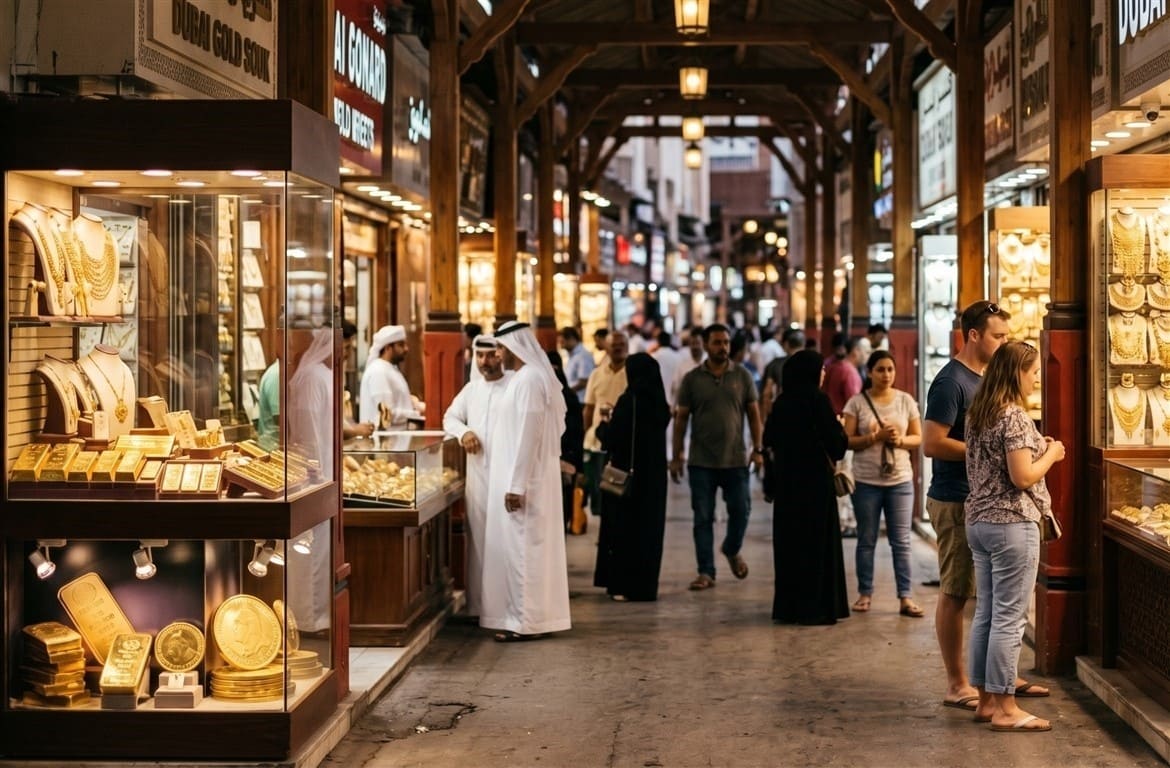
The Dubai Gold Souk is amazing for its atmosphere, sheer variety, and bargaining opportunities. Gold & Diamond Park is a great fit for custom work and diamond jewelry. Established jewelry chains are perfect for buyers who prefer standardized invoices and solid after-sales service. For bars and investment coins, bullion dealers are definitely the way to go.
Can you really bargain when buying gold in Dubai?
Yes, you absolutely can! Mostly on the making charges. The daily gold rate is market-based, so negotiation usually revolves around labor costs, the design premium, rounding the total, and buying multiple items. Polite persistence tends to work far better than aggressive haggling.
Your Super Clear Buying Plan for First-Time Visitors
First things first, decide what you’re buying it for. If it’s for wearing, pick jewelry based on karat, how comfy it feels, the clasp strength, and the design. If you’re all about investment, hunt for sealed bars or recognized bullion coins. Then, check that live gold rate. Visit a few stores. Always ask for the weight and the making charge. Compare those invoices before you hand over any money. Keep every single document. And, please, check your customs rules *before* you even start packing.
Honestly, the best gold purchase in Dubai is rarely that loudest necklace in the very first window you see. It’s the piece whose price you genuinely understand, whose purity is well-documented, whose charges make perfect sense, and whose journey home won’t turn into an airport nightmare. Buy the sparkle, yes. But definitely buy the paperwork, too.
0 Comment