

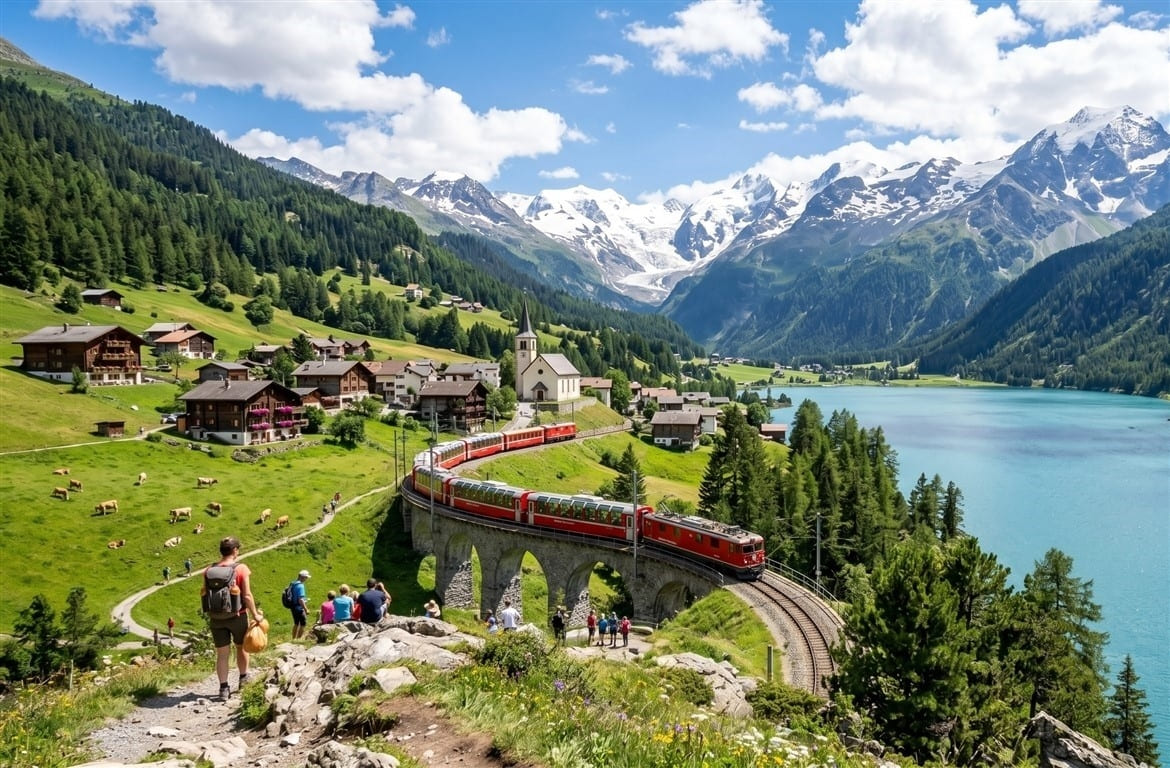

Switzerland in the Summer: Your Guide to Weather, Lakes, Charming Alpine Villages, Scenic Trains, and Smart Travel for 2026
Switzerland in summer? It just *looks* effortless, doesn’t it? Picture this: your train glides out of Zürich early, even before breakfast, and suddenly your window’s full of rolling green fields. Before you know it, lunch rolls around, and you’re standing right under a glacier, happily munching on warm bread from a paper bag. Then, *poof*! The weather shifts. Maybe a distant cowbell rings from a meadow high up. A lake surface turns into shimmering silver. You’re starting to get the vibe, right?
Officially, Swiss summer stretches from June through August. But honestly, September often throws in a whole bunch of those lovely, sunny days, especially down in the valleys and around the lakes. This time of year screams ‘get out and move!’ Think mountain railways chugging along, swimming holes sparkling clear, hiking trails bursting with flowers, charming old towns, bustling boat piers, dizzying cable cars, peaceful vineyards, and those high-up trails where the air just hits different – so incredibly crisp. If you’re dreaming of a Switzerland summer trip in 2026, here’s a tip: don’t try to cram everything onto the map. Sure, the country’s small. Its mountains, however? Not so much.
When Summer Actually Happens in Switzerland
So, calendar-wise, Swiss summer kicks off in June and wraps up in August. But when you’re actually *traveling*, it feels a bit longer. You might even catch lovely open lakefronts and city cafés spreading onto the sidewalks in late May. And September? That month often feels much calmer, drier, and just generally more laid-back, particularly in spots like Lucerne, Lausanne, Bern, and the Ticino region.
Now, those high alpine routes? Totally different beast. A lot of mountain paths, lifts, and passes really depend on how much snow is still around, the elevation, and when the local crews do their maintenance. You might find lower hikes lush and green by June, yet trails higher up, say above Zermatt or in the Bernese Oberland, could still be holding onto patches of snow. But come July and August, that quintessential Swiss Alps summer scene is absolutely humming: cows munching away in pastures, cozy huts welcoming hikers, panoramic trains gliding along, viewpoints bustling with people, and those beautifully long evenings stretching out in the valleys.
Swiss Summer Weather: What to Expect
Swiss summer weather plays by its own rules. It changes more based on how high up you are than how far you’ve traveled. Zürich can feel almost city-hot and humid, Lugano might give you Mediterranean vibes, and yet a ridge just above Grindelwald? You’ll still want a fleece before the sun goes down. That wild contrast, by the way, is part of the fun, not some mistake you made planning.
Down in the cities and around the lakes, you’re generally looking at mild to warm conditions during the day throughout summer. Up in the Alps, it’s cooler. Mountain weather can flip on a dime. Thunderstorms often roll in after a hot afternoon. Mist can completely swallow a famous peak for hours, only to rudely vanish in five minutes, just when half the viewing crowd has packed up and left.
Seriously, pack for layers. Don’t try to guess one single climate. A light rain shell, some breathable shirts, a good sweater, sturdy walking shoes, sunglasses, and plenty of sun protection all belong in the same bag. If you’re planning any serious hiking in Switzerland, throw in a refillable water bottle and something warmer than just your ego.
Why Summer is Absolutely Perfect for a Swiss Getaway
Summer really lets Switzerland show off its full range. Winter, obviously, is all about snow sports. Spring brings gorgeous flowers, sure, but also a fair bit of “will-it-or-won’t-it-rain” uncertainty. Autumn shines with vibrant colors and busy wine harvests. But summer? Summer just opens everything up. Boats are running, terraces are packed, mountain villages buzz awake, trains connect flawlessly, and outdoor life just spills into practically every nook and cranny of the country.
Figuring out the ‘best’ time to visit Switzerland really boils down to what kind of trip you’re after. For folks coming for the first time who crave lakes, mountains, epic rail journeys, easy walks, and those postcard-perfect views, June through September is tough to beat. July and August tend to be the busiest weeks, thanks to school holidays and sky-high demand for hotels in all the famous spots. June, though, means fresh flowers and crisp air. September brings quieter platforms and a more grown-up, mellow vibe. Personally, I love September. Plenty of travelers feel the same, quietly.
Top Things to Do in Switzerland in Summer
Summer activities in Switzerland swing from super chill lake days to challenging high-alpine treks that’ll have your legs protesting long before dinner. The secret? Balance. One grand mountain adventure, one city exploration, one relaxing lake day. Just repeat as needed.
- Hop on a scenic train through the Alps. These aren’t just fancy tourist transport in Switzerland. Routes like the Glacier Express, Bernina Express, GoldenPass line, and Gotthard Panorama route genuinely link real regions, weaving through valleys, tunnels, over viaducts, and past lakeside towns. During busy weeks, definitely book those panoramic services in advance, then rely on regular Swiss trains for everyday flexibility.
- Spend time on Switzerland’s amazing lakes. Lake Geneva, Lake Lucerne, Lake Zurich, Lake Thun, Lake Brienz, and Lake Lugano each have their own unique summer feel. Some feel polished and urban, others are dramatically deep blue, and some just lazy in the heat. There are swimming areas, boat rides, waterfront paths, and quick ferry hops that can fill an entire day without making it feel like you’re chained to a schedule.
- Hike high above the valleys. Hiking in Switzerland doesn’t have to mean a brutal climb. Loads of routes kick off from cable car stations or mountain railways, giving you access to incredible high-up views without turning your day into an endurance test. Still, pay attention to signs, weather, trail difficulty, and your footwear. A red-and-white mountain trail is NOT like a stroll in a city park.
- Mix bustling cities with peaceful mountain villages. Bern, Lucerne, Lausanne, Zürich, and Basel offer museums, ancient streets, river swims, cozy cafés, and seamless rail connections. Villages like Mürren, Wengen, Grindelwald, Zermatt, and Andermatt provide altitude and profound silence, then the chime of cowbells, then another perfectly timed train departure. This blend keeps your trip from feeling like one long, repetitive postcard.
- Eat local, wherever you are. Summer food in Switzerland can be wonderfully simple: crispy rösti after a hike, fresh lake fish right by the water, a sweet apricot tart in Valais, Ticino-style polenta, artisanal cheese from an alpine dairy, chocolate that absolutely doesn’t need a marketing slogan. Mountain huts vary in food quality, but let’s be honest, the setting does a lot of the heavy lifting.
Best Places to Visit in Switzerland in Summer
Switzerland truly shines for travelers who pick a few good bases instead of frantically chasing every single famous view. Two nights in the right valley can feel so much richer than four rushed photo ops. These spots fit perfectly into a Switzerland summer itinerary for 2026.
Zermatt
Zermatt in summer revolves entirely around the Matterhorn, even when that iconic peak plays coy, hiding behind clouds like it’s got a secret life. The village is blissfully car-free, you reach it by train, and it’s packed with hotels, bakeries, gear shops, and trailheads galore. Summer visitors flock here for the incredible hiking, the mountain railways, breathtaking glacier views, and that famously sharp Valais light.
The Gornergrat railway? That’s one of the classic high-altitude rides, dishing out views towards glaciers and peaks soaring over 4,000 meters. Trails around Riffelsee, Sunnegga, and Schwarzsee can be utterly spectacular when they’re open. Get an early start. Both the weather and the crowds behave much better before lunchtime.
Lucerne
Lucerne in summer is easy to fall for and even easier to underestimate. Its charming old town, the iconic Chapel Bridge, the beautiful lakefront, and direct access to mountains make it one of the absolute best first stops in Switzerland. Lake boats connect seamlessly with railways and mountain excursions, while nearby peaks like Pilatus and Rigi can transform a city stay into an amazing mountain day with zero fuss.
Lucerne also works incredibly well for families and first-time train travelers. Distances are manageable, the lake is stunning, and the city feels sophisticated without being at all stuffy.
Interlaken and the Bernese Oberland
Interlaken itself sits right between Lake Thun and Lake Brienz. Think of it as a launching pad, not the whole adventure. The real magic? That’s all up above it: Lauterbrunnen, Wengen, Mürren, Grindelwald, Schynige Platte, Kleine Scheidegg, and the entire Jungfrau region. Waterfalls tumble dramatically from sheer cliffs. Trains chug up into villages where no cars are allowed. Paragliders drift lazily over town like bright, scattered confetti.
Interlaken summer activities include boat trips, kayaking, canyoning, paragliding, hiking, and awesome day trips into the high Alps. It’s popular for a reason, absolutely. It also gets seriously busy for that same reason.
Bern
Bern moves at a noticeably slower pace than Zürich and somehow feels less ‘put on a show’ than many other capital cities. Its old town is a UNESCO World Heritage site, boasting lovely arcades, ancient fountains, beautiful sandstone buildings, and the Aare River gracefully curving around it all. In summer, when conditions are safe, locals actually swim in the river. Visitors usually watch first, then completely get why this city has such a devoted fan base.
Bern makes for a really smart pause between those bigger mountain sections. Even just one night here can completely reset your trip.
Lausanne and Lake Geneva
Lausanne climbs steeply right up from Lake Geneva, surrounded by vineyards and deep in French-speaking Switzerland. The lakefront promenade in Ouchy, the Olympic Museum, the old, winding streets, and those breathtaking Lavaux vineyard terraces create a slower, more cultured summer base. Boats zip between towns along the water, and views stretching towards the French Alps give the lake a truly grand horizon.
Lake Geneva works perfectly for travelers craving Switzerland with a side of wine, relaxing strolls, interesting museums, and perhaps fewer hiking boots clanking at breakfast.
Locarno and Ticino
Locarno and the broader Ticino region just feel completely different from the German-speaking Alps. Think palm trees, sunny piazzas, ancient stone villages, Italian spoken everywhere, warmer weather, and Lake Maggiore – it all gives summer here a distinctly southern flavor. Valleys like Verzasca and Maggia reveal crystal-clear water, picturesque old bridges, and granite villages that look like they’ve been carved right out of heat and time.
Ticino summer travel is ideal for visitors who want lake swimming, really relaxed evenings, and a refreshing change of pace after all those mountain railways and alpine passes.
Quick Summer Destination Comparison
| Destination | Best for | Summer travel note |
|---|---|---|
| Zermatt | Matterhorn views, hiking, mountain railways | Car-free village reached by train; high-altitude weather shifts quickly. |
| Lucerne | Lake trips, old town walks, easy mountain excursions | A fantastic first stop for visitors relying on public transport. |
| Bernese Oberland | Alpine scenery, waterfalls, classic Swiss villages | Book lodging early for July and August stays in popular valleys. |
| Lake Geneva | Vineyards, museums, promenades, boat travel | Lausanne and Montreux pair beautifully with slower summer days. |
| Ticino | Warm lakes, Italian-speaking towns, stone valleys | Offers a wonderful contrast after visiting higher alpine regions. |
| Bern | Old town atmosphere, river culture, relaxed pacing | Works well as a quick break between mountain bases. |
Scenic Trains and Public Transport: Your Best Friends
Switzerland’s public transport system? It’s one of the absolute strongest reasons to visit without even thinking about renting a car. Trains, lake boats, buses, trams, funiculars, and cable cars connect places that look utterly impossible on a flat map. In 2026, traveling by train remains the easiest way for first-time visitors to hit cities, lakes, and mountain regions all without any parking headaches.
Sure, panoramic trains are worth planning around, but don’t forget the regular trains—they’re the quiet heroes here. They run super frequently on most main routes, connect cleanly, and let travelers build a trip with way fewer logistical headaches. Mountain lifts and private alpine railways can definitely add to your costs, so *always* double-check what your pass covers before assuming every single cable car is included. That tiny detail can seriously bite you.
Swiss Alps or Swiss Lakes? Why Choose?
Look, a summer trip doesn’t demand you pick one forever. Still, the whole vibe shifts pretty dramatically between those high alpine villages and the cozy lakeside towns.
| Swiss Alps | Swiss Lakes |
|---|---|
| Better for hiking, stunning peak views, cable cars, mountain huts, and that wonderful cooler air. | Better for swimming, leisurely boat rides, promenades, museums, vineyards, and delightful warmer evenings. |
| Weather can quickly block views and completely change your plans. | Bad weather is much easier to manage with cafés, towns, and indoor options close by. |
| Villages like Zermatt, Mürren, Wengen, and Grindelwald feel intensely alpine. | Lucerne, Lausanne, Lugano, Montreux, and Zürich offer beautiful water with all the city comforts. |
| Best paired with early starts and keeping your trail choices flexible. | Best paired with lazy afternoons and unhurried boat connections. |
What to Wear in Switzerland in Summer
What you’ll want to wear in Switzerland in summer really hinges on your altitude and what you’re doing. You could literally leave your hotel in shorts, ride up to a ridge, and suddenly wish you’d brought gloves. Not dramatic. Just Swiss.
For cities and lake towns, pack light summer clothes, comfy walking shoes, sunglasses, and a compact rain jacket. For the Swiss Alps in summer, definitely add a warm layer, a windproof shell, proper hiking socks, and shoes with excellent grip. Flip-flops belong by the lake, not on mountain trails, trust me. A small daypack is a lifesaver for carrying water, snacks, sunscreen, and that extra layer everyone claims they won’t need until they’re shivering.
A Practical 2026 Switzerland Summer Itinerary Plan
A really good Switzerland summer itinerary doesn’t need ten hotel changes. It simply needs smart bases and smooth travel routes. For your first visit, say seven to ten days, try linking one major city, one lake region, and one alpine region. That rhythm gives you plenty of variety without turning your trip into a constant luggage parade.
- Kick things off in a well-connected arrival city. Zürich and Geneva are your main international gateways, both boasting fantastic rail links. Zürich works perfectly for Lucerne, Bern, and heading east. Geneva suits Lake Geneva, Lausanne, Montreux, and routes towards Valais.
- Choose just one alpine base for at least two nights. Zermatt, Grindelwald, Wengen, Mürren, or Andermatt can anchor your mountain section. Two nights gives you one full day, offering a bit of weather flexibility. Three nights feels even better if serious hiking is your main goal.
- Add one lake stay or at least a full lake day. Lucerne, Lausanne, Montreux, Lugano, or the Thun-Brienz area can bring that essential water element into your trip. A boat ride isn’t just some throwaway activity in Switzerland. It’s truly part of the transport culture and, on a scorching day, it’s nothing short of a rescue mission.
- Keep one day totally loose. Use it to finally catch that mountain view that was hidden earlier, explore a museum if it rains, or simply enjoy a slower city morning. Super tight plans might look clever back home, but they feel pretty silly when a cable car suddenly stops due to wind.
Family Travel in Switzerland During Summer
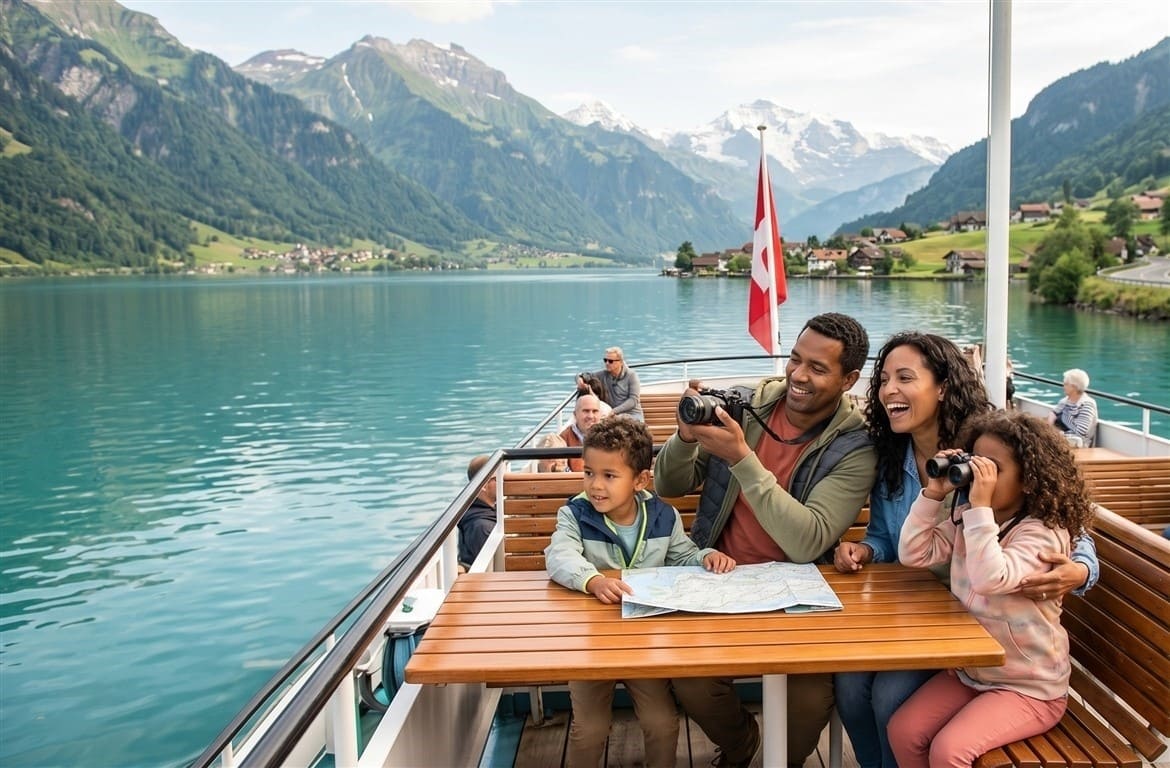
Switzerland just clicks beautifully for families. Why? Because the transport is so dependable, distances are short, and tons of outdoor activities don’t demand extreme effort. Lake boats, fantastic mountain playgrounds, short themed trails, open-air museums, chocolate experiences, animal parks, and easy cable car rides can fill an entire trip without ever forcing children into those dreaded long museum lines.
The best family days, honestly, usually involve just one main activity. Not three. A mountain railway trip plus a short walk and lunch at a cozy hut? That’s often more than enough. Add a lake swim later, and your day is completely full. Genuinely full.
Food, Markets, and Summer Flavor
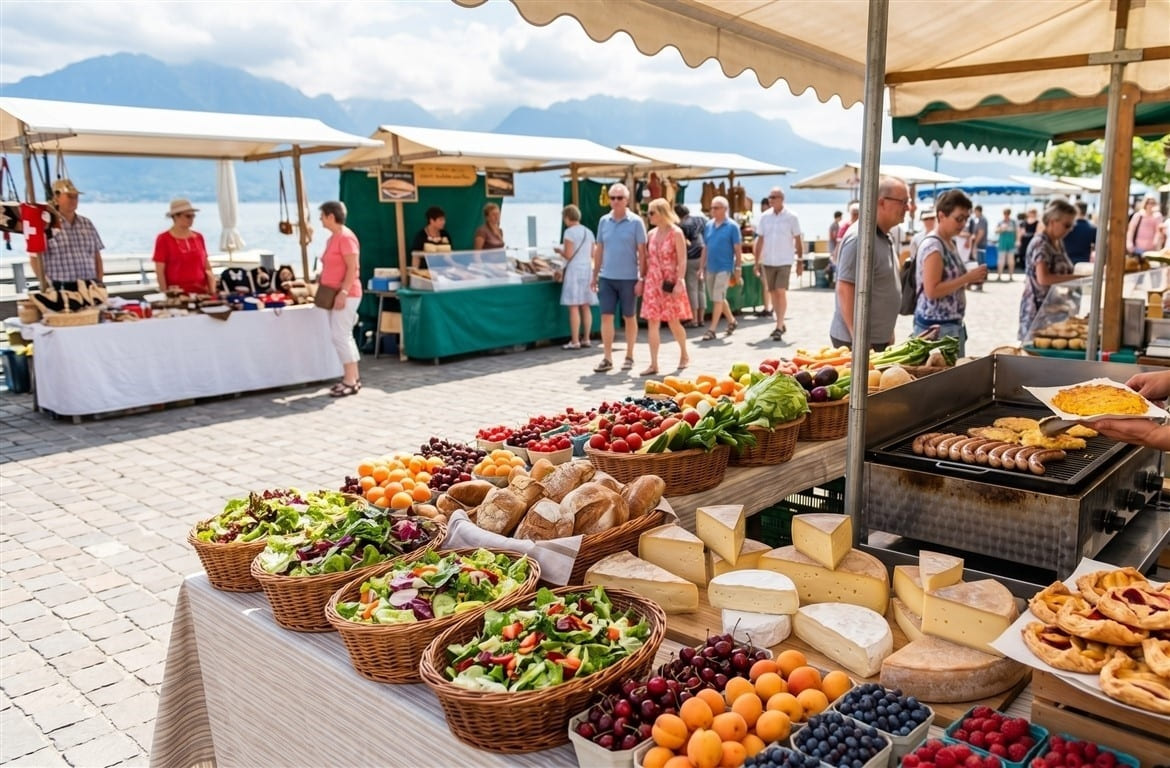
Swiss food in summer isn’t all fondue, though you’ll still find it in mountain restaurants because, well, tourists ask for it, and nobody’s really surprised. Warm-weather eating tends to be lighter near the lakes and more hearty in the mountains. Expect fresh salads, crusty bread, amazing cheese, crispy rösti, sausages, local lake fish, sweet fruit tarts, incredible chocolate, and regional dishes that shift delightfully by canton.
In Ticino, meals lean deliciously Italian: creamy risotto, polenta, strong espresso, smooth gelato, and shaded terraces. In Valais, definitely look for apricots, gooey raclette, cured meats, and fantastic local wines. Around Lake Geneva, those vineyard villages and terrace restaurants make long, lazy lunches dangerously easy. Mountain huts? They’re simple, not fancy, and that’s half the charm when your boots are dusty and the view is doing all the talking.
Smart Travel Tips for Summer Crowds and Costs
Summer is absolutely peak travel season in Switzerland’s most famous spots. Zermatt, Lucerne, Interlaken, Grindelwald, Lauterbrunnen, and all those Jungfrau region viewpoints see huge demand, with July and August being the busiest. Hotels in smaller villages can book out months in advance. Mountain excursions might feel pretty crowded around midday. And restaurants in resort towns? You’ll likely need reservations on busy evenings.
Start your mountain days early. Always check the weather before shelling out for expensive high-altitude tickets. Try to stay two or three nights in one region rather than frantically chasing clear skies from across the country. Hit up supermarkets and bakeries for casual lunches when restaurant prices start to feel a bit spicy. Tap water is everywhere and usually fantastic, so carry your reusable bottle.
When it comes to rail passes, compare them really carefully. A pass can be a total game-changer if you’re planning frequent train rides, boat trips, and museum visits. But point-to-point tickets might actually work out better for slower trips with fewer travel days. Oh, and mountain railways and cable cars have their own specific coverage rules—those rules matter way more than what the glossy brochure photo shows.
How Many Days Work Best?
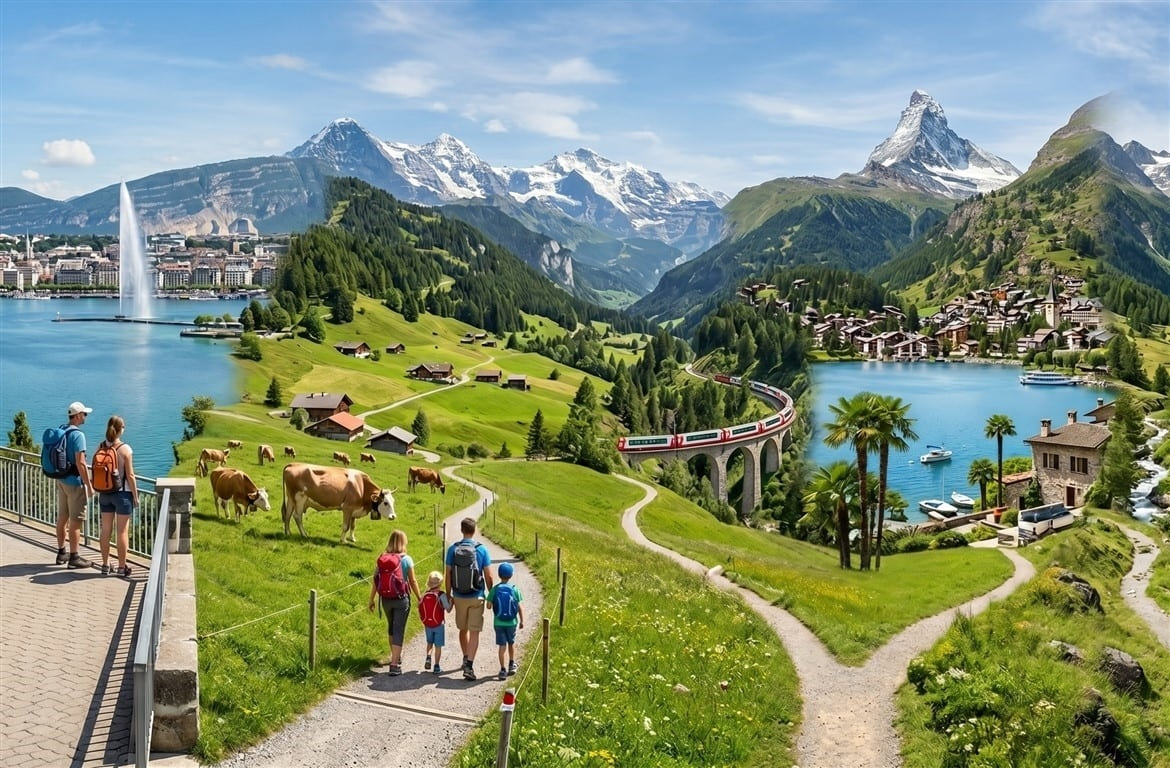
Four days? That’ll give you a taste: Zürich or Geneva, one lake, one mountain base. Seven days really feels like a proper Switzerland summer travel plan. Ten to twelve days lets you do a richer loop, perhaps hitting the Bernese Oberland, Zermatt, Lake Geneva or Ticino, plus a city stop. Two weeks? That opens up slower travel, lets you explore lesser-known valleys, and means fewer compromises.
Don’t build your entire trip just around the famous names. A quiet night in a smaller village can often stick with you longer than a rushed hour at a packed viewpoint. Switzerland has plenty of perfectly polished icons. But the best summer memories often sneak in sideways: a lonely bench above a lake, a bakery visit before a train, a trail sign that promises forty minutes and actually tells the truth.
Travel Notes for 2026
For 2026, make sure to book early for those peak summer stays in major alpine resorts and lake towns. Always double-check official local schedules for mountain lifts, panoramic trains, museums, and seasonal boat routes before locking in any non-refundable plans. Weather, maintenance, and regional timetables can seriously change how your day unfolds.
Visitors planning a Switzerland summer vacation should also keep altitude in mind. Hydrate well, use plenty of sun protection, and remember that a high viewpoint isn’t quite the same as a city square. The sun feels much stronger up there. So does a glass of wine at lunch, but that’s a story for another time.
Switzerland in the summer is pristine, bright, undeniably expensive, incredibly efficient, crowded in all the popular spots, yet still capable of moments of profound quiet. Go for the jaw-dropping mountains, linger for those magical lake evenings, and always, always leave a little bit of empty space in your plan. That empty space? That’s where the trip truly gets good.
0 Comment