

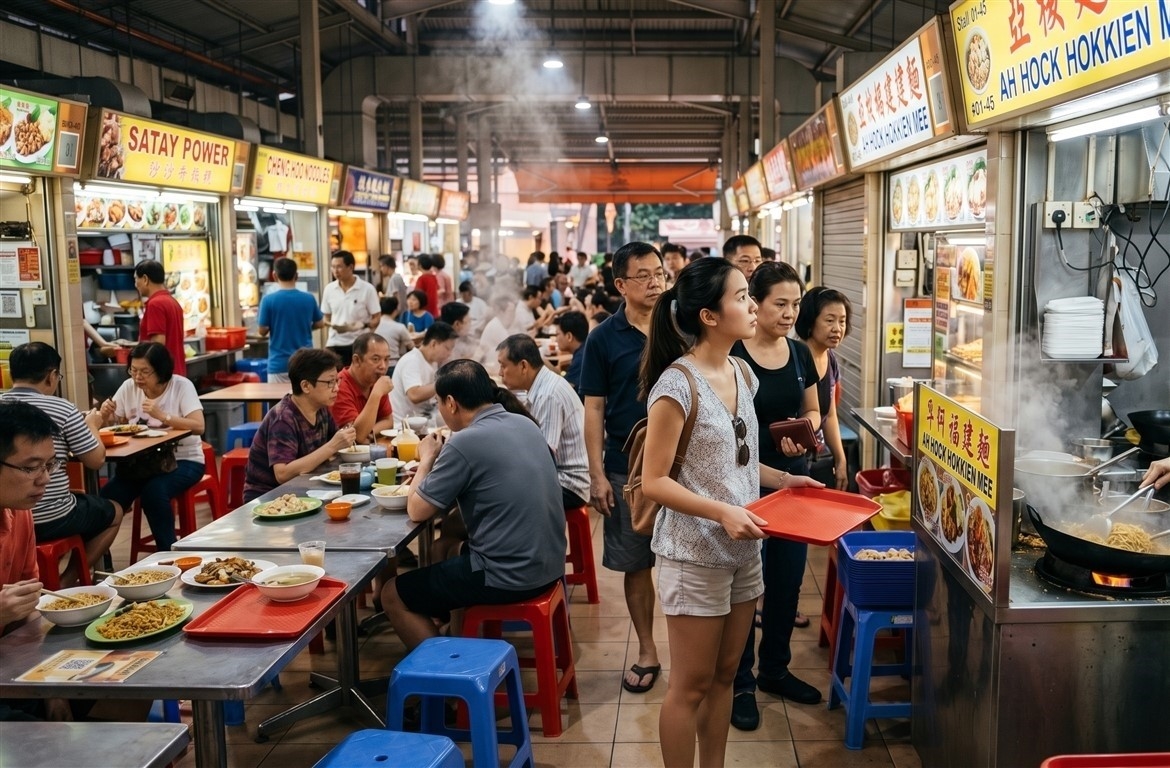

Hawker Centers: Food, Culture, and Traveler’s Joy
Want to truly get a feel for a city through its food? Skip the fancy linen. Forget those endless tasting menus. Instead, plunge into the vibrant chaos of a hawker center. Think steam rising, trays clattering, plastic stools sliding, rich broth simmering, and woks spitting flames. You’ll feel that tiny flutter of panic as you try to pick lunch, while a dozen locals behind you already know their order by heart.
The concept is beautifully straightforward. Lots of independent food vendors whip up meals from their tiny stalls, all sharing one big dining space. People just pick whatever looks amazing, grab a spot at a communal table, eat quickly or take their time, then head out. This whole setup sprung from street food culture across places like Singapore, Malaysia, Hong Kong, and Indonesia. In Singapore, it evolved into a daily essential, becoming a worldwide emblem of the city’s incredible food scene.
What Defines a Hawker Center?
Just What Is a Hawker Center?
A hawker center, sometimes spelled “hawker centre,” is basically a big public or semi-public spot absolutely packed with small food stalls. Each stall usually focuses on a super specific menu. We’re talking chicken rice, laksa, a noodle variety, satay, comforting porridge, fiery curries, roast meats, strong kopi, sweet desserts, or classic regional dishes. Diners order right at the stall, pick up their meal, and then find a seat in the shared dining area.
The term “hawker” originally described someone selling goods, often right from the street or a small stand. For food, it quickly became associated with street cooks dishing out quick, affordable meals. The “center” bit came later, as cities began relocating these informal street vendors into cleaner, more organized spaces. These new spots had running water, proper waste disposal, permanent stalls, and dedicated seating.
Hawker Centers vs. Food Courts
A modern mall food court might trick you at first glance. Counters. Trays. Shared tables. Looks similar, right? But the vibe is totally different. Hawker centers are deeply rooted in local food traditions and run by independent operators. Many stalls perfect just one dish, making it all day long. A mall food court, conversely, often feels more sterile, quieter, heavily branded, and usually costs more. You’ll likely find more chain restaurants there.
| Feature | Traditional Hawker Center | Modern Food Hall |
|---|---|---|
| Food style | Local dishes, specialized stalls, heritage recipes | Mixed cuisines, curated brands, trendy concepts |
| Atmosphere | Noisy, super casual, practical, always moving | Thoughtfully designed, polished, often more comfy |
| Pricing | Built around everyday, budget-friendly meals | Usually higher, linked to rent and brand prestige |
| Seating | Communal tables, quick turnover for diners | Shared seating with a focus on interior design |
| Cultural role | Essential daily neighborhood food spot | Dining destination, social hub, tourist magnet |
Why These Centers Took Off
They actually solved a huge city problem. People needed affordable food, close to their jobs, homes, markets, transit, and shopping areas. Vendors required proper facilities. Cities sought cleaner food handling than what scattered street vendors could offer. Hawker centers stepped right into that gap, beautifully messy in a human way, yet wonderfully organized on a civic level.
They also champion choice. Imagine a group of friends wanting to eat together. One craves noodles, another demands biryani, someone else needs fishball soup, and a fourth just wants an iced kopi before they can even speak. No need to negotiate! Everyone just splits up, orders what they want, and reunites at the table. Easy.
Origins of Hawker Centers
Street Food Roots
Asian street food has always been about practicality. Hungry workers needed fast meals. Vendors naturally cooked wherever people gathered: ports, bus stops, bustling markets, temple streets, tight alleys, busy commercial blocks. The food simply followed the flow of human movement.
Early hawkers sold their fare from pushcarts, shoulder poles, small roadside stands, or mobile setups. Some even built fierce loyal followings around just one signature dish. A noodle seller might become legendary for their broth. A satay man, famous for his marinade. A rice stall, known city-wide for its chili sauce. These reputations were everything. Food was deeply personal, repeat business meant survival, and customers never hesitated to walk away if unsatisfied.
Singapore’s Public Food Spots
Singapore truly refined the hawker center, transforming it into a clean, regulated, city-wide dining system. The government began moving many street hawkers into purpose-built food centers from the mid-20th century onwards. The big goals were better sanitation, more order, proper licensing, and ensuring access to affordable cooked food for everyone.
This massive shift totally changed the city’s eating habits, but thankfully, without ruining the food itself. That old street energy simply moved under a roof. Stalls gained utilities. Diners got tables. Neighborhoods ended up with reliable, beloved places to eat. The whole format blossomed into one of Singapore’s most recognizable daily rituals.
Singapore’s hawker culture now holds UNESCO intangible cultural heritage status. That recognition, of course, didn’t suddenly make chicken rice taste better. But the honor mattered because it formally acknowledged what residents already knew deep down: hawker centers aren’t merely cheap places for a meal. They are truly the social living rooms of the entire city.
How the Concept Spread
Hawker-style dining pops up across Asia in all sorts of variations. Malaysia boasts food courts, kopitiams, lively night markets, and open-air eating halls that share a very close relationship with hawker culture. Hong Kong offers cooked food centers and a rich dai pai dong history. Indonesia features food courts, warung clusters, and bustling market eating areas. Each place brings its own unique politics, flavors, licensing rules, and distinctive rhythm.
Outside of Asia, this idea often travels as inspiration, rather than a direct, perfect copy. Take Urban Hawker in New York, for instance; it brought a Singapore-inspired food hall right to Manhattan. Other cities use terms like “street food hall” or “market hall.” They wisely borrow the stall variety and shared seating concept, though local rent, labor costs, and dining customs inevitably mold the experience into a different shape.
Hawker Centers Around the World
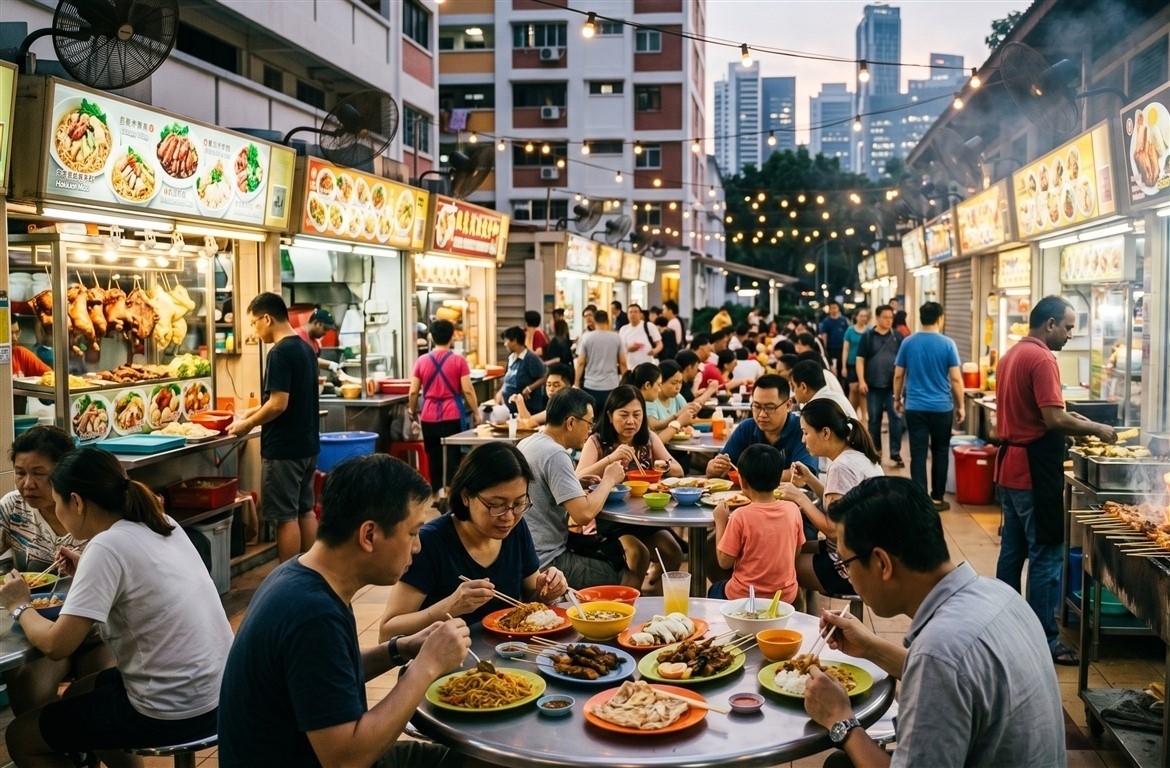
Singapore
Singapore is the city most instantly linked to the phrase “hawker center.” This island nation is dotted with dozens of public food centers, serving up incredible Chinese, Malay, Indian, Peranakan, Indonesian, and various regional dishes. Some perch above bustling wet markets. Others gaze out at the sea. Many cater to busy office crowds. Some draw late-night satay enthusiasts. Others might feel quiet and sleepy at the wrong hour, only to roar to life come lunchtime.
Many travelers start their culinary journey at places like Maxwell Food Centre, Lau Pa Sat, Chinatown Complex Food Centre, Old Airport Road Food Centre, Newton Food Centre, Tiong Bahru Market & Food Centre, Tekka Centre, and East Coast Lagoon Food Village. Each one truly has its own distinct mood and flavor.
Malaysia
Malaysia’s food scene intertwines beautifully with hawker traditions through its kopitiams, sprawling food courts, vibrant night markets, and roadside eating areas. Penang, Kuala Lumpur, Ipoh, Melaka, and Johor Bahru all boast incredibly strong casual dining scenes. You’ll find noodles, rice dishes, roti, satay, curry mee, char kway teow, and delightful desserts all sitting close together, vying for your attention.
The Malaysian hawker experience often feels a bit more spread out. You might dine at a coffee shop housing several individual stalls, or perhaps a lively night market, or a massive covered food court. The underlying social logic, however, feels very familiar: pick a stall, snag a table, and eat just like the locals do.
Hong Kong
Hong Kong presents its own unique tapestry of cooked food centers, bustling market food floors, charming cha chaan tengs, countless noodle shops, specialized roast meat counters, and the cherished old dai pai dong traditions. The city’s version often feels tighter, taller, more vertical somehow. You might find yourself climbing stairs above a wet market, only to discover a room buzzing with sizzling plates, live seafood tanks, plastic tablecloths, and the bright glow of fluorescent lights.
Indonesia
Indonesia brings its rich warung culture, modern food courts, bustling market stalls, and ubiquitous street vendors into the picture. Jakarta, Medan, Surabaya, Bandung, and Bali each offer distinct flavors and unique formats. Expect nasi goreng, bakso, soto, satay, gado-gado, martabak, grilled fish, and plenty of sambal-heavy plates. These all appear in casual, shared spaces that certainly echo hawker dining, even if they don’t precisely copy Singapore’s exact structure.
The United States
The United States now features food halls that draw inspiration from Asian hawker centers, but they operate within a completely different economic landscape. New York’s Urban Hawker stands as the most direct Singapore-inspired example, featuring vendors deeply connected to Singaporean food culture. Across the country, food halls in cities like Los Angeles, Chicago, Houston, and Seattle employ shared dining areas and independent stalls, though they often feel more curated and less like an everyday necessity.
How a Hawker Center Operates
Many Independent Food Stalls
A hawker center is fundamentally built around its stalls. Each one has its own signboard, a specific menu, a dedicated cooking area, posted prices, and its own queue. Some proudly display photos. Others look incredibly plain, yet somehow serve the absolute best bowl in the whole place. The stallholder might cook, plate, take payment, and shout out order numbers with truly astounding efficiency.
Specialization is the real magic here. A stall focusing on just one chicken rice plate has all day to perfect the rice, the chili, the soup, the poached chicken, the roast chicken, and the timing. A laksa stall can pour all its energy into crafting the perfect broth. A satay stall might obsess over the smoke and the peanut sauce. Their menu might be tiny. That’s not a weakness; it’s their superpower.
Shared Seating
The seats belong to the entire room, not to any single stall. During peak rush hours, people often share tables with complete strangers. A solo traveler might find themselves sitting beside an office worker, a family, a retired couple, or two students debating whose noodle bowl is better. Personal space exists, but it’s a bit lean.
In Singapore, people sometimes reserve a seat using a small packet of tissues, an umbrella, or another harmless item. This practice is known locally as “chope.” Tourists often find it charming, or perhaps a little baffling. It works because everyone understands the unspoken social rule. Still, use your common sense. Never, ever leave valuables unattended on a table while you wander off for ten minutes.
Self-Service, Quick Turnover
Most hawker centers run on a self-service model. Order, pay, collect your food, eat, then return your tray. Some stalls might bring food to your table after giving you a buzzer or a table marker, but don’t expect that everywhere. It’s not the default.
The pace can be quite blunt. Lunch crowds hit hard. A super popular stall might sell out surprisingly early. Another might close right after breakfast. A sleepy center at 4 p.m. can look utterly disappointing, then suddenly roar back to life for dinner. Timing matters far more than the decor here.
Menus, Prices, & Payment
You’ll usually find menus posted right above the stall or printed clearly near the counter. Prices are always visible. Portions often come in small, regular, or large sizes. Payment methods vary by country, specific center, and even individual stall. Cash remains incredibly useful. In Singapore, many stalls now accept local cashless systems and QR payments, but don’t assume every single counter will take your foreign credit card.
What to Eat at a Hawker Center
Classic Singaporean Hawker Dishes
Singapore’s hawker dishes tell a rich story of migration, trade, labor, and pure appetite. Hainanese chicken rice stands as the quiet icon: perfectly poached or roasted chicken, fragrant rice, a trio of chili, ginger, and dark soy, all served with clear broth. Laksa brings that unforgettable blend of coconut milk, spice, thick noodles, prawns, fishcake, and that vivid orange glow that sears itself into your memory. Char kway teow means smoky rice noodles, stir-fried with egg, cockles, Chinese sausage, and crisp bean sprouts. Satay delivers tender skewers, kissed by charcoal smoke, with cooling cucumber, onion, rice cake, and a rich peanut sauce.
For breakfast, kaya toast with soft-boiled eggs and a strong kopi feels wonderfully old-school and perfectly satisfying. Nasi lemak arrives with coconut rice, spicy sambal, crunchy ikan bilis, peanuts, an egg, and sometimes even fried chicken. Rojak is a wild mix of fruit, vegetables, fried dough, peanuts, and a dark, sticky prawn paste dressing. It sounds chaotic, yes. But it tastes absolutely deliberate.
Noodles, Rice, Soups, & Stir-Fries
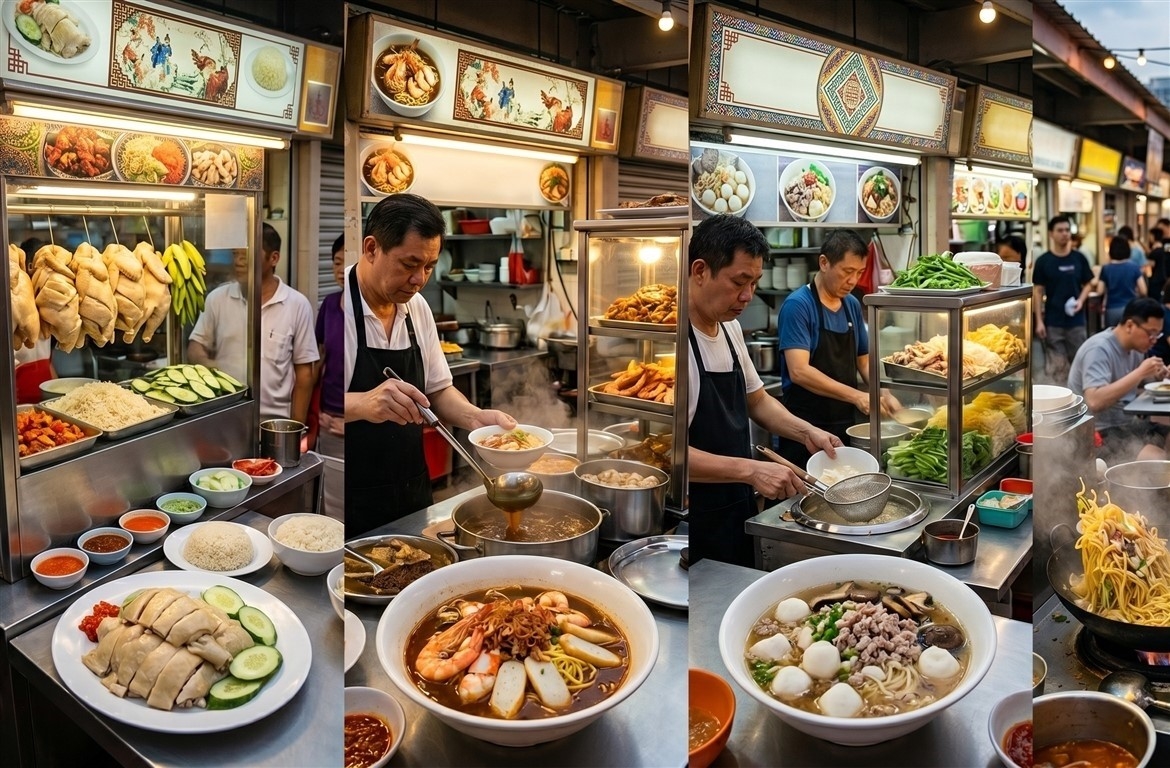
Noodles are king in many hawker centers. Why? They’re fast, incredibly versatile, and deeply regional. You’ll likely see wonton noodles, fishball noodles, bak chor mee, prawn mee, Hokkien mee, mee siam, mee rebus, and fried bee hoon. Rice dishes span a huge range: chicken rice, duck rice, economy rice, nasi padang, nasi biryani, claypot rice, and curry rice.
Soup stalls can offer a welcome soothing contrast after too much chili. Think fish soup, various herbal soups, comforting porridge, ban mian, and sliced fish bee hoon, all providing a gentler pace. Then, the wok stalls pull you right back in with their alluring smoky aroma.
Seafood and Meat Dishes
Newton Food Centre is often linked to amazing seafood and grilled dishes, but remember, prices there can run a bit higher than at your typical neighborhood centers. East Coast Lagoon Food Village gives you that lovely seaside energy, complete with plenty of smoky satay. You’ll find barbecued stingray, spicy sambal squid, oyster omelets, chili crab, black pepper crab, succulent roast duck, char siew, and hearty pork rib soup at various centers and stalls across the city.
Desserts, Drinks, & Snacks
Never, ever overlook the drink stall. A strong kopi, milky teh, refreshing sugarcane juice, tart lime juice, barley water, iced lemon tea, soy milk, and grass jelly drinks keep the meal flowing smoothly. Desserts span a delightful range from icy kachang and chendol to tau suan, mango sago, rich sesame paste, and silky beancurd. On a scorching afternoon, a bowl of shaved ice feels less like a dessert and more like vital medicine.
Singapore’s Best Hawker Centers
Maxwell Food Centre
Maxwell Food Centre sits conveniently near Chinatown, making it one of the easiest hawker centers for first-time visitors. It’s famous for its chicken rice, various traditional snacks, tasty noodles, and its prime location. The place certainly gets busy, but the layout remains quite manageable. For a less frantic first visit, aim for off-peak lunch hours.
Lau Pa Sat
Lau Pa Sat is truly famous for its stunning historic iron structure and its central business district spot. During the day, it’s packed with office workers. Come evening, the nearby satay stalls burst into life, creating one of Singapore’s most iconic tourist food scenes. By hawker standards, it’s quite polished, super convenient, and incredibly atmospheric after dark.
Chinatown Complex Food Centre
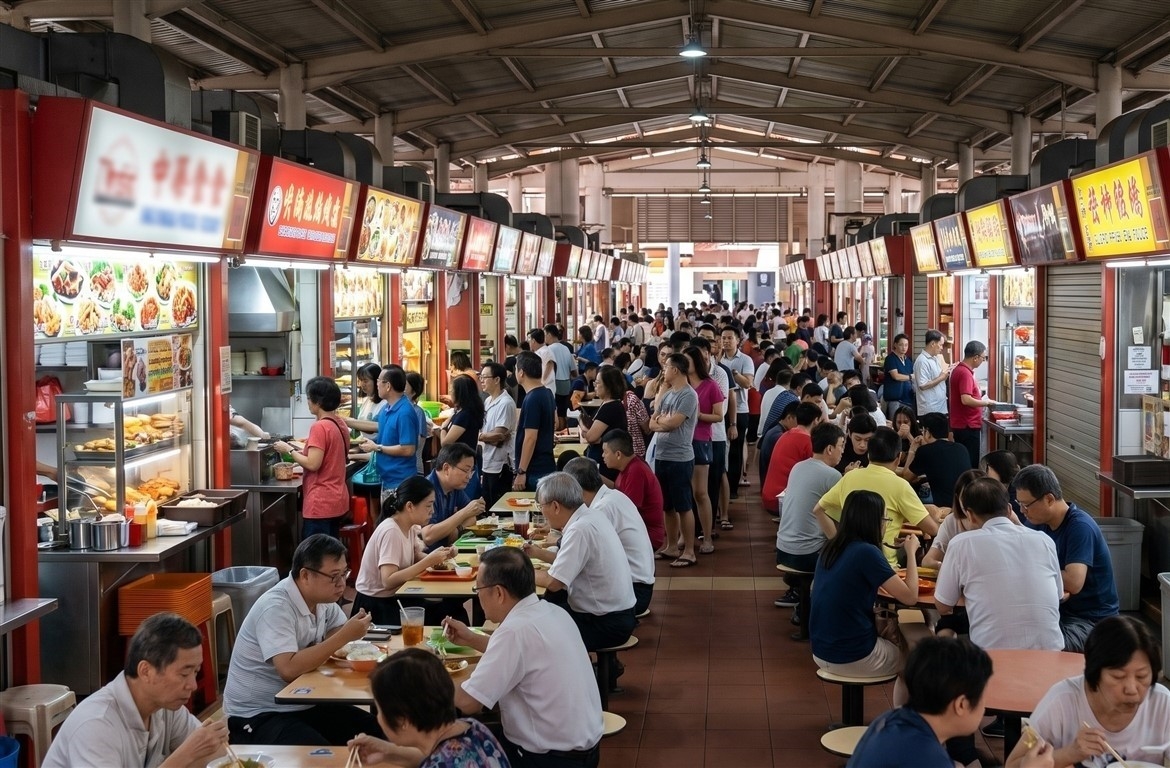
The Chinatown Complex Food Centre is enormous. Not just “a little big,” but genuinely, properly huge. It can definitely overwhelm newcomers, but it truly rewards patience with its incredible variety and many old-school stalls. Keep an eye out for queues, but also allow yourself to wander. That less dramatic stall tucked away in a corner might just serve you a better meal than the famous one with the longest line.
Old Airport Road Food Centre
Old Airport Road Food Centre boasts a stellar reputation among both locals and serious food travelers. It’s particularly well-known for its char kway teow, Hokkien mee, rojak, satay, and a host of other classic dishes. The setting is delightfully plain, and that’s part of its charm. People come here solely to eat, not to curate their latest lifestyle photo.
Tiong Bahru Market & Food Centre
Tiong Bahru Market & Food Centre sits directly above a lively wet market in one of Singapore’s most charming neighborhoods. Breakfast is an excellent time to visit. After your meal, take a leisurely stroll through the surrounding streets; you’ll find beautiful low-rise architecture, inviting bakeries, quirky bookshops, and a wonderfully slower city pace.
Newton Food Centre
Newton Food Centre is a well-known spot among tourists, famous for its association with seafood, grilled dishes, and lively night dining. It’s bright, energetic, and super easy to get to. Just remember to always check prices before you order any seafood. That small habit will save you from any awkward moments.
East Coast Lagoon Food Village
East Coast Lagoon Food Village has the rare, fantastic advantage of a refreshing sea breeze. It truly comes alive in the evening, when grilled food, the scent of satay smoke, and groups of friends settle in after a bike ride or walk along the coast. The beautiful location makes the meal feel more like a special outing, not just another dinner.
Tekka Centre
Tekka Centre, located in Little India, brings together an incredible mix of Indian, Malay, Chinese, and various regional foods. Biryani, dosa, prata, mee goreng, rich curries, and fresh drinks make it a top choice for travelers exploring Little India. Downstairs, the wet market adds a vibrant splash of color, noise, and a beautiful kind of organized chaos.
| Hawker Center | Area | Good For | Typical Mood |
|---|---|---|---|
| Maxwell Food Centre | Chinatown | Chicken rice, first visit | Busy, central, easygoing |
| Lau Pa Sat | CBD | Satay, evening meals |
0 Comment