


Red Light District Amsterdam: What to Know in 2026
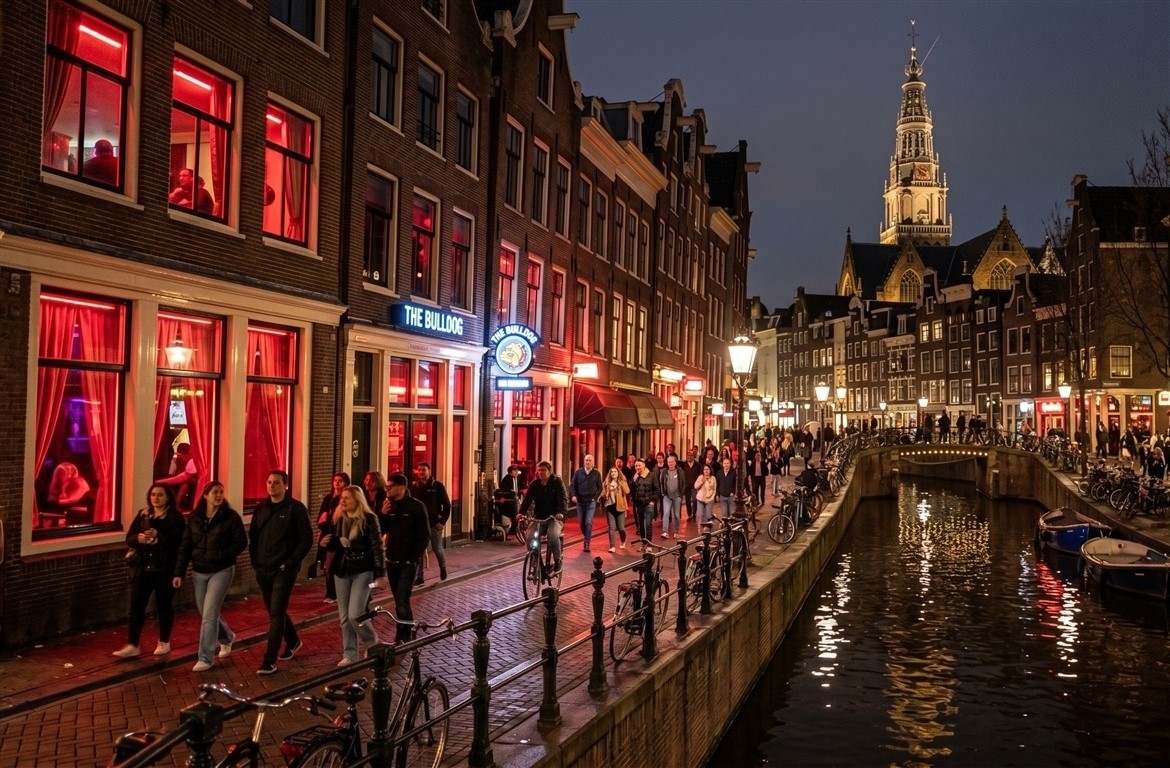
Amsterdam’s Red Light District still has that unique magnetic pull visitors often talk about: those glowing red-lit windows, quirky leaning canal houses, ancient brick alleyways, the sounds of laughter spilling from bars, bikes weaving through impossibly tight gaps. Then, the bells of Oude Kerk chime above it all. The whole place instantly feels less like just another nightlife zone and more like a deeply historic neighborhood that’s just happened to get famous. De Wallen isn’t some glossy, pristine attraction. It’s bustling, direct, strangely photogenic in ways you might not expect, and surprisingly regulated, much more so than many visitors imagine.
People come here for all sorts of reasons. Some are drawn by the sex-work windows. Others arrive for the museums, the old canals, the pubs, the coffeeshops, or simply for the experience of being right inside Amsterdam’s most talked-about postcard scene. A few folks show up expecting total chaos, only to find a very structured system instead. That’s a good thing. This district truly shines when you treat it like a real neighborhood, because that’s exactly what it is. People live upstairs. Sex workers rent their rooms. Staff clean the streets before dawn. And tourists, naturally, keep pouring in, phones ready to capture it all.
Where the Red Light District is
The Amsterdam Red Light District everyone knows is called De Wallen. You’ll find it nestled in the old city center, just east of Damrak and south of Amsterdam Centraal. From the station, you can usually walk there in about ten minutes, assuming the crowds aren’t too bad and nobody stops for a quick cone of fries. The main streets wind around Oudezijds Voorburgwal, Oudezijds Achterburgwal, Warmoesstraat, Zeedijk, and those tiny little alleys tucked in near Oude Kerk.
Dam Square is close enough for a super easy side trip, and Nieuwmarkt forms another helpful boundary for the area. This compact layout is a huge part of the district’s unique energy. You can literally walk from a 13th-century church, across a canal bridge, past glowing red windows, and into an ancient brown café, all within minutes. It almost feels like a stage set. But remember, it’s not a theme park.
De Wallen represents just one slice of Amsterdam’s long red-light history, though it’s definitely the name most travelers recognize. Window prostitution is the most obvious thing you’ll see, but the neighborhood also packs in restaurants, tattoo parlors, hostels, small hotels, adult theaters, souvenir shops, cannabis coffeeshops, and even streets that look almost sleepy during the daytime.
What visitors actually see there
When night falls, those red lights immediately grab your attention. Behind glass doors or windows, sex workers stand in their rented spaces, usually bathed in that distinctive red glow. You might also spot blue or purple lighting, which often signals transgender sex workers in certain parts of the district. Visitors walk past, talking a bit too loudly, then lowering their voices, staring, looking away, or laughing nervously. Those first few minutes can feel pretty awkward. It’s a common reaction, even for seasoned travelers.
But beyond the windows, De Wallen has so many layers. The canals are narrow, the edges dark. The houses lean at improbable angles. Neon signs sit right next to centuries-old carved stone, and a grand church rises above lanes that countless people visit for entirely different reasons. The Red Light Secrets Museum tells the story of sex work from inside what used to be a real brothel. Our Lord in the Attic cleverly hides a preserved Catholic church within an old canal house. Oude Kerk itself remains one of the city’s most significant historic buildings, standing right in the middle of the district’s daily hustle and bustle.
That mix is precisely the point. Amsterdam never just neatly tucked all its contradictions into separate boxes. In De Wallen, they rub shoulders, not always gracefully, not always comfortably, but always, undeniably, visible.
Is sex work legal in Amsterdam?
Yes, sex work is legal and regulated across the Netherlands, as long as it operates strictly within the law. Window prostitution in De Wallen functions through licensed rooms and established businesses, not based on the vague myths tourists sometimes bring with them. Street prostitution, on the other hand, is a completely different scenario and absolutely should not be treated as part of any visitor’s experience.
The ban on legal brothels in the Netherlands was lifted back in 2000, which fundamentally changed how municipalities could manage the industry. In Amsterdam, behind those red-lit images people snap from far too close, you’ll find licensed operators, strict age rules, local enforcement, and specific workplace conditions. The legal working age for prostitution in the Netherlands is 21. That number matters a lot, because this district is adult by design, not just adult in its vibe.
Respect starts with the words we choose. The women and men working there aren’t props, they’re not scenery, and they’re certainly not punchlines for bachelor parties. You don’t have to agree with every single policy surrounding sex work to simply behave decently on the street. Pay attention. Keep moving. Never, ever treat a person behind glass as if they’re just an exhibit.
Rules tourists should follow
De Wallen famously tolerates a lot, but tolerance doesn’t mean you get a free pass to act like an idiot. Amsterdam has really tightened up street rules in the old center. Residents and workers simply had enough of excessive noise, litter, harassment, and public drunkenness. The vibe for 2026 is crystal clear: come visit, look around, spend some money if you like, but please, behave as if this city isn’t yours to trash.
- Do not photograph sex workers. This is the rule visitors break the most, and it’s highly visible. Taking pictures or videos of people in the windows is simply unacceptable. Instead, photograph the canals, the rooftops, the signs, that beautiful old brickwork. Just keep your camera well away from the windows and anyone working inside them.
- Skip street dealers. You might hear whispers offering things near crowded alleys. Just keep walking. Cannabis coffeeshops are legal, regulated businesses; street drug sales are absolutely not. A cheap offer from some stranger in the old center isn’t a travel bargain; it’s a guaranteed bad night waiting to happen.
- Do not drink in restricted public areas. Public drinking rules in the old center are strictly enforced. Fines are a key part of the city’s approach to dealing with disorderly tourism. There are bars everywhere. Use them.
- Keep noise down near homes. Many buildings directly above shops and windows are actually people’s residences. Late-night shouting carries clearly along the canals, bounces off brick walls, and then lands right in someone’s bedroom. It gets old incredibly fast.
- Move with the flow. Stopping dead in narrow alleys blocks everyone: workers, residents, security staff, and other visitors. These streets are tiny. Lingering too long in front of windows also feels really creepy, because it absolutely is.
Safety in De Wallen
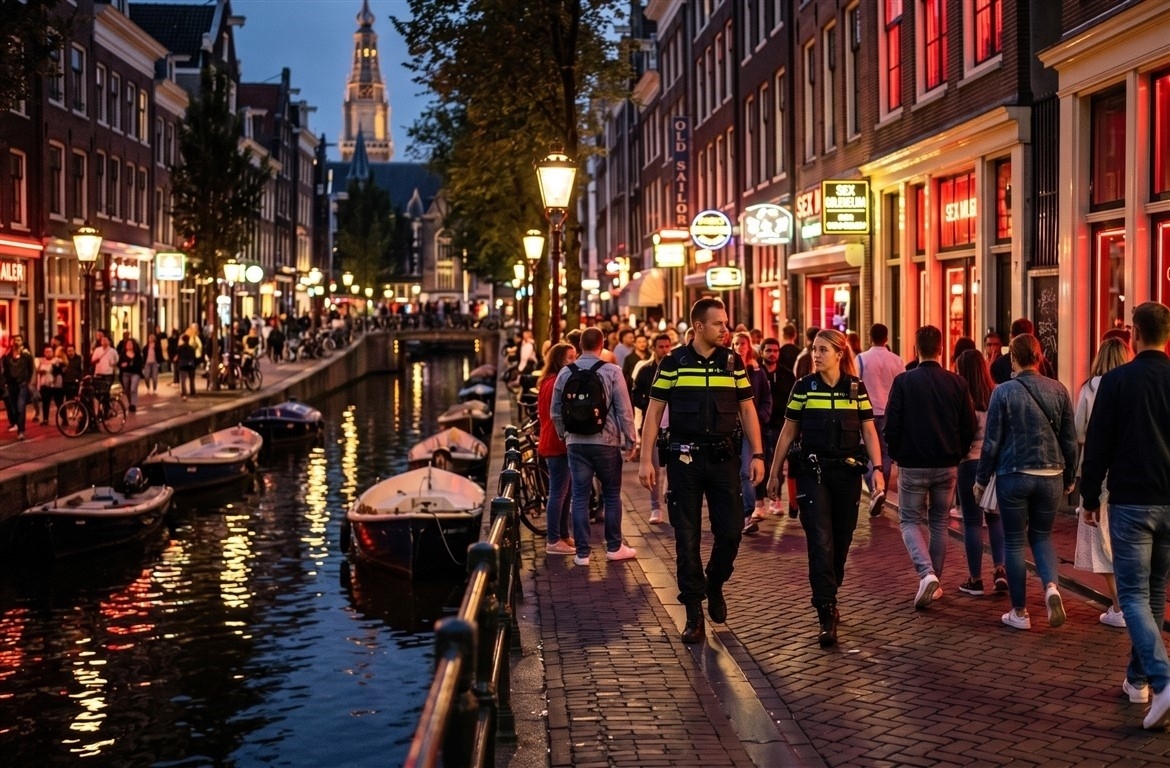
The Red Light District is central, always busy, and well-monitored. You’ll spot police and enforcement officers at peak times. It’s definitely not some lawless free-for-all. The most common headaches for travelers are usually things like pickpocketing, rowdy drunk groups, street scams, or someone trying to sell you something you definitely shouldn’t buy. The crowd can get a bit rough around the edges late at night, mostly due to alcohol, boredom, and plain old bad decisions.
Solo travelers can explore comfortably with just a little common street sense. Keep your phone secure after you’ve snapped those canal photos. Use a crossbody bag or a front pocket. Avoid getting into arguments with intoxicated groups. If an alley feels completely jammed, just back out and circle around via a wider street. The district is small; there’s rarely a good reason to try pushing through a bottleneck.
Women traveling solo often find early evening visits more comfortable. The red lights are on, but the heaviest, drunkest energy hasn’t quite peaked yet. Couples and older travelers might prefer weekday evenings. Families with older teens can certainly pass through during the day to appreciate the architecture and history, but parents should be completely clear about what the area contains. No need for drama. Just be straightforward.
Best time to visit the district
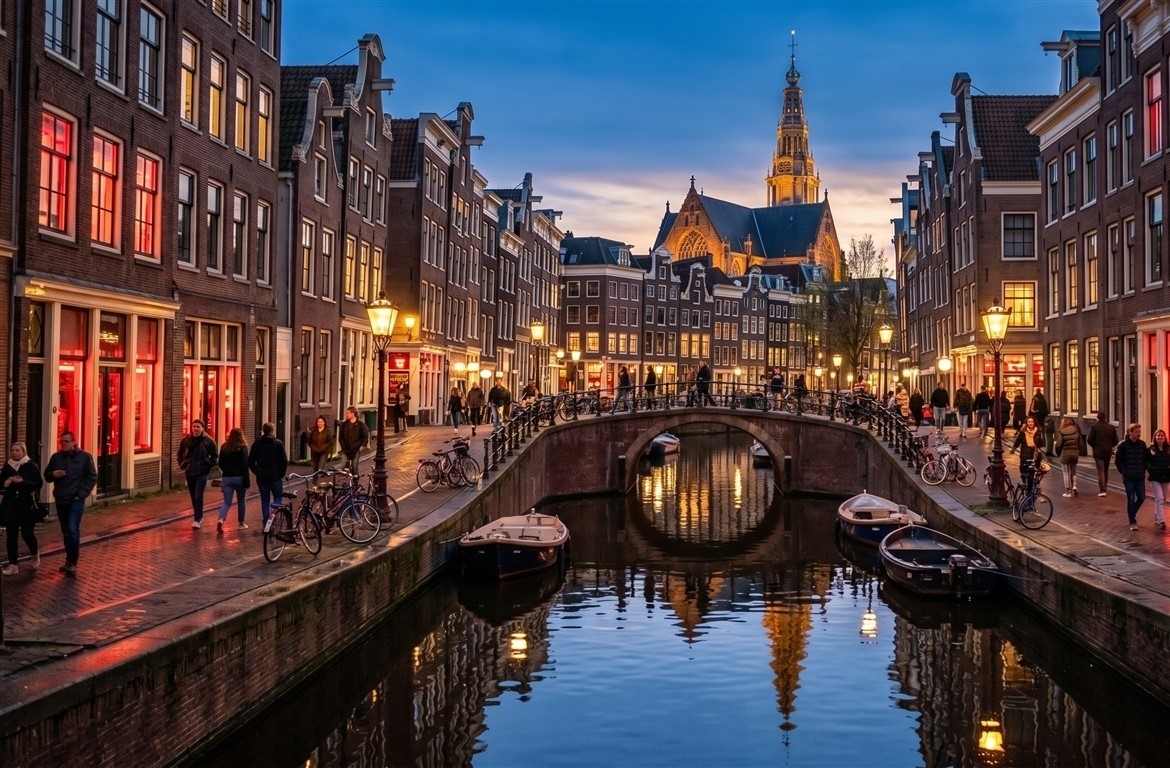
Timing changes everything in De Wallen. That exact same canal can feel almost peaceful at noon, curiously intriguing at sunset, and downright rowdy closer to midnight. The red lights are a huge part of its nighttime identity, but the architecture, museums, and historic lanes are much easier to truly appreciate before the crowds thicken.
| Time | Atmosphere | Best for | Crowd level |
|---|---|---|---|
| Morning | Quiet streets, delivery bikes, fewer open venues | Architecture, canals, photos of buildings | Low |
| Afternoon | More shops open, less nightlife pressure | Museums, Oude Kerk, first look around | Low to moderate |
| Early evening | Lights appear, bars wake up, streets still manageable | First-time visitors, couples, solo travelers | Moderate |
| Late night | Noisy, dense, more drinking, heavier security presence | Nightlife, adult venues, people-watching | High |
| Weekend nights | Stag groups, queues, bottlenecks, louder street mood | Travelers who want the busiest scene | Very high |
Things to do beyond the red windows
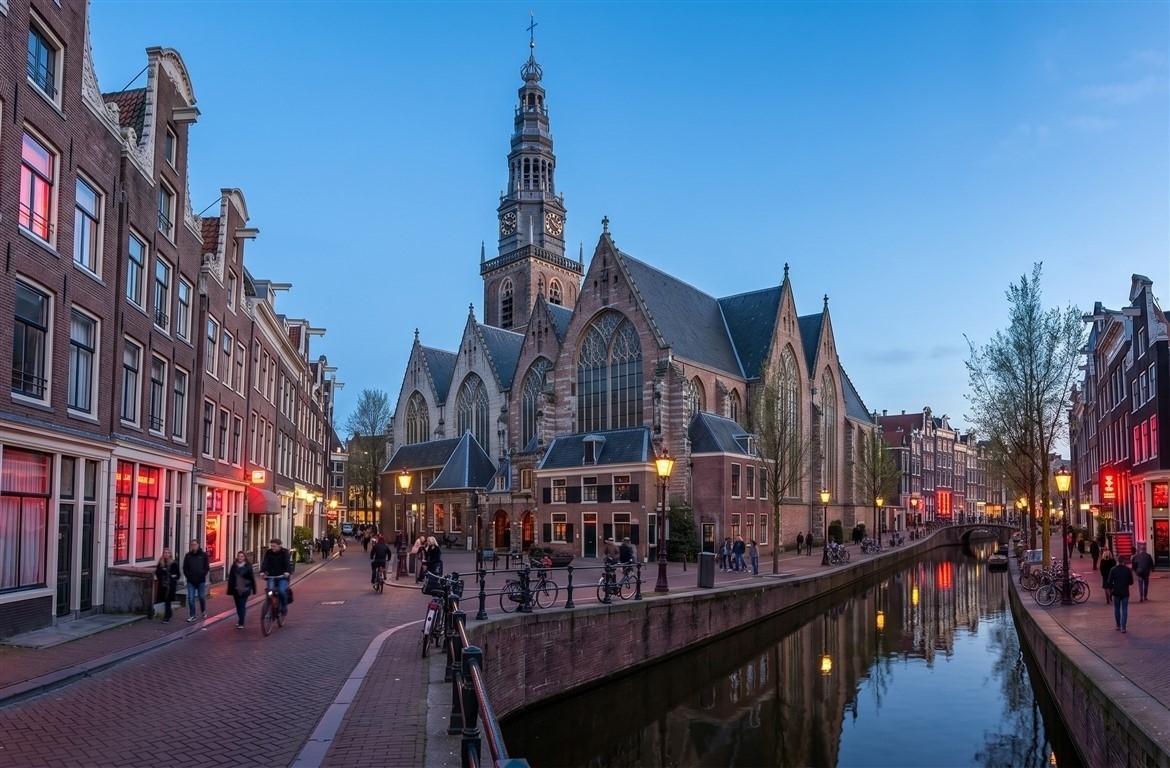
A smart visit doesn’t just revolve around the windows. De Wallen truly rewards those who take a moment to slow down and really notice what’s tucked between the neon signs. Start with Oude Kerk. This church traces its roots back to Amsterdam’s medieval beginnings, bringing a strange, vertical calm to the district, even when the surrounding alleys are swarming with people. Its very location tells half the city’s story: trade, sailors, religion, desire, money, tolerance, conflict—all packed into a few damp, historic streets.
The Red Light Secrets Museum offers the most direct museum experience for anyone trying to get a grasp on the sex-work aspect of the neighborhood. It’s housed in a former brothel and delves into the daily realities, history, and visibility of the profession. While the tone is definitely tourist-friendly, it provides far more context than just a quick walk past the windows ever could.
Our Lord in the Attic Museum is just nearby and often catches visitors by surprise. From the street, it simply looks like another canal house. But inside, a hidden Catholic church fills the upper floors, serving as a powerful reminder of the years when public Catholic worship was restricted in the Dutch Republic. The stark contrast with the surrounding nightlife is almost absurd. Amsterdam really excels at that sort of thing.
Licensed adult theaters like Casa Rosso are still a vibrant part of the district’s commercial nightlife. They aren’t for everyone, of course. If you decide to go, make sure to choose established venues, check the entry terms thoroughly before paying, and completely ignore anyone outside pushing vague, shady offers. A simple rule is best: if the pitch feels at all slippery, just walk away.
Coffeeshops and public smoking rules
Amsterdam’s coffeeshops are famously part of the city’s tolerant image, but the rules are actually a lot stricter than many visitors expect. Cannabis sales in these coffeeshops operate under a specific Dutch tolerance policy, while hard drugs remain absolutely illegal. You should completely ignore any street dealers. Mixing substances with crowded canals and unfamiliar streets is, frankly, a terrible travel strategy anyway.
Since May 2023, public cannabis smoking has been banned in specific areas of the old center, including De Wallen itself. The city introduced this rule to cut down on nuisance in streets where residents, workers, and tourists all share very little space. Smoking on some coffeeshop terraces has been treated differently than lighting up right in the street, but visitors should always check local signs and follow staff instructions carefully. Fines are definitely not the kind of souvenir you want to collect.
That old phrase, “everything is legal in Amsterdam,” has caused years of misunderstanding. It was never truly accurate. The city runs on rules, taxes, permits, licenses, wardens, cameras, and some very tired residents who’ve heard every excuse imaginable before breakfast.
A practical walk through De Wallen
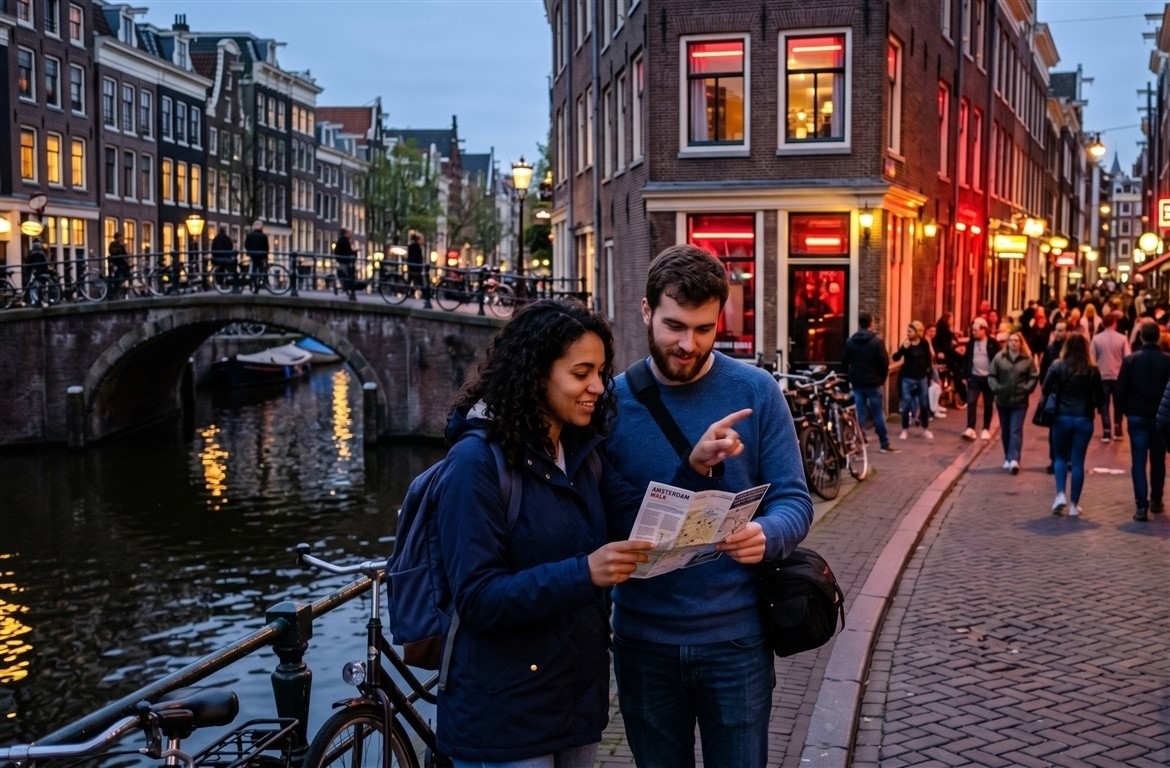
For your first visit, keep your route short and flexible. Wandering around is part of the charm, but a loose plan can prevent you from circling the same packed alley three times and missing out on the really interesting corners.
- Start at Amsterdam Centraal. Head south towards Damrak, then just drift naturally toward Warmoesstraat or Zeedijk. This approach immediately gives you a clear sense of how close the district is to the train station and why so many travelers find themselves there so quickly after arriving.
- Move toward Oude Kerk. The church square makes for a perfect natural pause. Take in the ancient stones, the nearby windows, the cafés, the groups trying to figure out where they are. The district’s contradictions are all visible right here, no commentary needed.
- Cross the canal streets slowly. Oudezijds Voorburgwal and Oudezijds Achterburgwal offer that classic canal-side view: shimmering water, charming bridges, red-lit rooms, old façades, and crowds squeezing past bicycles. Stay alert for bikes! They absolutely won’t care about your perfect photo op.
- Add one museum stop. Choose Red Light Secrets if you’re curious about the sex-work narrative, or Our Lord in the Attic for a quieter, more historical dive. Doing both works really well during daylight or early evening hours.
- Exit through Nieuwmarkt or Dam Square. Nieuwmarkt offers more food choices and a larger, open square. Dam Square easily reconnects you with central hotels, shopping streets, and various tram routes.
Staying in or near the Red Light District
Sleeping right inside De Wallen sounds super convenient until the street noise starts hammering against your windows. Some travelers absolutely adore being right in the thick of it all. Others deeply regret booking a room directly above a party street. The better choice really depends on your sleep habits, your budget, and how much late-night shouting you can tolerate.
| Stay inside De Wallen | Stay nearby but outside it |
|---|---|
| Fast access to nightlife, coffeeshops, bars, adult venues, and Amsterdam Centraal. | Quieter evenings while still staying within walking distance of the old center. |
| Street noise can run late, especially on weekends and around narrow bar streets. | Neighborhoods such as Jordaan, Plantage, or canal-belt edges feel calmer after dark. |
| Useful for short trips where location matters more than rest. | Better for longer stays, couples wanting sleep, and travelers with early museum plans. |
| Budget hotels and hostels may sit close to nightlife crowds. | Prices can rise, but the comfort trade-off is real. |
Food, bars, and late-night habits
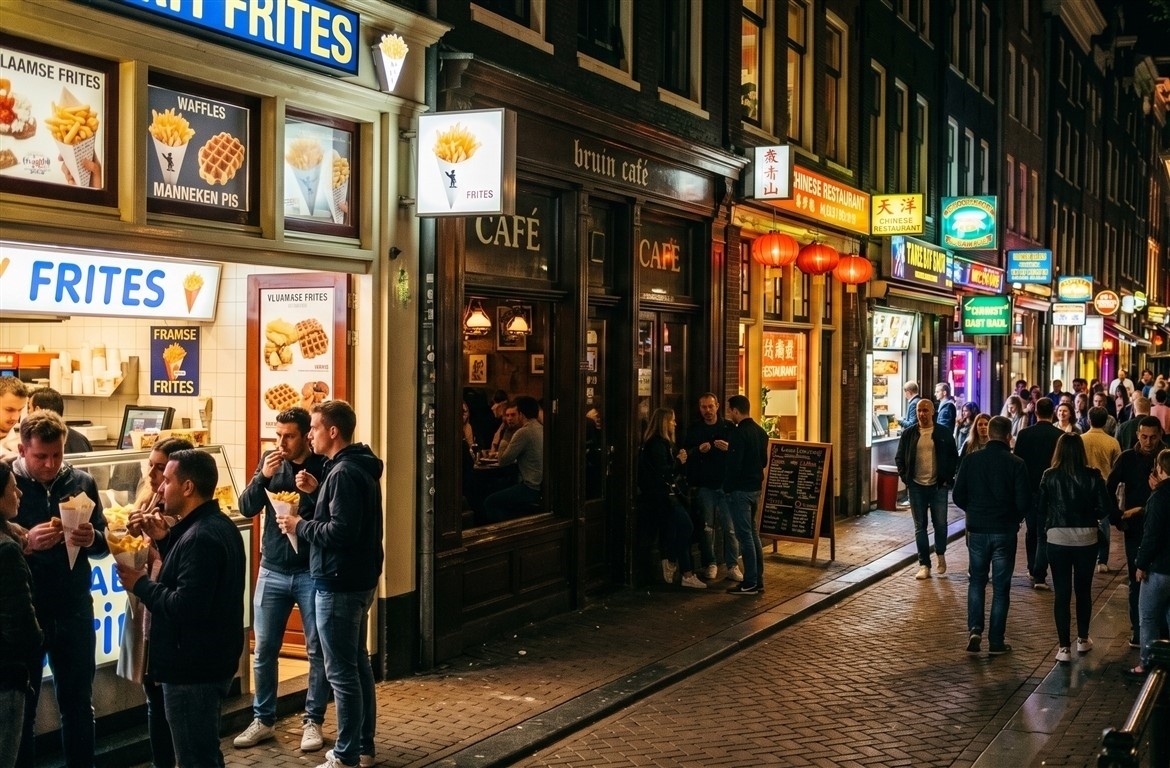
Eating in the Red Light District can be fun, a bit messy, or seriously overpriced—sometimes all within the same block. You’ll find fast-food counters, fries, waffles, snack walls, Asian restaurants buzzing around Zeedijk, old-school pubs, and touristy bars, all vying for your attention. The smartest move is usually to eat before the heaviest drinking hours kick in. Hunger plus crowds plus neon lights rarely leads to refined decisions.
Brown cafés near the old center offer a far more local Amsterdam vibe than the loudest shot bars. Zeedijk, in particular, has a rich history tied to sailors, nightlife, and the city’s Chinese community, and it remains one of the most intriguing streets close to De Wallen for food. Grabbing a small meal there before wandering the canals can really transform your visit from a quick gawp into something with genuine texture.
Late at night, always keep your exit strategy in mind. Amsterdam Centraal is close, trams run through the center, taxis gather in predictable spots, and walking back to a nearby hotel is easy if you made a sensible accommodation choice. Don’t count on being able to cycle confidently after you’ve had a few drinks. Locals can spot a wobbling tourist from half a canal away, trust me.
Architecture hiding in plain sight
De Wallen’s oldest streets still beautifully reflect the shape of medieval Amsterdam. Those narrow plots, high gables, ancient hoist beams, intricate brickwork, shimmering canal reflections, uneven paving—it’s all right there, even if many visitors just walk right past it. The district originally grew up around trade, water, sailors, churches, warehouses, taverns, and lodging houses. The current nightlife didn’t just appear out of nowhere. It evolved from a busy port city that learned to sell comfort, distraction, a little risk, and shelter right near the harbor.
Look up! It sounds like the most basic advice, but it completely changes your walk. Above the neon glow, you’ll spot carved details, historic rooflines, charmingly tilted windows, and apartments with plants pressed against the glass. In the morning, when the streets are freshly washed and quiet, De Wallen can feel almost tender. By night, it hardens again. Same bricks, totally different pulse.
Who will enjoy De Wallen
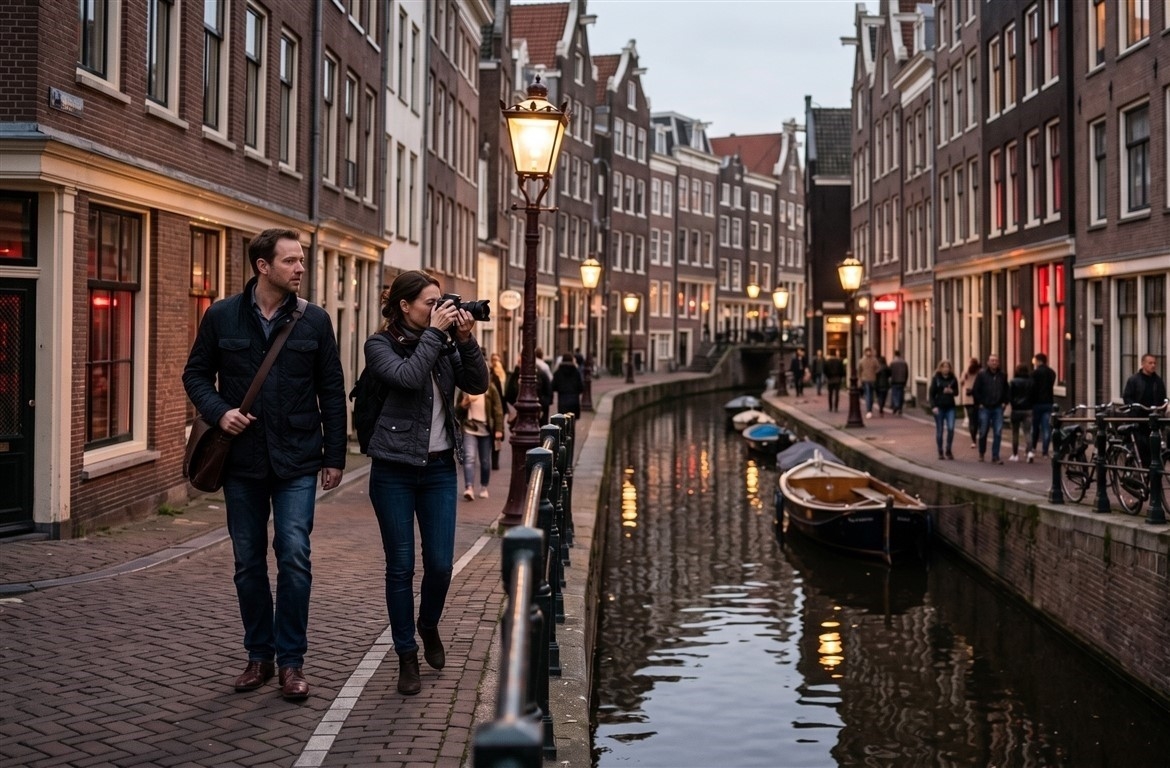
Curious adults, nightlife enthusiasts, urban history buffs, and anyone who appreciates truly complicated neighborhoods tend to get the absolute most out of De Wallen. It suits visitors who can handle a bit of sensory overload while still managing to behave with appropriate restraint. It’s also fantastic for photographers, as long as they focus their lenses on the canals, architecture, reflections, and general street scenes, all without invading anyone’s privacy.
People expecting a perfectly clean, romantic canal stroll might be happier in the Jordaan or the western canal belt. If you genuinely dislike crowds, aim for a visit during the day or early evening. And anyone hoping for some kind of law-free playground is heading straight for disappointment, fines, or a truly dull argument with security staff.
This district isn’t inherently dangerous, it’s not automatically glamorous, and it certainly isn’t always profound. It’s simply a working, breathing piece of Amsterdam: commercial, ancient, crowded, regulated, beautiful in fleeting moments, ugly in others. And honestly, that’s its real, unvarnished charm.
Visitor etiquette that changes the mood
Behaving well in De Wallen isn’t rocket science. It just needs to happen *before* someone gets too drunk. Walk with genuine awareness. Keep your voice down, especially near homes. Always ask before photographing people anywhere in the area. Spend your money in legitimate venues. And please, leave workers alone unless you are there for a lawful transaction, conducted respectfully and privately.
Travelers often talk about “seeing” the Red Light District as if simply observing is a neutral act. For the people being observed, it’s not always neutral at all. A little bit of restraint makes the entire neighborhood better for everyone: residents trying to sleep, workers trying to do their jobs, visitors trying to truly understand their surroundings, and staff cleaning up after the night’s chaos.
Amsterdam in 2026 is still wide open, still tolerant, and still wonderfully strange in the best possible way. But it’s also become far less patient with careless tourism than it once seemed. De Wallen truly rewards the visitor who arrives with curiosity and leaves without acting like the place somehow owes them a big spectacle. The red lights will still be there. And so will the church bells, the canals, the wet cobblestones, and those old houses leaning into another busy night.
0 Comment