

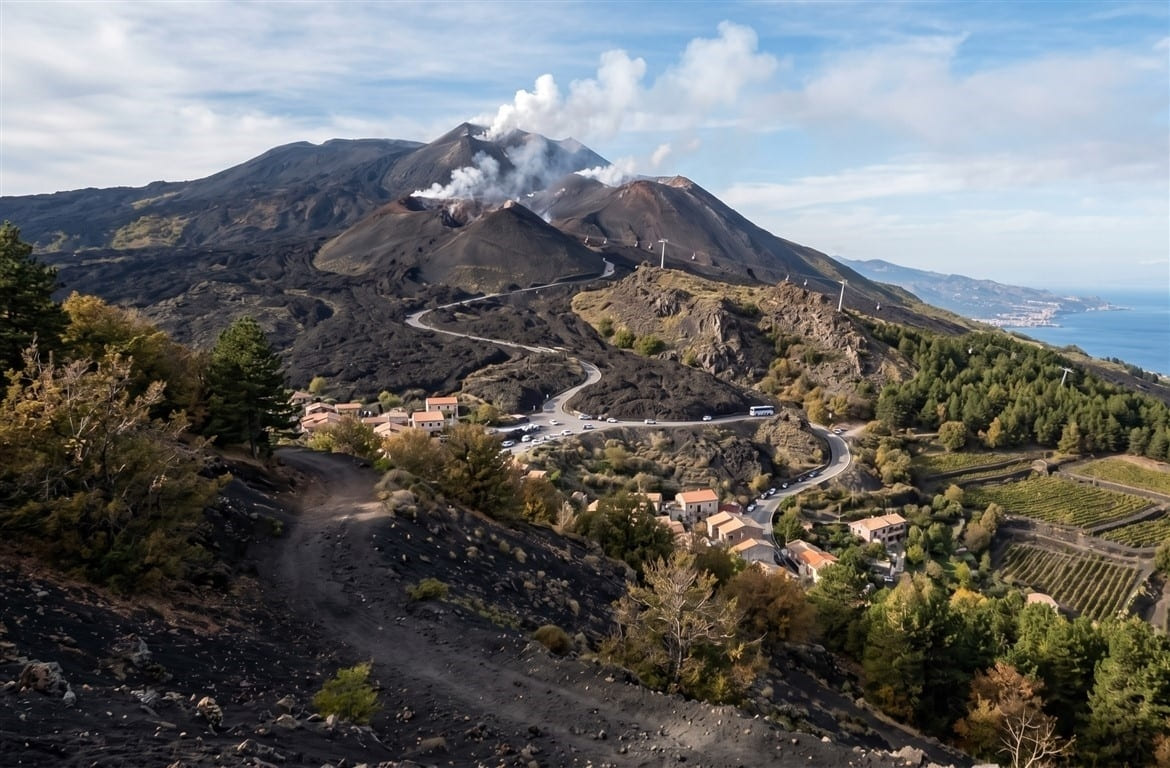

Mount Etna Tours: Picking Your Perfect Adventure
Forget those postcard-perfect volcanoes you’ve seen. Mount Etna? It sprawls. It really does. It puffs smoke, leaves black dust on your shoes, hides little villages behind unexpected bends, and then—BAM!—you’re hit with an impossibly blue view of the Ionian Sea, so stunning it almost feels a bit cheeky. People flock here for the dramatic craters, sure, but there’s this undeniable, unique vibe about the place: ancient lava flows right next to chestnut forests, cable cars disappearing into thick clouds, and vineyards thriving where fiery eruptions once scarred the slopes.
Even in 2026, exploring Mount Etna remains one of the top reasons folks plan a Sicily trip around the island’s eastern coast. Day-trippers often head out from Catania, Taormina, Syracuse, or the charming small towns right on Etna’s flanks. Dedicated hikers chase those higher, more elusive craters. Families, on the other hand, might opt for gentler strolls around older, calmer cones. And wine lovers? They’re usually found drifting among the terraced vineyards, tasting exquisite Nerello Mascalese and Carricante. No single Etna volcano tour fits everyone, which is precisely why choosing wisely is so crucial.
Why Etna Calls to So Many Travelers
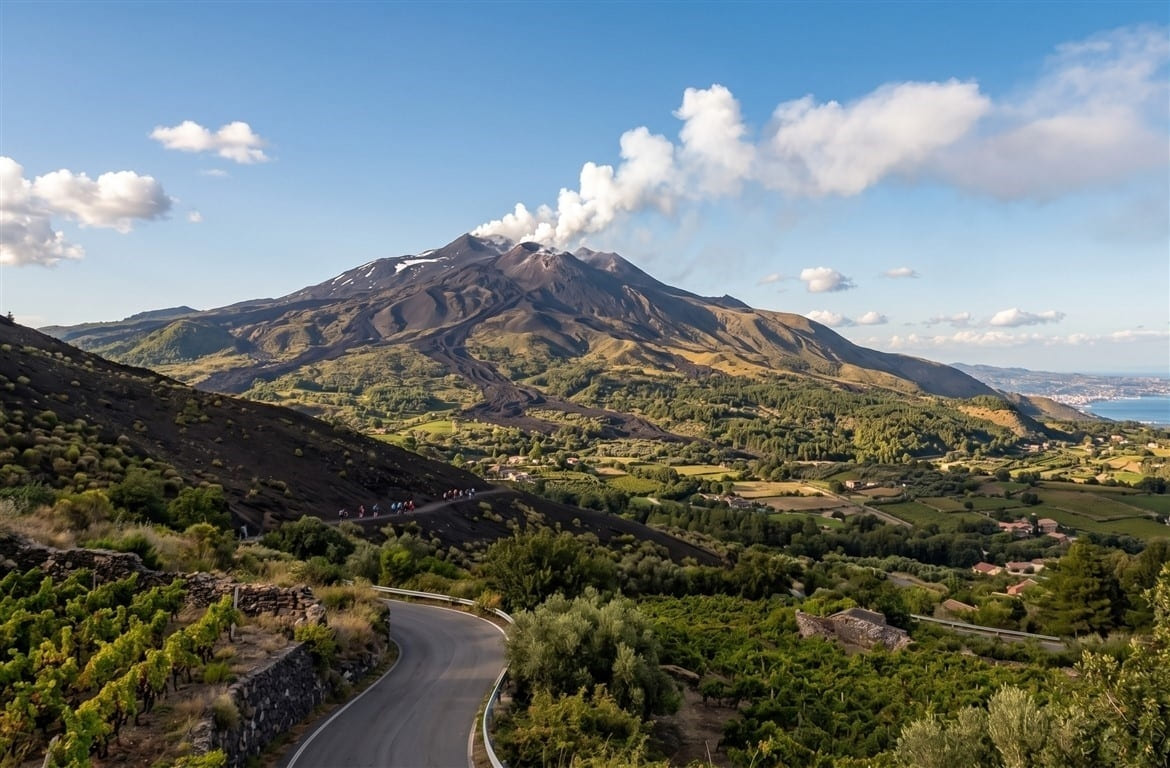
Rising majestically above eastern Sicily, Mount Etna is famous as Europe’s tallest active volcano. Its altitude actually shifts a little after eruptions and intense crater activity. That small detail? It actually tells you a lot about this mountain before you even set foot near it: Etna isn’t just a static monument. It’s a vibrant, living network of lava flows, active vents, ancient cones, ash slopes, deep forests, working farms, a couple of ski areas, and stark, high volcanic desert.
This isn’t just any mountain; it’s part of a UNESCO-listed natural site, and the protected landscape around it offers far more than a single view. Down near the coast, you’ll find bustling citrus groves and busy roads, echoing the everyday rhythm of Sicilian life. As you climb higher, the road narrows, the air gets crisper, and stark black lava ridges begin to appear alongside vibrant broom shrubs and towering pines. Climb even higher, and the ground transforms, becoming raw and exposed. The wind takes over up here. Conversations naturally get shorter.
That incredible variety makes Mount Etna excursions feel much bigger than your average day trip. You’re not just popping into a scenic viewpoint. You’re truly journeying across different climate zones, through land shaped by millennia of eruptions, and past villages that don’t just exist *beside* the mountain, but truly *live with* it.
The Best Types of Etna Adventures
When people say “Mount Etna tours,” they’re talking about a huge range of experiences. Some trips are wonderfully relaxed, almost gentle. Others demand serious stamina, proper hiking boots, and a guide who instinctively knows when it’s time to turn back. Honestly, booking the wrong kind of tour can easily turn a potentially breathtaking day into an absolute slog. Or, even worse, you might end up at some bland bus stop when all you really wanted was the crunch of ash, pure silence, and a proper climb.
- Easy crater walks: These are absolutely perfect for first-time visitors, families, or anyone who craves stunning volcanic scenery without the grind of a demanding hike. The Silvestri Craters, located near Rifugio Sapienza on the south side, are among the most famous and accessible options. Just remember, even “easy” doesn’t mean paved sidewalks; paths can still be quite dusty and uneven.
- Etna Jeep or 4×4 tours: A Jeep-style Etna adventure usually covers way more ground than a simple walking visit. Routes often weave through old lava fields, ancient eruption zones, forest tracks (where permitted), various viewpoints, and include several short walks. The big draw here is the sheer movement: less time stuck in one parking lot, more time watching Etna’s landscape change dramatically from slope to slope.
- Etna hiking tours: These trips are all about immersing yourself in the volcanic landscape on foot. Some stick to moderate altitudes, while more challenging routes climb significantly higher toward authorized crater zones. Hiking tours really hit the spot for travelers who want to *feel* the terrain underfoot, not just snap a quick photo. Be warned: loose lava stone can be exhausting. It crunches, it slides, and it absolutely gets everywhere.
- Etna summit tours: High-altitude and true summit-area tours are strictly for fit travelers. Their exact routes are completely dictated by current weather, volcanic activity levels, access rules, and decisions made by local authorities. You’ll always have licensed alpine or volcanological guides leading these upper routes. When Etna decides to be restless, plans simply change. That’s just part of the deal.
- Etna sunset tours: Sunset trips trade the obsession with altitude for pure atmosphere. The fading light transforms lava fields from a rich bronze to deep purple, then finally to a cold, stark grey. These tours are fantastic for couples, photographers, and anyone who prefers a more leisurely afternoon over an early morning start. Just remember to bring plenty of layers; after sundown, the mountain can suddenly feel quite unwelcoming.
- Etna wine tours: Wine-focused tours beautifully blend incredible volcanic scenery with tastings on Etna’s lower slopes. The vineyards here are deeply connected to the altitude, the unique lava soils, ancient terracing, and indigenous grape varieties. Many visitors love pairing a gentle crater visit with a delicious lunch or some tastings near the charming villages along the Etna wine route.
Etna: North Side or South Side?
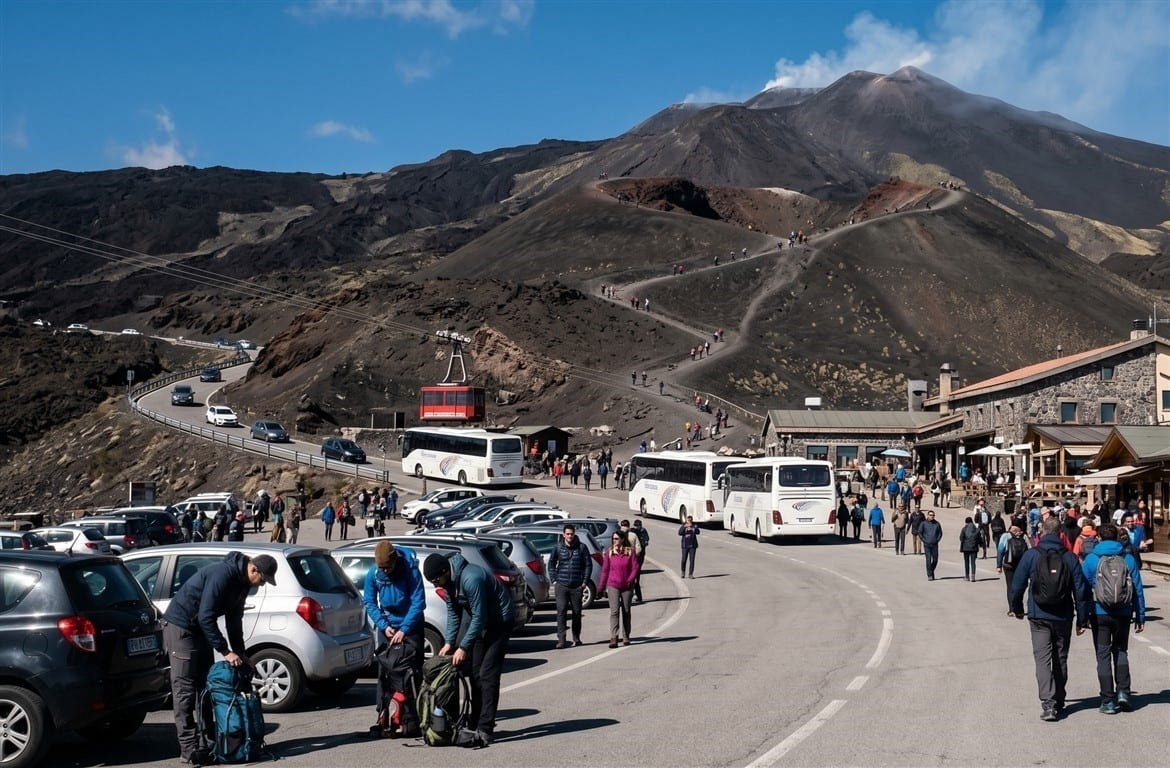
The south side is practically the default choice for many first-time visitors. It’s super easy to get to from Catania, boasts a well-developed visitor hub around Rifugio Sapienza, features the famous Silvestri Craters, offers cable car access (when running), and usually buzzes with a mix of tour buses, rental cars, busy cafés, souvenir stands, and hikers fussing with their backpacks in the wind. It can definitely feel crowded, but it’s incredibly practical. And honestly? Practical often wins out, even if our romantic side sometimes grumbles a bit.
The north side feels like a totally different world. It’s noticeably quieter, much greener at lower elevations, and thankfully, it’s not dominated by the massive visitor infrastructure you find on the south. Think forested landscapes, distinct lava scars, and routes starting from areas like Piano Provenzana, which lend the northern approach a much wilder, more untamed vibe. Travelers who really dislike crowds often prefer it here, though you might need to put in a little more effort with the logistics.
| Area | Best For | Typical Experience |
|---|---|---|
| South side | First-timers and straightforward travel plans | Rifugio Sapienza, the popular Silvestri Craters, easy cable car access, and plenty of facilities |
| North side | Seeking calmer, greener views | Forest trails, dramatic lava fields, fewer people, and a more rugged mountain atmosphere |
| Summit areas | Fit hikers with professional guides | Challenging high-altitude routes, always dependent on weather and any current volcanic restrictions |
| Lower slopes | Wine, local food, and charming villages | Visiting vineyards, farms, ancient lava stone towns, and enjoying slower, more relaxed days |
| Family routes | Children and mixed age groups | Short, manageable walks, easy crater viewpoints, flexible timing, and minimal elevation changes |
Can You Visit Etna Without a Guide?
Yep, absolutely. You can certainly explore parts of Mount Etna without signing up for an organized tour. The south side, especially around Rifugio Sapienza and the Silvestri Craters, is a popular choice for independent visitors. It’s easily reachable by car and, sometimes, by public transport from Catania. Just walking around those accessible crater areas gives you such a genuine taste of Etna: black ash crunching underfoot, ancient lava, the constant wind, sweeping views, and that peculiar feeling of standing on ground that was once moving fire.
But going solo? There are limits. Higher routes, any active crater zones, and particularly demanding terrain really call for better judgment and, frankly, in most of these areas, licensed guidance is mandatory. Access can be totally shut down when volcanic activity, gas emissions, snow, ice, or terrible visibility make routes genuinely unsafe. Look, a casual tourist just won’t ‘read’ Etna the way a local guide does. The mountain might appear totally calm from the parking lot, yet be incredibly hostile higher up.
And let’s be clear, a guided Etna tour isn’t just about safety. A *good* guide can bring the whole experience to life, explaining ancient lava flows, past eruptions, unique plant life, the geology, and even local village history, all without making it feel like a boring classroom lecture. Of course, bad guiding exists too. So, always choose operators who clearly detail the route, the actual walking difficulty, altitude, transport, required equipment, and the language used.
What to Wear on Your Etna Tour
You know, Etna has a way of *punishing* lazy packers. A beautiful, warm morning near the coast can quickly morph into a chilly, abrasive afternoon near the craters. The ground itself is uneven, often incredibly dusty, and sometimes surprisingly sharp. Sandals? Big mistake. And white sneakers? That’s an act of optimism the volcano definitely won’t respect.
- Start with proper shoes, please. Sturdy trainers are fine for short crater walks in bone-dry conditions, but honestly, dedicated hiking shoes are always better for longer Etna treks. The surface can shift unexpectedly underfoot, and jagged lava rock is not at all kind to thin soles.
- Pack layers, even if it’s summer. A T-shirt might be all you need in Catania, but a warm fleece or windbreaker will be your best friend at higher altitudes. The wind is the real sneaky one; it can take a perfectly pleasant day and just scrape all the softness right off it.
- Bring sun and dust protection. Sunglasses, sunscreen, and a hat are absolutely essential for bright summer visits. A light scarf or neck tube can also be incredibly useful when ash and volcanic dust decide to blow across open ground.
- Carry water and some small snacks. While visitor areas usually have services, hiking routes and many scenic stops won’t. A bottle of water in your bag can save a lot of grumbling later, especially if you’re traveling with kids.
- Always check the route difficulty before booking. Words like “summit,” “trekking,” “high altitude,” and “full day” carry serious weight. Read them honestly. Let’s be honest, pride makes for a terrible travel planner.
The Best Time to Experience Etna
Etna truly transforms with the seasons, and honestly, each one brings its own unique vibe. Spring paints the lower slopes with vibrant wildflowers, offers wonderfully cooler walking weather, and creates this stunning contrast between stark black lava and fresh green growth. Summer means longer days and consistent demand for tours, but beware of the intense heat on lower slopes and the strong sun, which can really wear people out before they even realize it. Autumn is often adored for its clearer hiking conditions, bustling vineyards, the energy of harvest, and that beautiful, softer light. Winter, however, can bring snow, closed routes, exciting ski opportunities (when conditions are right), and a volcano that feels less like a typical Sicilian postcard and more like an unexpected alpine stranger.
Weather at altitude can switch gears incredibly fast. Clouds can build out of nowhere. The wind can pick up suddenly. Visibility can drop in an instant. Tour plans aren’t always about what you *prefer*; sometimes, they’re simply about what the mountain *allows* that particular morning. If you treat Etna like some fixed museum piece, you might just leave a bit annoyed. Travelers who build in a little flexibility usually have a far better time.
Mount Etna Tours with Wine and Food
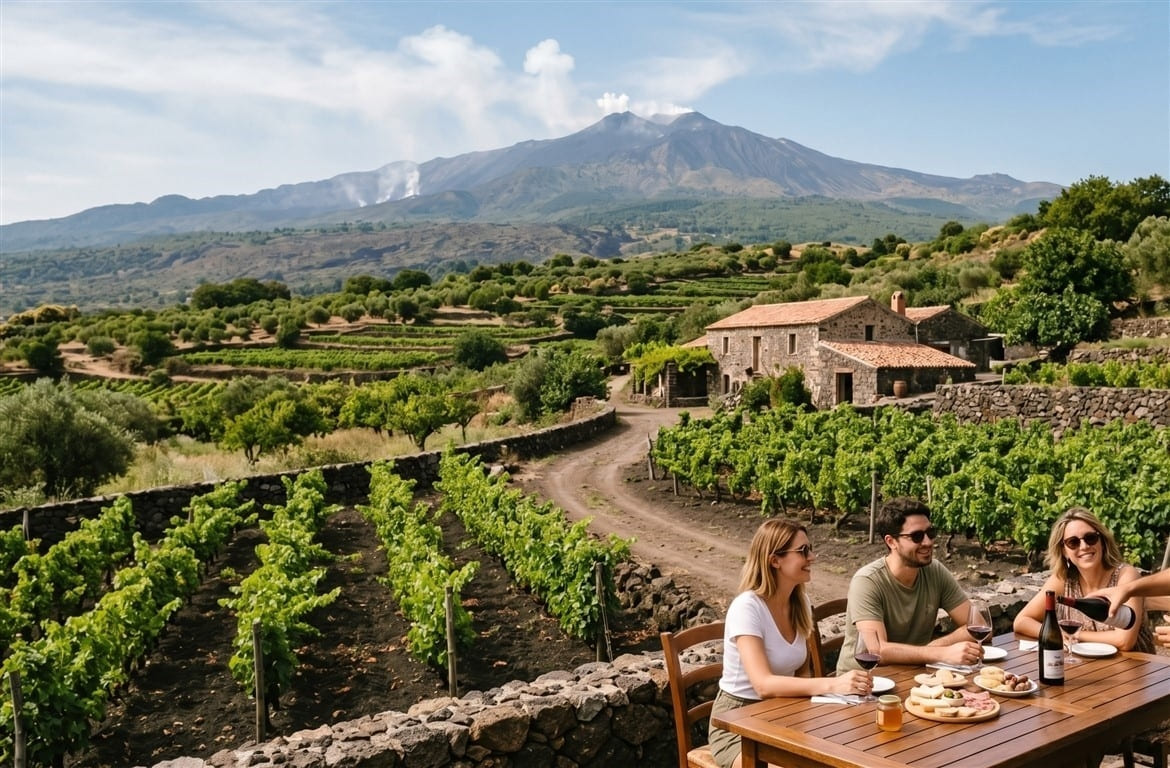
Those lower slopes of Etna? They’re not just some gentle cooldown after you’ve trekked around craters. They’re actually a huge part of why this volcano holds such a deep grip on Sicily. Think ancient lava stone walls, meticulously crafted old terraces, vineyards clinging to high altitudes, lush orchards, local honey producers, delicious pistachio sweets, and charming small restaurants. All of this truly transforms a Mount Etna tour into something much warmer and incredibly local.
Etna wine tours usually dive deep into the unique volcanic character of the land. Red wines are often synonymous with the Nerello Mascalese grape, while white wines frequently showcase Carricante. The real joy? It’s seeing exactly where those vines cling: steep parcels, rich black soils, the cooler mountain air, and villages that seem to have absorbed centuries of patience from the towering mountain above them.
Food stops vary quite a bit depending on the tour operator and the specific route. Some tours include a full lunch, others offer a dedicated tasting session, and some might only give you free time in a charming village. Make sure to read the booking details carefully. A “wine tour” can mean anything from a serious, in-depth cellar visit to just a quick glass with a stunning view. Both can be delightful, but they are definitely not the same kind of day.
Family-Friendly Etna Excursions
Families can absolutely visit Etna, no doubt about it, as long as the chosen route genuinely suits the youngest or least mobile member of the group. Short, accessible crater walks, scenic drives, gentle 4×4 excursions, and viewpoints on the south side usually work beautifully for most children. Just remember, the ground still demands respect. Lava gravel is notoriously slippery, many paths are quite exposed, and there might be absolutely no shade right when a child suddenly decides that walking is the most terrible invention ever.
For older travelers or groups with mixed abilities, seriously, don’t feel pressured to chase the highest possible altitude unless *everyone* in the group genuinely wants that experience. A really good family-friendly Etna excursion provides plenty of volcanic drama without turning the whole day into an endurance test. Think crater rims, lava tunnels (safely accessible with guides, of course), the serene edges of forests, and a relaxed lunch. These moments can be far more memorable than a forced march into cold, howling wind.
How Much Time to Dedicate to Etna
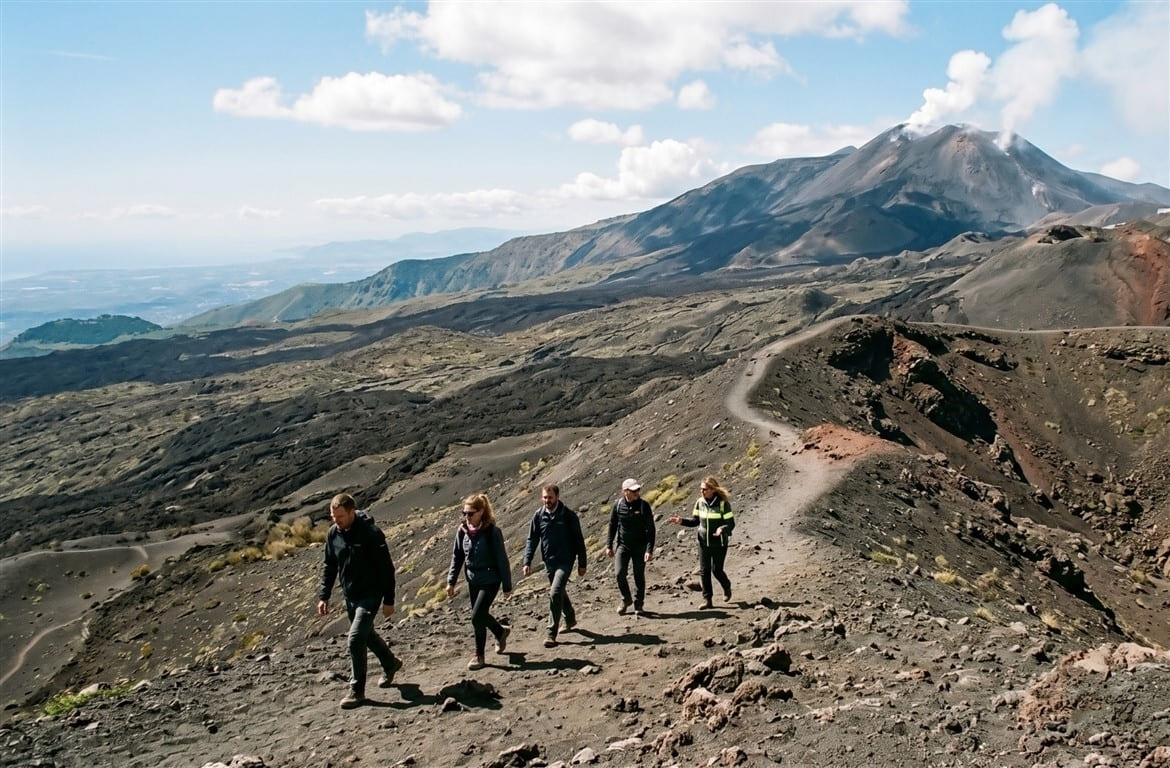
Got limited time? A half-day Mount Etna tour can be absolutely perfect, especially if you’re starting from Catania or nearby towns. It typically provides enough time for transport, a pleasant crater walk, a few impressive viewpoints, and perhaps a quick stop at an old lava field. It’s a smart choice for travelers with tight schedules, cruise passengers with fixed deadlines, or anyone who wants a taste of the volcano without sacrificing an entire day.
A full-day guided Etna tour, however, opens up a much richer route. There’s ample time for longer walks, truly exploring either the north or south side, visiting lava caves (where permitted and properly equipped), enjoying a leisurely lunch, indulging in a wine tasting, or wandering through charming villages like Zafferana Etnea, Linguaglossa, Nicolosi, or Randazzo. Combining a Mount Etna and Taormina tour is very popular, but do remember it creates a much faster pace. You’ll see more, but you’ll linger less. It’s a simple trade-off.
From Syracuse, Etna becomes a longer day trip. It’s still totally doable, but the drive definitely eats up a bigger chunk of your schedule. From Taormina, the volcano feels close enough for a surprisingly easy day trip, especially if you’re heading to the north side or the wine regions. And from Catania? Etna practically dominates the skyline, making the planning almost *too* tempting: wake up, see smoke, and just go.
Cable Car and High-Altitude Adventures
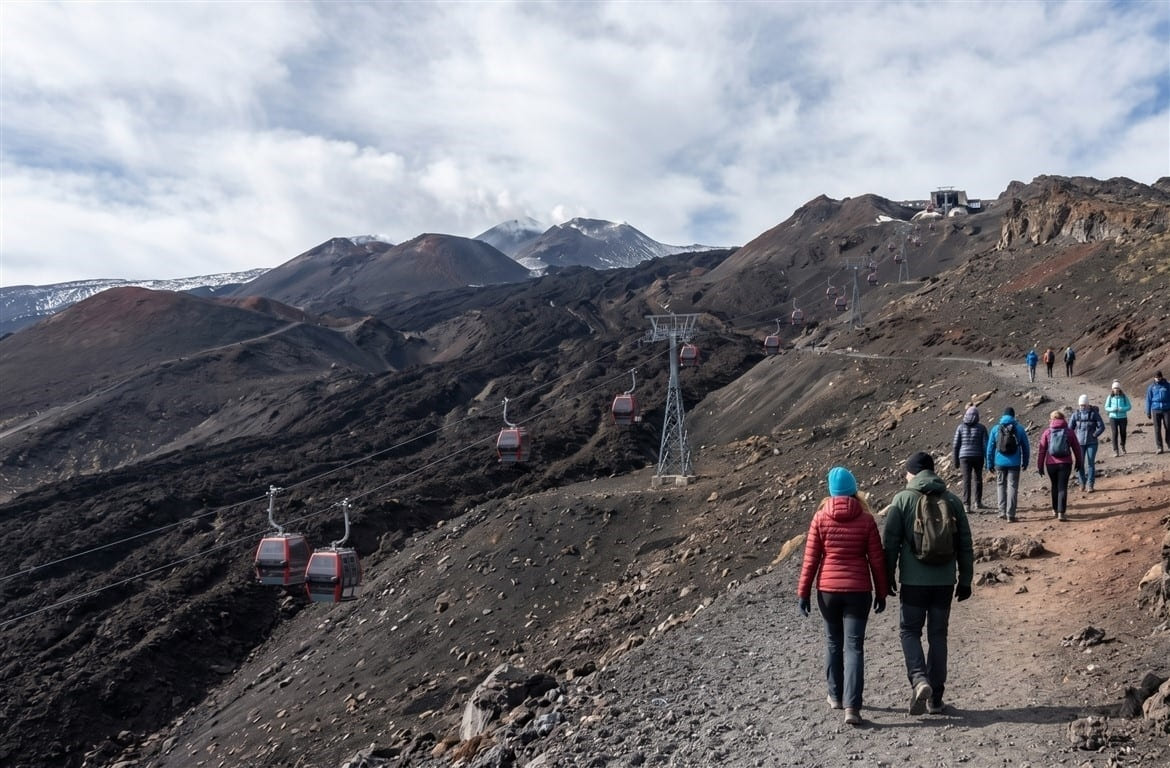
The Etna cable car, located on the south side, is one of the primary ways visitors can reach higher volcanic terrain, assuming conditions and operations permit. Just because you’re taking a cable car doesn’t mean you can skip proper clothing. The air is always colder up high, the ground much more exposed, and the atmosphere far less forgiving. Tourists who step out dressed like they’re headed to a beach town learn this lesson pretty quickly.
High-altitude trips often combine the cable car, specialized off-road transport, and guided walking. The exact routes are constantly shifting, adapting to volcanic activity, current weather, snow conditions, and official regulations. That flexibility isn’t some flaw in the tour plan; it’s simply how Etna works. Any reputable operator won’t promise access that local rules or prevailing conditions might ultimately block.
Safety, Access, and Local Rules
Etna is an active volcano. That fact is incredibly thrilling from a distance, but it becomes very practical and serious once you’re up close. Access to higher areas can be restricted for many reasons: volcanic activity, gas emissions, seismic events, heavy snow, ice, strong winds, or even just terrible visibility. Local authorities and qualified guides are constantly monitoring conditions and adjusting routes accordingly. Travelers absolutely must follow all posted restrictions and guide instructions, even if another group seems to be venturing further.
Safety on Etna also involves a good dose of ordinary mountain sense. Please, stay on marked or officially permitted paths. Do not, under any circumstances, walk into closed areas just to snap a photo. Never underestimate the effects of altitude. And don’t ever assume that a sunny coast guarantees a calm summit zone. Keep children very close, especially near crater edges and on loose, slippery slopes. The volcano is undeniably beautiful, but it is not tame.
Which Mount Etna Tour Fits Your Adventure?
Honestly, start by choosing your tour based on your fitness level first, then the season you’re visiting, and finally, your departure point. A traveler staying in Catania for a couple of nights might be happiest with a relaxed half-day south-side excursion or a magical sunset trip. A dedicated hiker, equipped with proper boots and a free day, should definitely look into Etna trekking routes with licensed guides. A couple enjoying a romantic stay near Taormina might find a north-side tour perfectly paired with a delightful wine experience. And families with younger children should absolutely prioritize short, manageable walks, flexible timing, and clear, comfortable transport options.
If you’re after the most dramatic volcanic experience, focus on tours that offer crater access, higher altitudes, and guides with impeccable credentials. If you’re hoping for the most quintessential Sicilian day, then look for options that weave in charming villages, lush vineyards, delicious food, and diverse lava landscapes. Neither choice is inferior, by the way. Etna genuinely has space for both moods.
The very best Mount Etna tours don’t try to flatten this incredible mountain into some neat, tidy product. Instead, they let it stay a little wild, a bit unruly: black dust on your shoes, the wind whispering in your ears, the sea glittering far below, the promise of lunch somewhere down the slope, and that faint, mineral smell hanging in the air. You’ll probably leave with clothing that’s a little less clean than when you started. A fair price to pay, honestly.
0 Comment