

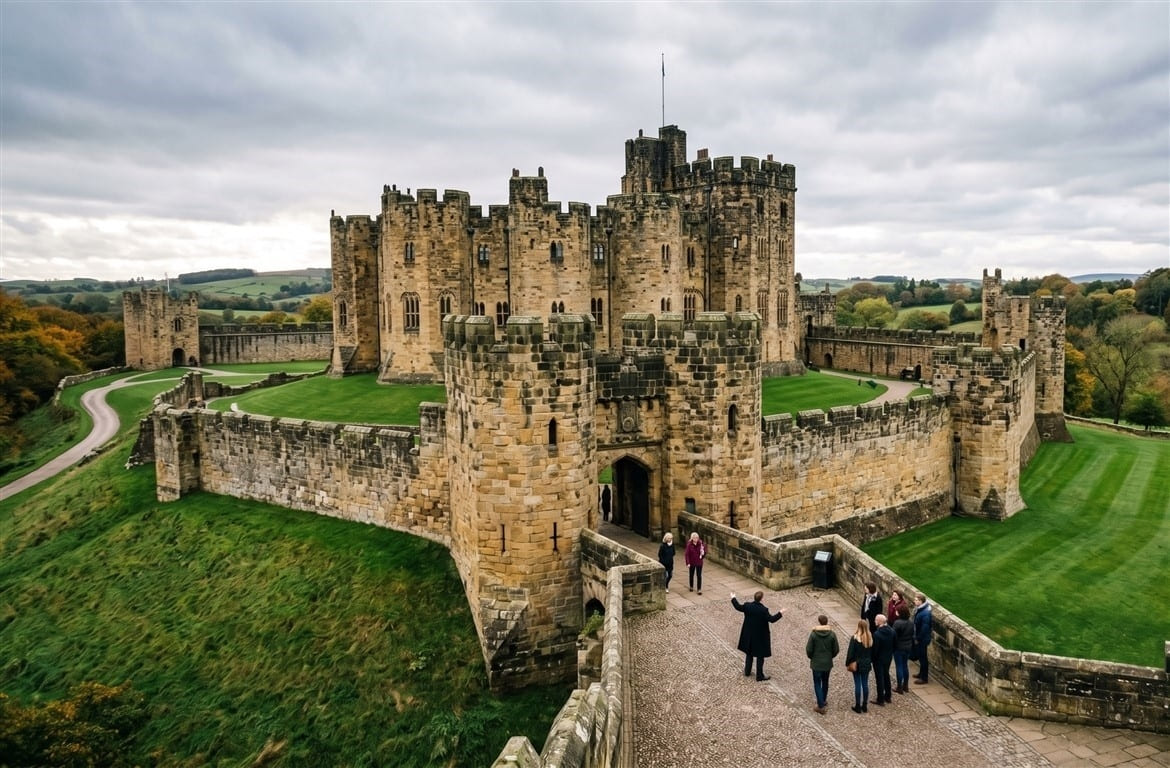

Hogwarts Castle in Real Life: Where to Find the Real-World Filming Locations
Okay, here’s a surprise for many: Hogwarts isn’t just one single castle. The school we all adore on screen is actually a spectacular, carefully pieced-together illusion. Think ancient courtyards tucked away in Northumberland, grand vaulted cloisters in Oxford, shadowy stone corridors in Gloucester, and those epic, windswept Scottish lochs. Then add a huge, detailed model at the studio near London, and a railway viaduct that’s probably stared into more camera lenses than a few royal palaces combined. Mash all that up, and boom, the magic works perfectly. But here’s the kicker: visit them separately, and honestly? They’re even *better*. You get to stand right there. Feel the ancient stone. Catch the scent of rain on the air. Hear a local guide whisper tales from filming days. That’s when it hits you: *this* is where the magic truly took root.
Planning a big Harry Potter adventure for 2026? Here’s the practical, if slightly sprawling, answer: the “real Hogwarts Castle” spans both England and Scotland. Some spots actually hosted film crews, others merely sparked ideas for sets, some just provided breathtaking backdrops, and then there are the custom-built studio pieces. A solid travel plan might sweep you through London, Oxford, Gloucester, Northumberland, Durham, and finally, the Scottish Highlands. Now, trying to cram all that into three days? Pure madness. Fun madness, maybe, but madness nonetheless.
Is Hogwarts Castle Real?
Nope, sorry, a single, actual Hogwarts Castle doesn’t exist. The one you see in the Harry Potter films? It’s a masterful blend of genuine UK locations, purpose-built studio sets, fancy digital effects, intricate miniatures, and some clever matte work. Filmmakers picked historic spots because those old stones already carried the perfect vibe: academic, a bit chilly, utterly grand, and just a touch spooky after the sun goes down.
Your closest bet for seeing the full, on-screen Hogwarts is the massive castle model at the Warner Bros. Studio Tour London. But if you’re dreaming of actually *walking through* “real Hogwarts,” you’ll need to visit the actual filming locations: Alnwick Castle, Christ Church, New College, the Bodleian Library, Durham Cathedral, Gloucester Cathedral, and Lacock Abbey. Just remember, none of them give you the *whole* castle experience. Each one, though, offers a different, captivating piece of the spell.
Where Is Hogwarts Located in the Harry Potter Films?
In the magical world of the books, Hogwarts is nestled deep within the Scottish Highlands. The movies absolutely lean into this setting: think dark, shimmering lochs, towering ridges, empty glens, that signature wet weather, and this constant sense that the school is miles away from any ordinary life. The train arrival, the looming mountains, and that vast expanse of water surrounding the school all scream “North!”
The actual filming locations, however, are dotted all over. The Great Hall? That was a studio set, though Christ Church in Oxford definitely inspired its design. Alnwick Castle delivered those iconic courtyards and broomstick lessons. Durham Cathedral and Gloucester Cathedral gave us corridors and classrooms. And Scotland? Oh, Scotland provided all the drama: Glen Coe, Loch Shiel, Loch Eilt, Loch Morar, and, of course, the magnificent Glenfinnan Viaduct. The final result feels wonderfully Scottish, even when the stones themselves were filmed in England. Pretty smart, right? Very British, too.
Main Real-Life Castles and Buildings Used as Hogwarts
Travelers always ask, “Which castle *was* Hogwarts?” The simple truth is: a bunch of buildings, plus a ton of sets. Alnwick Castle is probably the one most people picture when they think “real Hogwarts exterior.” Oxford gives us the academic heart of it all. Cathedrals supply the endless corridors. Lacock lends classrooms. And the studio? That’s where the whole magnificent, stitched-together beast truly comes alive.
| Location | What it represents for fans | Best for a 2026 visit |
|---|---|---|
| Alnwick Castle | Flying lessons, courtyards, exterior castle atmosphere | Outdoor photos and broomstick training sessions |
| Christ Church, Oxford | Great Hall inspiration and grand stair mood | Architecture, dining hall atmosphere, Oxford walking routes |
| New College, Oxford | Cloisters, courtyard scenes, Draco’s ferret moment | Quiet stone passages and photogenic quadrangles |
| Durham Cathedral | Classrooms, snowy courtyard, Hogwarts corridors | Cathedral interiors and northern England heritage |
| Gloucester Cathedral | Corridors, wall messages, moody school passageways | Atmospheric cloisters and easy city access |
| Warner Bros. Studio Tour London | Original sets, props, Great Hall set, castle model | The most complete Harry Potter filming experience |
Alnwick Castle: Exterior Courtyards and Flying Lessons
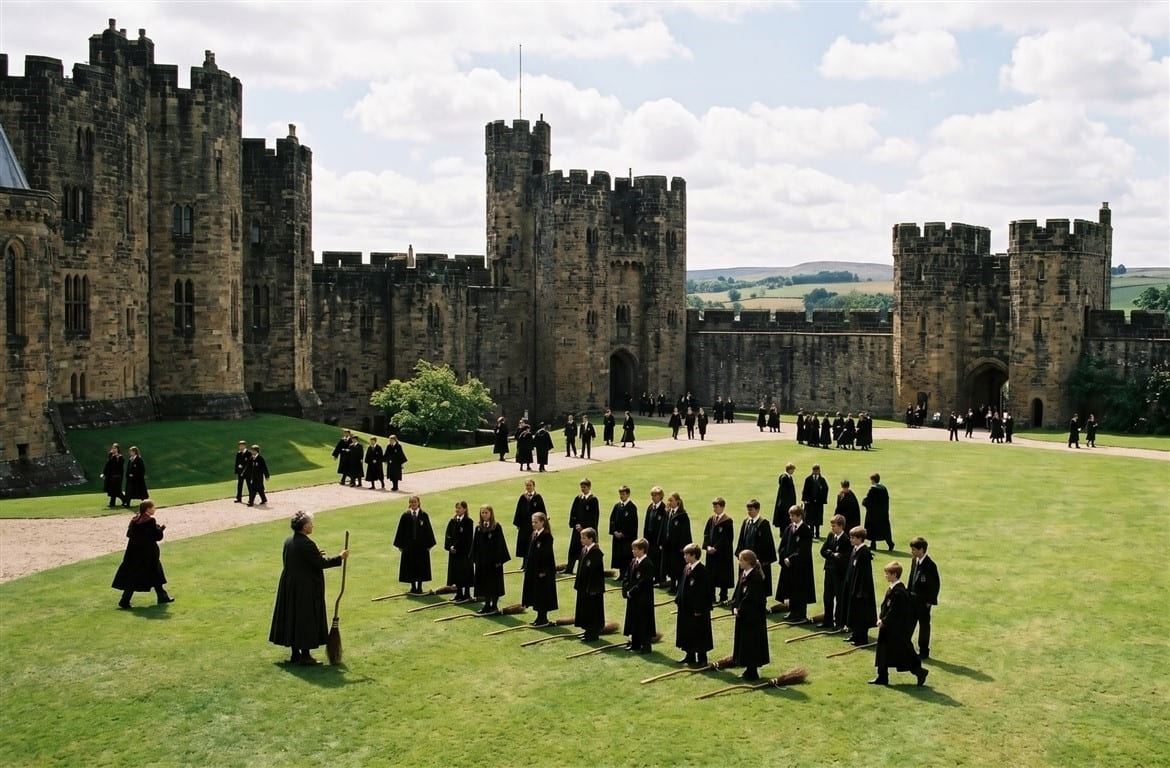
Alnwick Castle in Northumberland screams “Hogwarts” even before anyone mentions film crews. Seriously, it just looks the part. Think huge, sturdy walls, imposing towers, expansive grassy areas, and that perfectly stern, classic English castle façade. It popped up in the first two Harry Potter films, most famously during those broomstick training sessions and various outdoor school scenes.
Planning for 2026, Alnwick remains a super easy sell for mixed travel groups: Potterheads get their filming fix, history buffs explore a major medieval fortress, and kids get all the space in the world to run wild without constant shushing. Just a heads up, it’s seasonal, so definitely double-check opening dates and ticket info before you embark on that long drive north.
The Outer Bailey
The Outer Bailey is *the* spot many fans instantly recognize from the flying lesson scenes. It just has that wide-open, perfectly geometric feel, ideal for a bunch of nervous first-years trying desperately not to face-plant. This isn’t some made-up set; it’s genuine, ancient castle ground, and that’s what gives the place its real power. When the wind whips over those walls, the whole area feels wonderfully raw, far less polished than any theme park. And honestly? Better for it.
The Courtyards and Inner Bailey
Alnwick’s courtyards were absolutely key for all those scenes involving movement, student gatherings, and just generally soaking up the school-life vibe. Visit on a busy day, with people milling about everywhere, and you’ll immediately grasp why the filmmakers loved it so much. The castle itself provides all the scale needed, no fancy explanations required. Everyone just *gets* it: this could totally be a school, if that school happened to have a thousand years of stone history and a truly worrying lack of central heating.
The Lion Arch
The Lion Arch marks a specific path towards Hagrid’s hut in the early movies. It’s a tiny piece in a much bigger puzzle, yet fans absolutely adore it because it transforms what could have been just a transitional shot into a truly real, tangible place. That happens so often on a Hogwarts location trip. A simple doorway suddenly becomes iconic. A stairwell evokes powerful emotions. A quiet cloister corner is revered almost like a shrine.
Christ Church, Oxford: Great Hall Inspiration
Right, let’s be clear: Christ Church isn’t the *actual* Great Hall from the films. But its incredible dining hall absolutely *inspired* the Hogwarts Great Hall set. That distinction matters, because sometimes visitors arrive expecting the exact film room and end up feeling a bit let down, which is a real shame. Christ Church truly doesn’t need to pretend. Its own hall stands magnificent on its own: those long, imposing tables, walls adorned with portraits, a soaring timber roof, and centuries of collegiate ceremony practically baked into every stone. It’s breathtaking.
The grand staircase at Christ Church? That’s another crucial stop for fans. It perfectly captures that “just arrived at Hogwarts” feeling: fresh robes, shiny shoes, and a sense of being watched by far too many eyes. Oxford, as a whole, really adds depth to the Hogwarts hunt because it’s not just about one filming spot. The entire city feels like a living, breathing cousin to the fictional school – all those quads, chapels, libraries, sprawling lawns, ringing bells, whizzing bicycles, and, yes, those ever-present “please keep off the grass” signs.
New College, Oxford: Cloisters and Courtyards
New College delivers some of the best “Wait, I *know* this place!” moments in all of Oxford. Its cloisters and a specific courtyard appear prominently in *Harry Potter and the Goblet of Fire*. Yep, including that unforgettable scene where Draco Malfoy gets turned into a ferret. Silly moment, absolutely stunning location. That weird contrast? It’s just perfect.
This college dates all the way back to the fourteenth century, and you can truly feel it; the stone here has a softer, more lived-in vibe than many visitors expect. Try to go early if the access times work out. Later in the day, Oxford can feel like half the globe has descended with tote bags and smartphones, and suddenly, the magic gets lost in the sheer logistics of queue management.
Bodleian Library, Oxford: Hogwarts Library and Infirmary
The Bodleian Library offers fans a double dose of major Hogwarts interiors. Duke Humfrey’s Library actually stood in for the Hogwarts library—you know, the kind of place where even a whisper too loud might earn you a curse just from a librarian’s icy glare. Then there’s the Divinity School, which doubled as the Hogwarts infirmary, its exquisite fan-vaulted ceiling practically doing half the acting all on its own.
Access here is pretty controlled, and for some rooms, you’ll need a guided tour. That’s actually a good thing! The Bodleian is a living, working historic library, not just some film prop warehouse. Treat it as a scholarly treasure first, and a Potter location second, and your visit will feel so much richer.
Durham Cathedral: Classrooms and Corridors
Durham Cathedral stands as one of the most powerful Hogwarts filming locations in northern England. Its cloisters popped up in various school corridor scenes, and the Chapter House transformed into Professor McGonagall’s classroom in those early films. The cathedral’s magnificent Norman architecture really gives the on-screen Hogwarts a heavier, more ancient gravity, totally different from Oxford’s elegant collegiate vibe.
There’s this strong scene-memory clinging to the place: snow gently falling in the courtyard, students bustling under grand arches, the hushed quiet of a school that feels almost like a monastery. Durham itself perches high above the River Wear, and just approaching the cathedral feels utterly cinematic. No dragons needed for *this* drama.
Gloucester Cathedral: Hogwarts Corridors
If you’re on a mission to find *the* corridors, Gloucester Cathedral is your jackpot. Its cloisters appear throughout the early films, including those spine-chilling scenes linked to the Chamber of Secrets and the ominous writing on the wall. The fan-vaulting here? It’s simply outrageous. The stone passageways twist natural light into this incredible, silvery gloom, even on bright, sunny days.
For travelers short on time, Gloucester offers a handy advantage: the cathedral sits right within a perfectly manageable city, making it easy to pair with other lovely Cotswolds or west-of-England stops. For the best photos, wait for the crowds to thin out. Just hold on a minute. Let the corridor clear. *Then* snap your shot.
Lacock Abbey: Classrooms and Interior Scenes
Lacock Abbey in Wiltshire layers on even more Hogwarts interiors. Its various rooms and cloisters were utilized for classroom scenes, specifically areas associated with Snape and Quirrell in the initial films. And the quaint village of Lacock itself, surrounding the abbey, boasts this wonderfully film-friendly look: perfectly preserved cottages and narrow, winding lanes. It’s picture-perfect.
The abbey truly rewards those who take their time. It doesn’t shout “Hogwarts!” quite as loudly as, say, Alnwick or the studio, but the rooms here feel so wonderfully close to that older, more mysterious school from the first movies. A little dusty. A bit secretive. Just right.
Hogwarts Grounds in Real Life
The grounds of Hogwarts weren’t just built structures; they were crafted from landscapes. The Scottish Highlands lent the films that epic sense of scale: vast water, towering mountains, dramatic clouds, and an incredible feeling of distance. You simply can’t recreate that in a courtyard. You just have to head north and let the weather do whatever it pleases.
The Scottish Highlands
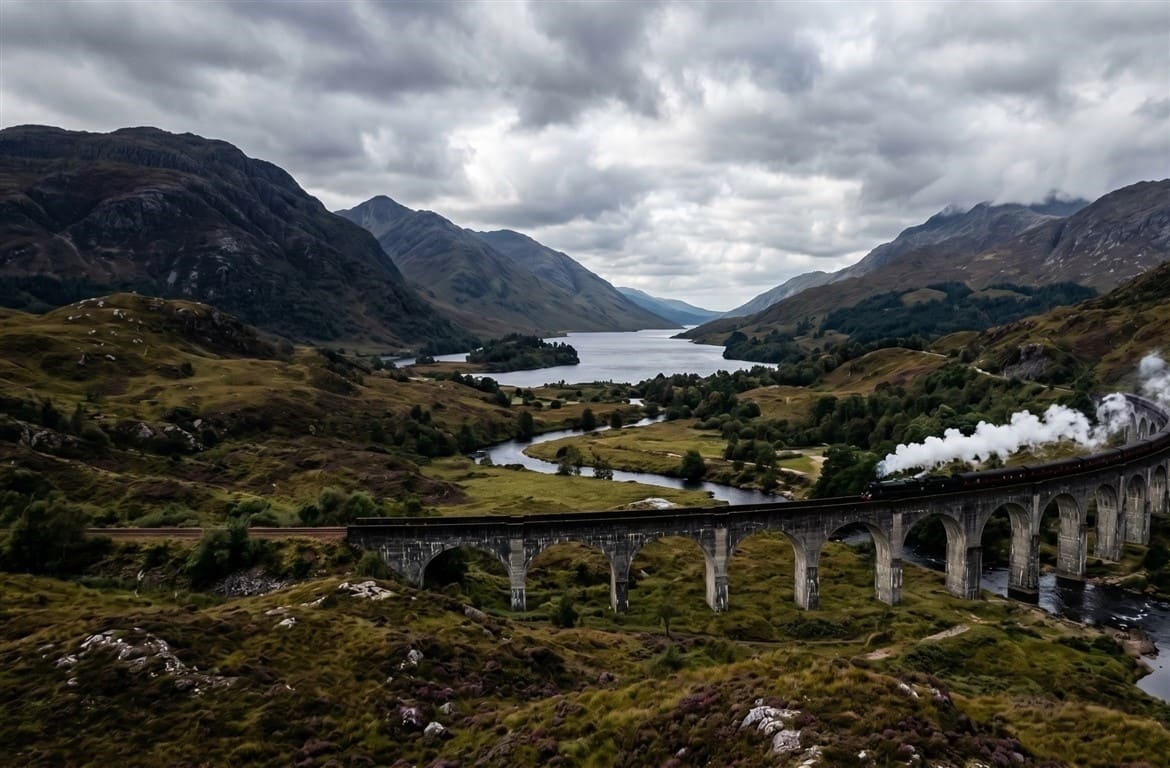
The Highlands, truly, are the emotional heart of Hogwarts’ geography. Glen Coe and the entire surrounding region helped forge that unforgettable feeling of a school hidden away in a truly wild, untamed place. The area around Fort William, Glenfinnan, and Lochaber is a goldmine for fans, because so many visual threads converge right there: the train, the iconic viaduct, those mysterious lochs, dramatic mountain backdrops, and that pervasive, beautiful loneliness the films returned to again and again.
The Great Lake Locations
The Great Lake wasn’t just one tidy spot. Several Scottish lochs contributed their incredible views and atmospheric vibes, including Loch Shiel, Loch Eilt, and Loch Morar. Loch Shiel is the big star for many travelers, sitting right next to Glenfinnan and appearing so prominently in the visual landscape around the train and viaduct. Loch Eilt, on the other hand, is connected to later-film landscape scenes and carries a much quieter, almost melancholic tone. Seriously, bring waterproof clothing. Not just “sort of” handles rain clothing. *Real* waterproof stuff.
The Hogwarts Bridge
That covered wooden bridge at Hogwarts? That was actually a film set, built specifically for the movies, not some ancient medieval bridge you can just stumble upon in the hills. A version of it appears as part of the studio experience, and the stunning Highland landscapes just supplied the perfect mood around it. This is one of those details where the films blur the line between constructed set and real scenery so seamlessly that the memory feels like a totally mapped, tangible place.
Hagrid’s Hut Filming Area
Hagrid’s hut was, sadly, built just for filming. Those lovely landscape shots associated with it were filmed in areas around Glen Coe, including Clachaig Gully. So, no, the hut itself isn’t just sitting there waiting for visitors in 2026. The scenery is the real draw now: those incredibly steep slopes, rugged ground, and that wonderful feeling that a half-giant could be out there chopping wood, just slightly out of sight.
The Forbidden Forest Locations
The Forbidden Forest came alive through a cool mix of genuine woodland, intensive studio work, and carefully constructed sets. Black Park in Buckinghamshire often gets linked to those forest filming sessions, while the studio tour offers visitors a controlled, immersive version of that darker, woodland world. Real forests, though? They’re messy. Mud, tangled roots, dogs on walks, families, midges. The screen version, naturally, just edits all that into pure menace.
Hogwarts Train and Arrival Locations
The journey to Hogwarts? It’s almost as vital as the castle itself. For countless fans, school truly begins at King’s Cross, then moves north via that majestic steam train, finally sweeping over the Glenfinnan Viaduct with mountains majestically rising behind it. An entire travel industry has sprung up around that very sequence. And yes, for 2026, you *really* need to double-check the train situation carefully, because service dates have been a bit up in the air lately.
King’s Cross Station and Platform 9¾
London King’s Cross is, hands down, the easiest Harry Potter stop in Britain. Platform 9¾ is clearly marked right inside the station, complete with that famous luggage trolley photo op and a nearby gift shop. You don’t even need a train ticket to pose for your picture. Lines can get pretty long, and remember, it’s still a busy, working transport hub, so arriving early or late definitely makes for a less chaotic experience.
The actual filming used King’s Cross for the *idea* of it, and then other platform arrangements for the actual screen illusion. But honestly? Travelers mostly don’t care once they spot that trolley. Fair enough, right? It’s touristy, sure, but in the most harmless, cheerful way possible.
The Jacobite Steam Train
The Jacobite steam train, running between Fort William and Mallaig, rocketed to global fame thanks to its unmistakable connection to the Hogwarts Express. Its route carves through wild Highland country, skirts shimmering lochs, and finally reaches the coast at Mallaig. For 2026, public travelers really *must* check the operator’s current announcements before booking any hotels around the ride; the season start has been delayed, and official dates are still listed as TBC.
Even if the steam departure isn’t confirmed, Fort William and Glenfinnan still offer incredible value for a Hogwarts-themed trip. The railway line, the viaduct, the monument, and Loch Shiel aren’t going anywhere just because a timetable is a bit messy. Still, anyone selling this as a guaranteed train ride without checking the current operating status is simply being careless.
Glenfinnan Viaduct
Glenfinnan Viaduct. This is *the* shot. Twenty-one incredible arches, gracefully curving over the valley, with Loch Shiel shimmering nearby and majestic mountains rising in the background. It features prominently in the Harry Potter films as the Hogwarts Express route, and that view has become one of Scotland’s most instantly recognizable film-location images. It’s iconic.
The visitor area can get seriously packed when a train is due. Paths can be muddy, parking fills up fast, and please, respect the drone rules. The smart move here? Treat Glenfinnan as a proper landscape visit, not just a frantic five-minute train chase. Walk to the viewpoint, explore the monument area, gaze out over Loch Shiel, take a deep breath. This place deserves more than just a rushed selfie.
Studio-Built Hogwarts Locations
Real locations brought age to Hogwarts. Studio work gave it absolute control. The Warner Bros. Studio Tour London, just outside Watford, is where visitors can immerse themselves in original sets, props, costumes, creature designs, and all the incredible technical craft that brought the films to life. For anyone with just one day in London and a serious Potter obsession, this is, without a doubt, the single most impactful stop.
Warner Bros. Studio Tour London
Despite the name, the studio tour isn’t smack in central London. It’s located in Leavesden, north-west of the city, with shuttle connections readily available from Watford Junction. Tickets are timed entry and you absolutely *must* book them well in advance. For 2026, the tour calendar often features seasonal highlights like Dark Arts, Hogwarts in the Snow, and other limited-time runs, so your choice of date can totally change the experience.
The Great Hall Set
The Great Hall set stands as one of the studio’s true anchor moments. This isn’t just an inspiration; this is *the* film hall. The authentic stone floor, those incredibly long tables, the teacher’s area, costumes, house details, and all that intricate production design—it’s all right there in front of you, no camera tricks needed. It actually feels a little smaller than it appears on screen, and somehow, that makes it even *more* impressive. Film makes rooms expand. Craft makes them believable.
Hogwarts Castle Model
The Hogwarts castle model is the closest you’ll ever get to seeing the complete, on-screen castle. It was built at an enormous scale and used for all those exterior shots, with digital enhancements added throughout the series as technology advanced. Seeing it in person can be surprisingly emotional. People tend to go quiet. Then they snap far too many photos. Totally understandable, really.
Clock Tower Courtyard
The Clock Tower Courtyard belongs to the later, more developed visual language of Hogwarts. It adds a broader, more layered architectural feel to the school than what you saw in the early films, where real castle and cathedral locations did most of the mood-building. At the studio, you can really read it as part of that production shift: Hogwarts grew darker, larger, and much more battle-scarred.
Chamber of Secrets
The Chamber of Secrets, as a concept, exists purely through incredible film design: serpentine, intensely theatrical, and looking perpetually damp even when perfectly dry. The studio tour showcases pieces and design work connected to that eerie world, giving visitors a much better understanding of just how much physical craftsmanship went into scenes people now remember as pure fantasy.
Hogwarts Owlery
The owlery was another brilliant blend of built environment and cinematic atmosphere. At the studio, you’ll find owl-related props and fascinating creature-making details that really help explain how animal work, puppetry, design, and clever editing combined to create the everyday texture of wizarding school life. Honestly, those owls do a lot of heavy lifting in the films. Small fact. Huge mood.
Other Harry Potter Locations Near Hogwarts-Related Sites
A Hogwarts-focused route can very easily snowball into a much broader Harry Potter UK trip. That’s precisely where planning can get ridiculously bloated, super fast. London offers Diagon Alley content and the studio. Oxford brings colleges and libraries. Scotland throws in train lore, writing history, and breathtaking landscapes. My advice? Keep your route tight unless you genuinely have a lot of time.
Diagon Alley Filming Locations in London
Leadenhall Market is very often linked with those early Diagon Alley and Leaky Cauldron exterior shots. Borough Market also has connections to later films. Neither is Hogwarts, of course, but both are easy London add-ons, and they both sit near places travelers are already likely to visit. The key here is not to over-romanticize them. They’re bustling, working city spaces, wonderfully busy and commercial. And that, surprisingly, can be part of their charm, if you just let it.
Edinburgh Locations Connected to Harry Potter
Edinburgh wasn’t actually used as Hogwarts Castle in the same practical, filming-location way as, say, Alnwick or Gloucester. But it remains absolutely central to any Harry Potter travel experience because of its rich writing history and the city’s naturally gothic, mystical mood. Victoria Street is frequently associated by fans with Diagon Alley inspiration, Greyfriars Kirkyard draws in name-spotters, and The Elephant House has long been part of the city’s Potter storytelling, though its access and conditions have definitely shifted over time.
Edinburgh pairs brilliantly with a Highlands leg. Try to stay two nights if your budget allows. Just one night, and the city quickly becomes a blur of endless stairs and souvenir shops.
How to Visit Hogwarts Filming Locations
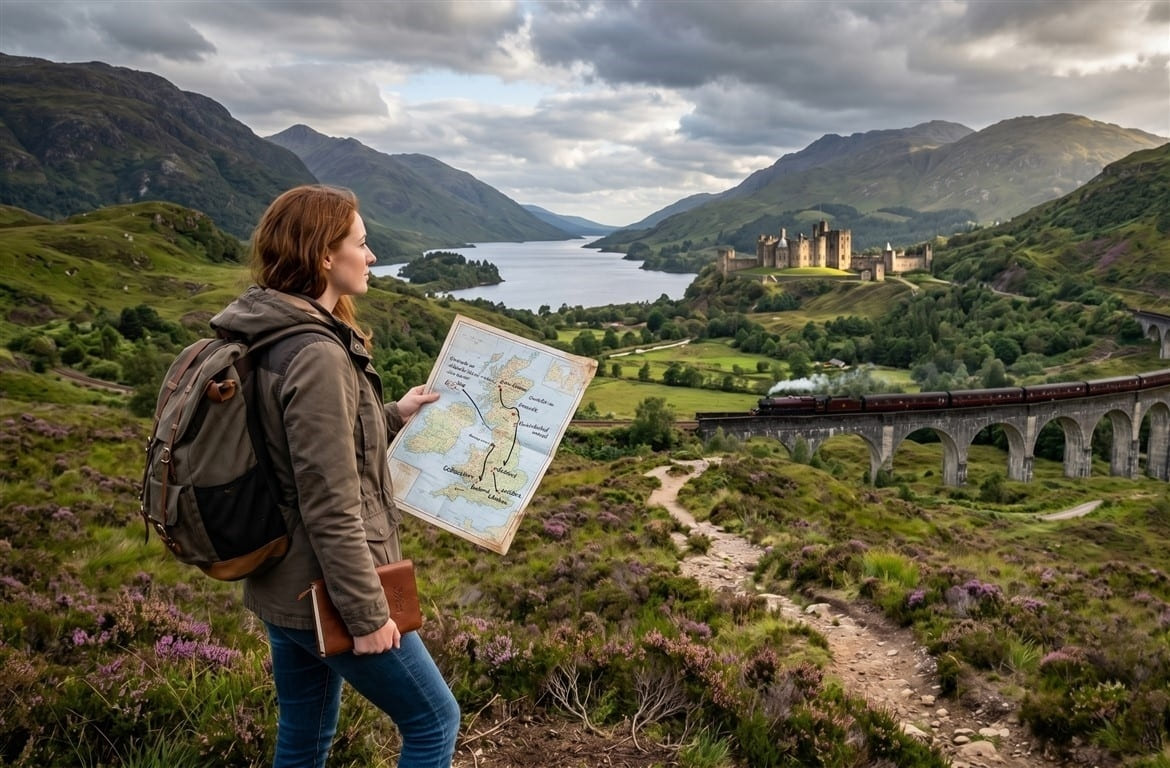
A truly great Hogwarts trip isn’t just about “pinning everything on a map and suffering through it.” Distances in the UK can be deceptively tricky for visitors. London to Oxford? Easy peasy. London to Alnwick? Not a casual jaunt. Fort William? That’s a proper journey. Gloucester is way out west. Durham is way up north. The absolute best route really hinges on just how much castle, studio magic, and raw landscape you’re hoping to experience.
Best Locations for First-Time Visitors
-
Warner Bros. Studio Tour London: Pick this one if you want the most complete Harry Potter experience packed into a single day. You’ll get the Great Hall set, real props, costumes, Diagon Alley, Forbidden Forest elements, Platform 9¾ displays, and that incredible Hogwarts castle model. It’s organized, polished, and incredibly satisfying for fans who really appreciate the art of filmmaking.
-
Oxford: Choose Oxford primarily for its unmatched atmosphere. Christ Church, New College, and the Bodleian Library can all fit into one compact city visit, though you’ll need to watch out for varying ticket rules and opening times. It feels wonderfully scholarly, not at all like a theme park.
-
Alnwick Castle: Go for Alnwick if you crave that classic castle exterior and those nostalgic flying lesson memories. This is an ideal stop for travelers making their way through northern England or building a route that extends into Scotland.
-
Glenfinnan and Fort William: Opt for the Highlands if you’re chasing the train-and-landscape fantasy. Just remember to meticulously check the Jacobite’s operating status *before* making the steam train the absolute core of your trip.
Which Sites Are Open to the Public?
Many Hogwarts-related sites welcome visitors, but they don’t all operate the same way. Alnwick Castle opens seasonally and might have timed entry or activity-specific arrangements. Oxford colleges and libraries have access rules shaped by active university life. Cathedrals might temporarily close certain areas for worship, events, filming, maintenance, or private services. And the Warner Bros. Studio Tour London uses timed tickets, which can absolutely sell out during school holidays.
The smartest planning habit? Book the studio tour first, then build the rest of your itinerary around transport logistics. For cathedral and college sites, it’s also a good idea to check same-week notices. Old buildings don’t behave like permanent attractions, and frankly, that’s part of their charm and dignity.
Can You Visit the Exact Filming Spots?
Yes, absolutely! Many exact filming spots are totally open for you to visit. Alnwick’s courtyards, Gloucester’s cloisters, Durham’s cloisters, Oxford’s grand interiors, rooms at Lacock Abbey, the King’s Cross photo area, and various Glenfinnan viewpoints are all accessible in visitor-friendly ways, provided you visit at the right times. Some specific rooms might require guided access, and sometimes, those exact film angles are impossible to replicate because cameras were placed where visitors can’t stand. Plus, remember, some scenes used actual sets, not public buildings.
Honestly? Don’t spend your whole day chasing perfect frame matches. It gets tedious fast. It’s far better to simply soak in the atmosphere of the place and let the recognition hit you naturally: a familiar turn in a corridor, a specific staircase, a patch of grass, or that lake view suddenly doing exactly what your memory wanted it to do.
Best Route for a Hogwarts-Inspired UK Trip
For a really balanced 2026 route, kick things off in London for King’s Cross and the studio. Then head to Oxford for Christ Church, New College, and the Bodleian. From there, you could swing west to Gloucester or Wiltshire for those cathedral and abbey locations, or venture north to Durham and Alnwick for a heavier dose of castle-and-cathedral vibes. If time truly allows, wrap it up in Scotland with Edinburgh, Fort William, Glenfinnan, and the breathtaking Highland landscapes.
-
Five-day version: London studio day, King’s Cross and other London film corners, an Oxford day trip, Gloucester or Lacock, then a final buffer day for travel hiccups or a second London museum. It’s compact, sensible, and deeply satisfying.
-
Ten-day version: London, Oxford, Gloucester, Durham, Alnwick, Edinburgh, Fort William, Glenfinnan, and the West Highlands. This route truly gives you the full spectrum—castle, corridors, library, train route, and stunning landscapes—without turning every single morning into a mad dash.
FAQs About Hogwarts Castle in Real Life
Which Castle Was Used as Hogwarts?
Alnwick Castle is the real castle most prominently linked with Hogwarts exterior scenes, particularly those iconic flying lesson sequences. But remember, the complete Hogwarts you see on screen wasn’t just one castle; it was a clever blend of Alnwick, various Oxford sites, cathedrals, abbeys, studio sets, detailed models, and brilliant visual effects.
Can You Visit the Real Hogwarts Castle?
You can definitely visit many of the real locations that contributed to the creation of Hogwarts, but there isn’t a single, actual Hogwarts Castle you can walk into. The closest you’ll get to seeing the complete on-screen version is the Hogwarts castle model at Warner Bros. Studio Tour London. For a genuine, historical castle experience with clear connections, Alnwick Castle is your best bet.
Was Hogwarts Filmed in Scotland or England?
Both! Many of the school’s interiors and castle-like spaces were filmed right here in England, including places like Alnwick, Oxford, Durham, Gloucester, and Lacock. But Scotland provided that incredible, sweeping landscape atmosphere, featuring those unforgettable Highland views and the famous Glenfinnan Viaduct route, indelibly linked with the Hogwarts Express.
What Is the Best Place to See Hogwarts in Real Life?
For a single, impactful stop, the Warner Bros. Studio Tour London is the strongest choice because it houses original sets and that breathtaking castle model. If you’re after a real historic building, Alnwick Castle offers the clearest, most tangible castle connection. For sheer atmosphere, Oxford and Gloucester are simply unbeatable. But for the ultimate emotional punch? Head to Glenfinnan on a gray, moody day, watch the clouds gracefully drift across the hills, and just let the place embrace its wild, untamed magic.
0 Comment