



Travel Rules for Canadian Permanent Residents
Holding permanent resident status in Canada feels convenient, but keep in mind that your PR card isn’t a replacement for a passport. Think of the card primarily as your ticket back home to Canada. While some countries offer special entry perks for residents of Canada, your travel experience is still dictated by the passport you hold. Before you finalize any booking, take a moment to cross-reference three things: your citizenship, your Canadian PR card, and the specific entry requirements for your destination—don’t forget to account for any transit hubs along the way.
Many people search for a universal list of “visa-free countries for Canadian PR holders,” but the reality is much more nuanced. Entry policies are rarely one-size-fits-all. For example, Mexico often grants simple entry to Canadian residents for short stays, whereas the U.S. remains strictly focused on your citizenship status. Even within the Schengen Area, border agents look at your passport rather than your Canadian residency. Spotting these distinctions early can save you from a stressful, last-minute dash for a visa appointment.
What PR Entry Privileges Really Mean
Traveling without a visa simply means you don’t have to secure permission from an embassy months in advance. However, the final say always rests with the immigration officer at the airport, border crossing, or harbor. They might grill you about your hotel reservations, your return plans, or your bank balance. Even if you hold a passport that generally enjoys visa-free access, you can still be turned away if your paperwork looks shaky or your trip purpose seems questionable.
Deciphering Travel Entry Terms
It is easy to mix up terminology, but the differences matter at the check-in desk. Visa-free travel is straightforward: just bring your passport and relevant documents. A “visa on arrival” implies you will pay a fee and fill out paperwork once you step off the plane. An eTA (electronic travel authorization) is something you must secure online before you even head to the airport. Airlines will check for this approval before letting you onto the plane.
| Entry type | What it means | What to check before booking |
|---|---|---|
| Visa-free | No visitor visa is needed before arrival | Passport nationality, stay limit, onward ticket |
| Visa on arrival | Visa is issued at the border or airport | Fee, payment method, eligible passports |
| eTA | Online travel approval before departure | Approval time, passport match, validity |
| Visitor visa | Visa must be obtained before travel | Appointment timing, documents, processing time |
Why Your Citizenship Still Leads
Your PR card isn’t a nationality document. If you are a citizen of Nigeria, India, Brazil, the Philippines, Ukraine, or anywhere else, you are still traveling on that country’s passport. Airlines are extremely vigilant about this because they face heavy fines for transporting passengers who arrive without proper authorization. Border authorities use your passport to determine exactly how long you can stay and whether you are eligible for entry.
That said, your PR card can open doors in specific regions. Mexico, for example, allows Canadian permanent residents to skip the visitor visa process for short tourism trips if they present their PR card alongside their passport. South Korea occasionally offers transit flexibility, though this doesn’t apply to every nationality. For places like Singapore or Hong Kong, your PR card is a helpful supporting document, but it isn’t the primary factor for entry.
Can PR Holders Travel Without a Visa?
You can certainly visit many places without a visa, but you cannot rely solely on your Canadian PR status to get you there. Some nations view Canadian residency as a sign of stability, while others treat you like any other visitor carrying your specific passport. Avoid booking non-refundable flights until you have verified if your PR status actually helps with entry requirements.
The Value of Your PR Card
Your PR card acts as a safeguard. It confirms that you have a legal home to return to, which airlines love to see, and it acts as an exemption key for specific entry rules in certain countries. Always ensure the card is valid for your entire trip; a card that expires while you are away can cause serious boarding issues when you try to fly back to Canada.
Organize your documents in one dedicated travel folder. You will be surprised how often you have to produce these papers throughout a journey. Have your passport, PR card, and accommodation details together; it makes navigating busy airports or lengthy customs queues much more manageable.
- Valid passport with enough blank pages and validity beyond the trip dates.
- Valid Canadian PR card, preferably not close to expiry.
- Return or onward ticket matching the allowed visitor stay.
- Hotel booking, rental confirmation, or invitation letter from a host.
- Proof of funds, such as recent bank statements or credit cards.
- Travel insurance covering medical care outside Canada.
Limits of Permanent Residency
Your card is not a universal pass. It won’t replace a passport, a work permit, a study visa, or a transit permit. It also doesn’t give you the right to work or live permanently in other countries. Remember that as a tourist, your activity is limited. If you plan to accept local employment or enroll in a long-term school program, you need to go through the proper legal channels for that destination.
Top Destinations for Canadian Residents
The smartest destinations for Canadian PR holders are those with clear, well-documented entry policies. You want routes that are commonly served by Canadian airlines and offer easy online confirmation. Whether you are planning a relaxing beach getaway or a quick city tour, the level of preparation will vary depending on your destination’s rules.
Mexico Travel Tips
Mexico is widely considered a top choice for Canadian PR holders. You generally don’t need a visitor visa for business or tourism stays lasting up to 180 days. You just need to carry your valid passport and your PR card. Remember, this is strictly for tourism; don’t attempt to start a business or work for pay without the correct permits.
Flights to spots like Cancún, Mexico City, Puerto Vallarta, and Los Cabos are frequent from most Canadian hubs. Once you land, you have plenty of reliable transport options, from airport shuttles and ride-hailing apps to licensed taxis. Whether you want to lounge on a beach in the Riviera Maya or explore the deep culture of Mexico City, the entry process is usually smooth.
Visiting Costa Rica
Costa Rica is a favorite for nature lovers and families, but its entry rules are heavily tied to your citizenship and your existing visa history. Your Canadian PR card is a helpful supporting document, but it isn’t an automatic entry pass for every passport holder. Check their official embassy requirements before you book a flight.
Most travelers fly into either San José or Liberia. Liberia is your best bet if you are heading to Guanacaste or the beach towns of Tamarindo. San José is the better starting point for the central valley and rainforest areas. While mountain roads can be slow, transport is well-developed, with shared shuttles and private transfers available to help you get around.
The Caribbean Experience
The Caribbean isn’t a single travel block; every island, from Barbados to the Dominican Republic, sets its own rules. While your PR card may give airline staff confidence that you are headed back to Canada, your passport nationality remains the deciding factor for immigration. Don’t assume that because your friend entered a country easily, your experience will be identical.
Popular destinations like the Dominican Republic, Jamaica, and Aruba have the most robust air links from Canada. These islands are built for tourism, so getting around from the airport to your resort is generally quite easy. Just remember: even on a pre-packaged vacation, you are still responsible for meeting the immigration requirements linked to your own passport.
United Kingdom
The UK is strict about its nationality-based entry system. Your Canadian PR card is helpful for your return flight but doesn’t grant you visitor rights in the UK. Depending on your nationality, you might need a visa or an Electronic Travel Authorisation (ETA). If you are passing through London, clarify if you need a specific transit visa.
London is extremely accessible from Canada with a wide range of transit links. Once you land at Heathrow, you have the Elizabeth line, the Tube, and express trains that take you directly into the heart of the city. Gatwick is equally well-connected. If your itinerary involves a tight connection between airports, be extra careful with your transit documentation.
South Korea
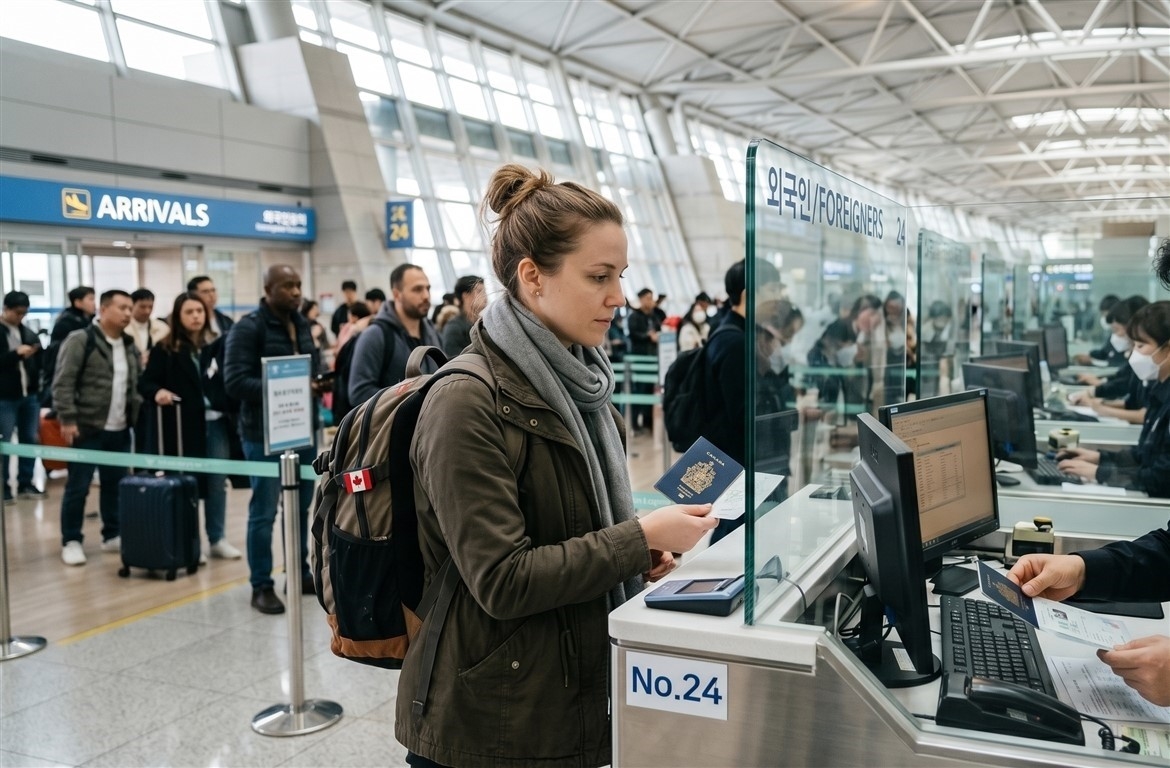
South Korea employs a specific system of K-ETA rules and transit exemptions. Canadian citizens have enjoyed some flexibility recently, but as a permanent resident, you are judged by your passport nationality unless you qualify for a specific transit waiver. Always confirm your status on the official Korean visa portal before buying your ticket.
Incheon International Airport is very efficient. You can easily reach Seoul via the AREX train or airport limousines, which are great if you have heavy luggage. If you are heading further afield to Busan or Jeju, the high-speed rail and domestic flight networks are incredibly reliable and easy to navigate.
Singapore Visits
Singapore is a fantastic spot for a stopover, but it is very strict about nationality-based entry. Your Canadian PR card does not override visa requirements if your passport is on their “visa-required” list. Always verify your status and ensure you fill out their digital arrival card before you land.
Changi Airport is world-renowned for its ease of use. You can get into the city using the MRT or by taxi in no time. Because the city is compact, it is a perfect place for a short 3-4 day trip, allowing you to easily hit spots like Chinatown, Marina Bay, and Little India without much travel stress.
Hong Kong Entry
Hong Kong also follows a nationality-based entry system. Some passports get visa-free entry, while others require a formal permit. Your PR card is not the document that grants you access. Because visa-free periods fluctuate, verify exactly how many days you are permitted to stay based on your specific passport.
Getting from the airport into the city is simple thanks to the Airport Express train and the extensive bus network. Hong Kong is very easy to navigate by public transit, meaning you can base yourself in a district like Tsim Sha Tsui or Causeway Bay and reach most tourist sites within minutes.
Portugal and Schengen
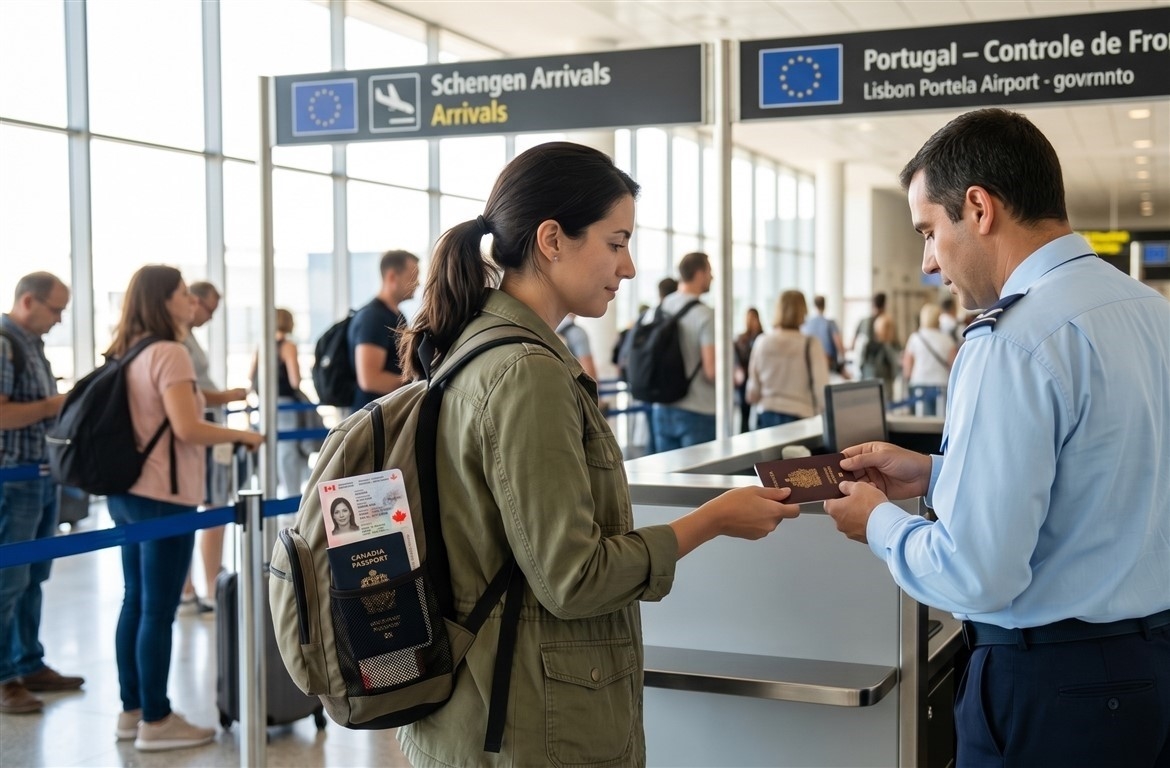
Portugal is part of the Schengen zone, where tourist stays are capped at 90 days out of every 180. Your Canadian PR card does not give you special Schengen access; your passport does. Use your PR card to demonstrate your right to return to Canada, but focus on your passport’s visa requirements for the Schengen area.
Both Lisbon and Porto are excellent entry points. Their airports are well-linked to city centers via metro and taxi services. If you plan to hop between different countries, like Spain or France, remember that the 90-day limit applies to the whole Schengen zone, so track your days carefully.
Simplified Planning Table
Use this table to map out your initial travel thoughts. This is a planning aid, not legal advice. Entry rules can shift, so always verify your requirements through official government sources before you commit to non-refundable costs.
| Destination | Entry pattern for Canadian PRs | Main documents to carry |
|---|---|---|
| Mexico | PR card can support visa-free visitor entry | Passport, PR card, return ticket, hotel proof |
| Costa Rica | Check passport group and residence-based rules | Passport, PR card, funds, accommodation |
| Caribbean islands | Rules differ by island and passport | Passport, PR card, resort or hotel booking |
| United Kingdom | Passport-based visa or ETA rules | Passport, PR card, ETA or visa if required |
| South Korea | Passport-based entry plus K-ETA or visa rules | Passport, PR card, K-ETA or visa if required |
| Singapore | Passport-based visa list | Passport, PR card, arrival card, onward ticket |
| Hong Kong | Passport-based visa-free stay or entry permit | Passport, PR card, booking, onward ticket |
| Portugal and Schengen | Passport decides visa-free status | Passport, PR card, Schengen visa if required |
Essential Documents for PR Travelers
Most travel issues happen at the airline counter, not at the destination itself. If your paperwork is lacking, the airline may be forced to deny you boarding because they are responsible for your return if you are refused entry. Double-check your status, your documents, and your ticket dates well in advance.
Your Passport
Check the validity of your passport carefully. Many countries require at least six months of validity beyond your planned return date. Ensure the name on your passport matches your tickets exactly to avoid any headaches at security.
Keeping Your PR Card Active
You need a valid PR card to return to Canada by commercial transport. If your card expires while you are traveling, you may need a Permanent Resident Travel Document, which can be a slow process. Never leave your PR card renewal until the last minute—it creates unnecessary stress for your return leg.
Proof of Funds and Housing
Border officers occasionally ask to see evidence of how you will support yourself. Having your hotel confirmations and bank statements handy can make these interactions much smoother. If you are traveling with family, ensure you have the necessary documentation for your children, particularly if one parent is traveling solo.
Return or Onward Tickets
A return ticket is a standard expectation. It proves that you intend to leave the destination. If you show up with only a one-way ticket, don’t be surprised if the airline refuses to let you board. Always have a clear exit plan.
Confirming Entry Rules Before Booking
Start your research with the official immigration website of your destination country. Don’t rely on third-party forums. Once you have a clear understanding of the requirements for your specific passport, check with the airline. Finally, consider if your transit route requires any additional permits.
Government Portals
Always go to the source. Official embassy or consulate pages are the only places that provide accurate, up-to-date visa policies. Save a copy of the requirements as a PDF. If an airline agent questions your status, showing them the official document can save your trip.
Verify With Your Airline
Airlines have their own internal databases regarding documentation requirements. If you have a complicated trip, call them directly. If your schedule changes, verify the rules again—you might be surprised by how a simple change in a layover city can introduce new transit requirements.
Watch Out for Transit Traps
Transit visas are a common pitfall. Flying through the U.S. is not automatically “visa-free” for all Canadian permanent residents. Even if you aren’t leaving the airport, you might still need a transit visa. Check every single stop on your itinerary to be safe.
Final Travel Precautions
A successful trip is about more than just getting to your destination. Planning for the “what ifs”—a lost bag, an expired document, or a transit delay—is what separates experienced travelers from the rest. Keep your documents safe and always have a contingency plan for your return to Canada.
Managing PR Status
You need to meet the 730-day residency obligation over a five-year period to maintain your status. While you don’t need to be in Canada every day, long absences can add up. Keep a travel log so you aren’t guessing your status when you go to renew your card.
Residency Obligations

Don’t assume you can work abroad while on a tourist visa. If you do, you risk your visitor status and future entry into that country. Stick to the letter of your visitor permit to keep your travel record clean.
Travel Insurance
Provincial health plans won’t cover much once you step outside Canada. Buy private travel insurance that is tailored to your health history and the specific activities you plan on doing, like snorkeling or hiking. It’s an inexpensive safety net for an otherwise expensive trip.
PR Status vs. Citizenship
There is a massive difference between being a permanent resident and being a citizen. Being a resident allows you to live in Canada, but your passport is still your primary document for international travel. Citizenship, on the other hand, grants you a Canadian passport, which offers significantly more travel freedom and simplified entry processes in many countries.
Travel Freedom Factors
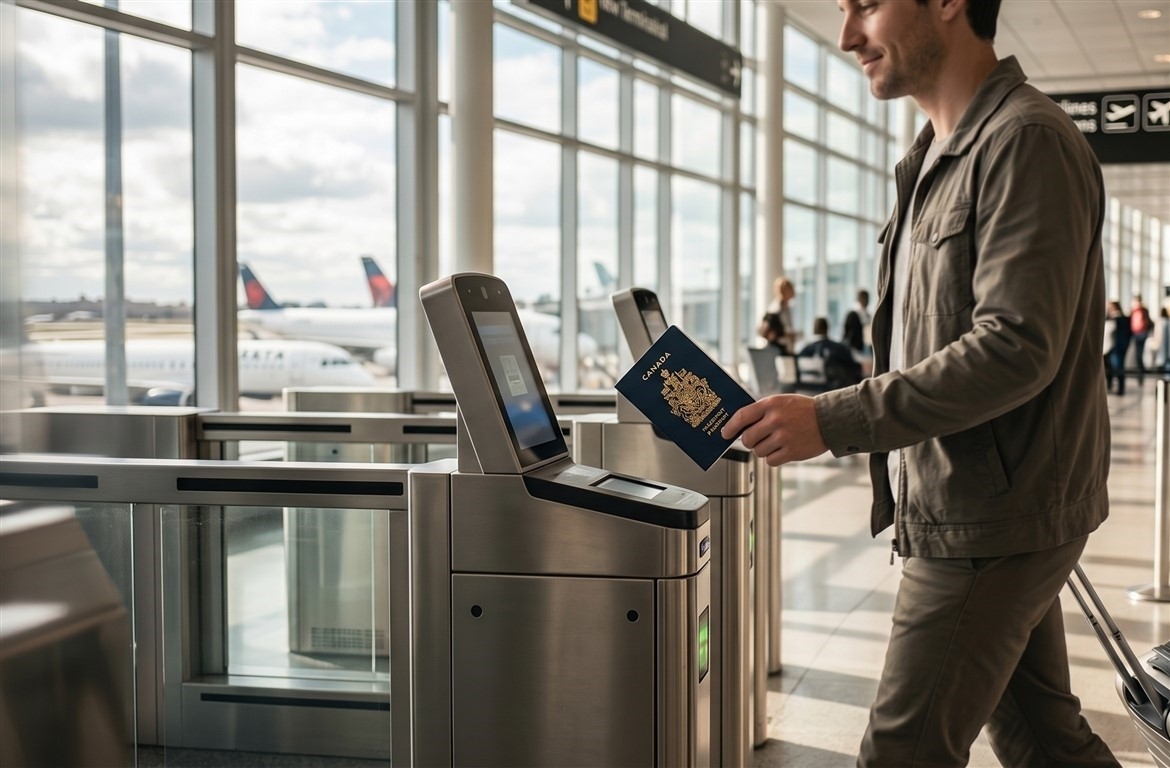
Having a Canadian passport is the gold standard for travel. It allows you to skip many visa hurdles. As a PR holder, you can still travel globally, but you must accept that you have a higher administrative burden. You will need to check more documents and potentially apply for more visas.
Keeping Status Secure
Your PR status is a privilege that depends on meeting your residency obligations. If you spend too much time abroad, you could face trouble. Conversely, citizens have an unconditional right to enter Canada. The more time you spend living outside Canada, the more closely you need to track your status.
Passport Benefits
Simplicity is the biggest gain of a Canadian passport. Airline check-in is almost always faster. With a foreign passport, you are performing a complex dance of showing a valid passport, a PR card, and potentially an eTA or visa. The fewer steps you have at the check-in counter, the better.
Best Vacation Ideas
The best trip is the one where your documents are in order and you aren’t worried about being turned away at the gate. If your PR card is nearing expiration, prioritize a direct, shorter trip. If your passport requires many visas, choose a destination with an easy online application process.
Relaxing Beach Trips
Mexico remains the easiest beach getaway for many residents because of the straightforward PR-friendly entry rules. It’s a low-stress, high-reward option. If you explore other islands, treat each one as a separate planning project.
City Getaways
If your documents are set, cities like London, Singapore, or Hong Kong are fantastic. They feature world-class public transport and plenty to do. Just remember that the key to a stress-free city break is choosing a hotel close to major transit hubs and booking your travel well in advance.
Family-Friendly Travel
Mexico, Costa Rica, and Singapore are great for families due to their welcoming atmosphere and established tourist infrastructure. When traveling with kids, ensure you have their identification documents, birth certificates, and, if necessary, a signed consent letter from any parent not present on the trip.
Keeping It Affordable
Don’t be fooled by cheap tickets that have complex transit requirements. If a flight is $200 cheaper but requires a transit visa that costs $150 and hours of paperwork, it isn’t a deal. Look for direct flights and off-season dates to get the best value without the headache.
Pro Tips for PR Travelers
A little bit of preparation goes a long way. Always verify your entry requirements before you look at hotel rooms. When your passport, PR card, and visa plans are in sync, you can focus on the real reason for your trip: enjoying yourself.
- Check visa rules by passport nationality, then look for Canadian PR exemptions.
- Avoid U.S. transit unless the traveler already has the required U.S. entry document.
- Book direct flights when a transit country creates document uncertainty.
- Keep printed and digital copies of the passport, PR card, insurance, and bookings.
- Renew the PR card before travel if the return date is close to the expiry date.
- Track days outside Canada to protect PR status and future citizenship plans.
- Check rules again one week before departure because entry policies can change.
Frequently Asked Questions
Can I travel on just my PR card?
No, your PR card is not a passport. You must always travel with a valid passport. The PR card is your proof of legal residence in Canada and helps with re-entry and specific visa exemptions.
Do I need a U.S. visa as a PR holder?
Permanent residency in Canada does not give you automatic entry to the U.S. You still need to meet the entry requirements tied to your passport nationality, which may include an ESTA or a visa.
What if I lose my card abroad?
If your card is lost, stolen, or expired while outside Canada, you will likely need a Permanent Resident Travel Document to re-enter Canada by air, sea, or rail. Apply for this at the nearest Canadian consulate.
Can I work abroad on a visitor permit?
No. Being a visitor means exactly that—you are there to visit. Working, studying, or engaging in local business without proper authorization is a violation of the host country’s immigration rules.
Do travel rules shift often?
Constantly. Security updates, new electronic authorization mandates, and diplomatic shifts happen all the time. Always check your entry requirements the moment you plan to travel and re-check them a few days before you depart.
0 Comment