


Passport-Free Travel Destinations for 2026
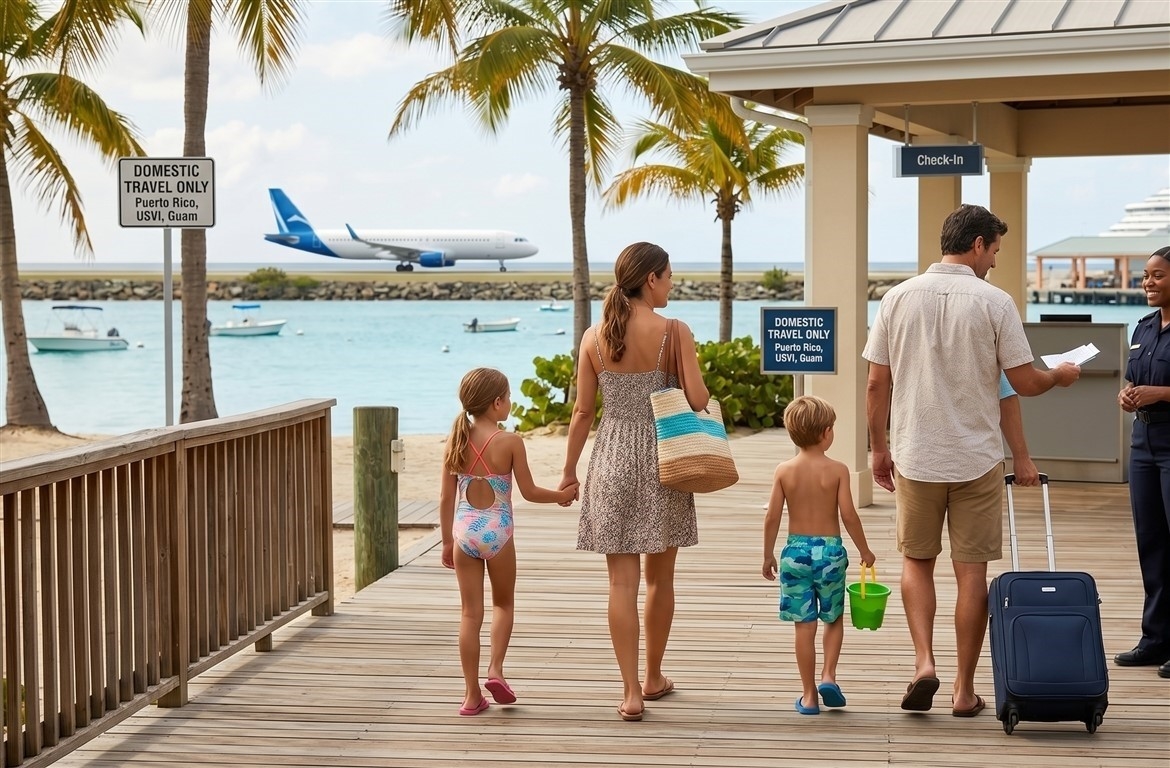
For U.S. citizens, plenty of fantastic vacation spots remain accessible in 2026, even without a passport book. Your best bets? Think the 50 states, of course, along with Puerto Rico, the U.S. Virgin Islands, Guam, and the Northern Mariana Islands. You’ll also find several closed-loop cruises fitting the bill—those delightful voyages starting and ending at the exact same U.S. port. Now, “passport-free” doesn’t mean “document-free.” Airlines, the TSA, cruise lines, and border officials will always want to verify who you are. And if you’re traveling by sea or land, you might even need to prove your citizenship.
The smartest way to plan any trip is to align your destination with your chosen mode of travel. For example, a direct flight from New York to San Juan? That’s typically treated just like domestic air travel for eligible U.S. citizens. But hop on a plane from Los Angeles to Mexico City, and you’re squarely in international territory – a passport book is non-negotiable there. What about a Caribbean cruise departing fromMiami that swings through the Bahamas and returns right back to Miami? You might be able to board with just a birth certificate and a government-issued photo ID. Just keep in mind that cruise lines often have their own, sometimes stricter, boarding rules. Always double-check!
Skipping the Passport: Is It Possible?
Quick answers for U.S. travelers
Absolutely, U.S. citizens can travel without a passport within the United States and to several U.S. territories. Puerto Rico and the U.S. Virgin Islands are probably the simplest island getaways, since flights from the mainland function much like any other domestic trip. Guam and the Northern Mariana Islands also offer U.S. territory options, but their location way out in the Pacific means flights are often longer and pricier. A little heads-up about American Samoa: travelers there might face requests for proof of citizenship and details about their return or onward travel, so a bit of extra planning helps.
When your passport isn’t needed

You won’t need your passport for U.S. domestic flights, and that includes those amazing journeys to Hawaii and Alaska. It’s also typically not required for many trips to Puerto Rico, the U.S. Virgin Islands, Guam, and the Northern Mariana Islands, assuming you’re a U.S. citizen flying directly from the United States. You might even skip the passport on certain closed-loop cruises, provided you have the necessary proof of citizenship and a photo ID. That word “may” is crucial here, because both cruise lines and destination governments can always ask for stronger identification.
Still need other IDs
For domestic flights, anyone 18 or older needs a REAL ID-compliant driver’s license or another ID accepted by the TSA. A passport book or even a passport card works perfectly well at TSA checkpoints, even if your specific trip doesn’t actually require a passport. However, for cruises or when crossing land or sea borders, a photo ID by itself just won’t cut it if they ask for proof of citizenship. Make sure you carry the exact document type required for your route; a photo on your phone definitely won’t be enough.
Alternative Travel Documents
REAL ID or state photo ID
Since REAL ID enforcement kicked in, your standard state driver’s license might not be sufficient for boarding a domestic flight. A REAL ID card features a star or another state-approved marking, and the TSA also accepts various federal IDs. If you don’t have a REAL ID, no worries! You can use a passport book, a passport card, a military ID, a DHS trusted traveler card, a permanent resident card, or another accepted document. Just a quick tip: before you pay for flights, always double-check that the name on your ID matches your airline ticket.
Birth certificate or citizenship proof
A certified birth certificate truly shines for closed-loop cruises and land or sea border travel. This document needs to be an original or a certified copy, not just a hospital souvenir certificate. Things like a Consular Report of Birth Abroad, a Certificate of Naturalization, or a Certificate of Citizenship might also work where proof of citizenship is accepted. Keep it flat, dry, and definitely separate from your checked luggage.
Passport card basics
The passport card is both cheaper and smaller than a full passport book, though its uses are a bit more limited. It works for land and sea entry from Canada, Mexico, Bermuda, and certain parts of the Caribbean. But a big “nope” for international air travel. It’s super handy for border towns, road trips, ferry routes, and cruises, but it won’t be your savior if you need to fly home from another country in an emergency.
Enhanced Driver’s License explained

An Enhanced Driver’s License (EDL) is your ticket for land and sea crossings from Canada, Mexico, Bermuda, and some Caribbean spots, but only if your state issues one. It’s important to know this isn’t the same as a REAL ID, although some states do issue cards that cover both functions. And, like the passport card, it’s not accepted for international flights. Folks living near the Canadian border often love it for road trips, but remember, it’s not offered in every state.
Documents for children
Even when adults handle all the booking, kids still need the correct paperwork. For domestic flights, the TSA doesn’t ask for ID from children under 18 traveling with an adult, but airlines might request proof of age. For closed-loop cruises and border travel by land or sea, children often need a birth certificate or some other proof of citizenship. If a child is traveling with just one parent, relatives, or a school group, they should also carry a signed consent letter whenever the trip crosses borders or includes cruise ports.
Great Passport-Free Travel Spots
Traveling without a passport really hits its stride when your destination feels miles away but keeps the paperwork simple. Think beaches, lush rainforests, towering volcanoes, charming historic towns, vast national parks, and vibrant cruise ports—all fit this category perfectly. Start by checking flight accessibility, then weigh factors like weather, budget, and how long you plan to stay. A quick three-night weekend needs a vastly different game plan than a two-week family adventure.
These destinations offer U.S. travelers an excellent blend of easy access, stunning scenery, and helpful travel services. Just remember, basic ID planning is still a must for each one. Airlines, cruise lines, hotels, car rental agencies, and tour operators might all ask for documents at various points during your trip.
- Puerto Rico: Fantastic for beautiful beaches, delicious food, rich history, and quick flights from the East Coast. San Juan is super easy to get into, with Old San Juan, Condado, Isla Verde, El Yunque rainforest, and convenient ferry access to Vieques and Culebra.
- U.S. Virgin Islands: Perfect for crystal-clear water, snorkeling, sailing, and family resort getaways. St. Thomas has the busiest airport, St. John is a favorite for its Virgin Islands National Park, and St. Croix offers a more laid-back pace.
- Guam: Ideal for experiencing Pacific island culture, relaxing on beaches, diving, and for travelers already close to the West Coast, Hawaii, Japan, or Korea. Antonio B. Won Pat International Airport serves the island.
- Northern Mariana Islands: Best for Saipan’s beaches, World War II history buffs, diving, and a tranquil island experience. Routes often connect via Guam or Asia, so pay close attention to layover details.
- American Samoa: A top pick for rugged coastlines, authentic Samoan culture, and incredible national park views. U.S. citizens absolutely need to carry proof of citizenship and review specific entry rules before booking anything.
- Alaska: Unbeatable for glaciers, spotting wildlife, epic road trips, fishing adventures, and cruise additions. Flights from the mainland are domestic, but watch out: cruise routes that include stops in Canada will require document checks.
- Hawaii: Simply amazing for beaches, volcanoes, hiking, surf towns, and resort vacations. Flights from the mainland are domestic, so a REAL ID or any accepted TSA ID is sufficient for adults.
- Key West, Florida: The ultimate choice for a quick, tropical-style escape without ever leaving the country. You can fly directly into Key West International Airport or enjoy the scenic drive down the Overseas Highway from Miami.
- Catalina Island, California: A wonderful option for a brief island break if you’re coming from Los Angeles or Orange County. Ferries depart regularly from mainland ports like Long Beach, San Pedro, Dana Point, and Newport Beach.
U.S. Territories You Can Visit
Puerto Rico passport info
Good news! U.S. citizens don’t need a passport for direct travel between the mainland United States and Puerto Rico. Adults flying there simply need a REAL ID-compliant license or another accepted TSA ID. San Juan is a fantastic starting point for first-timers; its airport is super close to beaches, hotels, restaurants, and historic Old San Juan. If you’re craving quieter beaches, think about adding Vieques or Culebra, but definitely plan those ferry and small-plane schedules well in advance.
U.S. Virgin Islands passport info
No passport needed for U.S. citizens arriving in the U.S. Virgin Islands from the mainland. Adult air travelers will still need a government-issued photo ID, though. St. Thomas makes a great hub for shopping, boat excursions, and ferry trips to St. John. St. Croix, on the other hand, is perfect for travelers who appreciate historic towns, diving, and a more relaxed pace.
Guam passport info
Guam is a U.S. territory, so U.S. citizens can absolutely travel there without a passport, provided your route doesn’t require passing through a foreign country. That routing detail is critical because a layover outside the United States could trigger international document rules. Always, always check your flight path carefully before booking, especially if you’re flying from a smaller airport. Guam is an excellent choice for diving, enjoying Chamorro food, beautiful beaches, and exploring Pacific military history.
Northern Mariana Islands policies
The Northern Mariana Islands—which include Saipan, Tinian, and Rota—are a U.S. commonwealth. U.S. citizens can visit without a passport on eligible routes, but those long-haul flight paths can sometimes be tricky. A passport is a really smart idea if your itinerary includes a connection through another country or if you might need emergency rerouting. Saipan serves as the main tourism hub, offering lovely beaches, memorial sites, and great dive spots right near town.
American Samoa’s special rules
American Samoa stands out as the passport-free option that demands the most attention to documents. U.S. citizens aren’t always treated the same way as they would be in Puerto Rico or the U.S. Virgin Islands for every step of entry. Travelers really should carry proof of citizenship, a valid photo ID, and details of their return or onward travel. Pago Pago is the main arrival point, and the reward is a truly wild, green, and peaceful island trip, complete with the stunning landscapes of the National Park of American Samoa.
Cruising Without a Passport?
What’s a closed-loop cruise?
A closed-loop cruise is straightforward: it starts and finishes at the same U.S. port. A classic example would be a Miami-to-Miami cruise visiting the Bahamas. Other major ports like Port Canaveral, Fort Lauderdale, Galveston, Tampa, New Orleans, Seattle, and Los Angeles also host routes that might qualify. The key is that the ship must return to the *exact same* U.S. port, not just any U.S. port.
Documents for closed-loop cruises
Many U.S. citizens on qualifying closed-loop cruises can board with a government-issued photo ID and proof of citizenship, like a certified birth certificate. Rules for children might vary by age and route. Honestly, a passport book remains the stronger document. It’s your best friend if you miss the ship, need a medical evacuation, or have to fly home from a foreign port. Cruise lines can absolutely refuse boarding if your documents don’t align with their policy, even if a government rule seems more flexible.
Popular cruise routes
Passport-free cruise planning is easiest with simple routes and major U.S. departure ports. Short Bahamas cruises from Miami or Port Canaveral are quite common. Western Caribbean sailings from Galveston or New Orleans might also fit the bill if they’re closed-loop and the cruise line accepts non-passport documents. Alaska cruises from Seattle can be a bit more complex because many itineraries include Canada, so carefully review the cruise line’s document page before booking.
Why a passport helps on cruises
Having a passport book simply gives travelers more wiggle room to solve unexpected problems. If a storm forces a route change, a traveler gets hospitalized abroad, or the ship departs before someone makes it back to port, trying to fly home without a passport can lead to serious delays. Families, in particular, should think long and hard before sailing with only birth certificates. While a passport-free cruise is perfectly legal on many routes, it’s not always the least stressful choice.
Visiting Canada or Mexico?
Travel by land rules
U.S. citizens crossing into Canada or Mexico by land need an approved Western Hemisphere Travel Initiative (WHTI) document. A passport book works perfectly, of course. A passport card or an Enhanced Driver’s License (EDL) can also be used for land crossings. Just know that a standard REAL ID license, by itself, isn’t enough for entering Canada or Mexico.
Travel by sea rules
Sea travel typically offers more options than air travel, but the route itself dictates the specific rules. A passport card can work for sea entry from Canada, Mexico, Bermuda, and certain parts of the Caribbean. Passengers on closed-loop cruises might be allowed to travel with a birth certificate and a government photo ID. For ferry routes and private boat travel, you should check separately, as ports and carriers might ask for specific documents.
Passport card vs. book
The passport book is universally accepted for international air, land, and sea travel. The passport card, on the other hand, is wallet-sized and limited to land and sea travel from approved Western Hemisphere destinations. While the card is easier to carry and costs less, you absolutely cannot use it to board an international flight. If you want one document to cover every single travel scenario, go for the book.
Enhanced Driver’s License rules
An Enhanced Driver’s License (EDL) is only valid if issued by a participating state and used on approved land or sea routes. It’s super handy for frequent border crossings by car or ferry. However, it absolutely does not replace a passport book for international flights. Before you rely on one, double-check that your card clearly says “Enhanced,” not just “REAL ID.”
Why international flights need passports
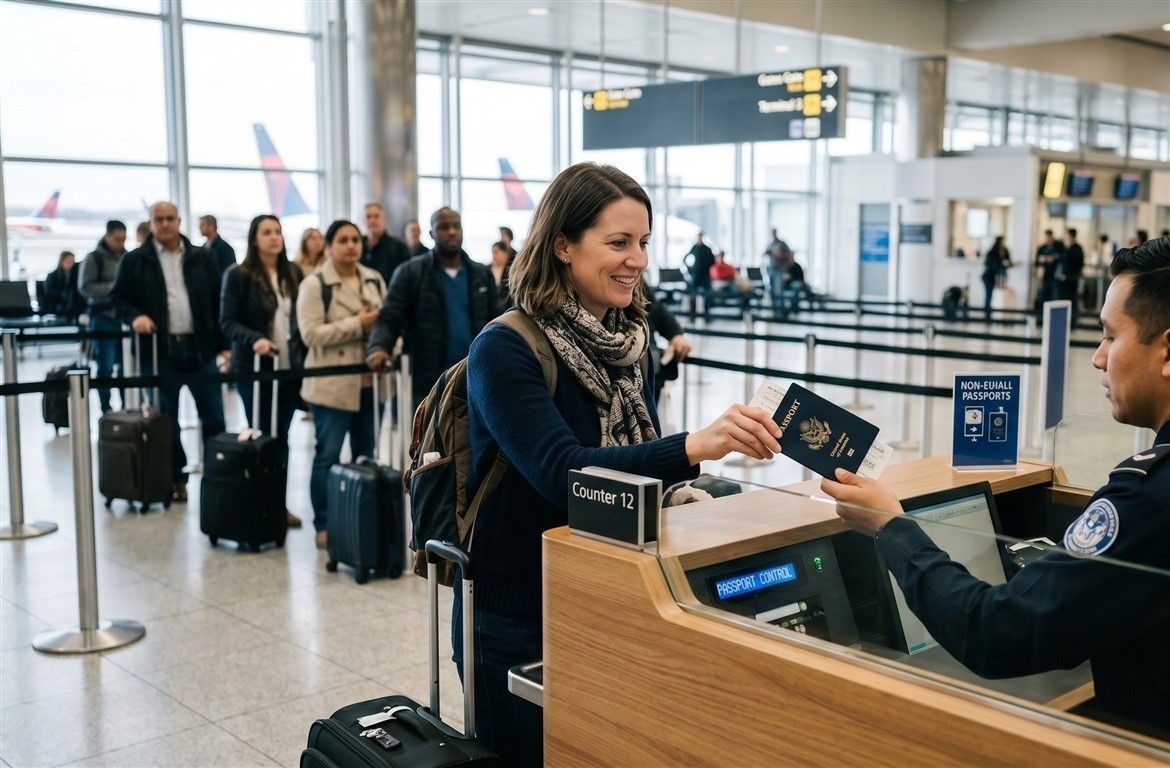
International flights are simply more stringent than land and sea routes. U.S. citizens, and that includes even infants and children, need a passport book for international air travel into or out of the United States. A passport card is not enough for a flight to Cancun, Toronto, Nassau, or any other foreign airport. When your trip involves a plane ride to another country, just assume you’ll need your passport book.
Top Destinations by Travel Style
The perfect passport-free trip really depends more on you, the traveler, than just looking at a map. A couple craving pristine beaches might fall in love with St. John, while a family with young children might find San Juan more practical due to easy access to flights, hotels, pharmacies, and restaurants. Students and groups often prioritize price, flight duration, and simple logistics. If your vacation days are limited, it’s probably best to steer clear of routes that demand multiple connections.
First, figure out your ideal travel style, then narrow down your destination by season and budget. Caribbean islands really shine for winter sun. Alaska comes alive when wildlife viewing, daylight hours, and cruise schedules are at their peak. Hawaii is a fantastic choice year-round, although prices and crowds do shift with school breaks and holidays.
- Best for beaches: Puerto Rico, St. John, St. Thomas, St. Croix, Hawaii, Guam, and Saipan.
- Best for families: Puerto Rico, Hawaii, U.S. Virgin Islands, Key West, and closed-loop Bahamas cruises.
- Best for nature: Alaska, Hawaii Volcanoes National Park, El Yunque, St. John, American Samoa, and Guam.
- Best for food and culture: San Juan, Ponce, St. Croix, Honolulu, Hilo, Key West, and Pago Pago.
- Best for quick weekends: Puerto Rico from the East Coast, Key West from Florida, Catalina Island from Southern California.
- Best for students: Puerto Rico, Alaska summer programs, Hawaii group trips, and closed-loop cruises with clear document rules.
Best Passport-Free Trips by Season
Summer adventures
Alaska is truly the star of summer travel. Long daylight hours, incredible wildlife viewing, national parks, and cruise routes are all at their absolute best. Hawaii also works wonderfully, especially for families tied to school calendars. Puerto Rico and the U.S. Virgin Islands can be hot and humid, so remember to keep hurricane season in mind from June through November. Catalina Island and Key West are easy, warm-weather choices for shorter getaways.
Fall travels

Fall is a smart time to snag lower prices in many beach destinations, but tropical storm risk in the Caribbean is still a factor to consider. Puerto Rico can be absolutely stunning in late fall, when crowds start to thin out. Alaska begins to wind down after its peak summer, though early fall can offer simply gorgeous scenery. Hawaii remains a strong contender, particularly outside major holiday weeks.
Winter getaways
Winter is prime time for Puerto Rico, the U.S. Virgin Islands, Hawaii, and Caribbean closed-loop cruises. Travelers escaping colder states can enjoy warm weather without the hassle of a passport-required trip. Be aware that prices tend to climb around Christmas, New Year’s, Presidents Day, and during spring break booking windows. If those weeks are your only option, book flights and hotels early!
Spring escapes
Spring is just perfect for Puerto Rico, Key West, Catalina Island, and Hawaii. The weather is generally delightful in many places, and shoulder-season weeks often bring better rates than major holiday periods. Of course, spring break dates will push prices up in beach towns and cruise ports. Families should ensure all travelers have their documents sorted long before final payment deadlines.
Quick Comparison Table
| Destination | Documents | Best for |
|---|---|---|
| Puerto Rico | REAL ID or accepted TSA ID for adults | Beaches, food, history, quick flights |
| U.S. Virgin Islands | Government photo ID for adult air travel | Snorkeling, sailing, family resorts |
| Guam | Accepted TSA ID; check flight routing | Diving, Pacific culture, beaches |
| Northern Mariana Islands | Accepted TSA ID; watch foreign layovers | Saipan beaches, history, quiet trips |
| American Samoa | Photo ID plus proof of citizenship | Remote nature and Samoan culture |
| Hawaii | REAL ID or accepted TSA ID for adults | Surf, volcanoes, resorts, hiking |
| Alaska | REAL ID or accepted TSA ID for flights | Wildlife, glaciers, national parks |
| Closed-loop cruise | Photo ID plus proof of citizenship | Caribbean-style trips from U.S. ports |
Small Details, Big Savings on Trouble
Document errors are incredibly frustrating, mostly because they can halt your vacation right at the airport or cruise terminal. The name on your ticket, ID, birth certificate, and booking profile absolutely must match. If you’ve had a recent marriage, divorce, adoption, or any other legal name change, make sure to carry supporting paperwork. Also, a laminated birth certificate, a damaged ID, or just a photocopy can cause real headaches at check-in.
Here’s a great tip: create a small travel document folder for everyone in your group. Pop all the IDs, birth certificates, consent letters, cruise documents, hotel confirmations, and emergency contacts into one place. Keep digital copies as a backup, but please don’t rely on screenshots as your primary documents. And crucially, the person who booked the trip shouldn’t be the only one who knows where everything is stored!
- Before you buy any nonrefundable tickets, check every traveler’s ID expiration date.
- Confirm whether your driver’s license is REAL ID-compliant, not just valid for driving.
- Read the airline or cruise line’s specific document page for your exact itinerary.
- For closed-loop cruises without a passport, carry certified citizenship documents.
- If minors are traveling without both parents and a border or cruise is involved, bring a notarized consent letter.
- Use the same full legal name across all flights, cruises, hotels, and travel insurance.
Trip-Ruining Mistakes to Avoid
Mixing up domestic vs. international travel
Puerto Rico, Hawaii, Alaska, and the U.S. Virgin Islands simply aren’t handled the same way as Mexico, Canada, or the Bahamas when it comes to air travel. A REAL ID can get an adult through TSA for domestic flights, but it absolutely does not replace a passport for international flights. If you’re flying to Cancun, even from a U.S. airport near the border, you need a passport book. Remember, the destination country sets the entry rules, and your airline will check your documents before you board.
Assuming all cruises are passport-free
Only specific closed-loop cruises offer that more flexible document path for U.S. citizens. One-way cruises, repositioning cruises, or sailings that start and end in different ports often require a passport book. A cruise visiting a country with stricter entry rules might also demand one. It’s always the itinerary, not the catchy marketing headline, that truly dictates your paperwork.
Forgetting REAL ID rules
You could be traveling entirely within the United States and still get stopped at the airport if you have the wrong ID. For domestic commercial flights, adults need REAL ID-compliant identification or another accepted TSA document. A passport card works perfectly well at TSA checkpoints, even though it’s not valid for international flights. Renewing a license right before travel can be risky if your permanent card doesn’t arrive in time.
Not checking carrier requirements
Airlines and cruise lines have the authority to enforce their own document rules at check-in. Their staff make the final decision on whether a traveler boards, and a phone answer from a third-party booking site won’t magically fix missing paperwork at the terminal. After booking, and again before departure, read the carrier’s own policy. Save that policy page or booking document right in your travel folder.
Traveling without citizenship proof
A government-issued photo ID proves your identity, not your citizenship. Closed-loop cruises, land crossings, and sea crossings might ask for both. A certified birth certificate, naturalization certificate, citizenship certificate, or passport card can fulfill that role on eligible routes. Travelers born outside the United States should pay extra careful attention to which citizenship document they carry.
No Passport Yet? What to Do.
Pick a U.S. destination or territory
The simplest solution is to just choose a place where a passport isn’t needed for eligible U.S. citizens. Hawaii, Alaska, Puerto Rico, the U.S. Virgin Islands, Key West, and Catalina Island cover a huge range of vacation styles without requiring international air travel. This approach makes things easier for families, groups, and last-minute travelers. It also significantly reduces risk for anyone waiting on a passport renewal.
Consider a closed-loop cruise
A closed-loop cruise can be a fantastic option if you have a certified birth certificate and a government-issued photo ID. Go for a simple itinerary departing from a major U.S. port, and critically, check the cruise line’s specific document policy before you pay. Short Bahamas cruises from Florida are among the most straightforward choices. Still, a passport book offers the absolute safest backup plan.
Apply for your passport early
Having a passport book simply removes so many limitations. It opens up international air travel, provides far better backup during cruise disruptions, and significantly reduces stress at borders. If any future trip might involve another country, apply early! Families should apply for children’s passports well ahead of school breaks, as appointment availability and processing times can get very tight before peak travel seasons.
Expedite your passport if urgent
If your travel plans are urgent, you absolutely should look into expedited service options rather than just hoping regular timing works out. A passport agency appointment might be available for qualifying urgent travel needs. Even with expedited service, you still need correct forms, photos, proof of citizenship, ID, and fees. Missing just one item can actually cost you more time than the expedited request saves.
Common Traveler Questions
Where can U.S. citizens travel without a passport?
U.S. citizens can travel without a passport within all 50 states, and also to Puerto Rico, the U.S. Virgin Islands, Guam, the Northern Mariana Islands, and several other U.S. territory routes. Some closed-loop cruises also permit travel without a passport book, provided the traveler has approved citizenship proof and a photo ID.
Can I fly to Puerto Rico without a passport?
Yes, absolutely. U.S. citizens flying between the mainland United States and Puerto Rico do not need a passport. Adults will need a REAL ID-compliant license or another accepted TSA ID.
Do I need a passport for the U.S. Virgin Islands?
U.S. citizens do not need a passport for direct travel from the mainland United States to the U.S. Virgin Islands. Adults should definitely carry a valid government photo ID for flights and hotel check-in.
Can I go to Hawaii without a passport?
Yes, you can! Hawaii is a U.S. state, so flights from the mainland are domestic. Adults simply need REAL ID-compliant identification or another TSA-accepted ID.
Can I go to Alaska without a passport?

Yes, direct flights from the mainland United States to Alaska are considered domestic. However, a passport might be necessary if your trip involves Canada by road, ferry, or as part of a cruise itinerary.
Can I take a Caribbean cruise without a passport?
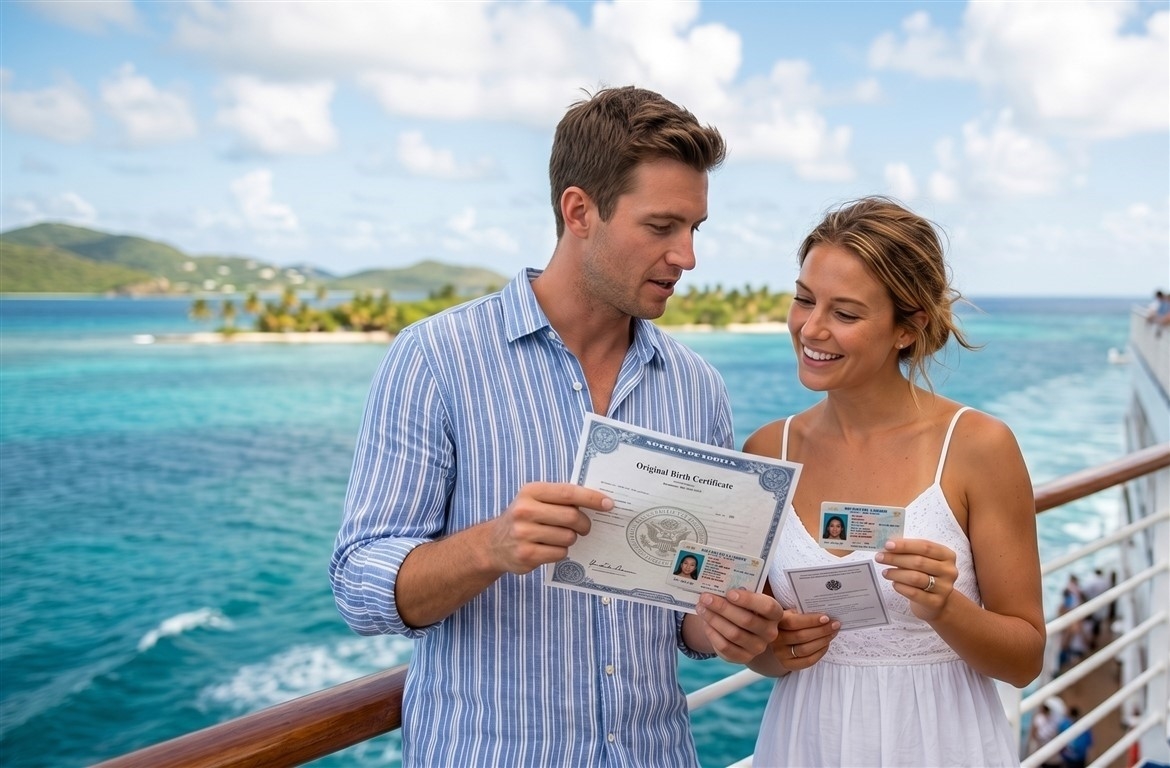
Many closed-loop Caribbean cruises departing from U.S. ports allow U.S. citizens to use a certified birth certificate and a government photo ID. You must, however, check the specific cruise line and itinerary before booking.
Can I enter Canada without a passport?
By land or sea, U.S. citizens may use a passport card or an Enhanced Driver’s License on approved routes. But for air travel, a passport book is always required.
Can I enter Mexico without a passport?
For land or sea travel, a passport card might work on approved routes. However, for flights to Mexico, U.S. citizens absolutely need a passport book.
Do children need passports for passport-free trips?
Children do not need passports for domestic U.S. flights. For cruises and border travel, though, they may require proof of citizenship, and minors traveling without both parents should carry appropriate consent paperwork.
Is a REAL ID enough to travel without a passport?
A REAL ID is sufficient for many domestic flights, including those to Hawaii, Alaska, Puerto Rico, and the U.S. Virgin Islands for eligible U.S. citizens. However, it is not enough for international flights or for entering Canada or Mexico on its own.
Final Checklist Before Your Trip
A passport-free trip can be incredibly simple, as long as your paperwork perfectly matches your chosen route. Start by confirming your destination, then verify your travel method, and finally, ensure every traveler has the correct documents. Make sure to do all of this *before* you pay for flights, cruise cabins, hotels, or tours. The best kind of trip is one where nobody is scrambling for documents at the airport counter!
- Confirm whether your destination is a U.S. state, a U.S. territory, a foreign country, or a cruise port.
- Check whether your trip uses air, land, sea, a ferry, or a closed-loop cruise.
- Ensure every adult has REAL ID-compliant identification or another TSA-accepted ID.
- Carry certified proof of citizenship whenever a cruise, land border, or sea border requires it.
- Review airline, cruise line, and destination document rules before making final payments.
- Double-check every name, date of birth, and document expiration date.
- Pack all physical documents in your carry-on luggage; never put them in checked bags.
- Apply for a passport book if your route involves foreign flights, complex cruise ports, or any risk of emergency return.
The essential takeaway is that you are responsible for your own documentation status. Don’t rely on advice from friends, online forums, or even travel agents who might not have the most current information regarding your specific citizenship and travel route. Your documentation is your ticket; treat it with the same priority as your flight booking. A few minutes spent verifying these requirements today can literally save you thousands of dollars and the heartbreak of a canceled vacation tomorrow. Stay informed, stay prepared, and enjoy your travels.
0 Comment