


Best Places to See Volcanoes Around the World
Volcano travel has a strange pull. People will wake at 2 a.m., climb through dust, freeze on a ridge, cough in sulfur wind, and still call it one of the best mornings of their life. Fair enough. A volcano is not just a mountain with a dramatic backstory. It is heat, pressure, geology, weather, local culture, risk management, and, when the sky behaves, a view that makes regular sightseeing feel a bit tame.
For 2026 travel planning, the best volcano destinations are not simply the loudest names on social media. Some are active volcanoes with glowing craters. Some are ancient calderas, quiet now, with lakes and forests sitting where fire once ruled. Others are serious volcano hikes where the reward arrives slowly: ash underfoot, thin air, then a crater rim opening in front of you like a secret you probably had no right to see.
The choices below lean toward places travelers can realistically visit through legal trails, national parks, local operators, or established viewing areas. Volcano access changes fast. Lava viewing, crater routes, summit trails, boat landings, gas conditions, park roads — all of it can shift by the day. That is part of the deal. The mountain never signed your itinerary.
Why Volcanoes Are Worth Traveling For
Volcanic landscapes feel unfinished. That is the charm. In Iceland, black lava fields look like the planet forgot to smooth its edges. In Indonesia, sunrise over Mount Bromo turns ash plains into something almost lunar. On Sicily, Etna sits above vineyards, villages, ski slopes, and old lava scars, behaving like a neighbor everyone respects but nobody fully trusts.
Volcano tourism also gives travelers several trips in one. There is hiking, photography, geology, local food, hot springs, stargazing, wildlife, and those slightly awkward early breakfasts before dawn tours. Families can choose crater viewpoints and cable cars. Experienced walkers can chase high-altitude trails. Photographers get steam vents, ridgelines, sunrise silhouettes, sulfur lakes, lava rock textures, and moody clouds that do half the work.
There is another reason people go. A volcano makes time visible. A fresh lava flow is young land. A caldera lake is old violence wearing blue. A cone built from ash and scoria tells the story without needing a museum label.
Best Active Volcanoes to Visit
Active does not always mean rivers of lava sliding politely past a viewing platform. It means the volcano has erupted in the geologically recent past or is monitored for ongoing unrest, degassing, quakes, crater glow, or eruptive episodes. Travelers should treat the word with respect, not as a marketing sticker.
Mount Etna, Italy
Mount Etna is the heavyweight of European volcano travel. Rising over eastern Sicily, it is one of the world’s most closely watched volcanoes and one of the easiest active giants to fold into a normal holiday. You can eat pistachio granita in Catania, taste wine on volcanic slopes, then stand among black cones and steaming ground before dinner. That mix is pure Sicily: rough, generous, slightly chaotic.
Etna works for many travel styles. Independent visitors can use lower trails and scenic viewpoints. Guided trips reach higher volcanic terrain, where routes depend on weather, activity, snow, and official limits. The upper mountain is not casual. Wind can turn nasty, ash makes footing loose, and cloud can erase the view in minutes.
Stromboli, Italy
Stromboli is smaller than Etna but more theatrical. The island rises from the Tyrrhenian Sea, and its volcano has a long reputation for frequent explosive bursts. People come for evening boat views, black-sand beaches, and the old thrill of watching fire flicker against darkness.
Access near the summit has been restricted at different times after stronger activity, so 2026 visitors should not assume the classic high climb is open. Boat-based viewing and guided lower routes often deliver the better, safer experience anyway. Stromboli after sunset has a campfire-at-the-edge-of-the-world feeling. Quiet, then boom.
Kīlauea, Hawaii, USA
Kīlauea on Hawaiʻi Island remains one of the great names in volcano tourism. The setting inside Hawaiʻi Volcanoes National Park gives travelers marked overlooks, crater roads, ranger information, lava fields, petroglyph walks, rainforest pockets, and vast night skies. When eruptive activity is visible from approved areas, the experience is almost unreal: glow inside Halemaʻumaʻu, steam rising, a crowd speaking in whispers without being told to.
There is no promise of lava on a given date. Kīlauea has pauses, pulses, closures, vog, unstable ground, and changing hazards. That uncertainty does not weaken the trip. The park is rich even on quiet days, with old flows stretching toward the ocean and steam vents breathing beside the road.
Arenal Volcano, Costa Rica
Arenal is the volcano many travelers picture when they think of Costa Rica: a clean cone, green forest, hot springs, hanging bridges, and clouds snagging on the summit. Its long eruptive period ended in 2010, so visitors no longer come expecting lava shows. They come for the full volcano-and-rainforest package.
The La Fortuna area is easy to enjoy without mountaineering. Trails cross old lava flows, waterfalls drop into swimming holes, and thermal pools turn a hiking day into something softer. For first-time volcano travelers, Arenal is a friendly pick. Not boring. Just less feral than the big ash-and-altitude trips.
Pacaya, Guatemala
Pacaya is one of Central America’s classic short volcano adventures. From Antigua or Guatemala City, travelers can reach the trailhead, hike through changing vegetation, and step onto dark volcanic ground with broad views across the highlands. Activity levels change, and routes move with safety rules, but the trip has long been known for accessible terrain and guided hikes.
It is not a summit-conquest sort of place for most visitors. The pleasure is in the texture: cooled lava, warm rock when conditions allow, smoking vents, and a guide explaining which areas are safe to cross. Wear real shoes. The lava rock is rude to flimsy soles.
Mount Yasur, Vanuatu
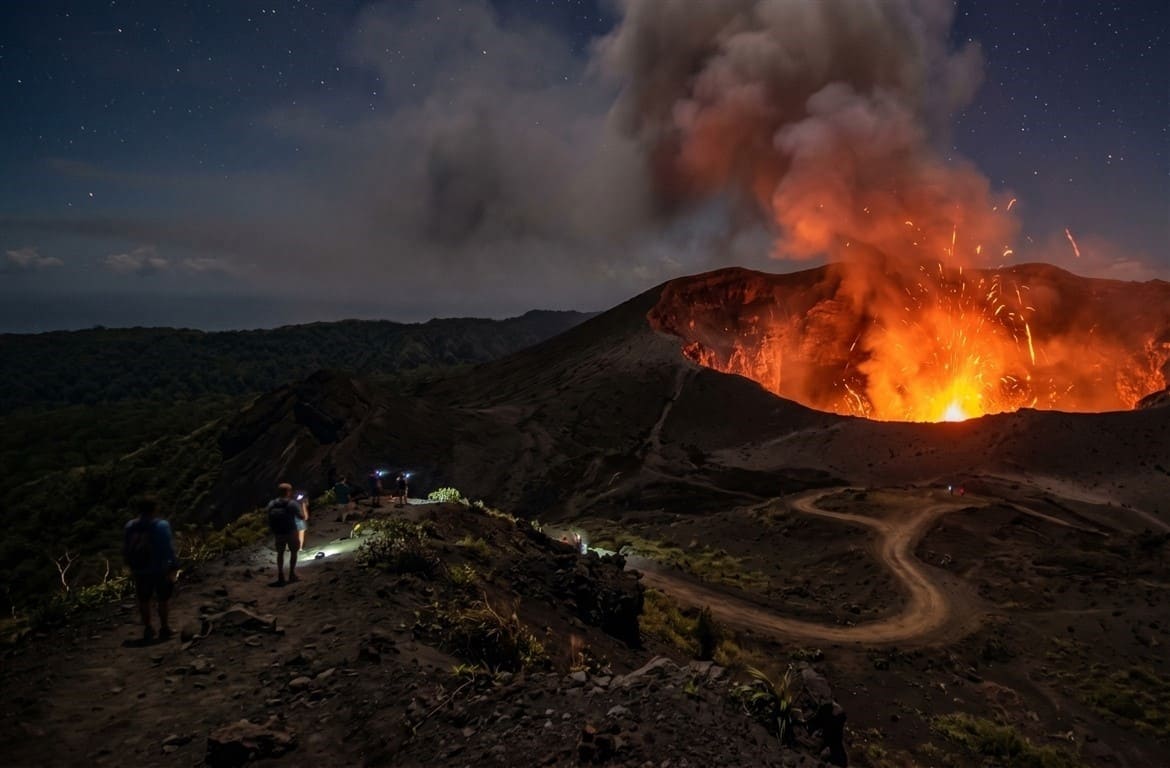
Mount Yasur on Tanna Island is raw volcano theater. The crater is famous for regular Strombolian-style explosions, with glowing bombs and ash bursts visible from viewpoints when access is allowed. The approach is part of the experience: island roads, local communities, dark slopes, then the crater breathing fire into the night.
Yasur is guided and access is controlled by alert levels. The best visit respects that system. Too close is not brave. It is dumb. From a legal viewing point, the sound alone can shake your ribs.
Sakurajima, Japan
Sakurajima sits across the bay from Kagoshima, connected to Kyushu by land after old lava flows changed the geography. It is one of Japan’s best volcano destinations because it is both active and woven into daily life. Ferries run, observatories look toward the smoking cone, ash shelters stand in schoolyards, and locals check wind direction like other cities check traffic.
Travelers usually visit from Kagoshima for viewpoints, foot baths, lava trails, and museums. Crater access is restricted during active alert levels, and ash can affect plans. Still, few places show the relationship between a city and an active volcano with such clarity.
Mount Bromo, Indonesia
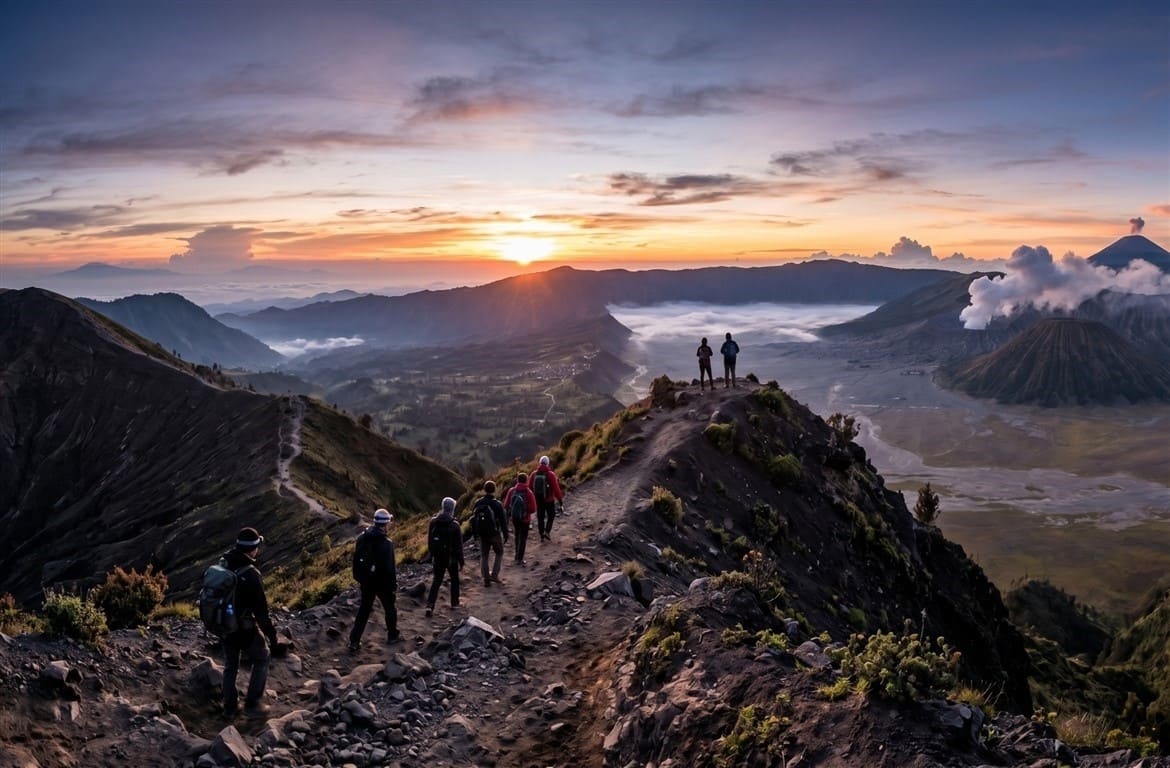
Mount Bromo is not a solitary peak. It sits in the Tengger caldera, surrounded by a broad Sea of Sand and watched over by the higher cone of Semeru in the distance. The classic trip begins before dawn: jeep ride, cold viewpoint, tea in paper cups, then sunrise spilling over a smoky volcanic basin. It is famous for a reason.
The crater approach is accessible compared with many volcano hikes, though dust, horses, crowds, and stairs add friction. The view from the rim is stark and memorable. Bring a scarf or mask. Fine ash gets everywhere, including places ash has no business being.
Best Volcanoes for Hiking and Adventure
Some volcanoes are not about standing at a viewpoint. They ask for legs, lungs, and patience. Weather shuts them down. Altitude bites. Guides set the pace. The reward feels earned because, well, it is.
Acatenango, Guatemala
Acatenango is the volcano hike travelers talk about for years, partly because it hurts. The usual overnight climb from near Antigua reaches campsites with views toward neighboring Volcán de Fuego, one of the most active volcanoes in Central America. On clear nights, Fuego’s bursts can paint orange against the dark. No guarantee, but when it happens, people forget the cold for a minute.
The route climbs through farmland, cloud forest, and exposed volcanic slopes. Fitness matters. So does warm clothing. Many travelers underestimate Guatemalan highland cold because they packed for Central America, not a freezing ridge at night.
Kawah Ijen, Indonesia
Kawah Ijen in East Java is known for its turquoise acidic crater lake, sulfur miners, and blue flames seen on pre-dawn visits when conditions allow. The hike is not extremely long, but the atmosphere can be harsh. Sulfur gas is the boss here. A proper mask is not a cute accessory.
The trip carries a strange emotional weight because visitors share the route with miners carrying heavy sulfur loads. The scenery is beautiful. The human labor is hard to ignore. Good operators manage timing, safety equipment, and respectful conduct around workers.
Mount Rinjani, Indonesia
Rinjani on Lombok is a bigger undertaking. Treks usually involve steep climbs, camping, crater-rim views, and the blue Segara Anak lake below. Summit attempts are demanding, with loose volcanic scree and early starts that test both calves and mood.
Rinjani is better treated as a mountain expedition than a sightseeing hike. Permits, guides, porters, route openings, weather, and park rules shape the trip. The crater rim alone can be enough. Not every journey needs the summit selfie.
Cotopaxi, Ecuador
Cotopaxi is a near-perfect volcanic cone, snow-covered and high enough to make the body complain quickly. The national park offers roads, highland plains, refuges, and views of one of the most recognizable volcanoes in South America. Non-climbers can visit the park and hike near the refuge. Summit climbs need technical gear, acclimatization, and qualified guides.
Altitude is not a detail here. Quito already sits high, and Cotopaxi goes far beyond casual hiking elevations. Move slowly. Drink water. Listen when a guide says turn around.
Villarrica, Chile
Villarrica rises above Pucón in Chile’s Lake District, a region of forests, lakes, and adventure outfitters. The volcano has a reputation for guided summit climbs with crampons, ice axes, helmets, and, when permitted, crater views. Weather and volcanic alert levels control access.
The climb is sporty rather than decorative. The descent can involve sliding on snow when conditions fit, which sounds silly until you are doing it, grinning like a kid. Pucón adds hot springs, rafting, and lake time, so the trip does not collapse if the volcano says no.
Tongariro Alpine Crossing, New Zealand
The Tongariro Alpine Crossing is one of New Zealand’s most famous day walks, crossing active volcanic terrain with red craters, emerald lakes, steam vents, and big Central Plateau views. It is a managed route, not a theme park path. Weather can turn savage. Volcanic risk is monitored. Shuttle logistics matter.
The walk is long, exposed, and popular. Start early, carry layers, and do not wander into restricted thermal areas. The colors look unreal enough from the trail.
Best Volcanoes for Scenic Views and Photography
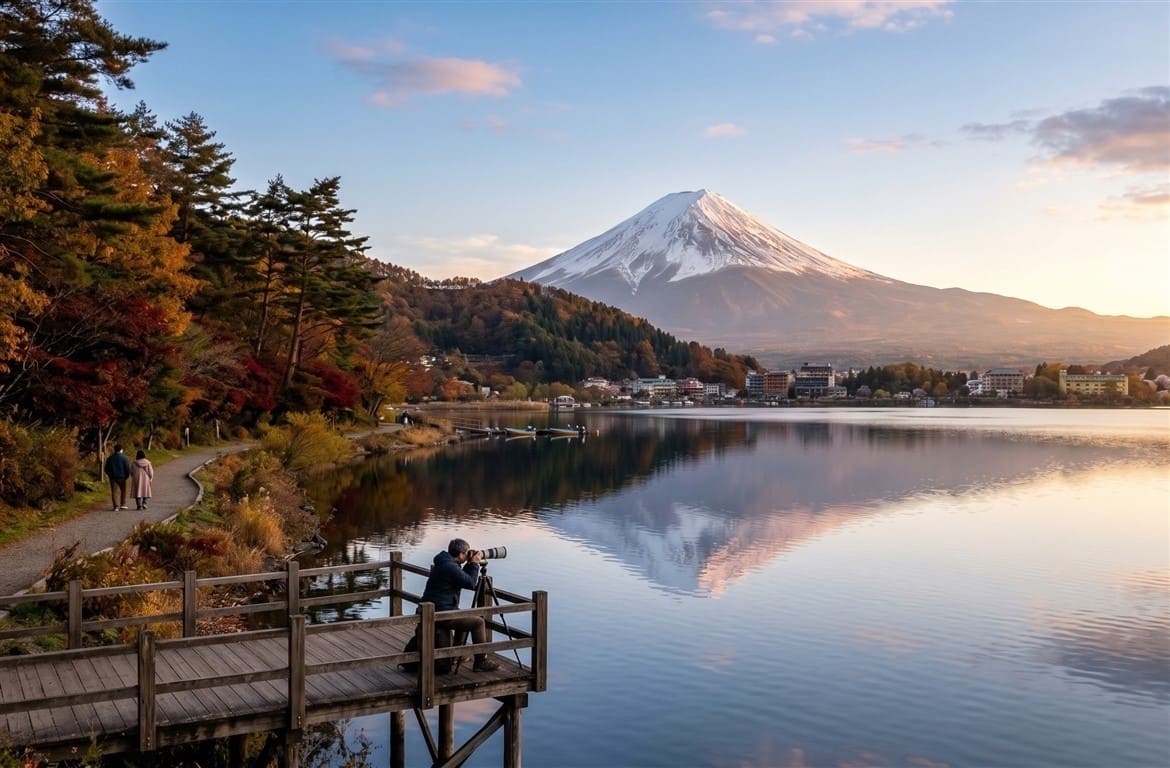
Not every volcano trip needs ash in your teeth. Some are best framed from a lake, a roadside pullout, a dawn viewpoint, or a quiet trail with a long lens.
| Volcano or volcanic site | Best visual draw | Good timing for photos | Travel style |
|---|---|---|---|
| Mount Fuji, Japan | Symmetrical cone, lakes, temples, winter clarity | Cold-season mornings and official climbing season for summit hikers | Scenic viewpoints, cultural travel, seasonal climbing |
| Mount Bromo, Indonesia | Sea of Sand, sunrise clouds, smoking crater | Pre-dawn viewpoint trips during drier months | Short adventure, jeep access, crater walk |
| Crater Lake, Oregon, USA | Deep blue caldera lake and Wizard Island | Summer road access, crisp autumn light | National park road trip, hiking, family travel |
| Yellowstone Caldera, Wyoming, USA | Geysers, hot springs, steam basins, colored pools | Early morning for steam and fewer crowds | Geothermal sightseeing, wildlife, road trip |
| Mount Pico, Azores, Portugal | Atlantic island cone, clouds, ocean horizon | Stable weather windows from late spring into early autumn | Island hiking, wine landscapes, summit climb |
| Haleakalā, Hawaii, USA | High crater views, sunrise, cinder cones | Reserved sunrise slots or late afternoon light | Scenic drive, hiking, stargazing |
Mount Fuji, Japan
Fuji is not just a volcano. It is a national symbol, a pilgrimage route, a postcard, a weather gamble, and a mountain that hides behind clouds with comic timing. The best views often come from the Fuji Five Lakes area, Hakone, or winter viewpoints when the air is dry and sharp.
Climbing Fuji belongs to the official summer season, with huts, routes, and heavy foot traffic. Outside that window, snow, wind, and closures make it a different beast. Many travelers get more joy from watching Fuji than climbing it. No shame there.
Crater Lake, Oregon, USA
Crater Lake sits inside the caldera left by ancient Mount Mazama. The color is ridiculous. Blue so deep it looks edited before anyone touches a camera. Roads around the rim open seasonally, and snow can linger late, which gives the park a split personality: summer road-trip classic, winter snowbound wonder.
It is one of the easiest places to understand a caldera visually. Stand on the rim and the story makes sense without much explanation. A mountain collapsed, water gathered, silence moved in.
Yellowstone Caldera, Wyoming, USA
Yellowstone is not a cone-shaped volcano trip. It is a giant volcanic system expressing itself through geysers, mud pots, hot springs, fumaroles, and hydrothermal drama. The boardwalks protect visitors and fragile ground. Stay on them. The crust near thermal features can be thin, and the water is not “hot tub hot.” It is ruin-your-day hot.
For photographers, early morning steam at geyser basins can be magic. Bison wandering through mist. Sun catching mineral colors. A faint smell of sulfur. Very Yellowstone.
Mount Pico, Azores, Portugal
Mount Pico rises from the Atlantic with clean geometry and maritime mood. The climb is steep and regulated, with route markers and weather checks. When clouds clear, the view reaches across neighboring Azorean islands and a lot of ocean. The surrounding vineyards, grown in black lava-stone walls, add texture to the trip.
Pico feels less crowded than many headline volcanoes. Weather has the final vote, as it always does in Atlantic islands.
Best Volcanoes for Unique Experiences
Thrihnukagigur Volcano, Iceland
Descend Inside a Dormant Magma Chamber
Near Reykjavík, Thrihnukagigur offers one of the rarest volcano experiences on Earth: visitors descend by lift into a dormant magma chamber. The drop is roughly 120 meters, and the chamber walls glow with mineral colors rather than active lava. It is not a fiery spectacle. Better. Stranger.
The usual season is limited, and the trip involves walking across lava terrain before the descent. Bring layers even in summer. Iceland laughs at optimistic packing.
Kawah Ijen, Indonesia
See Blue Flames and a Sulfur Crater Lake
Ijen earns a second mention because it is not just a hike. It is one of the planet’s more unusual volcanic travel scenes: sulfur gas, an acidic crater lake, miners at work, and blue flames seen during dark hours when gas ignites. The experience is intense, not polished.
Travelers should go with operators who provide proper masks and set clear boundaries around gas exposure. Pretty photos are not worth burning lungs.
Haleakalā, Hawaii, USA
Watch Sunrise Above a Volcanic Crater
Haleakalā on Maui is famous for sunrise above a huge volcanic depression filled with cinder cones and shifting light. Reservations are required for sunrise entry during controlled hours, and temperatures near the summit can feel brutally cold compared with the beaches below.
Many visitors prefer sunset or daytime hiking to dodge the pre-dawn crush. The Sliding Sands Trail gives a closer look at the crater landscape: red, black, ocher, silent, almost Martian.
Mount Nyiragongo, Democratic Republic of the Congo
See One of the World’s Most Famous Lava Lakes
Nyiragongo has long been known for its lava lake, though access has been heavily shaped by eruption history, park operations, and regional security. This is not a casual add-on. Travel to the area needs current official advice, a reputable operator, and a clear understanding of ground conditions.
When visits are permitted, the overnight climb is steep and memorable. Yet Nyiragongo belongs in the serious-planning category. The volcano is only one part of the risk picture.
Best Volcanoes to Visit by Region
North America
North America is excellent for volcanic road trips. Hawaiʻi gives active shield volcano landscapes, lava fields, steam vents, and crater overlooks. The U.S. mainland adds Crater Lake, Mount St. Helens, Lassen Volcanic National Park, Yellowstone, and volcanic deserts in the Southwest. Canada’s volcanic fields are quieter for tourism but rewarding for geology-minded travelers.
Central America
Central America is dense with volcano travel. Guatemala brings Acatenango, Fuego views, Pacaya, and Lake Atitlán’s volcanic skyline. Costa Rica offers Arenal, Poás, Irazú, and Rincón de la Vieja, with rainforest and hot springs close by. Nicaragua, El Salvador, and Panama add crater lakes, cones, and less-crowded routes for travelers who want more grit.
South America
The Andes run like a volcanic spine. Ecuador has Cotopaxi, Chimborazo, Tungurahua viewpoints, and high-altitude parks. Chile offers Villarrica, Osorno, Láscar, and the Atacama’s volcanic horizons. Peru, Bolivia, Colombia, and Argentina bring more remote volcano landscapes where altitude planning matters as much as route choice.
Europe
Europe’s volcano travel is wonderfully varied: Etna and Stromboli in Italy, Teide in Tenerife, Iceland’s lava fields and volcanic fissures, the Azores in Portugal, Santorini’s caldera in Greece, and extinct volcanic landscapes across France and Spain. Europe is also strong for mixing volcanoes with food, wine, museums, and old towns. Low stress, high reward.
Africa
Africa’s volcanoes include Kilimanjaro, Mount Cameroon, Erta Ale, Ol Doinyo Lengai, Nyiragongo, and the volcanic highlands of East Africa. The range is huge, from technical logistics and desert expeditions to iconic trekking routes. Travel advisories, permits, and local conditions deserve serious attention here.
Asia
Asia is a monster for volcano lovers. Indonesia alone could fill a lifetime: Bromo, Ijen, Rinjani, Merapi, Kerinci, Agung, Kelimutu. Japan adds Fuji, Sakurajima, Aso, Unzen, and island volcanoes. The Philippines has Mayon, Taal, and Pinatubo. Kamchatka in Russia offers some of the wildest volcanic scenery on Earth, though logistics and access are demanding.
Oceania
New Zealand’s North Island is rich with volcanic parks, thermal areas, and active monitoring zones. Vanuatu’s Yasur is one of the great accessible crater experiences when open. Papua New Guinea, Samoa, Tonga, and other Pacific islands add volcanic coastlines, lava tubes, cones, and cultural landscapes shaped by eruptions.
How to Choose the Right Volcano Trip
The best volcano for one traveler is a bad match for another. Some people want a safe overlook and a good coffee afterward. Others want a frozen summit at dawn, a guide yelling encouragement, and knees that file a complaint by lunch.
- Best for beginners: Arenal, Haleakalā, Crater Lake, Yellowstone, Mount Bromo, and lower Etna routes. These places offer strong volcanic scenery without requiring expert fitness. Access is usually clearer, tourism infrastructure is mature, and backup activities exist when weather or alerts shut down a trail.
- Best for experienced hikers: Acatenango, Rinjani, Cotopaxi, Villarrica, Mount Pico, and the Tongariro Alpine Crossing. These routes demand preparation. Think altitude, early starts, weather exposure, permits, guides, and gear that belongs on a mountain rather than a city break.
- Best for lava viewing: Kīlauea, Stromboli, Yasur, Fuego viewpoints from Acatenango, and, at times, other monitored active systems. Lava is never a guaranteed attraction. Legal viewing zones and current activity decide the show.
- Best for families: Yellowstone, Crater Lake, Arenal, Haleakalā viewpoints, Sakurajima observatories, and selected Etna excursions. Short walks, visitor centers, toilets, road access, and safe barriers matter more than dramatic marketing photos when kids are involved.
- Best for photography: Fuji, Bromo, Crater Lake, Pico, Etna, Yellowstone thermal basins, and the Azores. Great volcano photography is often about weather patience rather than expensive gear.
When Is the Best Time to Visit Volcanoes?
Weather and Visibility
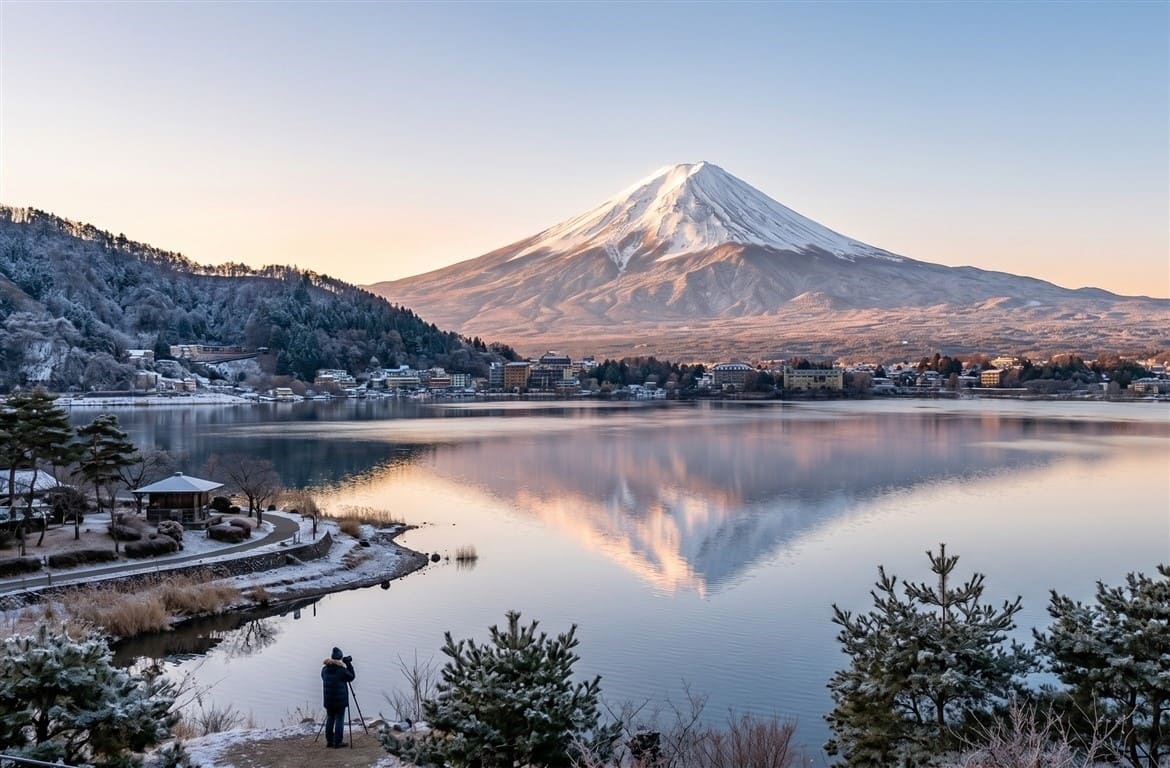
Visibility makes or breaks many volcano trips. A clear sunrise at Bromo feels sacred. The same viewpoint in fog feels like standing inside a wet sock with strangers. Dry seasons usually give better odds in tropical destinations, while winter can sharpen views of Fuji or snow-dusted Etna.
Mountain weather ignores lowland forecasts. A beach town can be warm while the crater rim is windy and freezing. Pack for the volcano, not the hotel balcony.
Seasonal Trail Conditions
Snow, monsoon rains, landslides, heat, and trail maintenance all shape access. Fuji has an official climbing season. Rinjani routes open and close under park rules. Cotopaxi and Villarrica require snow or ice judgment. Crater Lake’s rim roads depend on snow clearance.
Seasonality also changes crowds. The best month on paper can be the busiest month on the ground. Shoulder periods can be sweet when routes are open and tour buses thin out.
Eruption Activity and Access Restrictions
Active volcano travel runs on alerts, not wishful thinking. Monitoring agencies track seismicity, gas, deformation, ash, thermal changes, and eruptive behavior. Park authorities then close trails, change viewing areas, or stop tours. Annoying? Yes. Sensible? Also yes.
Travelers chasing lava should keep plans flexible. Stay more than one night near a volcano when possible. Build a spare day. Do not book the once-in-a-lifetime crater tour right before an international flight unless you enjoy stress as a hobby.
Volcano Safety Tips
Volcanoes punish casual mistakes. The hazards are not only lava. Gas, ash, loose rock, sudden storms, altitude, unstable crater rims, lahars, steam explosions, heat, and poor visibility all belong to the same family of trouble.
- Check current alerts before leaving your accommodation. Use official park pages, national monitoring agencies, visitor centers, local authorities, and licensed operators. Screenshots from last week are stale. A sunrise plan can die at midnight when alert levels change.
- Use licensed guides where rules or terrain demand it. Guides are not just storytellers. They know evacuation routes, legal boundaries, gas-prone zones, weather patterns, and which “shortcut” is a bad idea wearing a disguise.
- Respect closures and hazard zones. Barriers are not decorations. Crater edges crumble. Ash hides holes. A closed trail does not become open because a drone video looked cool.
- Prepare for gas, ash, heat, and sudden cold. Carry eye protection, a dust mask where ash or sulfur is common, real footwear, layers, water, snacks, sun protection, and a headlamp for pre-dawn starts. Cheap ponchos flap; proper shells work.
What to Pack for a Volcano Visit
Footwear and Clothing
Volcanic terrain eats weak shoes. Sharp lava rock, ash slopes, wet clay, scree, snow, and crater stairs all require grip. For easy viewpoints, sturdy sneakers can work. For Rinjani, Acatenango, Pico, Cotopaxi approaches, Villarrica, or Tongariro, bring proper hiking footwear already broken in.
Layers matter. A base layer, fleece or light insulated jacket, wind shell, hat, and gloves can save a dawn trip from becoming a miserable photo of your own regret. Tropical volcanoes still get cold at altitude.
Sun, Wind, and Dust Protection
Volcanic slopes are exposed. UV is stronger at altitude, wind dries you out, ash irritates eyes, and sulfur gas can sting. Sunglasses, sunscreen, lip balm, a buff or mask, and simple goggles for dusty places can make the day less scratchy.
Water, Snacks, and Emergency Essentials
Carry more water than seems elegant. Volcano hikes often have no shade and no refill points. Add salty snacks, a small first-aid kit, blister care, a charged phone, offline maps, cash for local fees, and a headlamp. Phone lights are flimsy little traitors on dark volcanic trails.
Camera Gear and Photography Accessories
A lightweight tripod helps with crater glow, stars, and blue-hour landscapes. Bring a lens cloth because ash and mist coat glass fast. Keep gear in a sealed bag when wind picks up. Drones are restricted or banned in many parks and volcanic hazard zones, so check rules before carrying extra weight for nothing.
Volcano Trip Planning: A Simple Route from Idea to Crater
Start with the experience, not the volcano name. Want lava glow? Choose monitored active systems with legal viewing and accept uncertainty. Want a family-friendly landscape? Pick national parks with roads, viewpoints, and visitor centers. Want a hard hike? Compare altitude, distance, elevation gain, guide rules, and rescue access before falling for a pretty photo.
Then match season to destination. Dry months for Bromo and Ijen. Official climbing dates for Fuji. Snow and road openings for Crater Lake. Weather windows for Pico. Local alerts for Etna, Stromboli, Sakurajima, Kīlauea, Villarrica, and Yasur.
Book the parts that sell out: sunrise permits, huts, guided climbs, park entry slots, shuttles, and reputable operators. Leave open space around active-volcano plans. One spare morning can save the whole trip.
Frequently Asked Questions
Can You Safely Visit an Active Volcano?
Yes, active volcanoes can be visited safely when access is legal, alerts allow entry, and travelers stay inside approved zones. Kīlauea, Etna, Sakurajima, Yasur, and Stromboli all receive visitors under managed conditions. The safety comes from monitoring, rules, distance, and good judgment, not from the volcano being “safe” in a simple sense.
Where Can You See Lava Flow?
Lava viewing changes constantly. Kīlauea is one of the best-known places for legal lava viewing when eruptions are visible from public areas. Stromboli and Yasur are famous for explosive glow rather than gentle lava rivers. Acatenango can offer views toward Fuego’s nighttime bursts. No operator can honestly guarantee lava on a fixed date.
What Is the Easiest Volcano to Visit?
Arenal, Haleakalā, Yellowstone, Crater Lake, Mount Bromo, Sakurajima, and lower Etna routes are among the easiest strong choices. They have established tourism infrastructure, road access or short walks, and enough nearby attractions to keep the trip worthwhile when clouds roll in.
What Is the Best Volcano Hike in the World?
For drama, Acatenango is hard to beat because of the view toward Fuego. For varied scenery, the Tongariro Alpine Crossing is exceptional. For a tougher multi-day challenge, Rinjani has scale and beauty. For high-altitude mountaineering flavor, Cotopaxi stands out. The “best” one is the hike that fits your fitness, season, risk tolerance, and appetite for discomfort.
Do You Need a Guide to Visit a Volcano?
Many volcanoes require guides for legal or safety reasons, including higher-risk routes, summit climbs, and active crater areas. Etna’s upper zones, Villarrica climbs, Cotopaxi summit attempts, Acatenango overnight treks, Rinjani routes, Yasur access, and Ijen pre-dawn visits are better with trained local support. Easy national park viewpoints usually do not need a guide, though a good one can turn black rock into a story worth remembering.
The finest volcano trips leave travelers with ash on their boots and a slightly altered sense of scale. A crater rim does that. So does a caldera lake, a glowing vent, a cold sunrise above cinder cones, or a quiet road through lava fields where plants are just beginning to return. The planet is still working. Go politely.
0 Comment