


Best Places to See Cherry Blossoms in 2026
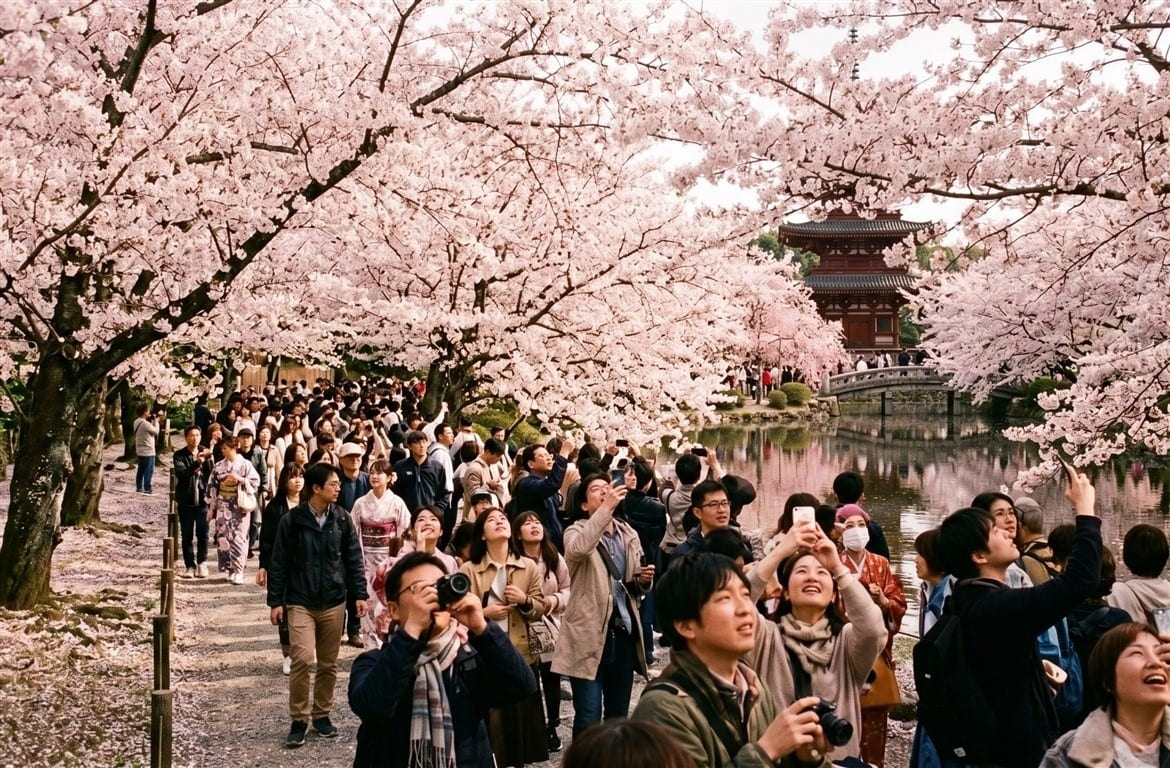
Cherry blossom season is brief, crowded, weather-sensitive, and a little ridiculous in the best way. People fly across oceans to stare at pale pink petals for ten minutes. They wake before sunrise, stand shoulder to shoulder near ponds and castle moats, and argue about whether the trees looked better yesterday. Fair enough. When cherry trees bloom well, a normal park turns cinematic.
The best places to see cherry blossoms in 2026 range from Washington, D.C. and New York City to Yoshino, Kyoto, Hirosaki, and the Fuji Five Lakes region. Some are polished festival destinations with food stalls, transit plans, and full bloom cameras. Others are quieter garden walks where the blossoms hang over a path and nobody claps when the wind moves. Both can be perfect.
When Is the Best Time to See Cherry Blossoms?
Cherry blossoms do not follow a fixed calendar. A warm March can push them forward. Cold nights can stall the buds. Heavy rain can knock petals down in one afternoon. In the United States, the classic viewing period runs from late February in warmer southern and western cities into April in the Northeast and Pacific Northwest. In Japan, the sakura front usually starts in the south in March and moves north through April and into early May.
Peak Bloom Season by Region
Peak bloom is not the same as “a few flowers are open.” In Washington, D.C., peak bloom refers to the day when 70% of the Yoshino cherry blossoms around the Tidal Basin are open. That definition has become a useful benchmark for travelers everywhere, even though local gardens and cities may track bloom stages in their own way.
| Region or Destination | Usual Viewing Window | Good Fit For |
|---|---|---|
| Washington, D.C. | Late March to early April | Iconic monuments, festival energy, sunrise photography |
| New York City and Newark | Late March to mid-April | Urban parks, botanical gardens, easy transit |
| Pacific Northwest | March to April | Campus blooms, waterfront walks, soft cloudy light |
| Georgia and Texas | Late February to March | Earlier spring trips, garden festivals, mild weather |
| Central Japan | Late March to early April | Classic hanami, temples, castles, city parks |
| Northern Japan | Late April to early May | Late-season sakura, castle moats, cooler travel days |
How Weather Affects Bloom Dates
Temperature drives the season. Warm spells speed up bud development; colder stretches slow it down. Wind, rain, and sudden heat decide how long the show lasts once the trees open. A calm, cool week after peak bloom is gold. A stormy day can turn the ground into pink confetti before lunch.
There is no magic travel date. The safer move is to pick a destination with several types of cherry trees. Yoshino cherries are famous and dramatic, but botanical gardens with later-blooming varieties give visitors more room for error. Kwanzan cherries, weeping cherries, and other ornamental varieties can stretch the season after the pale Yoshino flowers fade.
Tips for Tracking Cherry Blossom Forecasts
Do not book a once-in-a-lifetime trip around an old bloom chart and call it done. Use bloom trackers from park services, gardens, tourism boards, and festival organizers. Check them daily in the last two weeks before travel. Photos help more than poetic captions. If the buds are swelling and the weather forecast turns warm, the pace can change fast.
- Watch the local bloom stage, not only the festival date. Festivals are scheduled months ahead. Trees do not care about schedules. A parade can happen before peak bloom or after petals have already fallen.
- Build in two or three viewing days. One day is risky. A longer stay gives you a backup if rain rolls in, the best tree row is closed, or the crowd is just too much.
Best Places to See Cherry Blossoms in the United States
The United States has more cherry blossom destinations than many travelers expect. Washington, D.C. gets the spotlight, yes, but Newark has a larger cherry tree collection, Macon has a staggering number of Yoshino trees, and cities from Portland to Philadelphia have spring scenes worth planning around.
Washington, D.C.
Washington, D.C. remains the American classic for cherry blossom viewing. The story goes back to the 1912 gift of cherry trees from Tokyo, and the symbolism still hangs over the water every spring. The Tidal Basin, white monuments, pale blossoms, and early morning haze — it is famous for a reason.
Tidal Basin and the National Mall
The Tidal Basin is the postcard. Cherry branches frame the Jefferson Memorial, the Washington Monument appears through the petals, and the walking path fills up quickly once peak bloom lands. Go at sunrise if photos matter. Go after dark if you prefer a slower mood and reflections on the water. Midday on a peak weekend can feel like a moving sidewalk made of tourists.
U.S. National Arboretum
The National Arboretum gives breathing room. It has varied cherry tree plantings, wide lawns, and a calmer rhythm than the Tidal Basin. The columns, meadow views, and tree collections make it strong for photographers who want more than the standard monument shot.
Hains Point and East Potomac Park
East Potomac Park is useful when the Tidal Basin feels jammed. The roads and paths near Hains Point run past long rows of trees, and the Potomac River adds open sky. Cyclists like it. Walkers too. The mood is less ceremonial and more local, which is not a bad trade.
Dumbarton Oaks
Dumbarton Oaks in Georgetown suits visitors who prefer formal gardens, stone paths, terraces, and quieter corners. Timed entry and garden rules shape the experience. That is part of the appeal. Nobody is climbing trees or blocking a whole path for a twenty-minute photo shoot. Usually.
New York City
New York does cherry blossoms with city noise in the background: sirens, food carts, runners, kids, dogs, and then suddenly a row of pink trees acting like the whole city got dressed up. The season moves across boroughs, and the range of viewing spots is excellent.
Central Park
Central Park has several beloved cherry blossom areas, including the Reservoir, Cherry Hill, and sections near the Great Lawn. The mix of skyline, water, stone bridges, and flowering trees gives photographers plenty to work with. Early morning is kinder. By afternoon, the park belongs to everyone, loudly.
Brooklyn Botanic Garden
Brooklyn Botanic Garden is one of the best cherry blossom destinations in the country for variety and bloom tracking. Its Cherry Esplanade is famous, and the garden’s seasonal updates help visitors time a trip with less guesswork. The scene can be crowded, but the collection is worth the patience.
Roosevelt Island
Roosevelt Island offers East River views, a skyline backdrop, and a walking route that feels different from the city’s larger parks. The cherry trees along the waterfront are photogenic without needing much staging. Trains, trams, bridges, blossoms. Very New York.
Riverside Park
Riverside Park is a graceful choice on Manhattan’s west side, with cherry trees, river air, and long paths. It works well for a casual walk rather than a full bloom expedition. Bring coffee. Keep moving. That’s the rhythm here.
Flushing Meadows Corona Park
Flushing Meadows Corona Park brings big lawns, the Unisphere, and a Queens crowd that feels wonderfully unbothered by travel-blog hype. Cherry trees bloom around the park, and the nearby food scene turns a blossom walk into a full afternoon.
New York Botanical Garden
The New York Botanical Garden in the Bronx has a wide landscape, curated collections, and enough space to absorb spring crowds better than smaller sites. It is a strong pick for plant lovers who want labels, paths, and more than a quick photo stop.
Newark, New Jersey
Branch Brook Park
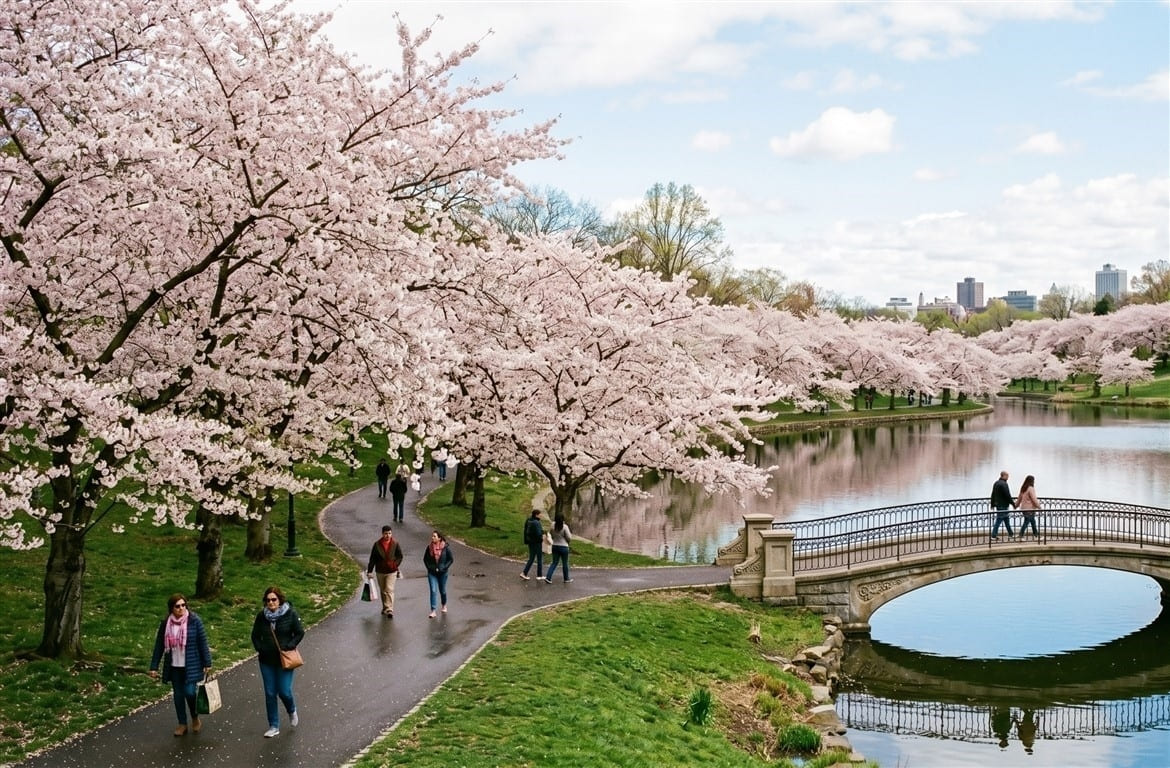
Branch Brook Park is the sleeper hit that should not be a sleeper anymore. The park has more than 5,300 cherry blossom trees across 18 varieties, making it one of the largest cherry blossom collections in the United States. The trees spread around lawns, bridges, roads, and water, so the experience feels generous rather than boxed in.
The Essex County Cherry Blossom Festival brings crowds, but the park’s scale helps. Photographers often head toward the lake and bridge areas. Families spread out on the grass. The Newark Light Rail makes access easier than many visitors expect.
Seattle, Washington
University of Washington Quad
The University of Washington Quad has become a Pacific Northwest spring ritual. Mature Yoshino trees frame brick paths and collegiate Gothic buildings, and the whole scene glows under Seattle’s softer spring light. Cloudy weather can be a gift here; petals photograph beautifully without harsh shadows.
San Francisco, California
Japanese Tea Garden at Golden Gate Park
San Francisco’s Japanese Tea Garden pairs cherry blossoms with bridges, lanterns, clipped shrubs, and a compact sense of ceremony. The city’s mild climate means the timing can run earlier than East Coast bloom windows. It is not a giant blossom landscape. It is intimate, composed, and lovely.
Portland, Oregon
Tom McCall Waterfront Park
Tom McCall Waterfront Park gives Portland its most recognizable cherry blossom walk. The trees near the Japanese American Historical Plaza bloom along the Willamette River, with bridges and downtown buildings close by. The setting is easy, photogenic, and best enjoyed before the weekend crowds arrive.
Portland Japanese Garden
Portland Japanese Garden is quieter and more refined. The blossoms are part of a larger design: moss, stone, water, maples, framed views. It rewards slower looking. Rushing through it feels wrong, almost rude.
Macon, Georgia
Carolyn Crayton Park
Macon calls itself the Cherry Blossom Capital of the World, and the claim comes with scale: the city is known for hundreds of thousands of Yoshino cherry trees. Carolyn Crayton Park anchors the festival experience, with rides, concerts, family events, and that full-on pink spring atmosphere. It is cheerful. Loud at times. Not subtle.
Philadelphia, Pennsylvania
Fairmount Park
Philadelphia’s Fairmount Park has a deep cherry blossom tradition tied to Japanese friendship plantings. The area around the Shofuso Japanese Cultural Center is especially rewarding, with trees, water, and cultural programming during the season. It feels less frantic than D.C. and more layered than a quick neighborhood bloom.
Boston, Massachusetts
Charles River Esplanade
The Charles River Esplanade is Boston’s spring stroll with blossoms, river views, joggers, sailboats, and skyline edges. Peak color usually arrives later than in Washington, D.C. A sunny April day here can feel like the city finally exhaled after winter.
Dallas, Texas
Dallas Arboretum and Botanical Garden
Dallas Arboretum brings an earlier spring mood, with flowering trees, tulips, manicured beds, and lake views. It is less about a single iconic cherry corridor and more about a broad seasonal display. For travelers chasing spring before northern cities wake up, Dallas works.
St. Louis, Missouri
Missouri Botanical Garden
Missouri Botanical Garden has Japanese garden scenery, spring blooms, and a thoughtful layout that suits slower visits. Cherry blossoms here sit inside a larger horticultural experience. The result is polished but not stiff, and the garden’s paths make crowd flow easier than at tight urban bloom spots.
Best Places to See Cherry Blossoms in Japan
Japan is still the dream trip for sakura. Not because no other country has beautiful blossoms. Plenty do. Japan pairs the bloom with rituals, food, poetry, train travel, castle parks, temple lanes, night illuminations, and a national habit of watching the season move north. Hanami is social and personal at once. People picnic under trees, photograph petals in gutters, buy sakura sweets, and track bloom maps like sports scores.
Yoshino, Kansai
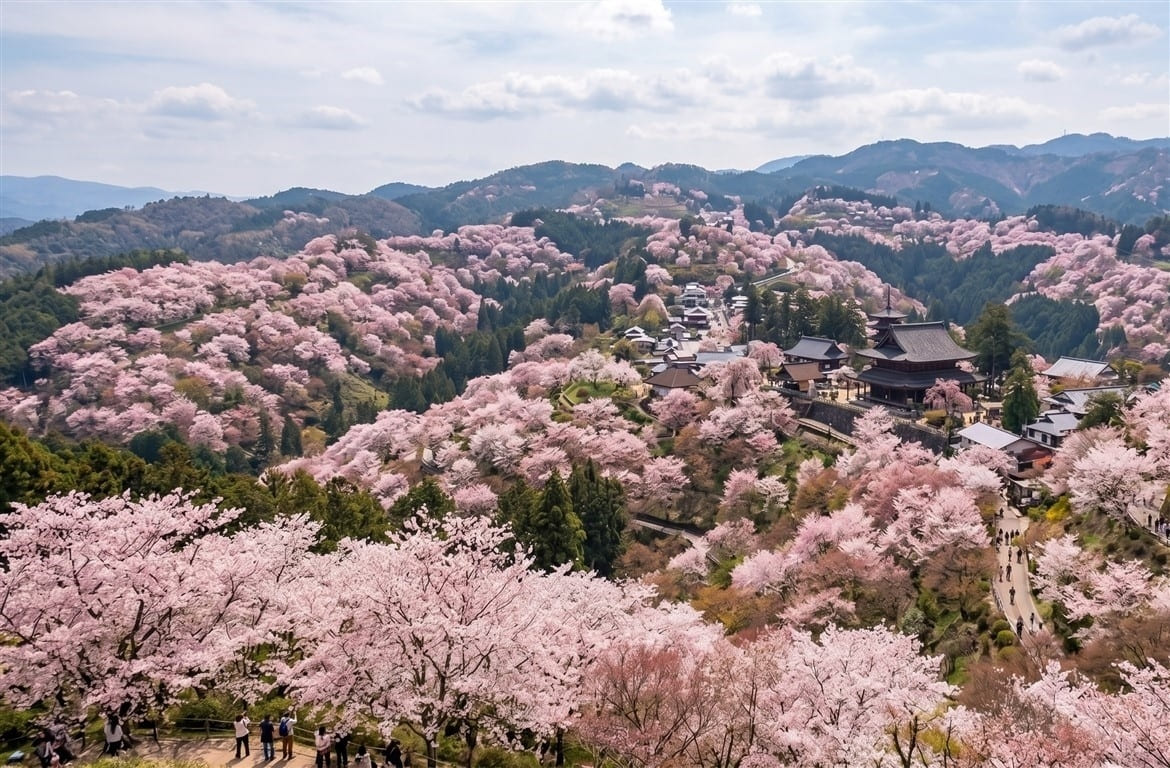
Mount Yoshino in Nara Prefecture is one of Japan’s grandest cherry blossom landscapes, with about 30,000 cherry trees spread across the mountain. The view changes by elevation, so the lower, middle, upper, and inner areas can bloom in waves. That layered timing gives travelers more room than a single city park.
Yoshino is not a casual ten-minute stop. Trains, walking, slopes, shops, temples, and crowd control shape the day. Wear good shoes. Carry less than you think you need. The reward is a mountain washed in pale bloom, with old religious sites tucked into the route.
Maruyama Park, Kyoto
Maruyama Park is Kyoto’s classic hanami hangout, close to Yasaka Shrine and within walking distance of Gion. Its famous weeping cherry tree draws evening crowds, and the surrounding food stalls give the park a festive, slightly messy charm. Kyoto can feel crowded in sakura season because it is crowded. Still, at the right hour, the old lanes and temple roofs make the fuss understandable.
Hirosaki Park, Tohoku
Hirosaki Park in Aomori is one of Japan’s late-season heavyweights. It has around 2,600 cherry trees across dozens of varieties, a castle setting, moats, bridges, and the famous petal “rafts” that cover the water after full bloom. Travelers who miss Kyoto or Tokyo at peak can aim north and still catch a spectacular display.
The Hirosaki Cherry Blossom Festival usually draws huge visitor numbers. The trees, many cared for with expert pruning techniques, produce dense clusters that create a lush canopy. Night viewing adds another layer: lanterns, reflections, and the kind of spring chill that makes hot snacks taste better.
Fuji Five Lakes, Yamanashi
The Fuji Five Lakes region gives travelers the classic combination: cherry blossoms and Mount Fuji. Lake Kawaguchiko is the usual target, with waterfront trees and open views toward the mountain when the weather cooperates. That last part matters. Fuji hides. A lot. Clear mornings are the prize.
Because the area sits higher than Tokyo, blooms tend to arrive later. Travelers pairing Tokyo with Fuji often get a second chance at sakura. The smartest plan is loose: check the forecast, start early, and do not spend the whole day chasing one viral photo spot.
Yoyogi Park, Tokyo
Yoyogi Park is Tokyo at its most relaxed during cherry blossom season. It is not the most refined sakura site in the city, and that is the point. Friends gather on tarps, musicians drift through, convenience-store snacks become picnic food, and the whole place feels alive. Nearby Meiji Shrine offers a calmer counterpoint before or after the park.
Best Cherry Blossom Festivals and Events
Cherry blossom festivals can be wonderful or exhausting. The difference is timing, transit, and expectations. A festival day brings performances, food, parades, and cultural programming. It also brings lines. If you want silence under petals, choose a weekday morning. If you want drums, kites, lanterns, street food, and strangers taking pictures of everything, go straight into the festival crowd and enjoy the chaos.
Major U.S. Cherry Blossom Festivals
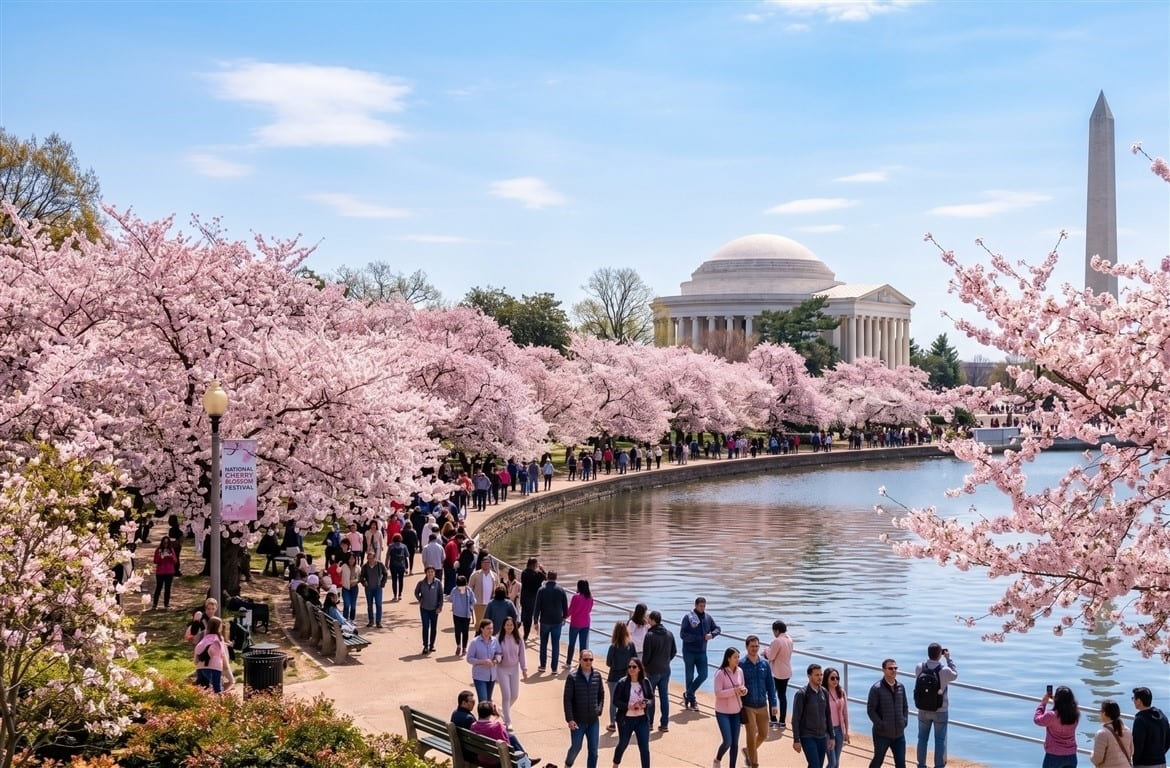
The National Cherry Blossom Festival in Washington, D.C. is the best-known U.S. event, with weeks of programming tied to the capital’s spring bloom. Macon’s International Cherry Blossom Festival turns the city pink with concerts, rides, and community events. Newark’s Essex County Cherry Blossom Festival celebrates Branch Brook Park’s enormous collection with runs, family days, and bloom-season activities.
Japan Hanami Celebrations
Hanami in Japan is less a single event than a seasonal habit. Parks fill with picnics. Castles stay open for night illuminations. Department stores sell sakura sweets. Train stations display bloom updates. In Tokyo, Kyoto, Nara, and Aomori, the mood shifts fast once the flowers open. Workdays end under trees. Tourists follow maps. Locals already know which branch is worth watching.
Local Garden Walks and Seasonal Events
Botanical gardens are the underrated choice for cherry blossom travel. They track varieties, maintain paths, and offer staff knowledge that city parks rarely provide. Brooklyn Botanic Garden, New York Botanical Garden, Missouri Botanical Garden, Dallas Arboretum, and Portland Japanese Garden all make bloom viewing easier for travelers who want structure without a giant parade around them.
How to Choose the Right Cherry Blossom Spot
The best cherry blossom destination is not always the most famous one. Match the place to the trip. A photographer wants light, foregrounds, and open sightlines. A family needs bathrooms, food, and space to sit. A couple may want lanterns and a dinner reservation nearby. A solo traveler might care more about transit and walkability.
Best Spots for Photography
For classic monument shots, Washington, D.C.’s Tidal Basin still wins. For skyline-and-petal compositions, Roosevelt Island and Central Park work beautifully. For mountain drama, Fuji Five Lakes is hard to beat on a clear morning. For castle reflections and petal-covered moats, Hirosaki Park is a serious contender.
Best Spots for Picnics
Yoyogi Park, Central Park, Branch Brook Park, and East Potomac Park all suit picnic-style viewing. Bring a blanket, pack out trash, and avoid spreading into walking paths. In Japan, follow local rules about tarps, alcohol, and reserving space. Nobody loves the person who claims half a lawn at dawn and vanishes until noon.
Best Less-Crowded Places
Try the U.S. National Arboretum instead of the Tidal Basin, Riverside Park instead of Central Park’s busiest bloom zones, or Portland Japanese Garden on a weekday. In Japan, smaller neighborhood riversides can feel more rewarding than famous sites once crowds peak. The flowers do not become less beautiful because fewer people are pointing cameras at them.
Best Family-Friendly Locations
Branch Brook Park, Dallas Arboretum, Missouri Botanical Garden, Fairmount Park, and Macon’s festival areas are strong family picks. Look for restrooms, stroller-friendly paths, food access, and nearby parking or transit. Children usually do not care that a tree is historically meaningful. They care whether they can run, eat, and not stand in line forever.
Cherry Blossom Viewing Tips
Go Early or Visit on Weekdays
Early mornings solve half the problems. Softer light, thinner crowds, calmer paths. Weekdays help too, mainly in parks that become weekend magnets. If you hate crowds, do not arrive at the Tidal Basin at 2 p.m. on a peak Saturday and act betrayed. The blossoms are famous. People came.
Check Bloom Updates Before You Go
Use official park updates, garden bloom maps, and recent photos. A destination can be “in season” while your target trees are still buds or already green. Search for the specific place, not just the city. “Cherry blossoms in New York” is too broad; Brooklyn Botanic Garden and Central Park can hit different stages.
Use Public Transit When Possible
Cherry blossom traffic is real. Washington, D.C., New York, Newark, Seattle, Tokyo, Kyoto, and many Japanese rail towns are easier by train, subway, tram, or bus. Parking near famous bloom zones can waste the best hour of the day. Wear shoes made for walking and save the cute-but-painful pair for dinner.
Respect Trees, Gardens, and Local Rules
Do not shake branches. Do not climb trees. Do not pull blossoms down for photos. Stay out of fenced restoration areas and private yards. The internet has made certain cherry blossom spots too popular for their own good, and local residents feel the strain. A good visitor leaves petals on the branch and trash in the bin. Simple.
Frequently Asked Questions
How long do cherry blossoms last?
Peak beauty often lasts only a few days, while the broader bloom period can stretch one to two weeks if the weather stays calm and cool. Rain, wind, and heat shorten the display. Different cherry varieties extend the season in gardens and large parks.
What month is best for cherry blossoms?
March and April are the main cherry blossom months across many famous destinations. Warmer U.S. cities and parts of southern Japan can bloom in March. Northern Japan, cooler U.S. cities, and higher-elevation areas often reach their best color in April or early May.
Where are the most famous cherry blossoms?
Washington, D.C.’s Tidal Basin, Mount Yoshino, Kyoto, Hirosaki Park, Tokyo’s major parks, and the Fuji Five Lakes region are among the most famous places to see cherry blossoms. In the United States, Branch Brook Park, Brooklyn Botanic Garden, the University of Washington Quad, and Macon also draw serious bloom-season attention.
Can you see cherry blossoms outside Japan?
Yes. The United States, South Korea, China, Taiwan, Canada, the United Kingdom, and several European cities have notable cherry blossom displays. Japan remains the cultural heart of sakura travel, but beautiful bloom trips do not require a flight to Tokyo. A city park, a river path, a botanical garden — then the petals start falling, and everyone goes quiet for a second.
0 Comment