


Best Tulip Fields in the Netherlands: Where and When to See Them in 2026
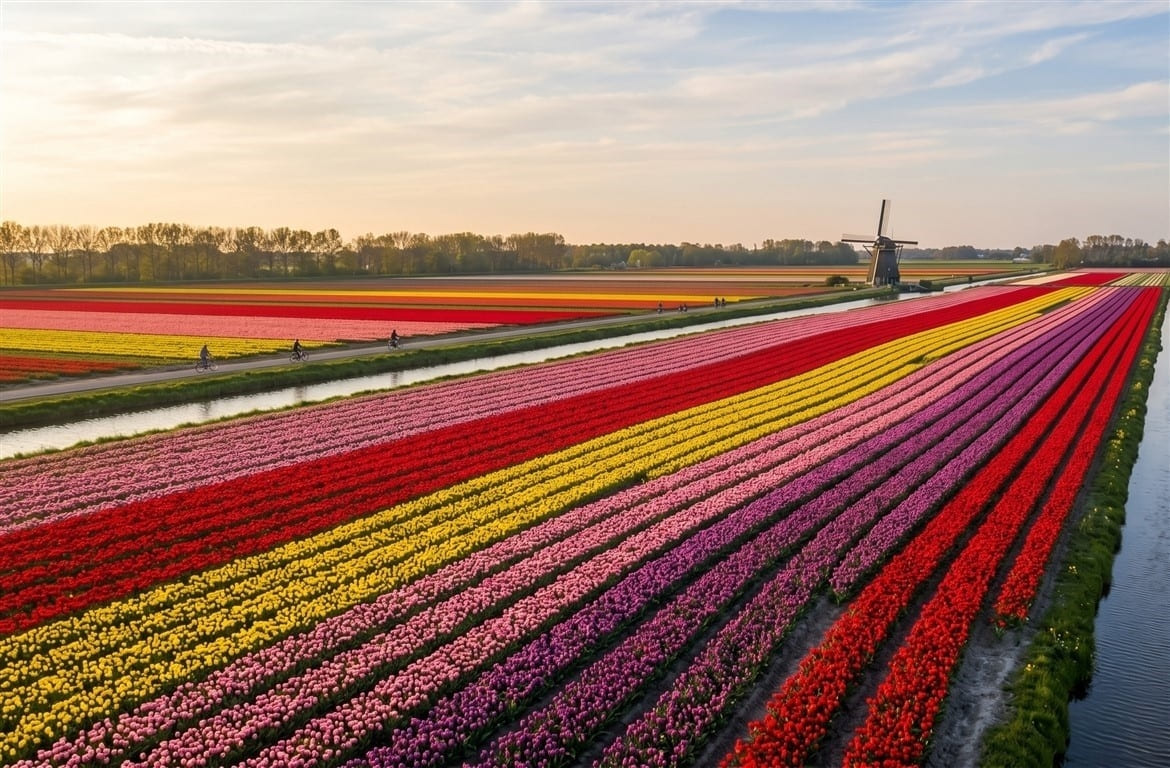
Listen, the Dutch tulip season? It’s brief, it’s bursting with color, and frankly, it’s a beautiful kind of chaos. You see fields near Lisse, perfectly green one week, then *bam*! The next, it’s like someone unrolled the most vibrant carpets—reds, yellows, pinks, purples, whites—stretching out between those classic canals and sleepy farm roads. People jet in from all over. Cyclists pedal hard, trying to keep up. Photographers? They’re up before dawn, tripods in hand. And honestly, when you hit it just right, those real Dutch tulip fields? They’re every bit as dazzling as all those pictures promise. No filter needed.
Okay, so for 2026, pencil this in: your prime tulip-spotting window kicks off late March and cruises right through early May. Your absolute best bet for seeing those grand open fields? That’s typically mid-April, pushing into the very first days of May. Keukenhof, you know, that utterly famous spring garden over in Lisse, has its doors open from March 19th all the way to May 10th, 2026. And mark your calendars! The Flower Parade in the Bulb Region—that massive spectacle—hits its peak parade day on April 18th, 2026. Over in Flevoland, their neat, organized tulip routes kick off April 8th, 2026. Sure, these dates really help us plan our spring trips, but let’s be real: the fields themselves? They’re still playing by Mother Nature’s rules. Blooms don’t check hotel reservations. Never have, never will.
What You Absolutely Need to Know Before Visiting the Tulip Fields
Why the Netherlands Just Can’t Get Enough of Tulips
Tulips are so woven into the very fabric of Dutch identity, it almost feels weird to mention they aren’t even native to the Netherlands. This flower actually made its way to Western Europe via ancient trade routes. By the 17th century, though? It had become a full-blown Dutch obsession. The country’s sandy coastal soils, their incredible drainage smarts, cool spring weather, bustling bulb auctions, and wide-reaching export networks all helped turn that obsession into a massive industry. Fast forward to today, and the Netherlands is still one of the planet’s biggest bulb producers. They grow tulips not just for us tourists, but also for cut flowers, bulb exports, breeding new varieties, and all those stunning seasonal displays.
Here’s a crucial detail: most of those unbelievably photogenic tulip fields? They’re actually working farms. This changes everything. A field isn’t some public park. It’s a crop, pure and simple. Farmers carefully plant bulbs in long, precise blocks. They meticulously remove any diseased plants, strategically cut flower heads at just the right moment to strengthen the bulbs, and, yes, they manage visitors who sometimes, bless their hearts, completely forget where they’re standing. Those rows look incredibly romantic from afar. Get up close, though? It’s a business. Mud and all.
Tulip Fields Versus Tulip Gardens: What’s the Difference?
Alright, so a tulip field is pure agriculture. A tulip garden, on the other hand, is meticulously designed with *you*, the visitor, in mind. Knowing this difference is super important for planning your trip.
Keukenhof? That’s a garden. Definitely not a production field. It’s got beautifully landscaped beds, inviting pavilions, clear paths, serene ponds, those iconic windmill views, restaurants, restrooms, proper ticket control, and clever layered planting that ensures vibrant color throughout its entire open season. The nearby fields around Lisse, Hillegom, Noordwijkerhout, Voorhout, and Sassenheim? Those are simply farm plots. They deliver that classic, striped-landscape view you see everywhere, but usually, access is limited to the road edge, designated cycling paths, or clearly signed viewing points.
Travelers who prefer spotless shoes, readily available toilets, stroller-friendly paths, and guaranteed, spectacular floral displays usually fall head over heels for the gardens. Folks craving expansive landscapes and wide-open horizons tend to lean towards the field routes. The absolute best tulip trip often blends both: maybe hit Keukenhof first thing in the morning, then explore the Bollenstreek lanes by bike later, before settling down for a quiet dinner somewhere far from the tour-bus chaos.
Can You Actually Walk Into the Tulip Fields?
Nope. Unless you spot a clear sign inviting you in, a specific photo area, a designated picking garden, or you’re on a guided farm visit, just don’t do it. Most tulip fields are private property. Wandering between the rows can really mess up bulbs, compact the soil, break delicate stems, and even spread plant diseases from one field to another. One single footprint might seem totally harmless, right? But a thousand visitors, all thinking the exact same thing, can absolutely devastate an entire crop.
Stick to the marked paths, those roadside pull-offs, official observation spots, and visitor farms that openly invite guests into prepared areas. Your photo will still look amazing. Better, honestly, because nobody wants a lovely spring memory with an upset farmer glaring in the background.
The Absolute Best Time to Catch Those Tulip Fields in the Netherlands
Peak Tulip Bloom Season: Don’t Miss It!
For seeing those wide-open fields, the classic sweet spot in 2026 runs from mid-April right into early May. You’ll see early spring bulbs like crocuses and daffodils pop up first. Then hyacinths arrive, bringing their incredible fragrance and dense color. After that, the tulips completely take over. The exact peak bloom shifts around a bit, depending on the region and, of course, the temperature. A chilly March can slow everything down. A warm spell? It’ll speed things up. And watch out: strong winds or heavy rain can flatten a beautiful display in no time.
Keukenhof, with its clever planting plan, gives visitors a much wider window. They layer beds with early, mid-season, and late varieties. Outdoor production fields, however, are way less forgiving. A field looking utterly perfect on a Thursday could be topped the very next week, leaving only green stems where all that glorious color once stood. That’s just normal farming, folks, not bad luck.
When Different Flower Fields Actually Bloom
| Flower type | Usual viewing window | Where travelers notice them |
|---|---|---|
| Crocuses | March, leading into early April | You’ll spot them in gardens, parks, and those lovely early spring displays. |
| Daffodils | Late March through mid-April | Look for them along Bollenstreek roadsides, at Keukenhof, or in charming village gardens. |
| Hyacinths | Early to mid-April | These are a common sight in Bollenstreek fields, often making the air smell absolutely divine. |
| Tulips | Mid-April through early May | The big areas: Bollenstreek, Flevoland, Noordoostpolder, and the Kop van Noord-Holland. |
| Late tulip varieties | Late April, running into early May | Check the Keukenhof beds, certain selected farms, or the cooler northern fields. |
How the Weather Completely Shapes the Blooming Period
Dutch spring weather, bless its heart, absolutely loves to change its mind. One morning might be bright blue and sunny, then suddenly turn damp by lunchtime. A mild week in March can nudge the buds forward, but then chilly April nights might hold the color right back. Those coastal winds near Noordwijk and Zandvoort? They can feel pretty biting, even when the sun is out. Flevoland, with its much broader polder landscapes, often feels even more exposed to the elements.
So, here’s the practical advice: keep an eye on the flower forecasts. Check out recent photos posted by local farms. And for goodness sake, if tulips are the absolute main reason for your trip, try to build in at least one flexible day. People who book only a single afternoon, squeezed in after a museum morning and before a dinner reservation, often end up spending that entire afternoon stuck in traffic near Lisse. That’s just heartbreaking.
How to Actually Follow Flower Forecasts
Your best bet is to use current bloom reports from Keukenhof, the Bollenstreek tourism pages, the Flevoland tulip route organizers, local farms, and, crucially, recent social media posts from actual visitors. Look for images with clear date stamps, not just generic, perfectly polished promotional shots from ages ago. The ultimate clue isn’t some slick drone video from last year. It’s that slightly muddy phone photo someone just posted *yesterday* from near Hillegom. That’s the real gold.
The Top Spots to See Tulip Fields in the Netherlands
Bollenstreek: The Famous Dutch Bulb Region You’ve Dreamed Of
The Bollenstreek, that gorgeous coastal bulb region nestled between Haarlem and Leiden, is hands-down the classic choice for first-timers. It wraps in places like Lisse, Hillegom, Noordwijkerhout, Sassenheim, Voorhout, and all the charming villages nearby. Amsterdam is super close. Keukenhof lives here. The epic Flower Parade rolls right through. Renting a bike? Easy peasy. The views? They’re exactly like those glossy travel posters: flat fields, quaint church towers, little farm sheds, distant dunes, and those unforgettable stripes of color hugging the narrow roads.
The downside? Crowds. Especially on peak weekends. Roads around Keukenhof and Lisse can get absolutely jammed. Parking lots? Full to the brim. Rental bikes vanish in a flash. Cafes get slammed. Your strategy: go super early, hit it on a weekday, or better yet, stay overnight in Leiden, Haarlem, Noordwijk, or a smaller village. That way, your day doesn’t kick off with an hour-long queue just to escape Amsterdam.
Keukenhof and Its Surrounding Tulip Wonderland
Keukenhof is simply the easiest answer for anyone wondering where to see tulips near Amsterdam. This magnificent garden opens daily during its spring season, showcasing millions upon millions of bulbs spread across carefully designed beds, grand pavilions, lush lawns, elegant water features, and serene wooded paths. It’s perfectly polished, undeniably busy, incredibly photogenic, and just brilliant at what it does.
Meanwhile, the surrounding countryside is where you’ll find those iconic field views. Loads of visitors grab bikes near Keukenhof and pedal through lovely loops around Lisse and its neighboring villages. The pace is slow, but not because the route is tough—it’s because everyone keeps pulling over for photos! That’s part of the fun. Just let it happen.
Flevoland Tulip Route: Space and Grandeur
Flevoland offers a truly big-sky tulip experience. This whole province sits on land famously reclaimed from the old Zuiderzee, and its tulip routes wind along expansive polder roads near Dronten, Lelystad, Zeewolde, and Almere. Their organized routes for 2026 actually start from April 8th, with fantastic options for both cars and cyclists in different areas.
This region is a real winner for travelers craving more space. The fields stretch out much wider here than in the Bollenstreek, parking stress is way lower (unless it’s a major event day), and the landscape has this wonderfully clean, geometric feel: straight ditches, straight roads, straight rows, then sudden, vibrant bursts of color. It’s less ‘cute’ than Lisse, more elemental. Some folks definitely prefer it that way.
Noordoostpolder: The Grand Scale of Tulips
The Noordoostpolder, way up in the northern part of Flevoland, is actually one of the absolute strongest regions for serious tulip routes. Emmeloord, Creil, Espel, Marknesse, and all the villages around them are nestled right by enormous fields and fantastic seasonal routes. The sheer scale here genuinely takes visitors by surprise, especially if they only know the Amsterdam-Lisse version of tulip travel.
Driving really works well here, though cycling is super rewarding on calmer days. Be warned: the wind can be brutal. Bring layers, and please don’t underestimate the distances between villages. A coffee stop that looks conveniently close on the map might feel a lot further when that polder wind is hitting you full in the face.
Goeree-Overflakkee: Quieter Island Blooms
South Holland’s island landscapes offer tulip fields with a noticeably quieter vibe. Goeree-Overflakkee simply doesn’t pull in the same international hordes as the Bollenstreek, which gives it this wonderful, more local spring mood. The roads here weave past fields, dikes, charming villages, and sparkling water. The colors truly pop against those vast skies and broad horizons.
This area is a gem for travelers with a car and a fondness for taking detours. It’s definitely not the easiest day trip from Amsterdam, but it pairs beautifully with a visit to Rotterdam, Zeeland, or a longer Dutch coastal adventure.
Zeeland Tulip Fields: Unexpected Beauty
Zeeland is typically known for its stunning beaches, incredible seafood, massive storm-surge barriers, and sprawling estuaries. But guess what? Tulip fields absolutely bloom in parts of the province during spring! The whole experience feels completely different from the crowded bulb belt. There’s a fresh salt air, much larger distances to cover, and a deep rural calm that’s just perfect for travelers who genuinely dislike crowds.
For a fantastic spring road trip, Zeeland perfectly combines vibrant flowers with windswept dunes, charming harbor towns, and mouth-watering seafood lunches. Not a bad combo. Not bad at all.
Northern Netherlands Tulip Fields: The Untouched Charm
Up in the northern provinces, including bits of Friesland and Groningen, you’ll find tulip fields that tend to bloom a touch later in cooler seasons. The distances are bigger, visitors are far fewer, and the landscapes here feel wonderfully open, practical, and deeply agricultural. This isn’t where most first-time travelers head, and honestly? That’s precisely its charm.
Definitely plan on using a car up here. Public transport will get you to the towns, sure, but the fields themselves are out where fields usually are: well outside of town, down roads that absolutely were not designed for bustling sightseeing shuttles.
Anna Paulowna and the Poldertuin: A Local Secret
Anna Paulowna, nestled in the Kop van Noord-Holland, offers a delightful blend of bulb fields, genuine village character, and the Poldertuin—a free garden often lovingly called a “mini Keukenhof.” It’s considerably more modest than Lisse, which is exactly why people adore it. Paths meander past lovely spring bulbs, comfortable benches, tranquil water features, and neat planting beds, all without the pressure of a major international attraction.
The wider region around Breezand and Julianadorp also boasts beautiful flower fields. This area works wonderfully for travelers basing themselves near Alkmaar, Den Helder, or anywhere along the northern coast.
Free Tulip Gardens and Those Wonderful Hidden Flower Spots
Poldertuin in Anna Paulowna: A Calm Oasis
Poldertuin stands out as one of the Netherlands’ best free spring gardens for anyone who adores tulips. It’s incredibly easygoing, bursting with flowers, and wonderfully local in its whole vibe. No elaborate stagecraft here. No enormous arrival hall. Just pleasant paths, vibrant bulbs, fresh spring air, and people simply taking their time. Families especially appreciate its manageable size, since it won’t eat up your entire day.
Hortus Bulborum: A Living History
Hortus Bulborum, located in Limmen, is dedicated to preserving historic bulb varieties. We’re talking old tulips, daffodils, hyacinths, and other classic spring bulbs. It really appeals to travelers who care deeply about heritage, the art of plant breeding, and peaceful, quieter gardens. The rows here look quite different from commercial display beds; the atmosphere feels much more like a living archive, a beautiful botanical treasure chest.
Passion for Tulips Show Garden: A Closer Look
Show gardens, often linked directly to bulb growers, offer visitors a fantastic opportunity for an up-close look at various tulip varieties, their stunning colors, unique shapes, and creative planting styles. They’re super useful when the main production fields are closed or have already been topped. Some even feature dedicated photo areas, sales points, or short, informative educational displays. Just remember to check their season schedule before heading out, because opening days and field conditions can, and do, change throughout the spring.
How to Actually Get to the Tulip Fields
Visiting Tulip Fields from Amsterdam: Your Best Bets
The absolute easiest tulip day trip from Amsterdam is definitely the Bollenstreek. Travelers usually aim for Keukenhof, Lisse, Hillegom, or Noordwijkerhout. During the garden season, you’ll often find direct seasonal buses connecting major transport hubs straight to Keukenhof. Or, you can catch a train to Leiden, Haarlem, or Hillegom and then link up with buses, taxis, rental bikes, or organized tours.
On parade weekend, and especially on sunny peak Saturdays, you need to leave early. And I mean *really* early. Not “after breakfast at 10:30” early. Think “before the sun is even thinking about rising.” The difference between a smooth, pleasant ride and a slow, maddeningly crowded slog can easily be an entire hour.
Traveling by Car: Freedom (and Headaches)
Having a car gives you incredible freedom, particularly if you’re exploring Flevoland, Zeeland, Goeree-Overflakkee, and the northern tulip regions. But it also brings potential parking headaches, especially near Keukenhof and the Bollenstreek on peak days. Always pre-book parking if it’s required. Please, please respect any temporary road closures, and for the love of tulips, do not stop in farm entrances just to snap photos. Farmers use those entrances for machines that are often much, much wider than many visitors expect.
Traveling by Public Transport: Smart, But Plan Ahead
Public transport really shines for Keukenhof, Leiden, Haarlem, Hillegom, and certain parts of the Bollenstreek. It becomes a bit less smooth for reaching scattered fields in Flevoland or the more remote northern provinces. Before you even leave the city, make sure you’ve figured out that final mile. Yes, the Netherlands boasts incredible public transit, but tulip fields don’t always conveniently sit right next to a train station.
Biking Through the Tulip Fields: The Ultimate Experience
Cycling? Oh, cycling is simply the most exquisite way to truly soak in the bulb region, provided the weather cooperates. The pace just perfectly matches the landscape. You’ll actually smell the hyacinths before they even come into view. You hear birdsong, the distant hum of tractors, the satisfying crunch of tires on grit. And best of all, you can stop anytime without blocking traffic, which, during tulip season, is an absolute gift.
- Want a quick spin? Just rent a bike close to Keukenhof or Lisse, then cruise along the clearly marked local loops winding through the surrounding fields. Perfect for families or anyone new to cycling who isn’t up for an all-day pedal.
- Ready for a longer adventure? Start your ride from Leiden, Haarlem, Noordwijk, or Hillegom and connect villages, dunes, and those glorious bulb roads. Don’t forget water, a windproof layer, and a good dose of patience at busy intersections.
Guided Tulip Tours: Let Someone Else Handle It
Guided tours are fantastic because they completely take away the planning burden. They’re super useful for travelers short on time, visitors without a car, or anyone who just wants that local insight and context. Options range wildly, from big bus tours zipping out of Amsterdam to intimate small-group cycling trips, fascinating farm visits, dedicated photography tours, and even private custom routes. Just make sure to read the itinerary super carefully: some tours might *only* visit Keukenhof, while others include multiple field stops or actual working farms.
Best Tulip Routes and Maps: Your Navigation Guide
Bollenstreek Flower Route: The Classic Journey
The classic Bollenstreek route effortlessly links Haarlem, Hillegom, Lisse, Keukenhof, Noordwijkerhout, and Leiden. Cyclists can cleverly use the Dutch junction network to design their own flexible loops. Drivers, however, should absolutely avoid those tiny lanes on peak weekends, unless they genuinely enjoy crawling behind countless other people snapping photos through their car windows.
Flevoland Tulip Route: Big, Open, and Beautiful
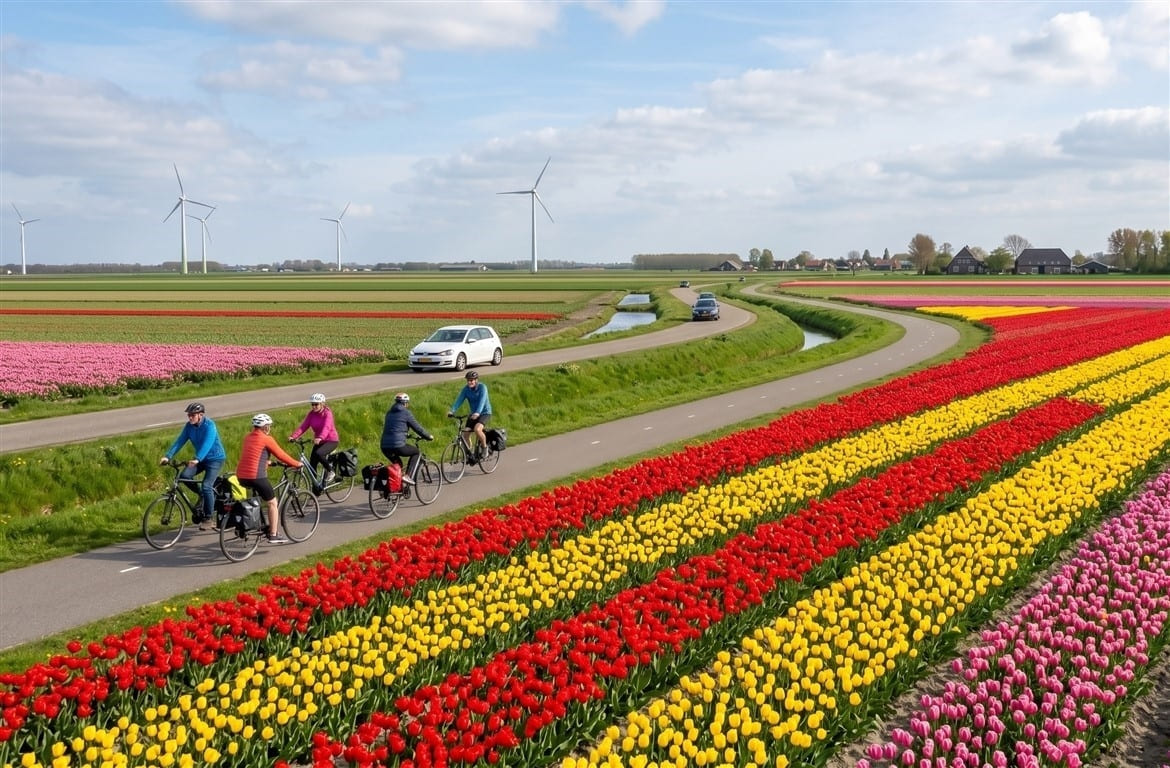
Flevoland’s routes are meticulously organized by area, and often, they’re app-based, offering separate paths for cars and bicycles. The polder setting makes navigation wonderfully clear, but just a heads up: distances here are much longer than they appear on a map. Pick one route and really enjoy it, instead of attempting to “do all of Flevoland” in a single day. That kind of plan sounds incredibly bold over breakfast, but often feels pretty foolish by mid-afternoon.
Scenic Cycling Routes: Pedal Through Perfection
Fantastic cycling bases include Lisse, Noordwijk, Hillegom, Leiden, Haarlem, Dronten, Emmeloord, and Anna Paulowna. For an even richer day, why not combine your tulip viewing with a ride through the dunes, a charming village lunch, a stop at a local farm shop, or a visit to a smaller, peaceful garden? Honestly, a route with fewer fields but better, more enjoyable stops often feels far more satisfying than a frantic, desperate hunt for every single famous viewpoint.
Using a Tulip Map to Plan Your Epic Trip
A truly useful tulip map will clearly show current fields, any road closures, parking spots, bike paths, and all the official viewing areas. Make sure you use updated maps from regional tourism boards, the route organizers, and the gardens themselves. Old blog maps can sometimes lead you astray, sending visitors to fields that simply don’t have tulips anymore. Remember, crop rotation changes the whole picture every single year.
Tulip Festivals and Spring Events in 2026: Mark Your Calendars!
Tulip Festival Amsterdam: Blooms in the City
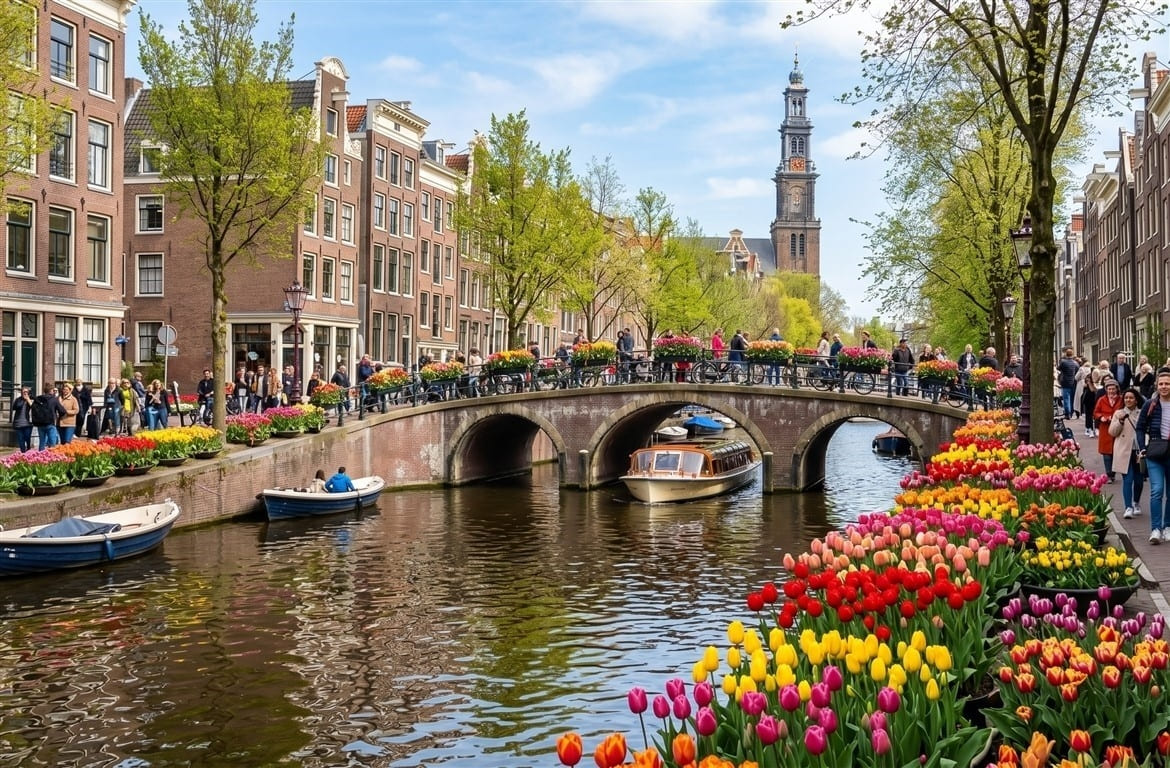
Amsterdam genuinely embraces spring with fabulous tulip displays scattered across its public spaces, various museums, charming hotel gardens, bustling streets, and serene squares. The broader 2026 tulip season around Amsterdam and the Bollenstreek stretches from March 19th right through to May 10th, perfectly aligning with Keukenhof’s open season. City displays are certainly not the same as those vast rural tulip fields, but they add a delightful splash of color for travelers staying in Amsterdam who simply can’t commit to a full day outside the city.
Flower Parade in the Bulb Region: A Grand Spectacle
The Bloemencorso Bollenstreek ranks as one of the busiest, most exhilarating spring events in the Netherlands. For 2026, the festivities actually run from April 15th to April 19th, with the magnificent main parade rolling out on Saturday, April 18th. Floats, absolutely adorned with bulb flowers, journey from Noordwijk all the way toward Haarlem, weaving through the heart of the bulb region with massive, cheerful crowds lining the entire route.
Here’s a crucial tip: book your transport and accommodation *super early* for parade weekend. Streets close down, buses fill up instantly, and those quiet villages suddenly transform into buzzing festival towns. The atmosphere is wonderfully cheerful, but undeniably dense. Small children might adore the floats but absolutely despise the waiting. And frankly, adults too.
Local Tulip Events Across the Netherlands: Find the Hidden Gems
Beyond the huge, well-known names, you’ll discover an array of smaller, charming events popping up in Flevoland, Noordoostpolder, the Kop van Noord-Holland, and countless local bulb villages. These can include anything from intimate farm visits and lovely walking routes to delightful picking gardens, intriguing art routes, fun children’s activities, and even temporary photo fields. The smaller events often feel much warmer and more authentic than the big-ticket attractions, mainly because volunteers, local growers, and neighborhood cafes are often deeply involved in making your day special.
Tips for Visiting Tulip Fields Responsibly: Be a Good Guest
Respect Farmers and Private Land: It’s Their Livelihood
Just stay completely out of any closed fields. Keep those drones firmly grounded unless local regulations and explicit landowner permission allow them. Do not, under any circumstances, pick flowers from production fields. And please, don’t move barriers just to get a “cleaner” photo. These rules aren’t just for decoration; they’re there to protect valuable crops and the livelihoods of hardworking farmers.
Best Times of Day for Those Perfect Photos
Early morning light is soft, there are fewer people around, and the roads are calmer—a photographer’s dream. Late afternoon can be equally beautiful, with the low sun casting a gorgeous glow across the rows. Midday light tends to be harsher, yet colors really *pop* under a clear blue sky. After a rain shower, fields absolutely shimmer, but be prepared: paths will get muddy. Your shoes will definitely suffer. Just accept it.
What to Wear and Bring: Be Prepared!
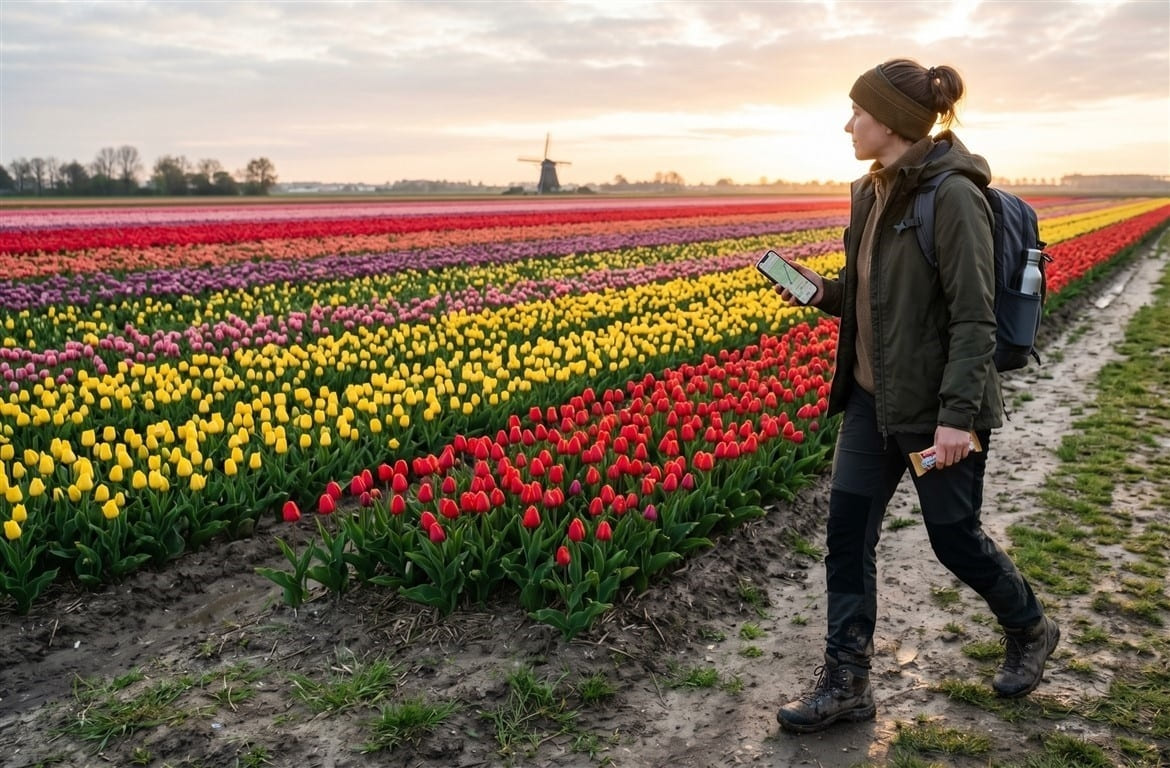
- Layered clothing: Dutch spring weather can flip from sunny to chilly in a flash. A good windproof jacket is an absolute must, even on bright days.
- Water-resistant shoes: Field edges, cycling paths, and even parking areas can get surprisingly wet or muddy, especially after rain.
- Charged phone and offline map: Invaluable for navigating bike junctions, using route apps, checking weather updates, and handling any bus changes.
- Reusable water bottle and snacks: Cafes near major attractions get seriously crowded during peak hours. You’ll thank yourself later.
Avoiding Crowds: Your Secret Strategy
Visit on weekdays. Arrive at Keukenhof right when it opens its doors. On peak Saturdays, seriously consider choosing Flevoland, Noordoostpolder, Anna Paulowna,
0 Comment