


Bangkok’s Floating Markets: Your Guide to Best Spots, Tips, and Getting Around
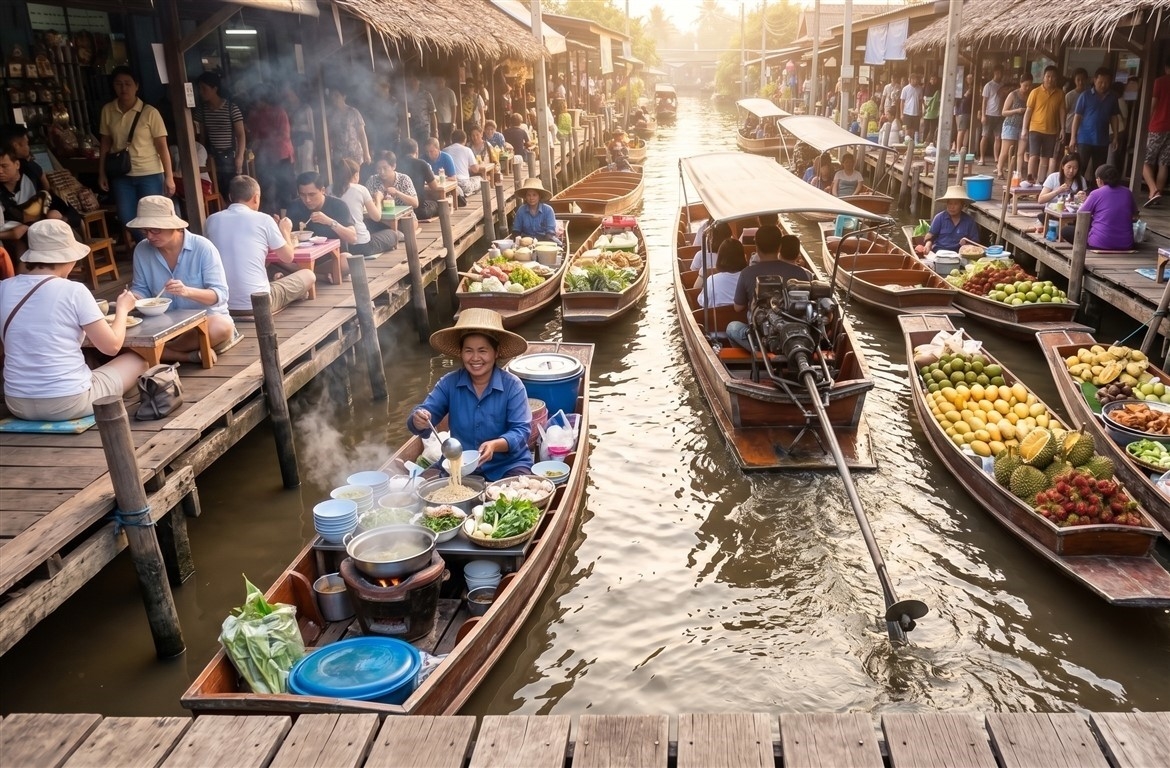
Bangkok kicks off its day right on the water, often before many hotel guests even finish their morning coffee. Little boats gently bump against wooden piers. Vendors expertly dish out noodles from their tiny, floating kitchens. The sweet scent of coconut smoke drifts lazily over the canal, then a longtail boat engine suddenly rips through the quiet, and somehow, everyone just keeps eating like nothing happened.
You see, a floating market in Bangkok isn’t just one single place. It’s really a whole small world of canal-side stalls, lively weekend food hubs, ancient trading routes, souvenir boats, fruit sellers, serene temples, charming river houses, and yeah, sometimes tour buses parked a little too close. Some markets definitely feel like a performance. Others genuinely feel local. A few are wonderfully messy in the best possible way. Picking the right one truly sets the tone for your entire day.
Understanding Bangkok’s Floating Markets
Canal commerce and Thai river ways
Before paved roads took over everything, canals were the main highways for people, rice, fruit, fish, flowers, and all the local gossip. Bangkok and its surrounding provinces were intricately connected by these waterways. Small boats operated like mobile shops. A vendor could effortlessly paddle from one house to the next, pause at a temple pier to trade their fresh produce, then move along before the midday heat became truly unbearable.
Today’s floating markets still capture a piece of that old rhythm, though perhaps not in its purest, untouched form. Some vendors truly cook and sell directly from their boats. Others have shifted to fixed stalls along the banks. The real magic, however, lies in this vibrant mix: slurping down a bowl of boat noodles right beside murky canal water, watching a grandma perfectly grill bananas, an eager tourist comically haggling for a straw hat, or a child happily feeding fish near a temple.
Why people still visit these markets
Travelers keep flocking to these markets because they offer Bangkok a much softer side. The city can often feel like an endless sprawl of glass towers, honking traffic, enormous malls, and elevated Skytrain lines. Then you hit the canal. Suddenly, breakfast appears from a boat, and your entire day just… slows down.
There’s another reason, less romantic but completely honest: floating markets are incredibly straightforward. You can easily eat, stroll, snap photos, hop on a boat ride, grab a snack for later, and be back in Bangkok well before dinner. No confusing museum rules. No strict dress code beyond comfort and some common sense about the sun. Just show up with some cash, a dash of curiosity, and a tiny bit of patience.
Top Floating Markets in & Around Bangkok
Damnoen Saduak’s Market
Damnoen Saduak is *the* famous one. It’s the market you see on postcards. Boats absolutely jam-packed with colorful fruit, trendy hats, warm coconut pancakes, sizzling grilled skewers, and visitors pointing cameras in every direction imaginable. It’s located in Ratchaburi province, a bit outside Bangkok, so many travelers combine it with the Maeklong Railway Market for a half-day or full-day adventure.
Its main draw is purely visual. Think narrow canals, boats crammed together, vibrant produce, and that slightly chaotic, theatrical buzz of commerce. The trade-off is pretty obvious too. It can feel heavily set up for tourists, with higher prices and incredibly busy boat traffic. Show up super early or be ready for serious crowds. Even better, just embrace it for what it is: a renowned travel spectacle, not some secret, untouched village morning.
Amphawa’s Lively Market
Amphawa sits in Samut Songkhram province and has a totally different vibe. It’s well-known as a weekend afternoon and evening market, featuring charming old wooden houses lining the canal and heaps of fresh seafood cooked right by the water. Thai locals adore it, so the energy here feels less like a quick photo stop and much more like a proper evening out.
Boats here sell delicious grilled prawns, tender squid, noodles, sweet treats, and refreshing drinks. As daylight fades, the canal becomes even more enchanting. Firefly boat trips are a very popular activity after dark. These are gentle, not flashy at all. Just quiet water, rustling trees, and tiny, twinkling lights. A perfect calm antidote to Bangkok’s non-stop neon.
Taling Chan’s Local Charm
Taling Chan is conveniently located right inside Bangkok, making it one of the easiest floating markets for travelers who are a bit short on time. It’s compact, super friendly, and much more about a delicious lunch than any grand spectacle. People come here specifically for grilled fish, succulent prawns, zesty papaya salad, and a wonderfully relaxed meal right by the canal.
Boat rides are available through the nearby canals, and the market area itself is very manageable, even for a leisurely visit. It won’t give you that packed-boat image many people picture when they search for a “floating market Bangkok” experience. That, surprisingly, can be a real plus. Less theatrical fuss. More fantastic eating.
Khlong Lat Mayom Market
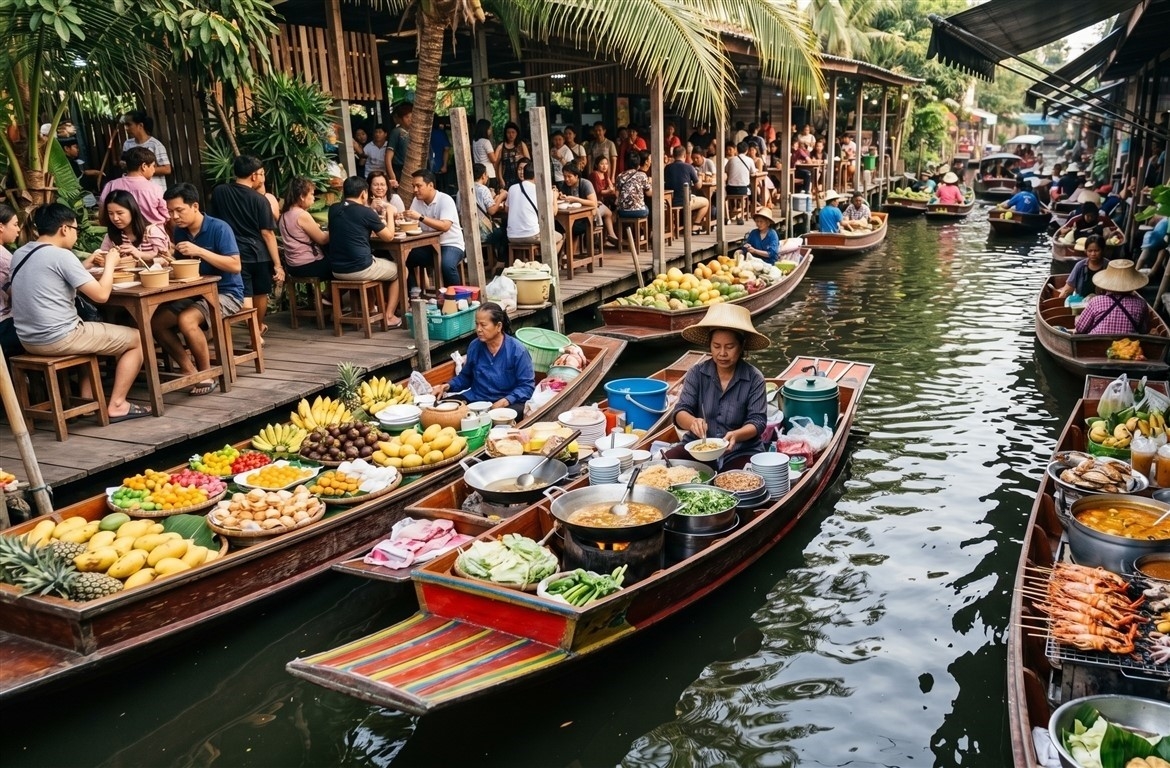
Khlong Lat Mayom is a huge hit with food lovers. The actual “floating” part is quite modest, but oh, the food spread is simply epic: incredible noodles, perfectly grilled river prawns, authentic Thai sweets, fresh fruit, flavorful curries, herb-packed snacks, and icy cold drinks. Arrive incredibly hungry and take your time exploring.
This market is in western Bangkok and pairs beautifully with Taling Chan for a delightful canal-market day. It feels much more authentically local than Damnoen Saduak, with families enjoying meals under shady spots and vendors who aren’t solely focused on tour groups. The best moments are often the small ones: that first bite of smoky grilled pork, a unique clay pot dessert, or a quiet canal boat gliding past swaying banana trees.
Bang Nam Phueng’s Green Oasis
Bang Nam Phueng sits in Bang Kachao, that lovely green curve of the Chao Phraya River often lovingly called Bangkok’s “green lung.” This market is more of a canal-side weekend affair than a boat-jammed floating market, but it absolutely shines for its lush, leafy setting.
Travelers looking for bicycles, towering trees, tasty snacks, and a welcome break from central Bangkok’s relentless noise will totally love it here. Expect delicious local sweets, fresh fruit, refreshing herbal drinks, simple meals, potted plants, and various handmade goods. The pace is wonderfully gentle. Wear comfy walking shoes; the fun actually spills out beyond just one narrow market lane.
Tha Kha’s Quiet Corners
Tha Kha is located near Amphawa in Samut Songkhram province and has a distinctly quieter, more rural vibe. It’s smaller and less overtly dramatic than Damnoen Saduak, with vendors selling fresh produce, tempting snacks, and cooked food all around the canals.
For those travelers seeking genuine calm rather than ticking off a bucket-list item, Tha Kha can be a much more rewarding stop. Timing is key, though, because market days and activity levels aren’t as consistent or broad as Bangkok’s busier weekend markets. Make sure to check the current local schedule before you plan your whole day around it.
Comparing Bangkok’s Floating Markets
| Market | Best For | Usual Opening Pattern | Travel Feel |
|---|---|---|---|
| Damnoen Saduak | Classic photos, first visits | Morning-focused, popular tours | Busy, colorful, tourist-centric |
| Amphawa | Evening food, canal atmosphere | Weekend afternoon/evening | Lively, social, food-driven |
| Taling Chan | Easy Bangkok lunch trip | Weekend daytime | Relaxed, compact, local vibe |
| Khlong Lat Mayom | Thai snacks, relaxed wandering | Weekend daytime | Food-rich, friendly, low-key |
| Bang Nam Phueng | Green escape near the city | Weekend daytime | Leafy, casual, neighborhood feel |
| Tha Kha | Quieter rural canal scenes | Limited local market schedule | Small, calm, traditional |
Picking Your Perfect Floating Market
Great for first-timers
Damnoen Saduak truly wins on sheer recognition. If your dream involves a narrow boat gliding through a crowded canal, fruit piled high, vendors calling out from both sides, then go for it. It’s famous because the scene is so incredibly vivid. Yes, it’s also quite commercial. Both statements are absolutely true.
Our top market for foodies
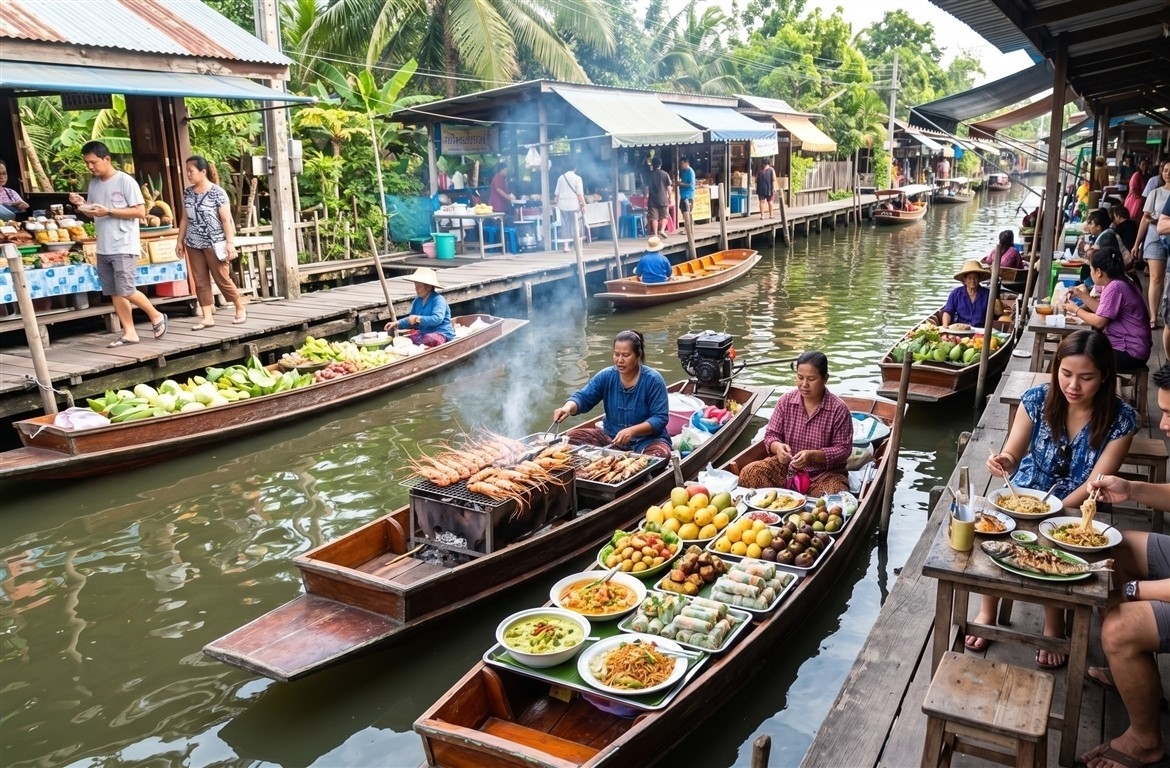
Khlong Lat Mayom definitely has the upper hand when it comes to eating. This market gives you plenty of space to graze leisurely instead of rushing through a strict checklist. Taling Chan follows closely, especially for its amazing grilled seafood and a simple, satisfying lunch by the water. Amphawa really shines later in the day, offering a much bigger, delightful evening vibe.
The calmest canal market
Tha Kha is your serene choice when its schedule aligns with yours. Bang Nam Phueng also works wonderfully for travelers who crave trees, snacks, and open breathing space rather than heavy boat traffic. Neither of these markets delivers that loud, postcard-perfect version of a Bangkok floating market. And honestly, that’s exactly the point.
Ideal for families
Taling Chan and Khlong Lat Mayom are generally easier with kids because the travel time is shorter, and the walking areas feel less overwhelming than at those famous, out-of-town markets. Families still need to keep a close eye on steps near piers, ensure little hands stay inside boats, and carry plenty of water. Bangkok’s heat has absolutely no manners.
Best for stunning photos
Damnoen Saduak is the undisputed visual champion. Amphawa transforms into something truly beautiful later in the day, especially when the warm light bathes the canal houses and seafood stalls begin to glow along the banks. For softer, more natural pictures, Bang Nam Phueng offers lush greenery and intricate small details instead of dramatic, crowded boat scenes.
Activities at a Floating Market
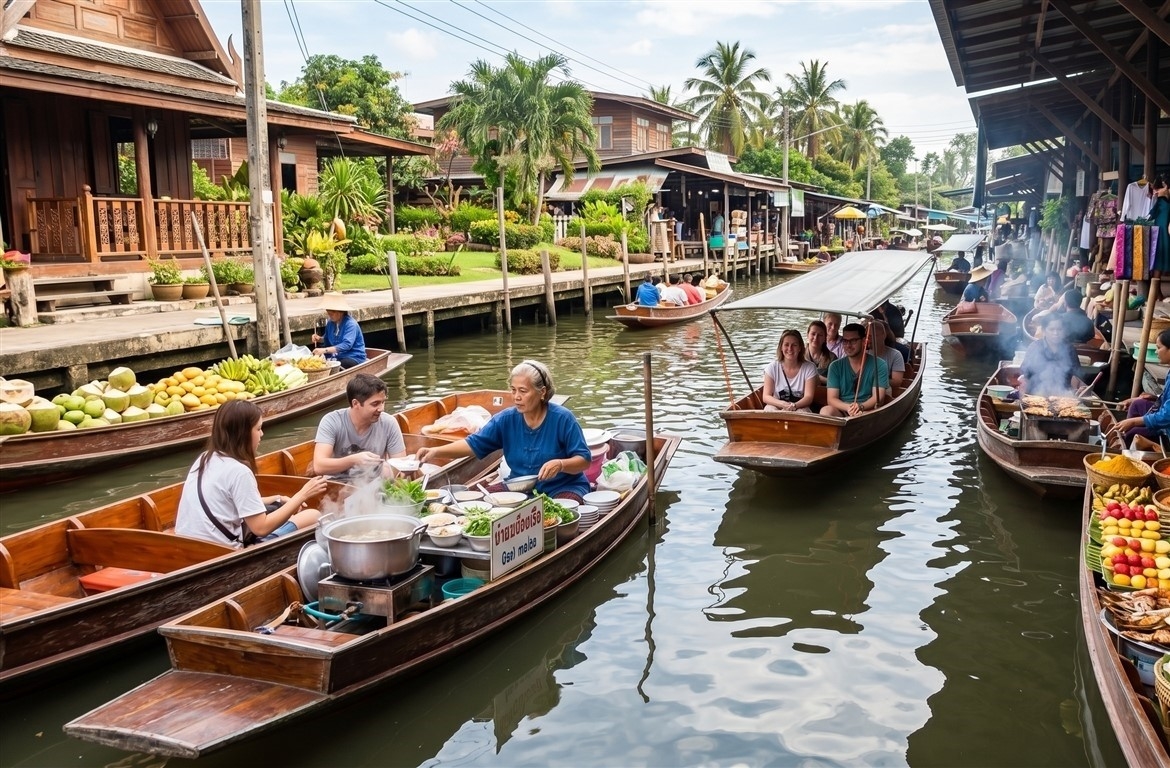
- Hop on a longtail boat ride. A canal ride adds a wonderful sense of movement to your visit, revealing homes, temples, gardens, and tiny piers far beyond the main food area. Always agree on the route and price *before* you step aboard.
- Savor food from various stalls and boats. Try one dish, then another, then another! Boat noodles, fresh grilled seafood, sweet coconut pancakes, savory skewers, local fruits, and classic Thai desserts are all essential parts of the market experience.
- Browse for small, local treasures. Keep an eye out for interesting spices, authentic palm sugar, beautifully woven bags, unique ceramics, delightful snacks, and simple handmade goods. Skip anything that feels mass-produced if you’re hoping for a more meaningful souvenir.
- Capture canal life respectfully with your camera. Boats, shimmering reflections, rising steam, rustic wooden homes, and food prep all make for incredible pictures. Just remember to ask permission before attempting any close-up portraits. A simple smile goes a very long way.
- Combine your trip with Maeklong Railway Market. Damnoen Saduak and Amphawa are frequently paired with Maeklong, that famous market where vendors quickly clear their goods from the railway tracks as a train approaches.
- Stay for the magical fireflies in Amphawa. Evening boat trips gently search the darker canal edges for these twinkling insects. Keep your expectations relaxed. The overall atmosphere and calm feeling matter much more than counting individual fireflies.
What to Eat at Floating Markets
Noodles, seafood, and grilled delights
Food is genuinely the beating heart of most floating markets. Boat noodles arrive in small bowls, boasting rich broth, fragrant herbs, tender meat, and a quick, satisfying kick of spice. Grilled river prawns, succulent squid, fresh fish, savory pork skewers, and various sausages fill the air with irresistible smoky aromas. You’ll definitely smell lunch long before you even decide what to choose!
In Amphawa, seafood is a huge part of the attraction. At Taling Chan, a perfectly grilled fish right beside the canal can easily outperform a fancy lunch in the city center. Khlong Lat Mayom offers the widest, most inviting grazing experience: a plate here, a small bowl there, and that delicious dessert you absolutely didn’t plan to buy but somehow just did.
Sweet mango rice and coconut treats
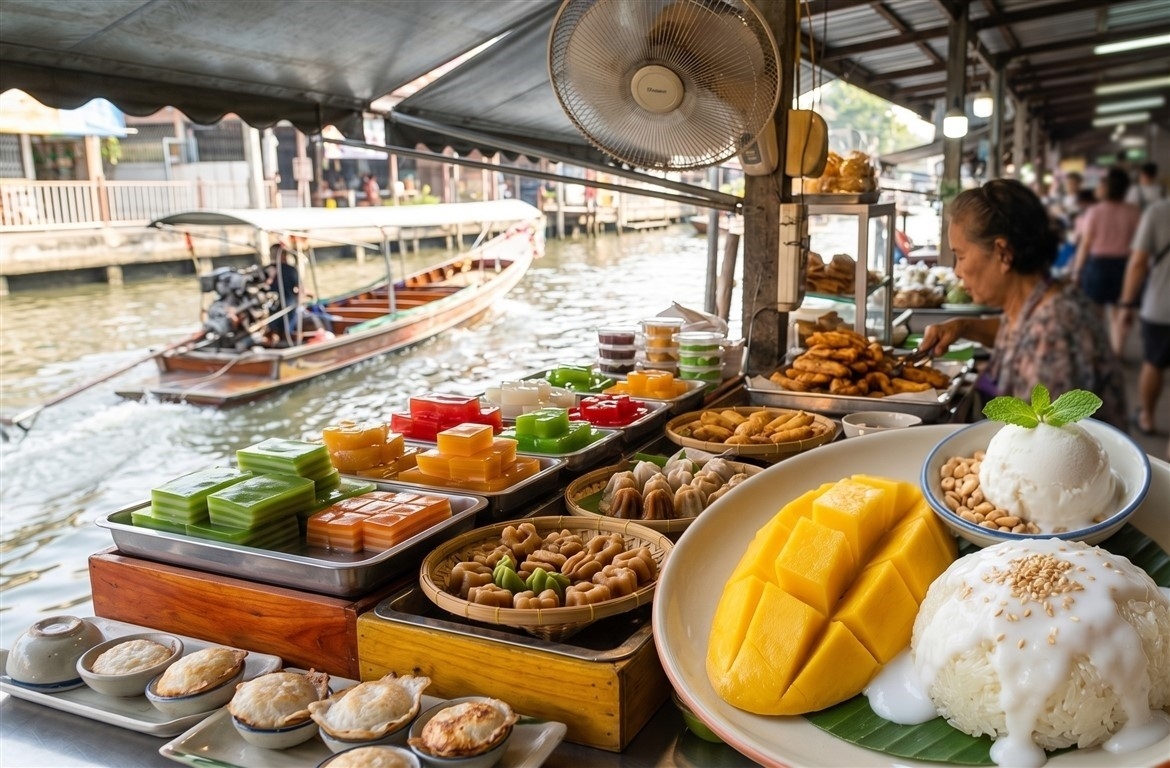
Sweet treats pop up everywhere you look: classic mango sticky rice, creamy coconut ice cream, fluffy khanom krok coconut pancakes, crispy fried bananas, delightful palm sugar sweets, vibrant jelly desserts, and an abundance of fresh fruit. The best dessert might just be the simplest one, savored under a gentle fan while a boat engine rumbles softly nearby.
Vegetarian options
Vegetarian travelers can certainly eat very well, but clear communication is always a huge help. Fresh fruit, various desserts, sweet coconut snacks, grilled bananas, crispy fried tofu, papaya salad (just ask for it without fish sauce), vegetable noodles, and rice dishes are typically available. Keep in mind that fish sauce, shrimp paste, and oyster sauce are incredibly common in Thai cooking, so it’s best to ask directly about ingredients. The term “jay” refers to Thai vegan-style food, though not every single vendor will be able to prepare dishes this way on request.
Hours & Best Time to Visit
Weekend and daily markets
Market schedules are a big deal. Damnoen Saduak is the easiest to plan for because tours run there consistently, and all the action happens in the morning. Amphawa is famous for weekends, with its strongest appeal stretching from afternoon right into evening. Taling Chan, Khlong Lat Mayom, and Bang Nam Phueng are primarily weekend daytime markets.
Schedules can sometimes shift during holidays, special local events, or quieter travel seasons. Always double-check the very latest opening hours before you leave your hotel, especially for smaller spots like Tha Kha.
Morning vs. evening visits
Mornings work best for Damnoen Saduak. The light is cooler, boats are buzzing with activity, and that long drive feels much less painful when you start early. Evenings are perfect for Amphawa, as the market truly comes alive for dinner, canal lights sparkle, and those firefly trips begin.
For markets closer to Bangkok, late morning through lunch is usually the sweet spot. Arrive hungry. Then, make sure to leave before the heat and crowds completely zap your good mood.
How to avoid peak hours
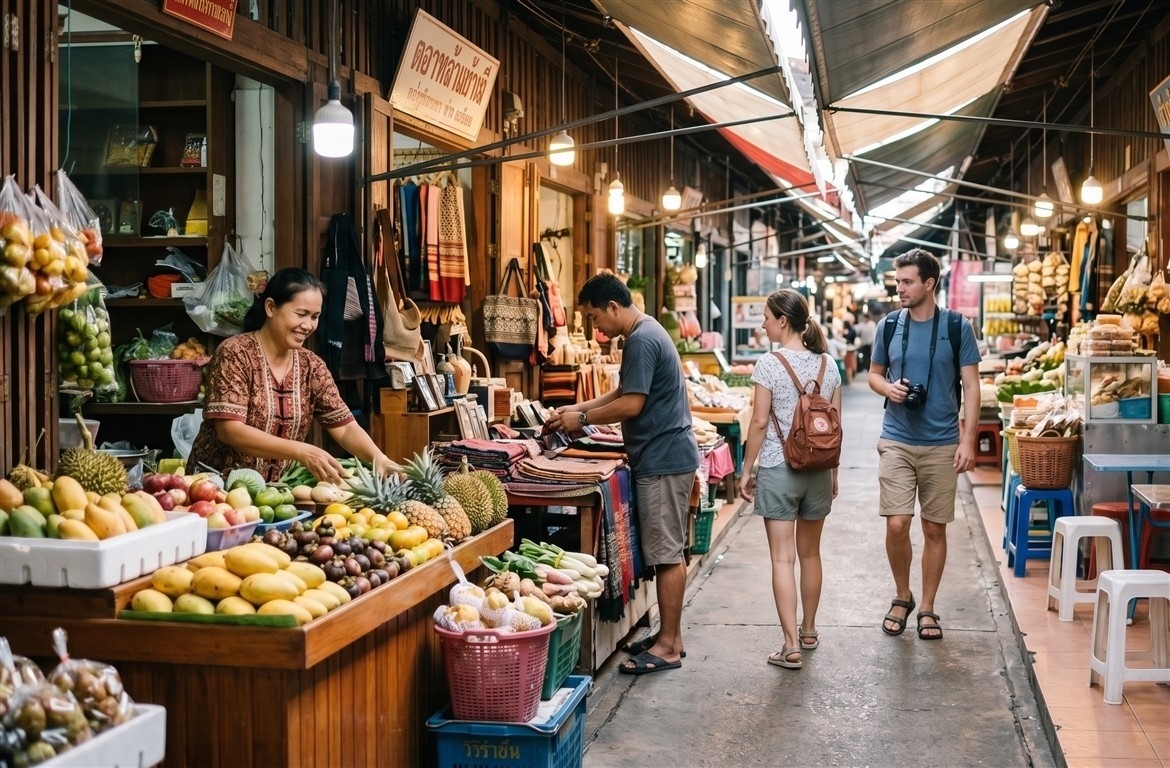
For the really famous markets, just go early. If you’re visiting weekend markets inside Bangkok, showing up near opening time helps you snag good seating and get better photos. Seriously, avoid arriving at peak lunch with a huge group and no cash. That’s how a perfectly pleasant market visit quickly turns into a sweaty negotiation over plastic chairs.
Getting There from Bangkok
Join a guided tour
Tours are hands down the simplest way to reach Damnoen Saduak, Amphawa, and the Maeklong Railway Market. All your transport, timing, and pickups are completely handled. The main drawback? You get less freedom. Stops can feel rushed, and some tours might subtly guide visitors towards specific boat operators or shops.
Hire a taxi or driver
A taxi or private driver gives you much more control, which is super helpful for families or travelers who want to combine several stops. Make sure to agree on the full day’s price, waiting time, exact route, any tolls, and your return plan *before* you leave Bangkok. Write the market name in Thai or save it on a map. This prevents any awkward roadside guessing games.
Public transport options
Public transport can work well for closer markets and for more adventurous travelers. Taling Chan and Khlong Lat Mayom are quite reachable with a mix of rail, bus, taxi, or a ride-hailing app from the nearest convenient point. Getting to Bang Nam Phueng usually involves crossing towards Bang Kachao and then continuing by local transport or even a bike.
For markets further out, public transport definitely saves money but costs time. The journey itself might be fun if you enjoy figuring things out on the fly. If not, just book a ride and save all your energy for enjoying the market itself.
Markets closest to central Bangkok
Taling Chan is definitely one of the easiest floating markets to get to from central Bangkok. Khlong Lat Mayom is also a practical Bangkok-side choice, offering stronger food appeal and a wonderfully relaxed weekend pace. Bang Nam Phueng looks close on a map, but it involves navigating river geography, which always adds a little twist to the journey.
Costs, Boat Rides & Payment
Boat tour prices
Boat prices really vary by market, route, boat type, group size, and your bargaining skills. Shared boats are always cheaper than private rides. Longtail boats usually cost more than shorter, local canal trips. At busy tourist markets, always, always settle on the price *before* you even step into the boat. Don’t wait until you’re already moving!
Food and souvenir costs
Street food at the more local-leaning markets is generally super affordable by Bangkok travel standards. Seafood will naturally cost a bit more, and tourist-heavy zones typically charge higher prices for snacks, souvenirs, and boat rides. Take a moment to compare nearby stalls before you commit to a big meal. The very first vendor you see at the entrance is rarely your only option.
Cash, cards, and change
Make sure to carry plenty of Thai baht in small notes. Many vendors are small, independent operators, so card payment isn’t reliably available across all floating markets. QR payments are common for Thai bank users, but visitors shouldn’t rely on that. Small cash transactions just keep your day running smoothly.
Smart Tips for Your Visit
- Arrive early, especially at famous markets. Damnoen Saduak gets packed incredibly fast. Early morning light also makes for better photos and less brutal heat.
- Compare prices before buying anything. Souvenir stalls often sell similar items. Walk around a bit, look at different options, then make your choice. Bargain gently where it feels appropriate, but don’t get aggressive over tiny amounts.
- Bring proper sun protection. A good hat, sunglasses, sunscreen, and plenty of water are the difference between a fun canal day and a red-faced dash back to your hotel.
- Watch your footing near piers. Wet wood, constantly moving boats, narrow planks, and loose sandals are a terrible combination. Keep your phone secure when boarding any boat.
- Be respectful of local vendors. Consider buying something before turning a food stall into your personal photo studio. Remember, these people are working hard, not posing for a theme park.
Is Damnoen Saduak Worth a Visit?
Why it’s so famous
Damnoen Saduak rocketed to fame because it perfectly matches the image of a floating market most travelers conjure up before landing in Thailand. Boats literally fill the canal. Vendors skillfully pass fruit and food across the water. The whole scene is loud, incredibly colorful, and super easy to photograph. For a very first trip to Thailand, that can definitely be enough.
Crowds, prices, and visitor pressure
That same fame, however, brings its own set of pressures. Tour buses arrive in droves. Boat routes become congested. Souvenir prices inevitably climb. Some visitors leave absolutely thrilled; others feel like they’ve stepped into a performance specifically built for cameras. Both reactions are totally understandable.
The solution really lies in managing your expectations. Don’t go searching for untouched, authentic local life at the most famous floating market near Bangkok. Go for the iconic image, the vibrant energy, the unique canal ride, and its convenient pairing with the Maeklong Railway Market.
Quieter alternatives for your trip
For calmer food experiences and a shorter journey, definitely pick Khlong Lat Mayom or Taling Chan. If you’re after a lovely evening atmosphere, Amphawa is your best bet. For a green, relaxing weekend escape, choose Bang Nam Phueng. And for a truly soft, rural canal visit, check out Tha Kha, assuming its schedule works for you.
Floating Markets with Kids
Family-friendly market options
Taling Chan and Khlong Lat Mayom are generally easier with children because the travel time from central Bangkok is shorter, and delicious food is always close at hand. Bang Nam Phueng can also be a great choice for active families who enjoy bikes, snacks, and open green spaces.
Damnoen Saduak is a bit more intense. Kids might absolutely adore the boats, the bright colors, and all the noise. Parents, however, might first notice the intense heat, the long drive, and the crowded boarding points. Just remember to pack snacks, plenty of water, hats, and a healthy dose of patience. All that “boring” stuff really saves the day!
Boat safety and comfort
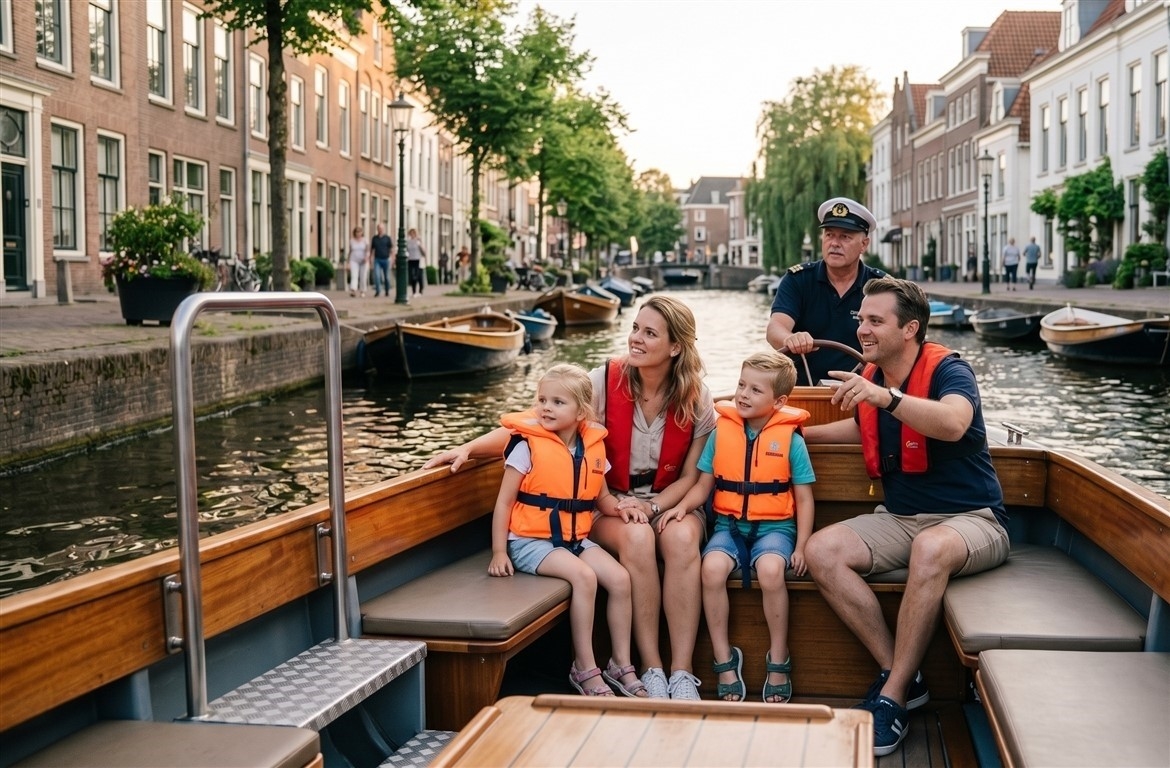
Always pick boats with stable boarding areas and enough room for everyone. Make sure children stay seated quietly while the boat is in motion. Life jackets aren’t always offered automatically, so it’s a good idea to ask for them when you’re booking your ride. A short canal trip is usually much better than a long one with tired kids in the midday heat.
Accessibility & Mobility
Paths, piers, and boats
Floating markets can pose some challenges for travelers with limited mobility. Piers might have steep steps, uneven wooden boards, narrow walkways, slippery wet surfaces, and boats that require a careful climb down. Crowds simply add another layer of stress to the experience.
Markets that feature more land-based stalls, like Taling Chan, Khlong Lat Mayom, or Bang Nam Phueng, are generally easier to navigate than a boat-centric visit to Damnoen Saduak. Still, access varies significantly by entrance point, parking spot, and how busy the market is.
Easier choices for limited mobility
Consider hiring a private driver for convenient door-to-door transport. Plan your visit for early morning, steer clear of peak lunch hours, and skip boat rides if getting on and off feels at all unsafe. You can still enjoy a wonderful canal-side meal and soak in the atmosphere without turning your day into a balancing act.
Common Questions About Bangkok Floating Markets
Which floating market in Bangkok is the most picturesque?
Damnoen Saduak is definitely the most photogenic in that classic, iconic sense: bustling boats, mountains of fruit, narrow canals, and constant movement everywhere. Amphawa, though, becomes truly prettier in the evening, with its charming wooden canal houses, the aroma of dinner cooking, and the soft, magical light.
Which floating market is closest to Bangkok’s center?
Taling Chan stands out as one of the closest and easiest choices to reach from central Bangkok. Khlong Lat Mayom is also a very practical Bangkok-side option, boasting fantastic food and a wonderfully relaxed weekend pace.
How do you reach Damnoen Saduak Floating Market?
Most travelers opt for a guided tour, a taxi, or a private driver from Bangkok. This market is located outside the city in Ratchaburi province, and many day trips commonly combine it with the Maeklong Railway Market.
Can you visit floating markets without a tour?
Absolutely, yes! Taling Chan, Khlong Lat Mayom, and Bang Nam Phueng are excellent choices for independent exploration. For Damnoen Saduak and Amphawa, independent travel is certainly possible, but having a dedicated driver or joining a tour generally simplifies your day.
What’s the best time for a visit?
Mornings are ideal for Damnoen Saduak. Late morning works perfectly for Taling Chan and Khlong Lat Mayom. Amphawa truly shines from afternoon into evening, when dinner stalls and sparkling canal lights take over the scene.
0 Comment