


Best Things to Do in Casablanca
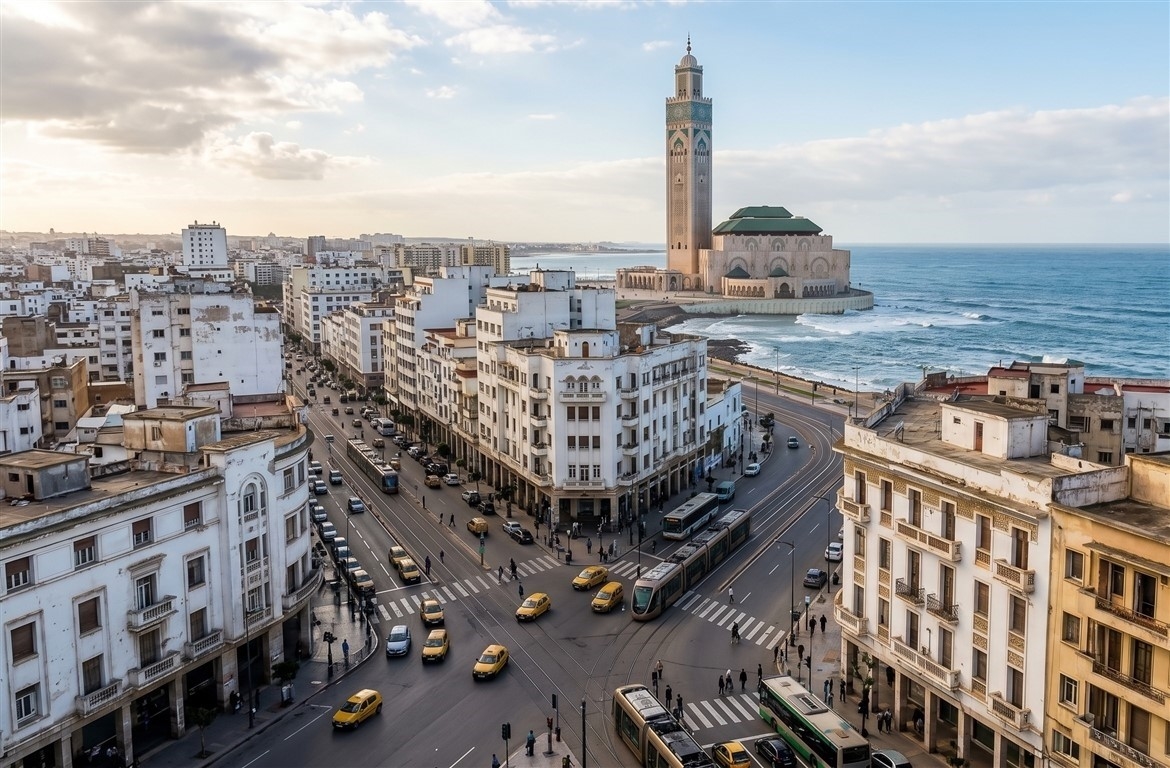
Casablanca does not behave like the Morocco many travelers picture before landing. It is not a maze of ocher lanes like Marrakech, nor a polished capital like Rabat. It is bigger, saltier, louder, and more businesslike. The Atlantic sits beside it, traffic presses in, Art Deco balconies hang above busy streets, and the Hassan II Mosque rises from the edge of the ocean with a kind of calm that makes the rest of the city feel even more restless.
For travelers searching for the best things to do in Casablanca, the answer is not only a checklist. Yes, there are grand sights. Yes, there are beaches, markets, mosques, cafés, and a famous movie-inspired restaurant. The better way to see the city is to move through its contrasts: sacred architecture beside surf clubs, French-era façades beside tram stops, polished malls beside old fish stalls. Casablanca is not always pretty. Good. That is part of the pull.
What to Know Before Visiting Casablanca
How Casablanca Feels Different
Casablanca is Morocco’s economic engine, and it shows. People are working, commuting, bargaining, eating lunch fast, drinking coffee late, and getting on with their day. Tourists are present, but the city does not bend itself around them. That can feel blunt at first. Then it starts to feel real.
The city has a layered look: modern towers, colonial boulevards, older market lanes, seaside promenades, and residential quarters where daily life matters more than postcard charm. Travelers who want a polished fantasy may struggle. Travelers who like cities with grit and movement usually settle in quicker.
How Long to Spend in the City
One full day is enough for the major Casablanca attractions: Hassan II Mosque, the Old Medina, Place Mohammed V, the Habous Quarter, and a sunset walk near La Corniche. Two days feels better. With a second day, the city loosens up. You can add markets, Art Deco streets, a slow seafood lunch, Ain Diab Beach, and a night out without rushing across town like a person late for a train.
Who Will Enjoy Casablanca Most
Casablanca suits travelers who like urban texture, architecture, food, ocean air, and places that do not perform too hard. It also works well for cruise passengers, business travelers adding a short stay, and anyone flying through Mohammed V International Airport before continuing to Marrakech, Fes, Rabat, or the desert.
| Place | Best Time Needed | Why Go | Good For |
|---|---|---|---|
| Hassan II Mosque | 1.5 to 2 hours | Oceanfront architecture and interior tours | First-time visitors |
| Old Medina | 1 to 2 hours | Local lanes, small shops, everyday street life | Walkers and photographers |
| Habous Quarter | 1.5 hours | Bookshops, pastries, crafts, calmer streets | Shoppers |
| La Corniche | 1 to 3 hours | Atlantic views, cafés, sunset walks | Couples and families |
| Central Market | 45 to 90 minutes | Seafood, produce, flowers, quick meals | Food-focused travelers |
Top Casablanca Landmarks
Hassan II Mosque
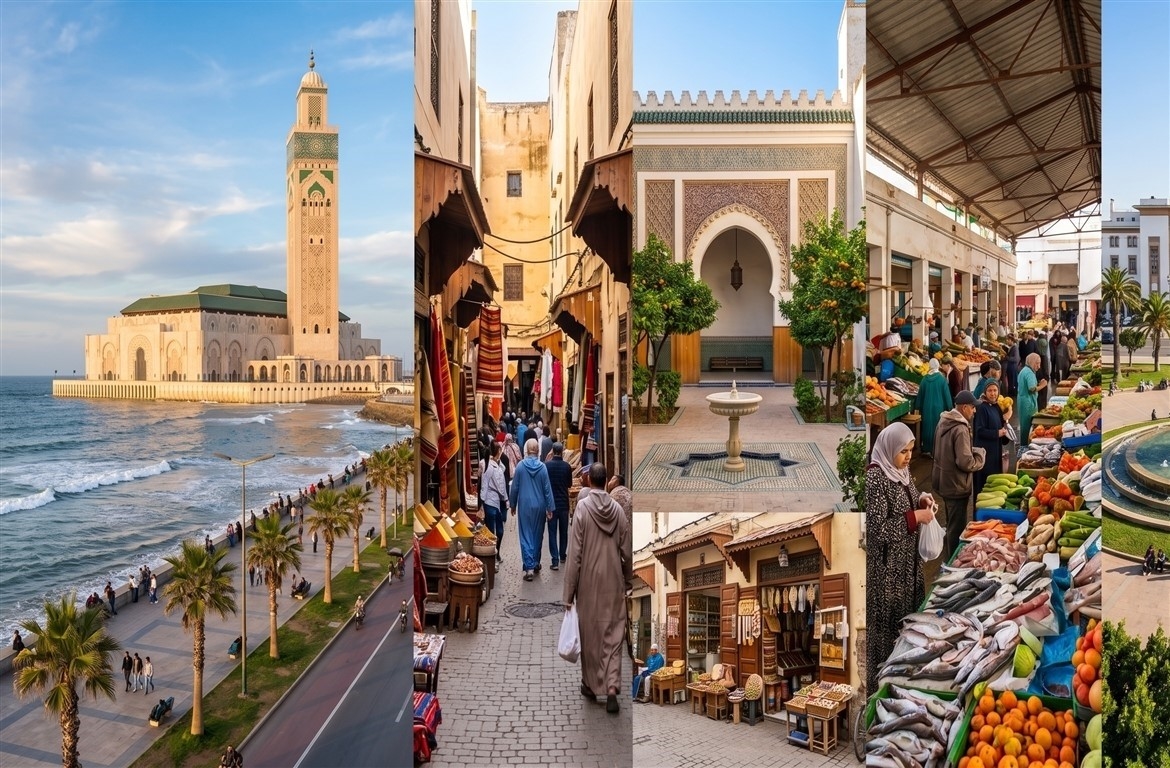
The Hassan II Mosque is the sight that makes people stop talking. Built partly over the Atlantic, it is one of the largest mosques in Africa and among the few mosques in Morocco that non-Muslim visitors can enter on official tours. The minaret rises above the shoreline, the marble shines, the carved woodwork is dense with detail, and the scale is almost theatrical.
Go in the morning for cleaner light and fewer delays. Dress modestly. Shoes come off inside certain areas, so wear socks you are not embarrassed by. The tour gives context for the craftsmanship, the prayer hall, the ablution rooms, and the technical ambition behind the building. Even travelers who “don’t really do monuments” tend to remember this one.
The Old Medina
The Old Medina of Casablanca is smaller and less cinematic than the medinas of Fes or Marrakech. That is not a flaw. Its charm sits in the ordinary details: a tea glass on a counter, a cat sleeping under a display of sandals, a vendor arranging oranges, the sudden flash of the sea beyond a lane. It is a good place for a slow walk rather than a treasure hunt.
Expect uneven pavements, practical shops, souvenir stalls, snack counters, and a bit of urban wear. Keep your bag close, bargain politely, and avoid treating every doorway like a photo prop. People live and work here.
Place Mohammed V
Place Mohammed V is the civic face of Casablanca. Around the square stand major administrative buildings shaped by early twentieth-century French planning and Moroccan design details. Arches, arcades, carved ornament, pale stone, and formal geometry meet the city’s daily noise. Pigeons own part of the square. Children chase them. Adults pretend not to watch.
United Nations Square
United Nations Square is less elegant but more hectic. It connects old and new Casablanca, with tram lines, traffic, pedestrians, hotels, shops, and the entrance toward the Old Medina. It is not a place to linger for hours. It is useful, central, and revealing. Stand there for five minutes and the city’s pace becomes obvious.
Sacred Heart Cathedral
Sacred Heart Cathedral, often called Casablanca Cathedral, is no longer used as a working cathedral. Its white exterior and Gothic-inspired lines make it one of the city’s most recognizable colonial-era buildings. Access can change, so treat interior visits as a bonus, not a promise. The outside still rewards a stop, mainly for the way the building interrupts the surrounding streets.
Notre-Dame de Lourdes Church
Notre-Dame de Lourdes Church surprises visitors with color. Its stained glass is the reason to come, spreading bold panels of light through a concrete structure that feels far plainer from the outside. It gives another view of Casablanca’s religious and architectural mix, and it pairs well with nearby central-city sightseeing.
Mahkama du Pacha
Mahkama du Pacha sits in the Habous area and is known for carved cedar, zellij tilework, courtyards, and ceremonial rooms. It has served administrative and judicial functions, so access is not always straightforward. A local tour or guide can help if interiors are open. Even from the outside, the building gives a quieter kind of grandeur than the mosque: less ocean drama, more craftsmanship up close.
The Royal Palace
The Royal Palace in Casablanca is not open for casual tourist visits. Travelers usually see the exterior gates and the surrounding Habous district. Do not expect palace rooms or royal gardens. Go for the neighborhood context, the guarded formality, and the way the palace sits within one of the city’s most pleasant walking areas.
Historic Areas and Architecture
The Habous Quarter
The Habous Quarter, also called the New Medina, was developed during the French protectorate period with a planned blend of Moroccan urban style and colonial order. It is calmer than the Old Medina, easier to navigate, and good for browsing. Arched walkways, bookshops, leather goods, pastry shops, and small craft stores make it one of the best places to visit in Casablanca for a half-day wander.
Look for traditional sweets, leather slippers, ceramics, olives, spices, and Arabic bookshops. The mood is gentler here. Less pressure. More room to look.
Casablanca’s Art Deco Streets
Downtown Casablanca has one of North Africa’s richest collections of Art Deco and early modern architecture. The best wandering areas sit around Boulevard Mohammed V, Place Mohammed V, and the central streets nearby. Balconies curve. Old signs fade. Facades carry sunbursts, geometric lines, and worn elegance.
Many buildings need care, and that faded condition adds a strange tenderness to the walk. Bring your eyes upward. Street level can be noisy and practical, while the upper floors carry the real show.
The Old Port and Fishing Harbor
The port area reminds visitors that Casablanca is a working Atlantic city, not only a sightseeing stop. The fishing harbor has boats, gulls, nets, and the smell of salt and diesel. Access varies by area, and some parts are industrial rather than visitor-friendly, so stay where public movement is clear. For seafood lovers, the nearby market and restaurants make more sense than trying to romanticize every dock.
El Hank Lighthouse
El Hank Lighthouse stands west of the center near the coast. Built in the early twentieth century, it remains a useful visual marker along the Atlantic side of the city. The area around it is good for a coastal drive or a photo stop, mainly when paired with La Corniche or Ain Diab.
Oceanfront Walks and Beaches
La Corniche
La Corniche is Casablanca’s seaside release valve. After traffic, stone, and city heat, the Atlantic opens everything up. The promenade area has cafés, restaurants, clubs, hotels, and long views toward the water. It is at its best near sunset, when the light softens and families, joggers, couples, and groups of friends drift toward the coast.
This is one of the easiest things to do in Casablanca after a day of sightseeing. No big plan. Just walk, drink coffee, watch the waves, and let the city breathe a little.
Ain Diab Beach
Ain Diab Beach is the city’s best-known beach area. It works for a walk, a casual sit by the water, or a look at local weekend life. Swimming conditions depend on season, surf, and local guidance, so check the beach on the day rather than assuming. The Atlantic can be rough. Pretty, yes. Gentle, not always.
Oceanfront Pools and Beach Clubs
Casablanca has long had a culture of oceanfront pools and clubs along the coast. Some are linked to hotels, restaurants, or private leisure complexes. They suit travelers who want sea views and sun without dealing with surf or sand. Prices and access rules change, so check before going, mostly in summer and on weekends.
Arab League Park
Arab League Park is the main green pause in central Casablanca. Palms, paths, open lawns, and nearby cafés make it useful between downtown sights. It is not wild or remote. It is urban greenery, and that is exactly what the center needs. Pair it with Sacred Heart Cathedral or a downtown Art Deco walk.
Markets, Shopping, and Local Finds
Central Market
Central Market is one of the most satisfying food stops in Casablanca. Flowers, vegetables, olives, seafood, spices, and small eating spots sit together in a compact space. Go before lunch if you want the liveliest feel. Travelers often come for seafood, and the routine is simple: look, choose, sit, eat. It can be brisk and a little messy. Better that way.
Shopping in the Habous Quarter
Habous is the easiest place for pleasant souvenir shopping. The pace is softer than the Old Medina, and the streets are easier to read. Look for leather goods, embroidered textiles, ceramics, traditional sweets, and Moroccan pastries. Bargaining exists, but not every transaction needs to become theater. Smile, ask, decide, move on.
Souvenirs in the Old Medina
The Old Medina gives a rougher shopping experience: more cramped, more uneven, more spontaneous. It can be good for small gifts, casual browsing, and street photography done with respect. Quality varies. Check stitching, glaze, zippers, metalwork, and weight before buying. A cheap bag that falls apart in the hotel lobby is not a bargain. It is just luggage comedy.
Morocco Mall and Modern Shopping
Morocco Mall shows another side of Casablanca: international brands, family entertainment, cafés, and polished retail by the coast. It is not the place to search for old-world atmosphere. It is useful for travelers who need practical shopping, air-conditioning, familiar brands, or a rainy-day plan.
What to Buy in Casablanca
- Leather slippers and bags: Habous and the Old Medina both sell leather goods. Check the seams and smell the leather before paying; very sharp chemical smells can signal lower-quality finishing.
- Ceramics and tea glasses: Small pieces travel better than large plates. Wrap them carefully, since airport baggage handlers are not gentle poets.
- Olives, spices, and sweets: These are better for travelers with room in checked luggage and a clear idea of customs rules at home.
- Argan oil products: Buy from reputable shops, read labels, and avoid vague miracle claims. Cosmetic argan oil and culinary argan oil are not the same product.
Food, Cafes, and Nightlife
Rick’s Café
Rick’s Café is inspired by the film “Casablanca,” though the movie itself was not filmed in the city. The restaurant leans into the romance: piano, arches, white jackets, low light, and a carefully staged old-world mood. Some travelers go for dinner. Others stop for a drink and the photo. It is touristy, yes. It also knows exactly what it is doing.
Where to Try Moroccan Food
Casablanca has plenty of Moroccan restaurants serving tagines, couscous, grilled meats, zaalouk, harira, and pastilla. The best meal is not always in the prettiest room. Ask hotel staff where they eat with family, check menus before sitting down, and avoid assuming that a view means better cooking. In Casablanca, a modest dining room can beat a polished one without making a speech about it.
Fish and Seafood
Seafood belongs naturally to the city. Central Market is a strong choice for a casual lunch, while the Corniche has more formal restaurants with ocean views. Grilled fish, calamari, shrimp, sardines, and mixed seafood plates are common. Ask what is fresh that day. If the answer sounds rehearsed, look at what local tables are ordering.
European-Style Cafes
Café culture runs deep in Casablanca. Espresso, mint tea, pastries, people-watching, long conversations, quiet smoking terraces, business meetings that turn into gossip — it is all there. Downtown and the Corniche both have good café territory. A morning coffee near the center gives a different feeling from a late drink near the sea.
Bars, Clubs, and Late Nights
Casablanca has more nightlife than many Moroccan cities. Hotel bars, lounges, clubs, live music spots, and restaurants with late service can all be part of a night out. Dress codes vary, and some venues aim for a polished crowd. Use licensed taxis or ride-hailing options where available, keep your phone charged, and do not wander into poorly lit unfamiliar streets after midnight just to prove a point.
Tours and Activities in Casablanca
City Sightseeing Tours
A city tour can make sense in Casablanca because the sights are spread out. A good route usually covers Hassan II Mosque, the Old Medina, Habous, Mohammed V Square, the Corniche, and selected architectural stops. Choose small-group or private formats if you care about time at each place. Big bus tours are efficient, but they can flatten the city into windows and schedules.
Hassan II Mosque Tours
The mosque tour is the most useful paid activity for many visitors. Non-Muslim entry is normally tied to official tour times, not casual wandering. Check current schedules before arrival, since hours can shift around religious days and events. Cover shoulders and knees. Speak quietly inside. The building deserves that.
Food Tours
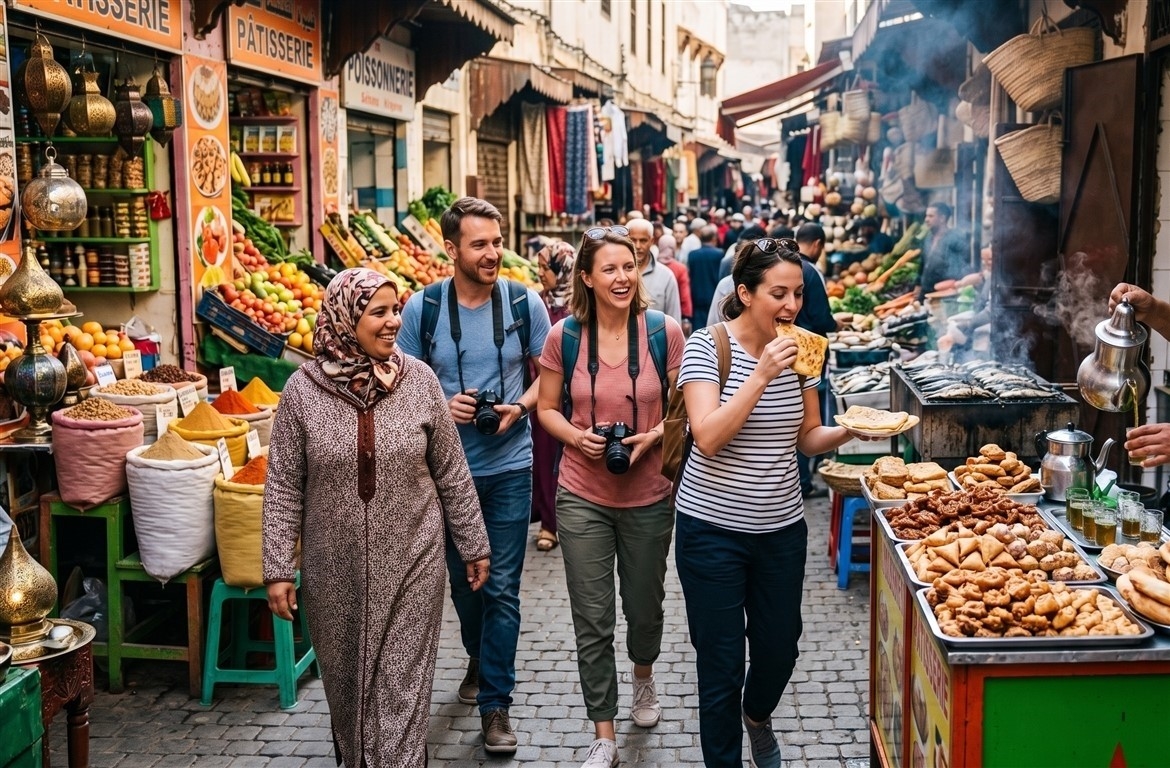
A food-focused walk can open up Casablanca quickly: market stalls, street snacks, seafood, pastries, mint tea, and small restaurants that visitors might miss alone. It is a good option for anyone nervous about ordering or unsure what to try. Come hungry, not politely hungry. Properly hungry.
Day Trips from Marrakech
Casablanca is often sold as a day trip from Marrakech, mainly for travelers who want to see Hassan II Mosque and the Atlantic coast without changing hotels. The trip is long, and much of the day goes to transport. It works best for travelers with limited time and a specific interest in the mosque. For a richer visit, overnighting in Casablanca is far kinder.
Private Tours with Transfers
Private tours help with airport arrivals, cruise stops, and tight itineraries. They can combine pickup, the mosque, Habous, the Old Medina, the Corniche, and lunch into one controlled day. Ask what entrance fees are included, how long the mosque stop lasts, and whether the route allows walking time rather than only photo stops.
How to Plan Your Time
One Day in Casablanca
Start at Hassan II Mosque. Take the tour if timing works. From there, move toward the Old Medina and United Nations Square, then continue to Place Mohammed V for the civic architecture. Have lunch at Central Market or nearby. Spend the afternoon in the Habous Quarter, then finish at La Corniche for sunset.
Two Days in Casablanca
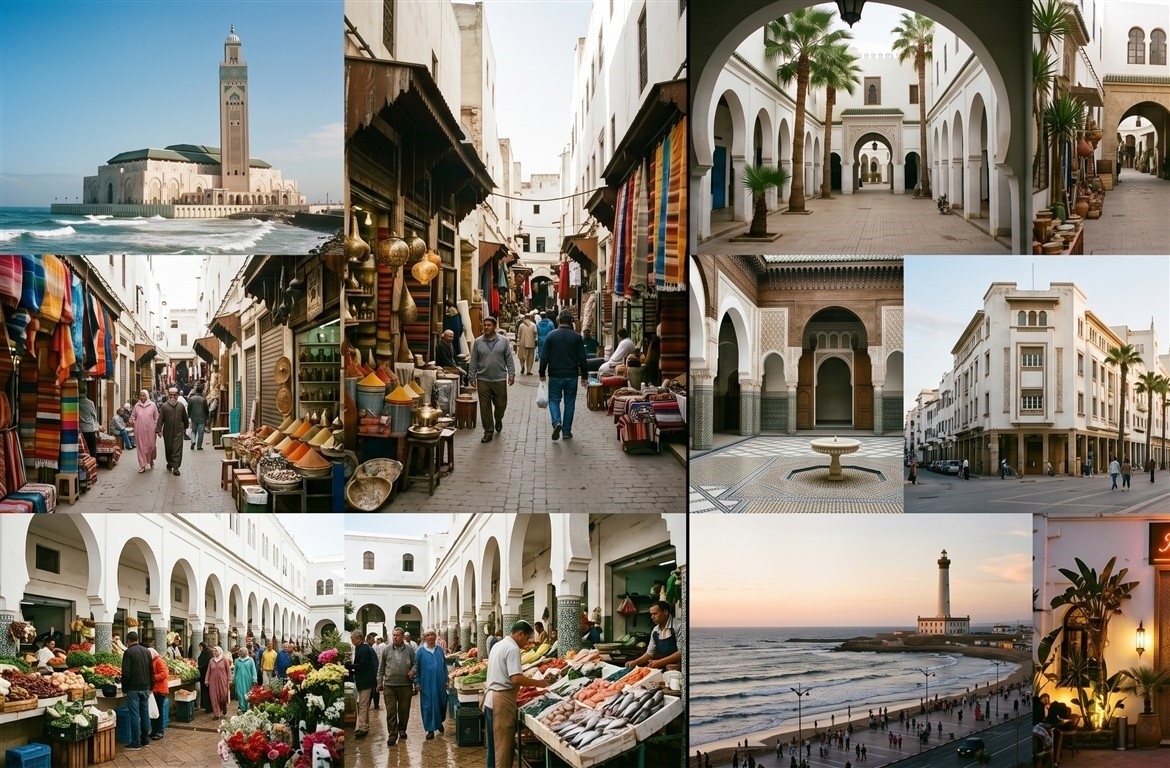
With two days, the city becomes less mechanical. Keep day one for the mosque, Old Medina, downtown, and Central Market. Use day two for Habous, Mahkama du Pacha if accessible, Art Deco streets, Arab League Park, El Hank Lighthouse, and Ain Diab. End with seafood or a drink at Rick’s Café if the mood fits.
What to Do at Night
Night in Casablanca can be simple: dinner near the Corniche, a café terrace, a hotel bar, or a live music venue. Travelers looking for a calmer evening can walk the better-lit parts of the seafront and call it done. The city feels different after dark, less architectural, more social.
Cruise Stops and Short Layovers
Cruise passengers and short-layover travelers should keep the plan tight. The mosque is the anchor. Add one market or one neighborhood, not five. Traffic can eat time without apology. For airport layovers, calculate transfer time carefully, since Mohammed V International Airport sits outside the city center.
Practical Travel Tips
Best Time to Visit
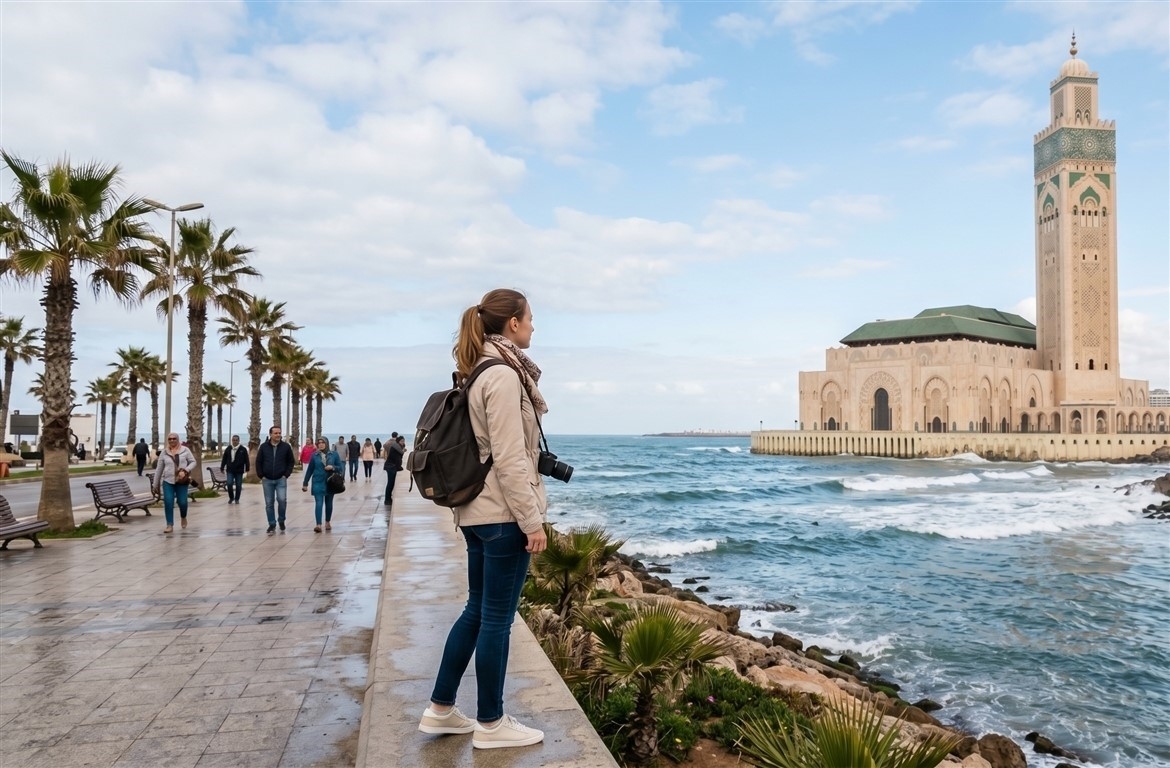
Spring and fall are the most comfortable seasons for Casablanca travel. The Atlantic moderates the climate, so the city is rarely as punishingly hot as inland destinations, but summer still brings stronger beach crowds and warmer days. Winter can be mild, with rain and gray spells. Pack layers. The ocean has moods.
How to Get to Casablanca
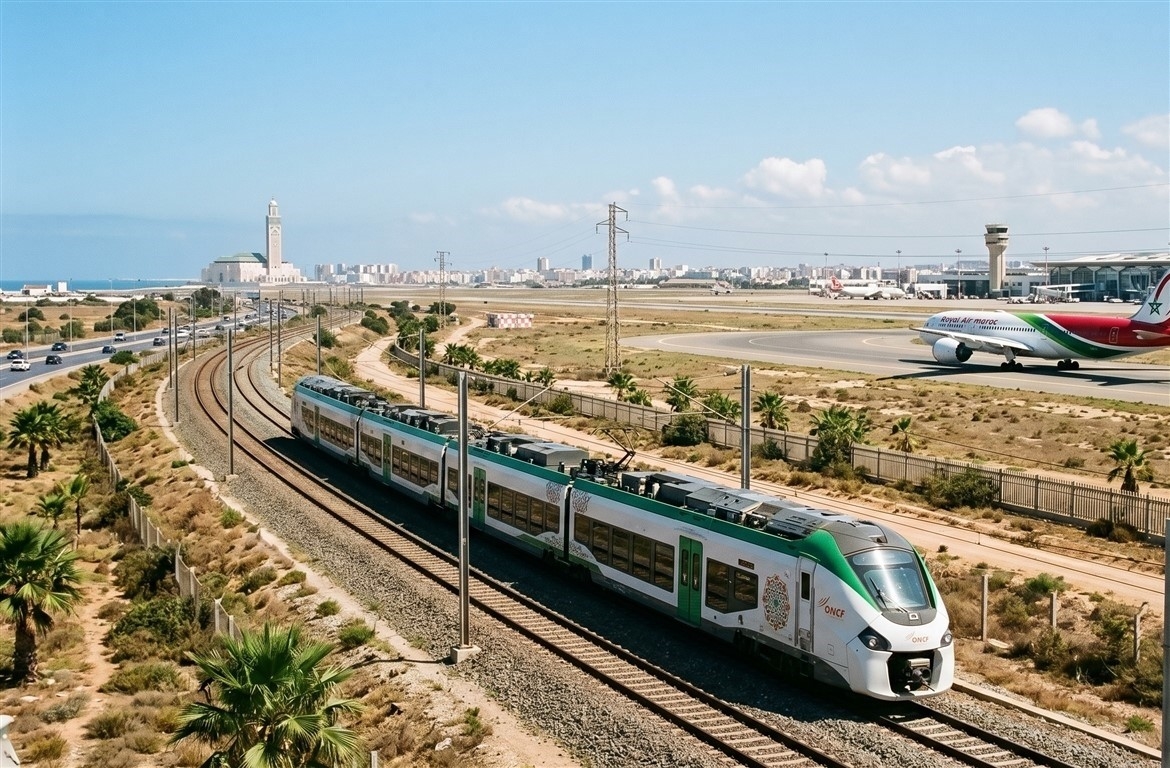
Mohammed V International Airport is Morocco’s busiest air gateway and connects Casablanca with many international and domestic routes. Trains link the airport with the city. Casablanca also has rail connections to Rabat, Marrakech, Fes, Tangier, and other Moroccan cities, making it easy to fold into a broader Morocco trip.
How to Get Around
The tram is useful for several central routes, while taxis remain common. Petite taxis serve city trips; agree on meter use or price practices before moving, depending on the situation. Ride-hailing options operate in parts of the city, though availability and local rules can shift. Walking works best within districts, not across the entire city.
Where to Stay
Stay near the city center if you want access to markets, Art Deco streets, restaurants, tram lines, and the main sights. Choose the Corniche or Ain Diab for ocean views, nightlife, and a more resort-like mood. Business travelers often prefer modern hotels in central commercial areas. For a first visit, central Casablanca usually saves time.
Safety and Tourist Mistakes
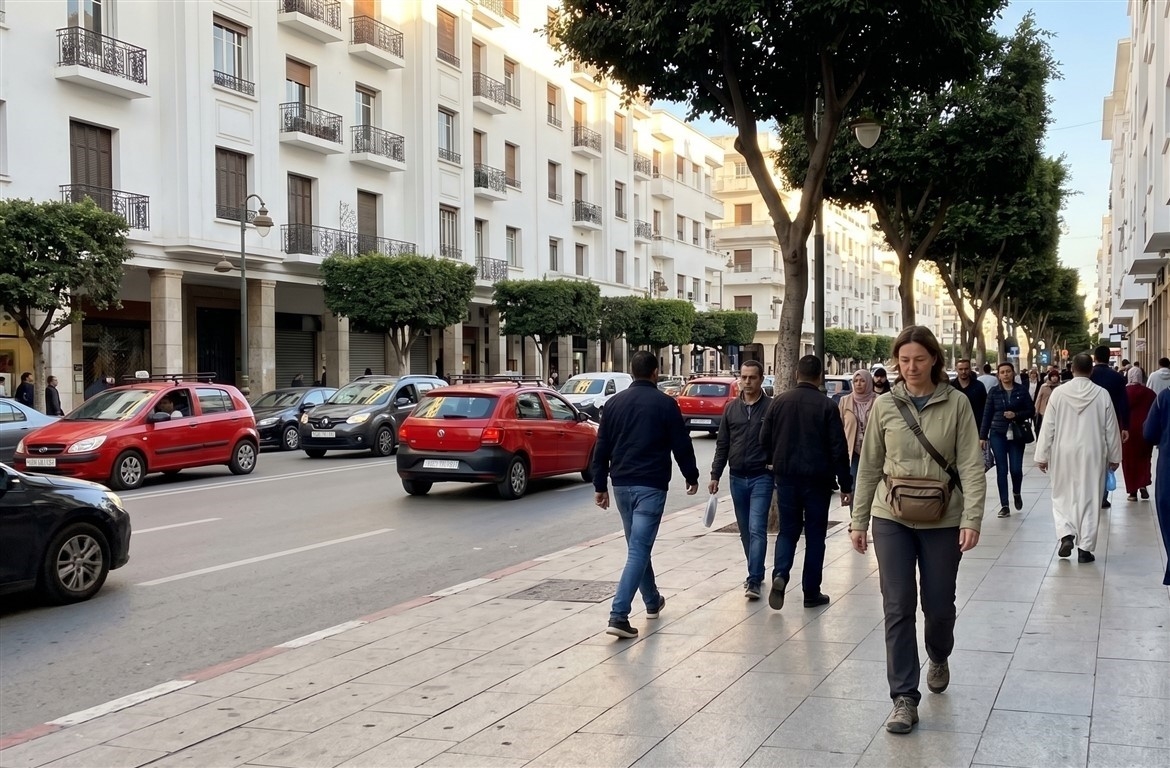
Casablanca is a large city, so use ordinary city sense. Watch bags in crowded areas, use registered transport, keep valuables out of sight, and avoid empty streets late at night. The biggest mistake is expecting Marrakech. The second is trying to see everything with no allowance for traffic. The third: skipping the city because someone online called it boring after three hours and a bad taxi ride.
Visiting Religious Sites
Dress modestly around mosques and churches. At Hassan II Mosque, follow official visitor rules, tour times, and staff instructions. Do not photograph people praying without permission. A little restraint goes a long way, and it keeps the visit from feeling like tourism with elbows.
- Build the day around geography: Group the mosque, Old Medina, and downtown together, then save the Corniche or Ain Diab for later. Crossing the city repeatedly wastes energy.
- Book the mosque around official access: Check tour times before arranging lunch or transfers. Missing the entry window can turn the city’s top sight into an exterior-only stop.
- Leave space for cafés: Casablanca is better when not rushed. A coffee break is not empty time here; it is one of the easiest ways to watch the city work.
- Use Rabat or Marrakech as a pair: Rabat offers order and monuments, Marrakech brings intensity and craft, while Casablanca adds ocean, commerce, and modern Moroccan urban life.
Is Casablanca Worth Visiting?
Who May Not Love the City
Travelers wanting a soft, instantly beautiful old town may not fall for Casablanca. The city has traffic, construction, rough edges, and neighborhoods that feel more functional than charming. It does not always flatter the visitor. That can be disappointing if the trip is built around romantic expectations.
Why Casablanca Stays Interesting
Casablanca stays interesting because it is not frozen for tourism. The mosque is magnificent, the coast is alive, the markets are useful, the architecture tells a complicated story, and the food scene has range. It is Morocco at work, not Morocco arranged behind glass.
Pairing Casablanca with Other Cities
Casablanca pairs easily with Rabat by train, and the contrast is sharp: Casablanca is busier, Rabat is cleaner and more formal. Marrakech brings more spectacle, color, and visitor infrastructure. Fes brings deeper historic atmosphere. Casablanca adds the Atlantic, Art Deco streets, and the feeling of a modern port city moving at its own speed.
| City Pairing | Best Reason |
|---|---|
| Casablanca and Rabat | Easy rail link, coastal cities, strong contrast between business energy and capital calm. |
| Casablanca and Marrakech | Good for travelers who want both modern urban Morocco and classic medina atmosphere. |
| Casablanca and Fes | A strong pairing for architecture lovers who want modern layers and deep medieval heritage. |
| Casablanca and Tangier | Atlantic identity, port-city mood, and rail-friendly planning for a northern route. |
Casablanca Travel Questions
What should you not miss in Casablanca?
Do not miss Hassan II Mosque. Add the Old Medina, Habous Quarter, Central Market, Place Mohammed V, and La Corniche if time allows.
Is one day enough for Casablanca?
One day covers the main sights if planned tightly. Two days gives a better feel for neighborhoods, food, architecture, and the oceanfront.
Can non-Muslims enter Hassan II Mosque?
Non-Muslim visitors can enter Hassan II Mosque during official guided tour times. Casual entry outside visitor access is not the same thing, so check the current schedule before going.
Does Casablanca have good beaches?
Casablanca has urban Atlantic beaches, with Ain Diab as the best-known area. They are good for walks, sea views, cafés, and local beach life. Swimming depends on conditions and local advice.
What can you do in Casablanca at night?
Go to dinner near the Corniche, visit Rick’s Café, sit at a café, try a hotel bar, or choose a licensed club or lounge. Keep transport sorted before the night gets late.
Is Casablanca safe for tourists?
Tourists visit Casablanca every day without trouble, but it is a big city. Watch belongings, use reliable transport, stay alert in crowded areas, and be sensible after dark.
When is the best time to visit Casablanca?
Spring and fall are the most comfortable seasons. Summer is lively near the coast, while winter is mild with a chance of rain.
Is Casablanca better than Rabat or Marrakech?
Casablanca is not better or worse. It is different. Rabat feels calmer and more orderly. Marrakech is more theatrical and tourist-facing. Casablanca is bigger, busier, more coastal, and more tied to daily Moroccan city life.
0 Comment