


Things to Do in San Francisco’s Chinatown
San Francisco’s Chinatown does not behave like a museum district. It moves. It steams. It argues a little from open shop doors, then goes quiet in a temple stairwell two blocks away. For travelers looking for the best things to do in Chinatown San Francisco, the real answer is not one attraction. It is the mix: Dragon Gate photos, dim sum boxes warm in your hand, herbal drawers sliding open, red lanterns above Grant Avenue, produce stalls on Stockton Street, and alleys that feel older than the glass towers nearby.
The neighborhood is widely known as the oldest Chinatown in North America and one of San Francisco’s most visited cultural districts. It sits beside Union Square, North Beach, the Financial District, and Nob Hill, which makes it easy to fold into a larger city day. Still, rushing through would be a shame. Chinatown rewards slow feet.
Getting There and Getting Around
Walking is the cleanest way to understand the area. The streets are compact, the hills are real, and half the fun sits at eye level: bakery windows, mahjong sounds from a social hall, bundles of dried mushrooms, temple balconies, handwritten signs, kids eating buns after school. A car adds friction. Feet do better.
Public transportation is usually the easiest choice. Muni buses serve the area, cable cars run nearby, and the Central Subway connects Chinatown with other parts of San Francisco through Chinatown-Rose Pak Station. From Union Square, the walk to Dragon Gate is short enough for most visitors, though the slope changes quickly once Nob Hill gets involved.
- Arrive by transit when timing matters. Chinatown streets can clog with delivery trucks, ride-share pickups, weekend crowds, and festival traffic. Transit lets visitors skip the slow loop around garages and start near the main walking routes.
- Use parking only when it solves a real problem. Portsmouth Square Garage and St. Mary’s Square Garage are practical choices for drivers, but garages fill faster during lunch, weekends, and major cultural events. Check current rates and availability before heading in.
- Start early for calmer streets. Morning brings deliveries, locals shopping for groceries, and a softer version of Grant Avenue before the souvenir flow arrives. Late afternoon has more energy and better people-watching.
- Wear shoes made for hills. The neighborhood looks small on a map. The pavement says something else. Comfortable shoes matter more here than a polished travel outfit.
Start at Dragon Gate
Dragon Gate marks the southern entrance to Chinatown at Grant Avenue and Bush Street. The gateway, built in the traditional Chinese paifang style, is one of the most photographed landmarks in the neighborhood. It works as a natural starting point because Grant Avenue stretches north from here through the visitor-facing spine of Chinatown.
Pause, take the photo, then keep moving. The gate is a symbol, not the full story. The better texture comes after it: carved balconies, gift shops, tea counters, old signs, and side streets pulling you off the straight line.
Walk Grant Avenue Without Rushing
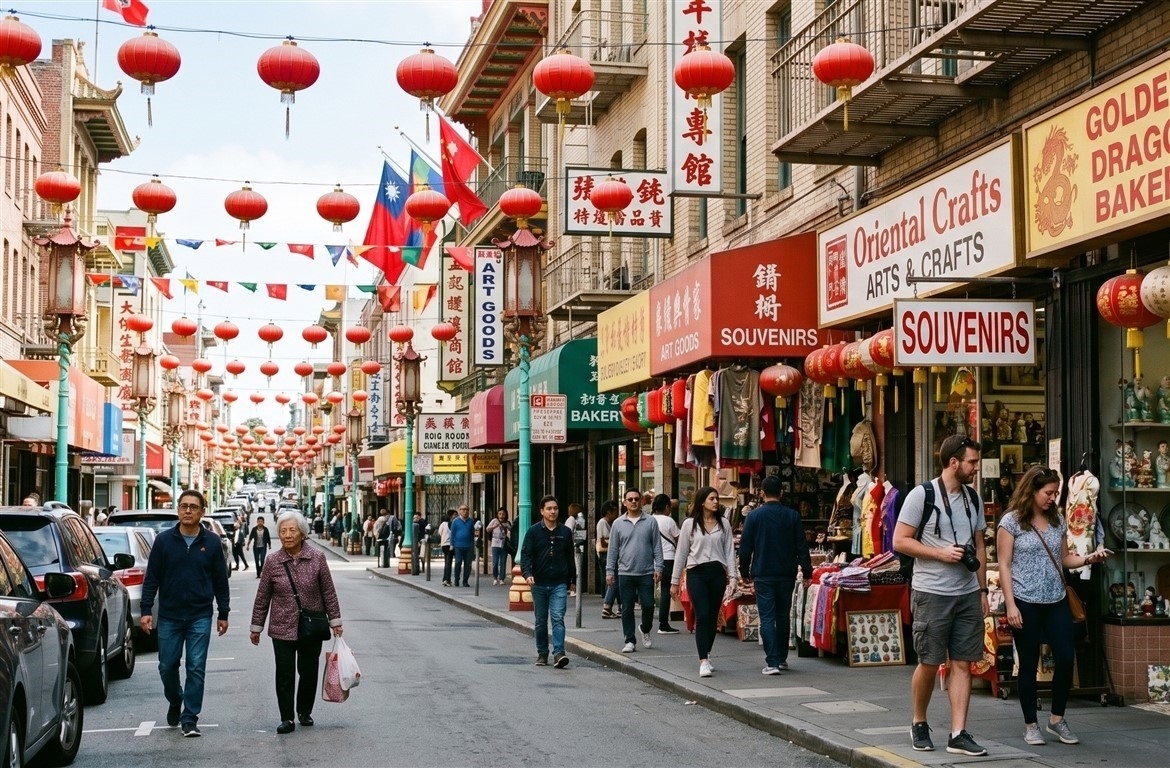
Grant Avenue is the grand stage. It has lanterns, souvenir shops, bakeries, art objects, imported goods, and the kind of visual density that makes visitors stop every few steps. Yes, parts of it are polished for tourism. That does not make it fake. Tourist streets can still hold history, commerce, family memory, and good snacks all at once.
Look above the storefronts. The upper floors tell a different story from the ground-level shops. Balconies, painted trim, association halls, and old signage help explain how Chinatown has presented itself to outsiders while keeping community life layered behind the storefronts.
Use Stockton Street for a Local Pulse
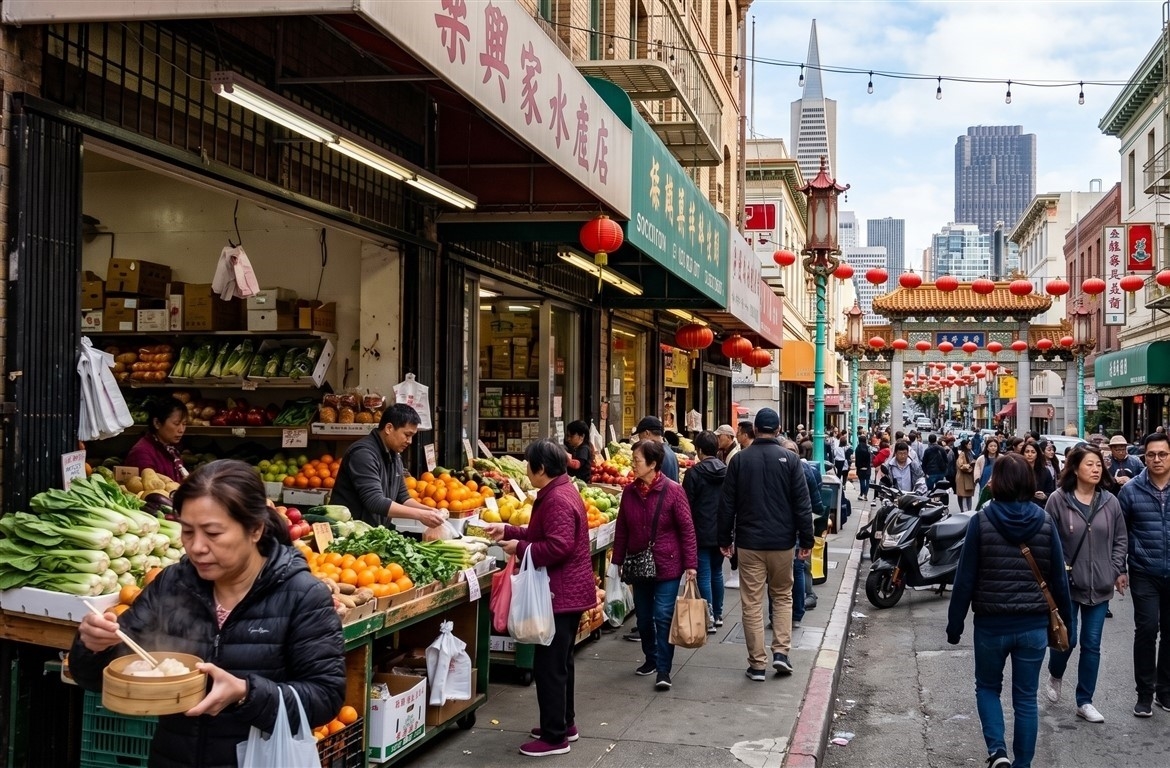
Stockton Street feels less staged. The sidewalks narrow. The markets get busy. Shoppers inspect greens, seafood, fruit, dried goods, and roasted meats with serious focus. This is one of the best streets for travelers who want Chinatown to feel like a neighborhood rather than a postcard.
Do not block doorways for photos. Do not squeeze produce unless invited. Watch how local shoppers move, then move with that rhythm. Fast when needed. Patient when the line stalls.
Grant Avenue vs Stockton Street
| Street | Best for | Visitor feel |
|---|---|---|
| Grant Avenue | Landmarks, shops, photos, first-time visits | Colorful, polished, easy to navigate |
| Stockton Street | Markets, groceries, street life, local errands | Busy, practical, louder, less filtered |
| Waverly Place | Temples, balconies, historic atmosphere | Quieter, layered, highly photogenic |
| Ross Alley | Fortune cookies and old alley texture | Narrow, quick, memorable |
See Portsmouth Square
Portsmouth Square is one of Chinatown’s great social rooms. People sit, talk, play games, rest, argue softly, read newspapers, watch children, wait for friends. Tourists often pass through too quickly, looking for a landmark plaque or a clean photo. The square asks for a slower kind of looking.
Historically, the site has been tied to early San Francisco civic life. For present-day visitors, it is more useful as a window into daily Chinatown. A public space can say a lot without performing.
Visit Tin How Temple
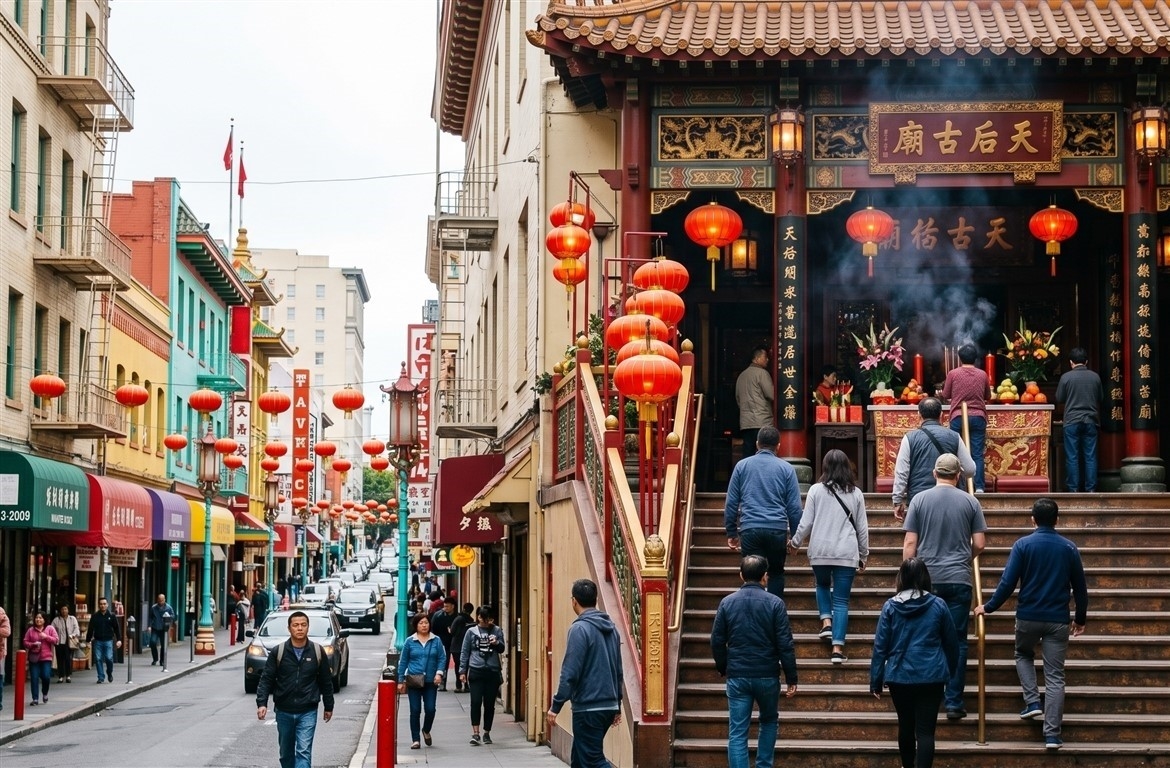
Tin How Temple, dedicated to the sea goddess Mazu, is among the oldest Chinese temples in the United States. It sits above street level, so visitors climb away from the noise before entering a quieter space shaped by incense, offerings, red details, and devotion.
Respect matters here. Keep voices low. Do not treat worshippers as scenery. Photography rules can change, and a posted sign beats any travel blog. The visit is brief for many travelers, yet it tends to stay in memory because the shift from sidewalk to sacred space is so sharp.
Step Inside Old St. Mary’s Cathedral
Old St. Mary’s Cathedral stands at the edge of Chinatown and remains one of San Francisco’s notable historic churches. Its presence reflects the layered religious and civic history of the neighborhood. Chinatown is not one note. It never has been.
The building also gives travelers a useful pause between busier stops. Inside, the city drops its volume. Then the door opens again and the street comes back all at once.
Find the Golden Gate Fortune Cookie Factory
The Golden Gate Fortune Cookie Factory on Ross Alley has been making fortune cookies by hand since 1962. The space is small, warm, and famous for a reason. Visitors can watch the cookies being formed, buy fresh bags, and see how much work sits behind a treat many people barely think about at restaurants.
Ross Alley itself deserves attention. It is one of the historic alleys that make Chinatown feel more intricate than its main streets suggest. The factory visit can be quick. The line can be less quick. Still worth it for many first-timers.
Learn at the Chinese Historical Society Museum
The Chinese Historical Society of America Museum gives needed depth to a neighborhood that casual visitors often reduce to food and lanterns. Exhibits have addressed immigration, exclusion laws, family life, political struggle, identity, art, and community memory. Chinatown’s beauty has weight behind it.
A museum stop changes the rest of the walk. Storefronts, association buildings, temples, and old alleys begin to read less like decoration and more like evidence of survival. That is a better way to travel.
Follow the Historic Alleys
Chinatown’s alleys are not shortcuts. They are the neighborhood’s fine print. Waverly Place, Ross Alley, Spofford Alley, and nearby lanes carry stories of temples, family associations, theaters, shops, and cramped urban life shaped by race, law, labor, and migration.
Waverly Place is often called the “Street of Painted Balconies,” a phrase that fits once you look up. The buildings wear color beautifully, but the street is not only pretty. It holds temples and association life, the less visible architecture of belonging.
Look for Murals and Street Art
Murals in and around Chinatown add another layer to the walk. Some celebrate cultural pride. Some speak to displacement, memory, and city change. Others simply bring color to walls that might otherwise be ignored by rushing visitors.
Street art also helps connect Chinatown with nearby neighborhoods. North Beach, the Financial District, and the edge of downtown press close. Murals make those borders feel less tidy, more alive.
Visit Chinese Herbal Shops
Chinese herbal shops are part pharmacy, part archive, part theater of scent. Dried roots, bark, flowers, fungi, seeds, and powders sit in jars and drawers, often behind counters where staff serve regular customers with practiced speed.
Visitors should browse gently. These are working businesses, not prop rooms. Ask before photographing. Buy tea, candies, dried fruit, or packaged goods when something catches your eye. The fragrance alone is a Chinatown memory: earthy, bitter, sweet, smoky, medicinal.
Eat Dim Sum and Bakery Snacks
Food is one of the strongest reasons to visit Chinatown, but the best strategy is not always a formal meal. A bakery crawl can be just as satisfying. A pork bun here, sesame ball there, egg tart for later. Suddenly lunch has happened on the sidewalk.
Good Mong Kok Bakery is a well-known stop for takeout dim sum and baked goods. Lines move with purpose, so decide quickly when your turn comes. House of Nanking has long been a famous sit-down name near the neighborhood’s edge. Mister Jiu’s brings a Michelin-recognized, modern Chinese American lens to a historic space. China Live offers a larger dining and retail experience, while Empress by Boon pairs dramatic views with upscale Cantonese cooking.
Not every traveler needs the same meal. A solo visitor might prefer a quick bakery haul. A family may want a seated restaurant. A food-focused couple might plan dinner at one of the modern dining rooms. Chinatown handles all of that, sometimes on the same block.
Try Tea Tasting
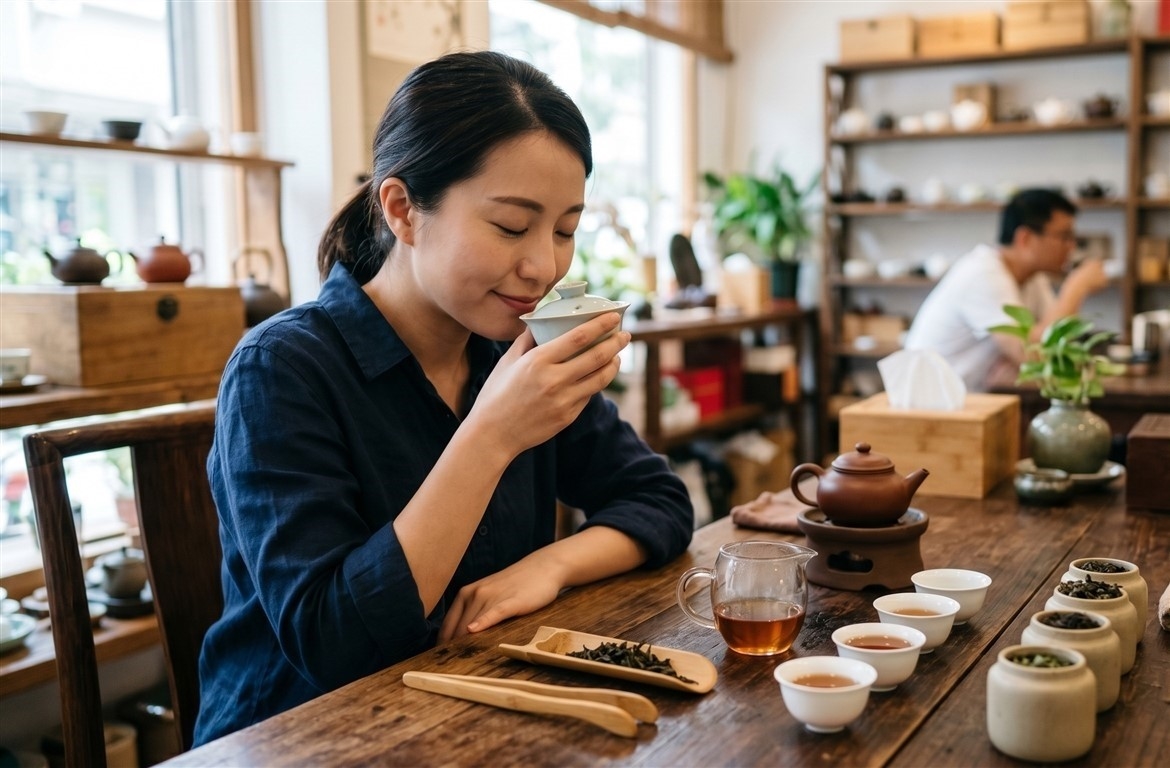
Tea tasting slows the day down. Red Blossom Tea Company and Vital Tea Leaf are two recognized names for visitors who want to learn about Chinese teas, aroma, steeping, and flavor without turning the moment into a lecture.
A good tea stop fits nicely after a crowded market walk. Sit, taste, listen, reset. The city outside keeps rushing. Let it.
Plan a Simple Chinatown Food Path
- Begin with a bakery snack. Start with something portable, such as a bun, tart, or dumpling box. This keeps the first hour flexible and gives you fuel for the hills.
- Walk Stockton Street before lunch. Markets are livelier earlier in the day, and the produce stalls give a sharper sense of local food culture than a restaurant menu alone.
- Choose one sit-down meal. Pick either classic comfort, modern Chinese American cooking, or a larger group-friendly dining room. Trying to do three full meals in one visit turns pleasure into work.
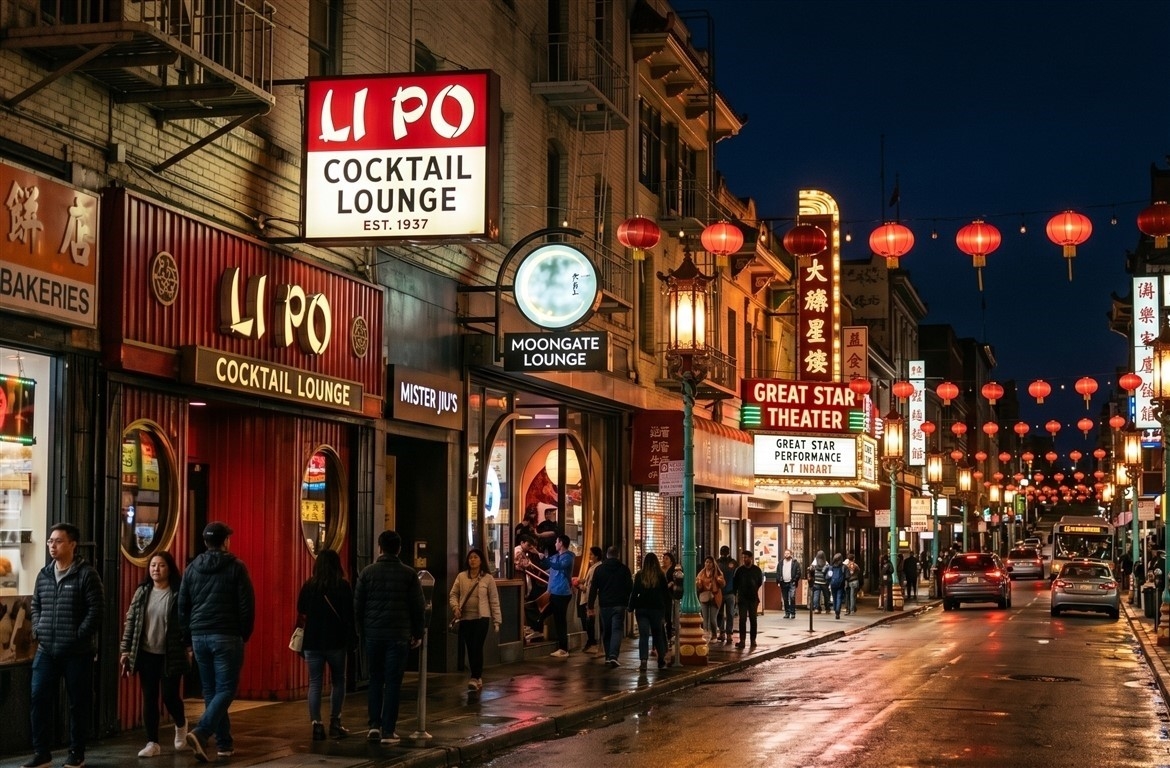
- Finish with tea or a cocktail. Tea suits a slower afternoon. Li Po Cocktail Lounge or Moongate Lounge fits a night plan. Different mood, same neighborhood.
Watch a Show at Great Star Theater
Great Star Theater is one of Chinatown’s historic performance spaces, with roots tied to Chinese opera and neighborhood entertainment. Its modern programming has included live shows, film events, and cultural performances. Check current listings before planning around it, because schedules shift.
A night at the theater changes the shape of a Chinatown visit. Food first, show after, maybe a late drink. The neighborhood becomes less of a daytime attraction and more of an evening destination.
Stop at the Chinese Culture Center
The Chinese Culture Center presents exhibitions and programs tied to contemporary art, community, and Chinese diasporic experience. It gives travelers a different frame from the older landmarks. Chinatown is historic, yes, but it is not frozen.
That point matters in 2026. The neighborhood is still dealing with questions many urban cultural districts face: tourism, aging residents, small-business pressure, safety perception, heritage, and development at the edges. A visitor does not need to solve those tensions. A visitor can notice them.
Time Your Visit Around Festivals
San Francisco’s Chinatown is tied to major cultural events that draw locals and travelers from across the Bay Area. The Lunar New Year Parade is the best-known, with floats, lion dancers, firecrackers, school groups, and heavy crowds. The Autumn Moon Festival brings food, vendors, performances, and family energy. Hungry Ghost Festival programming has grown as a visible cultural event in the neighborhood. Chinatown Night Markets add another reason to visit after regular shop hours.
Festival days are not normal sightseeing days. Streets close. Restaurants fill. Transit gets packed. The payoff is atmosphere: drums, smoke, costumes, aunties guarding good viewing spots, kids on shoulders, phones everywhere, the whole neighborhood switched on.
Best Stops by Travel Style
| Traveler type | Best Chinatown stops | Time to allow |
|---|---|---|
| First-time visitor | Dragon Gate, Grant Avenue, Portsmouth Square | 2 to 3 hours |
| Food lover | Stockton Street, bakeries, dim sum, tea tasting | 3 to 5 hours |
| History-focused traveler | CHSA Museum, alleys, Tin How Temple | Half day |
| Family group | Fortune cookie factory, Portsmouth Square, bakeries | 2 to 4 hours |
| Evening visitor | Dinner, Li Po, Moongate, Great Star Theater | 3 hours or more |
Explore Chinatown Nightlife
Chinatown after dark has a different temperature. Some shops close. Restaurant signs glow harder. Bars take over the mood. Li Po Cocktail Lounge is the classic name, known for its long history and strong Chinatown character. Moongate Lounge brings a more polished cocktail-room feeling above Mister Jiu’s. Buddha Lounge keeps the old-school bar energy going.
Evening works best with a plan. Dinner reservation, bar stop, show, or night market when scheduled. Wandering is fine too, though the best nighttime version of Chinatown usually has at least one anchor.
Shop Without Treating Shops Like Props
Chinatown shopping ranges from souvenir stores to food markets, tea sellers, cookware shops, herbal counters, bakeries, and gift stores. Grant Avenue is the place for decorative goods, postcards, ceramics, ornaments, and quick browsing. Stockton Street leans practical, with groceries and daily shopping woven into the street scene.
Buy something small if you spend time asking questions or taking up counter space. It is a simple courtesy. A tea tin, a bakery item, a kitchen tool, dried fruit, a packet of candy. Travel money lands better when it reaches local businesses directly.
Build a Half-Day Chinatown Walk
Start at Dragon Gate. Walk north on Grant Avenue, then cut toward Waverly Place for balconies and temple atmosphere. Continue to Portsmouth Square for a pause. Move into Ross Alley for the fortune cookie factory, then shift toward Stockton Street for markets and food. Add the Chinese Historical Society Museum if history is the priority, or tea tasting if the day needs a softer landing.
That route avoids the mistake of treating Chinatown as one straight tourist strip. The neighborhood is better as a weave.
Family-Friendly Things to Do
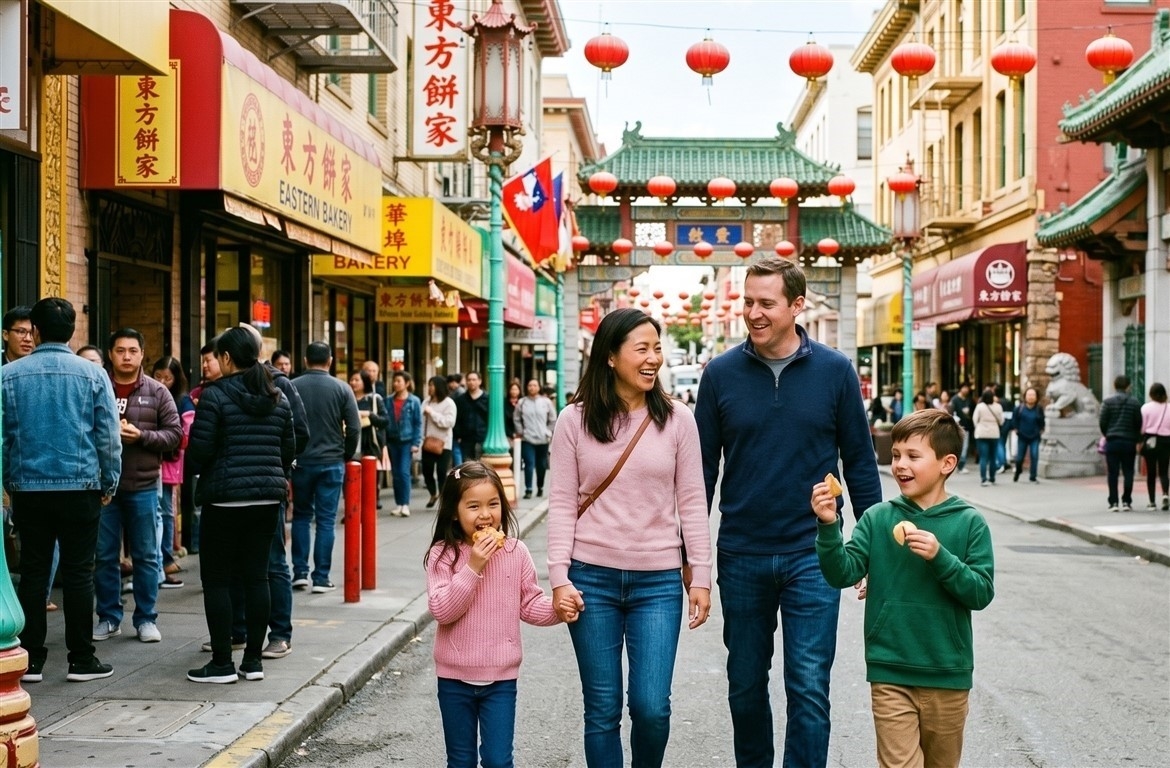
Families usually do well with Chinatown because the distances are short and the sensory rewards come quickly. The Golden Gate Fortune Cookie Factory is an easy win with kids. Bakeries help with snack emergencies. Portsmouth Square gives everyone room to breathe. Dragon Gate supplies the photo that grandparents will ask for later.
The harder part is crowd management. Sidewalks can be tight, and strollers may feel awkward on busy blocks. Morning visits are gentler. Shorter loops beat ambitious itineraries.
Accessibility and Comfort Notes
San Francisco’s hills shape every Chinatown visit. Some routes are flatter than others, but sidewalks can be crowded, curb cuts vary, and older buildings may have stairs or narrow entries. Visitors with mobility needs should plan routes around specific stops and check current access details directly with museums, restaurants, theaters, and parking garages.
Restrooms are another practical matter. Museums, restaurants, and some larger venues are more reliable than tiny shops. Carry water, especially when walking from Union Square or Nob Hill on a sunny day. San Francisco weather can look mild and still wear you out.
Where to Stay Near Chinatown
Hotels around Union Square, Nob Hill, the Financial District, and North Beach place visitors close to Chinatown. Union Square works well for transit and shopping. Nob Hill has classic San Francisco views and steeper walks. The Financial District is quieter on some evenings but convenient for business travelers. North Beach pairs nicely with Chinatown for food-heavy trips.
Pick the area based on how you move. If walking is the plan, look closely at hill grades. A hotel that seems five minutes away on a map may feel longer after dinner.
Best Time to Visit Chinatown
Morning suits markets, bakeries, and calmer photography. Midday brings the thickest tourist flow and lunch crowds. Late afternoon has warmth and motion, a good time for people-watching on Stockton Street or tea before dinner. Evening belongs to restaurants, bars, theaters, and scheduled night markets.
Weekdays tend to feel more workable than weekends. Festival days are their own animal. Go for the event, not for a quiet checklist.
Common Questions
How much time do you need in Chinatown San Francisco?
Two hours covers Dragon Gate, Grant Avenue, a bakery stop, and Portsmouth Square at a brisk pace. A half day gives room for alleys, a museum, tea, markets, and a real meal. Food lovers can spend most of a day here without forcing it.
Is Chinatown San Francisco walkable?
Yes, the neighborhood is compact and best explored on foot. The challenge is not distance but hills, crowds, narrow sidewalks, and the temptation to stop constantly.
What is the most famous Chinatown attraction?
Dragon Gate is the most recognizable photo stop. The Golden Gate Fortune Cookie Factory, Portsmouth Square, Tin How Temple, and Grant Avenue are also major visitor draws.
Where should first-time visitors eat?
For quick food, try a bakery or takeout dim sum counter. For a planned meal, choose based on mood: classic Chinatown comfort, modern Chinese American dining, or a larger restaurant suited to groups.
Is Chinatown better during the day or at night?
Daytime is better for markets, temples, museums, bakeries, and first-time walking. Night is better for dinner, cocktails, theater, and seasonal night market energy. The strongest visit may use both.
Can you visit Chinatown and North Beach together?
Yes. Chinatown and North Beach sit side by side, making them one of San Francisco’s easiest neighborhood pairings. Start with Chinatown markets and landmarks, then move toward North Beach for cafés, Italian food, bookstores, or Coit Tower views.
A Few Blocks Can Carry a Whole City
Chinatown is compact, but it does not feel small. A visitor can stand near Dragon Gate in the morning, eat dumplings from a paper box before noon, sit with tea in the afternoon, then return at night for cocktails or a theater performance. Same streets. Different city.
Go with a route, then let it bend. Follow the smell of fresh buns. Turn down the alley that looks too narrow. Watch the market line move. Chinatown rewards attention more than speed, and the best memories here are rarely the neat ones.
0 Comment