


The Darvaza Crater: Turkmenistan’s Fiery Pit
You’ll find the Gates of Hell right in Turkmenistan, deep within the vast Karakum Desert, near a tiny spot called Darvaza. Most maps and travel plans label it the Darvaza Gas Crater, a blazing natural gas pit just north of Ashgabat. If you search for “Gates of Hell location,” you won’t get some ancient myth, a crumbled temple, or a spooky movie set. What pops up is a huge, fiery hole smack in the middle of Central Asia’s toughest deserts.
Its very location adds to the mystique. Forget city lights. Forget green valleys. You won’t find a sleek visitor center with shiny doors here. It’s just endless sand, a dry, whipping wind, one long road, a few scattered desert camps, and, once night falls, a ring of fire that feels almost shocking in the profound quiet. This crater has become a top landmark for Turkmenistan travelers. It feels distant, untamed, and strangely dramatic without even trying.
Understanding the Gates of Hell
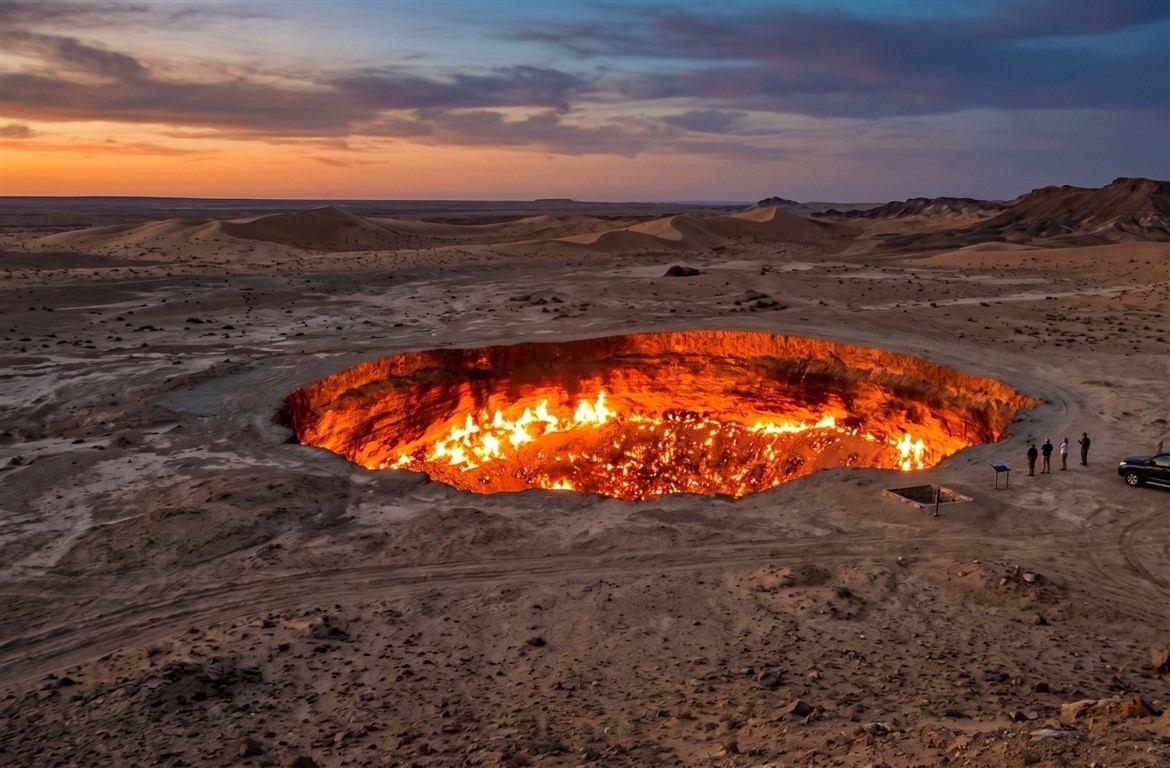
The Gates of Hell, often called the Door to Hell, is simply the burning Darvaza Gas Crater. It’s nestled in a natural gas field area of the Karakum Desert, and flames have been erupting from this crater for decades. The name perfectly captures the scene: orange fire inside a deep desert opening, heat shimmering off the rim, and at night, a mesmerizing glow spilling across the sand.
This isn’t your typical volcanic crater. No flowing lava, no conical peak, no ash clouds here. The fire persists because natural gas escapes from underground and ignites inside a collapsed section of earth. Reports generally state the crater is about 70 meters across and roughly 30 meters deep, though exact measurements might vary slightly depending on whether sources use metric or imperial units. From the edge, it looks almost perfectly round, with dozens of flames dancing from vents along its floor and walls.
During the day, it can seem more peculiar than beautiful. Just a dusty bowl. Charred ground. A wavy heat haze. Then, as the sun dips, everything changes rapidly. The fire becomes the dominant light for miles around. People instinctively lower their voices.
Crater Location Details
The Darvaza Gas Crater sits in central Turkmenistan, specifically in the Karakum Desert. The closest named place is Darvaza, a small desert village that lent its name to the crater. Ashgabat, Turkmenistan’s bustling capital, lies to the south.
Driving from Ashgabat to the Gates of Hell usually takes about three to four hours. This can change based on your vehicle, current road conditions, any stops you make, and the final stretch of desert track. The distance is frequently cited as around 260 kilometers from Ashgabat. These figures are great for planning, but don’t mistake this journey for a quick trip across town. The last part of the drive feels completely different. The paved road disappears, the horizon stretches endlessly, and your cell phone signal becomes a very unreliable friend.
| Detail | Travel fact | Why it matters |
|---|---|---|
| Country | Turkmenistan | Understand entry rules and guided travel options before booking. |
| Region | Karakum Desert | Expect heat, dust, dark roads, and very few services during your journey. |
| Nearest area | Darvaza | The crater is always referred to as the Darvaza Gas Crater. |
| From Ashgabat | Approx. 260 km, often 3-4 hours by road | Travel time varies greatly due to stops, permits, and desert conditions. |
| Best viewing time | Sunset through night | The fire’s glow becomes truly spectacular once the desert darkens. |
| Coordinates | Near 40.25° N, 58.44° E | Helpful for general direction, but always rely on local navigation. |
Travel from Ashgabat
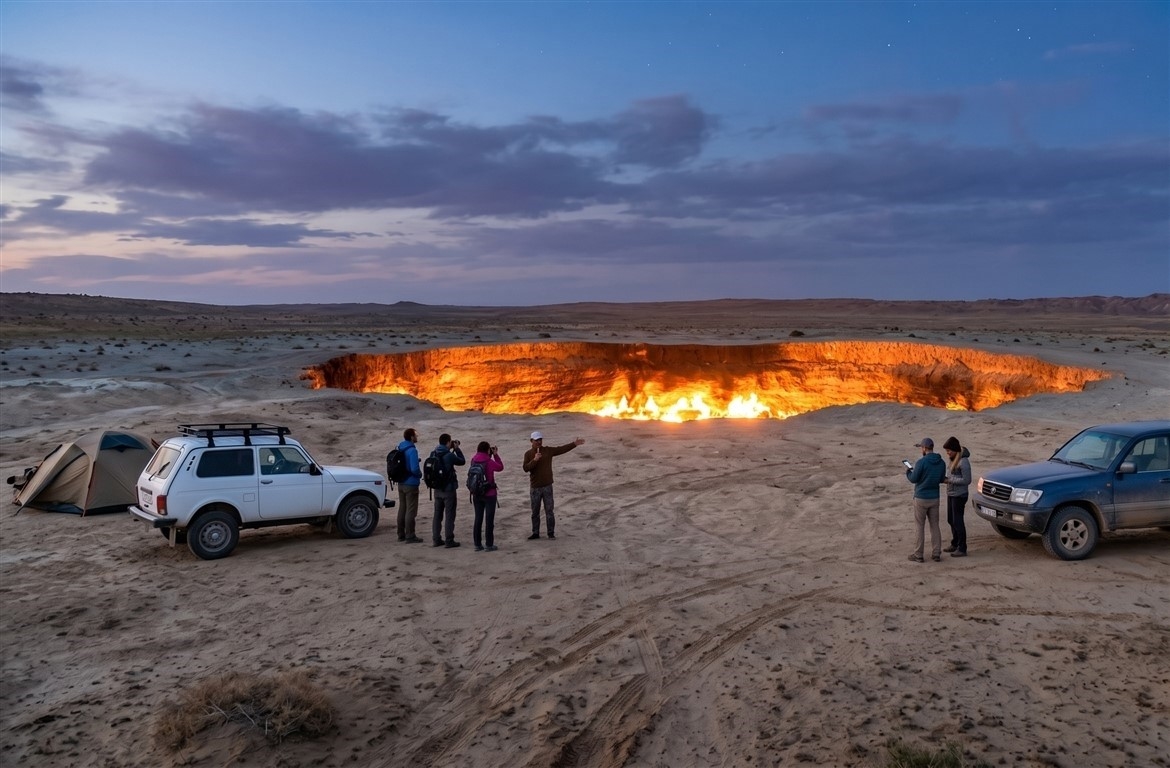
Most trips kick off in Ashgabat, heading north into the Karakum Desert. People typically travel by private car, tour vehicle, or a robust 4×4 arranged through a local company. The main part of the journey is on paved roads, but the final approach to the crater involves rougher desert tracks.
On a map, the distance looks straightforward. In reality, visiting the Gates of Hell isn’t something to take lightly. Desert driving after dark can be incredibly disorienting. Tracks split and vanish. Sand shifts with the wind. A driver who knows this route well saves a lot of time and stress, which is vital when the nearest city is miles behind you.
Independent travel in Turkmenistan isn’t as simple as in many other places. Before your trip, you absolutely must check visa regulations, permits, local registration requirements, and route access. Many visitors opt for an organized itinerary to Darvaza. This makes transport, timing, accommodation, and meeting local rules much easier.
How the Darvaza Crater Began
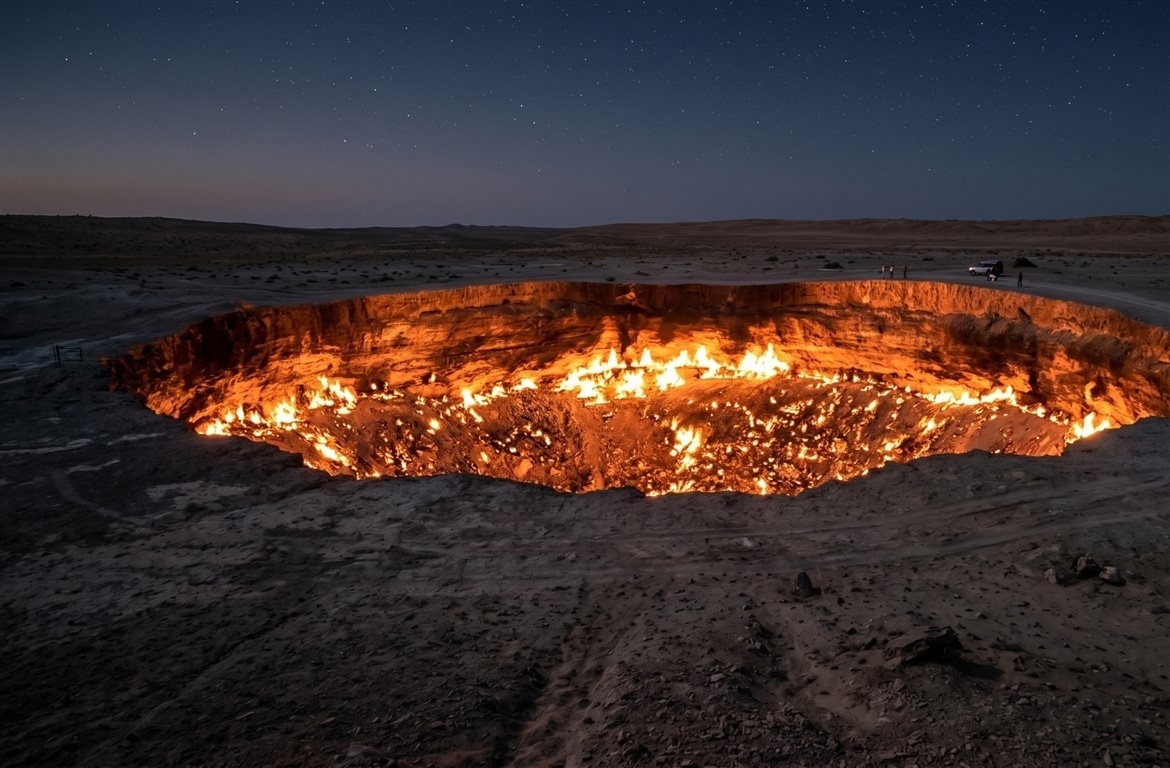
The story of its creation is a bit muddled. The most popular version claims Soviet geologists were drilling in the area back in 1971. The ground supposedly collapsed into an underground gas pocket, and the gas was then lit to prevent methane from spreading. The general idea, according to this tale, was that the fire would burn itself out quickly. It didn’t.
Other accounts suggest the ground collapse happened in the 1960s, with the ignition occurring much later, possibly even in the 1980s. Local geological explanations and common travel narratives don’t always align. This very uncertainty has become part of the crater’s unique identity. Travelers often hear a neat, clean campfire story, only to discover the actual history is far hazier than the vibrant flames suggest.
What’s undeniable: the crater sits in a desert region incredibly rich in natural gas, and escaping gas fuels the fire. This burning has continued for decades. Whether the initial spark came from a drilling crew, a later decision, or a series of events never perfectly recorded, Darvaza is now less of a geographical accident and more of a landmark with its own strange, powerful pull.
The Fire Keeps Burning
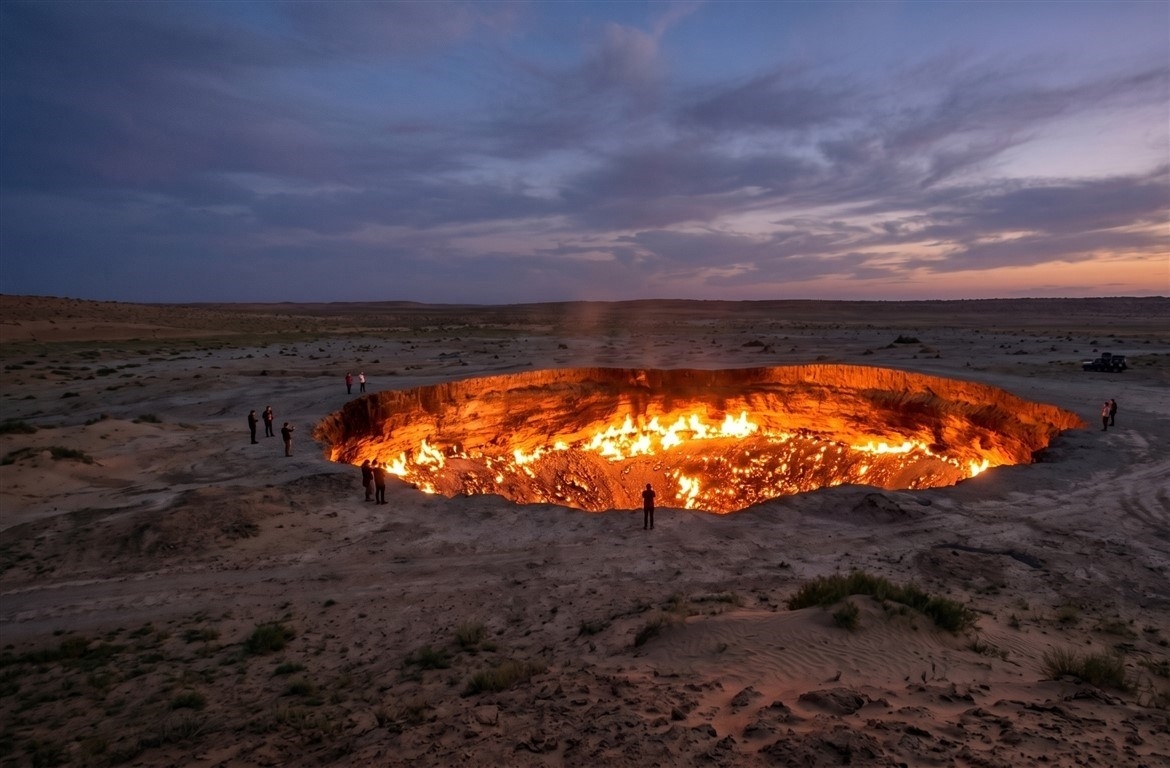
The fire persists because gas just keeps escaping. Methane is the main concern here. When it leaks unburned, methane acts as a potent greenhouse gas. When it burns, it produces carbon dioxide and heat. Neither scenario is ideal. The crater is absolutely stunning visually, yet environmentally, it presents a tricky situation.
Turkmen officials have discussed extinguishing the crater multiple times. Their worries involve gas loss, potential health risks, safety issues, and emissions. Travelers shouldn’t assume any fixed closure date. Access can change, and in Turkmenistan, changes often happen quietly. Anyone planning a trip centered on Darvaza should absolutely confirm the site’s current status right before they leave.
Why Night Visits Matter
Daylight reveals the crater’s immense scale. Night, however, truly unleashes its power. The desert turns pitch black, the temperature drops dramatically, and the fire transforms from a geological curiosity into what feels like a furnace buried deep beneath the earth.
Sunset is the prime time for many visitors. You get to see the crater in the fading light, watch the rim slowly darken, then simply stand there as the flames completely dominate the landscape. Cameras adore it, but your own eyes still offer the best experience. A phone screen flattens the intense heat. A long-exposure shot captures the glow but misses the subtle sounds, the shifting air, the faint scent of hot mineral dust.
Photographers usually set up on the rim or from slightly elevated patches of ground nearby. The glow is visible from a considerable distance, which is great for wide desert shots. Wind matters. Dust matters. A tripod is crucial after dark, unless blurry fire is your artistic goal.
What Else to See
The main burning crater is the undeniable draw. It’s big enough to walk around, offering various viewing angles from the rim. The safest spots are on stable ground, a bit set back from the edge. From there, you can take in the entire circle of flame without leaning over loose earth.
There are other crater-like features in the broader Darvaza area. These include non-burning gas or mud formations, often part of desert tour routes. They don’t have the same dramatic impact as the flaming crater, but they do show why this region isn’t just one bizarre hole in the sand. It’s part of a much larger gas-rich landscape.
Near the camps, the experience becomes quieter. Dinner, tea, cool air, stars. Then, inevitably, someone heads back towards the glow, because everyone does. The crater somehow pulls people back, even after they’ve already seen it.
Is the Crater Safe?
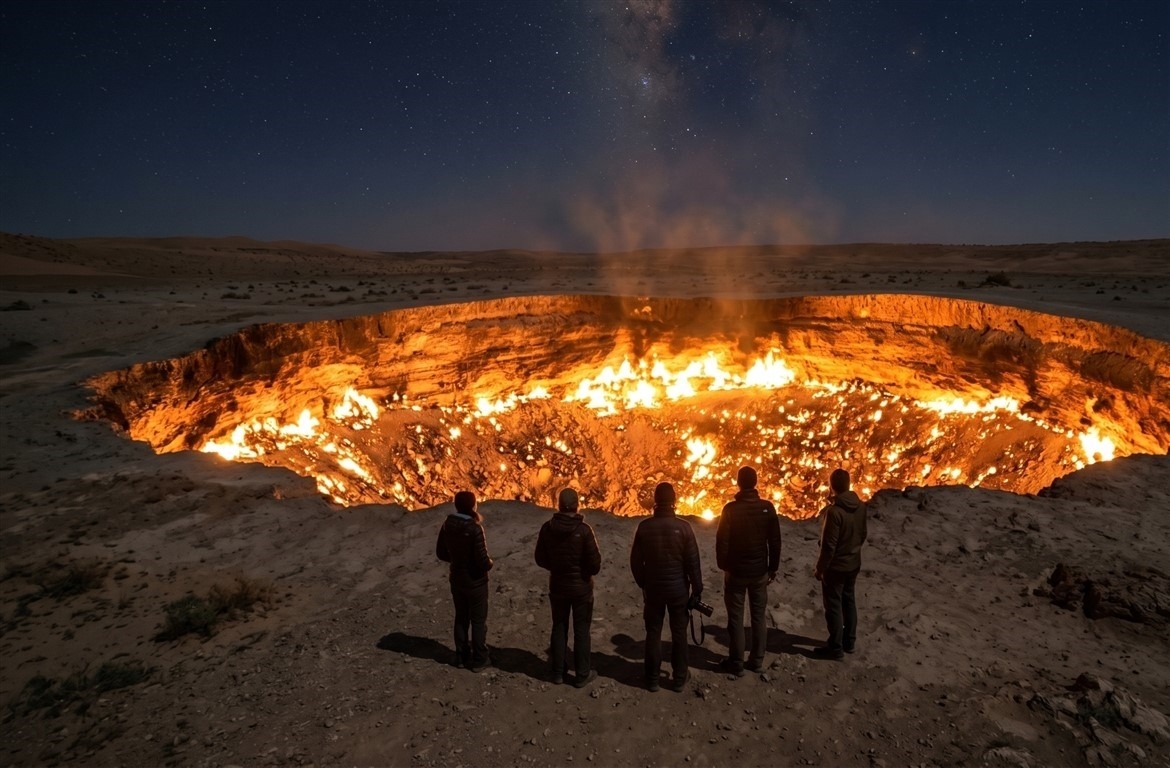
You can visit the Darvaza Crater safely, but it absolutely requires sensible behavior and proper local assistance. The dangers are real: intense heat, gas, potentially unstable rim sections, total darkness, dust, isolated roads, and a very real, deadly drop into a burning pit. There’s absolutely no good reason to test the edge. None at all.
Some visitor accounts mention fencing and improved tourist facilities at the site. Still, conditions around remote attractions can change quickly. A fence isn’t an excuse to stop thinking. Night photography, loose gravel, kids running around, windblown dust, and people stepping backwards for a better photo create a seriously dangerous combination.
Simple Rim Safety Rules
- Keep away from the edge. The rim could crumble. The crater is deep enough that a fall would be catastrophic. No photo is worth a single careless step.
- Wear sturdy, closed shoes. Sandals offer poor protection in the desert. You’ll encounter hot ground, gravel, potential metal debris, and uneven paths around the crater.
- Use a headlamp after dark. The crater shines brightly, but the ground around it still hides dips, loose stones, and vehicle tracks.
- Mind the wind. Heat and fumes shift constantly. If smoke or a strong gas smell drifts your way, move away immediately instead of trying to finish your video.
- Supervise children closely. The place feels surreal, which can make the danger seem unreal too. It’s very real.
- Do not attempt to climb down. The scientific descent by trained specialists required extensive equipment and detailed planning. A tourist trying to scramble into the crater is utterly reckless.
Staying Overnight
Spending the night near the Gates of Hell is a common part of many Darvaza trips. Travelers might sleep in tents, basic desert camps, or yurt-style setups arranged by local operators. Comfort levels vary significantly. Expect simple beds or mats, shared facilities, basic meals, and a night sky that needs no embellishment.
The desert can be brutally hot during warm months but surprisingly cold after sunset, especially outside of peak summer. This temperature swing often catches people off guard. They pack for fire and completely forget about the cold. Bring plenty of layers, even when the afternoon feels like an oven door left wide open.
You won’t find any city conveniences at the crater. Make sure you’ve got water, snacks, any medications, batteries, cash, and warm clothing sorted before leaving Ashgabat or any larger stop. A desert camp is not the place to realize your phone charger is still plugged into a hotel socket.
Best Time to Go
Spring and autumn generally offer the most comfortable weather for desert excursions in Turkmenistan. Summer heat in the Karakum can be brutal, and winter nights can be extremely harsh. The crater burns all year, but human endurance definitely has its seasons.
For timing, late afternoon into night is the absolute best choice. Arrive while there’s still daylight. Walk around, get a feel for the terrain, then simply watch the crater transform after sunset. Showing up only in complete darkness robs you of orientation. Arriving only at noon robs you of the true spectacle.
Weather also significantly shapes the experience. Wind can whip dust across the entire site. Cold nights make long viewing sessions much shorter. Hot days make even small movements feel incredibly heavy. The crater might be fire, but the desert truly sets the rules.
What to Pack
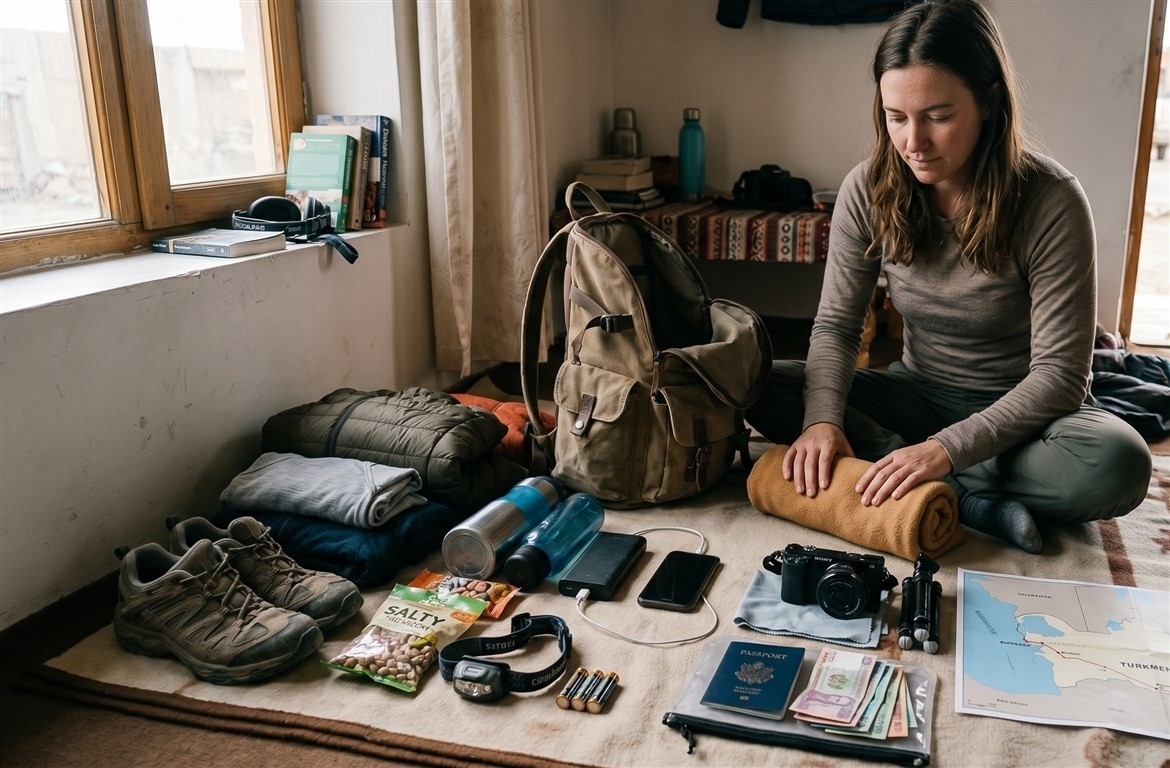
- Closed walking shoes: The ground around the crater is uneven, dusty, and rough. Proper shoes make walking the rim safer and much more pleasant.
- Layered clothing: Wear light clothes for the day, and be sure to have a warm layer for night. Desert temperature drops feel much sharper when you’re standing still.
- Water and salty snacks: Pack more water than you think you’ll need for a short stop. Dry air drains energy quickly and subtly.
- Headlamp or flashlight: Phone lights work until you need both hands, or your battery starts dying near midnight.
- Power bank: Photos, maps, and the cold night’s battery drain can deplete your charge very quickly.
- Camera gear: A tripod is invaluable for night shots. A lens cloth helps with dust. Spare batteries are a necessity out here, not a luxury.
- Documents and cash: Keep your passport, permits, local contact details, and some cash easily accessible. Remote stops are rarely the place to solve paperwork problems.
- Basic medicine: Pack any personal medications, stomach tablets, pain relief, and anything you rely on daily.
Visa, Permits, and Booking
Turkmenistan isn’t generally a spontaneous “hop-on-the-bus” kind of place for many international travelers. You really need to carefully check entry requirements, transit rules, registration procedures, and approved routes before committing any money. Rules can differ based on your nationality and the type of trip you’re planning.
This is precisely why Darvaza is often visited with a tour operator or local guide. The crater itself is just one part of the adventure. The rest involves paperwork, road access, choosing the right vehicle, timing, food, sleeping arrangements, and knowing exactly who to call if your plan hits a snag in the desert.
Book well in advance if your travel dates are fixed. Ask specific questions about the type of transport, overnight setup, meals, water, pickup location, crater access, and what happens if weather or official instructions alter your route. Simple questions now can save you from nasty surprises later.
Tour vs. Solo Visit
| Organized tour | Independent visit |
|---|---|
| Handles all transport from Ashgabat or other route points. | Requires you to arrange a suitable vehicle and a knowledgeable driver. |
| Assists with timing, meals, camp setup, and local logistics. | Offers more freedom in theory, but desert access can quickly limit that. |
| Excellent for travelers new to Turkmenistan’s procedures. | Only advisable for those who have already sorted rules, route, and support. |
| Generally safer after dark, as the driver knows the tracks. | Night navigation can become highly stressful when tracks diverge in the sand. |
| Less flexible, since the itinerary is pre-planned. | More flexible, assuming access, vehicle, fuel, and permits align perfectly. |
Could the Gates Close?
The crater has faced calls for closure or extinguishing because it wastes natural gas, releases emissions, and poses a safety risk. Turkmenistan’s government has publicly discussed finding ways to put out the flames. The fire remains a key part of the country’s travel image, but that image exists alongside very real environmental and resource concerns.
No traveler should simply assume Darvaza will remain open forever in its current state. Likewise, no traveler should assume it will close next month. The smartest approach is straightforward: confirm access through a current local operator before finalizing any route plans around the crater.
Darvaza’s Unique Qualities
The Darvaza Gas Crater has been burning for decades, with many accounts tracing the fire back to the Soviet era. Its name became famous globally because “Gates of Hell” sounds like something from folklore, but the place is very real and stubbornly physical: gas, heat, sand, flame.
The explorer George Kourounis famously ventured into the crater during a scientific expedition. He used specialized protective gear to collect samples from the floor. That descent only emphasized what visitors already sense from the rim: the crater is absolutely not a playground. It is an extreme environment.
At night, the crater’s light draws in insects and birds. Its glow is visible from far across the flat desert. This detail gives Darvaza a peculiar ecology all its own. Fire in the sand, moths drawn to the light, people standing at the rim with their jackets zipped up, their faces bathed in the orange glow of the flames.
FAQ About the Gates of Hell
Which country holds the Gates of Hell?
The Gates of Hell are in Turkmenistan, a Central Asian nation bordering Kazakhstan, Uzbekistan, Afghanistan, Iran, and the Caspian Sea.
Where exactly is the Darvaza Crater?
The Darvaza Crater is situated in the Karakum Desert, near the Darvaza area, north of Ashgabat. Its approximate coordinates are around 40.25° N and 58.44° E.
How far is it from Ashgabat?
The crater is typically listed as being about 260 kilometers from Ashgabat. The drive usually takes roughly three to four hours, with the timing influenced by road conditions, stops, and the final desert track.
Can one visit without a tour?
Independent travel can be challenging. Turkmenistan has strict entry and travel procedures, and the crater itself is in a remote desert region. Many visitors opt for a local tour or an arranged driver for transport and logistics.
Is the Darvaza Crater dangerous?
Yes, if you’re careless. The main dangers include intense heat, gas fumes, unstable ground near the rim, profound darkness, desert isolation, and the sheer drop into the crater. A safe visit means staying well back from the edge and always following local advice.
Why does the crater burn?
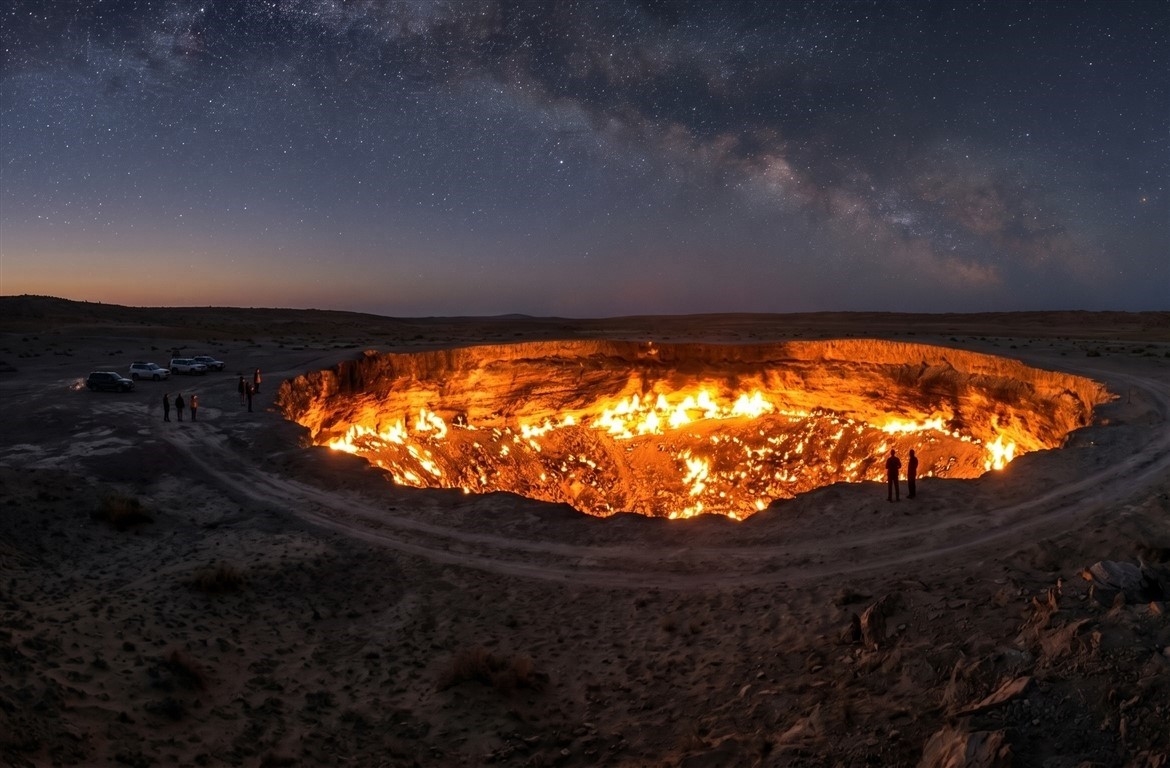
The crater burns because natural gas escapes from underground and continuously fuels the flames. Methane is the gas most commonly associated with Darvaza’s fire.
Will the crater be put out?
Turkmen officials have discussed extinguishing it. However, travelers should not rely on rumors or outdated access information. Always check the current status with a local operator before booking your trip.
Is it worth a visit?
For travelers who love remote desert landscapes, unique geological formations, and night photography, Darvaza stands as one of Central Asia’s most unforgettable destinations. It demands planning, patience, and a deep respect for the terrain. Go for the fire, yes, but the profound silence around it will stay with you even longer.
0 Comment