


Swiss Fondue: A Hearty Guide
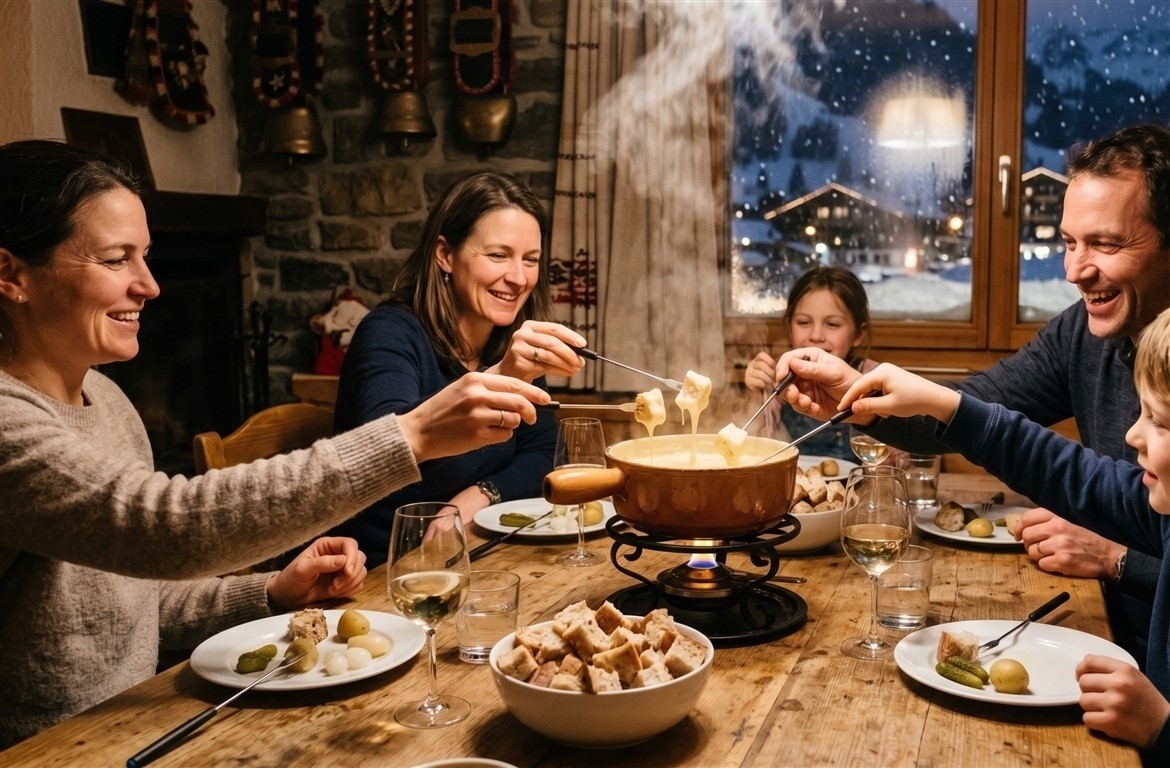
Fondue in Switzerland is way more than just melted cheese in a pot. Honestly, calling it that would miss the entire point. It’s a winter scene, pure and simple: elbows bumping at a crowded table, windows fogged with steam, bread cubes vanishing one after another. Someone always “accidentally” drops a piece into the cheese, then tries to play it cool. Sure, Swiss fondue is humble food. But for something you eat with extra-long forks, it comes with a surprising amount of ritual.
Visitors discover it everywhere: ancient dining rooms in Zurich, lakeside spots in Geneva, cozy ski huts high above Zermatt, and warm chalets in Interlaken after a brisk day out. The recipe? Oh, it changes. Different cantons, different restaurants, every grandmother has her own spin. Still, the core elements remain stubbornly constant: Swiss cheese, dry white wine, a little garlic, heat, plenty of bread, and a shared chunk of time around the table.
What is Swiss Fondue?
Swiss fondue is a communal dish. Picture melted cheese, bubbling gently in a heavy pot called a caquelon. Diners use long forks to spear bread, then dip it into that glorious, gooey cheese, all while the pot stays warm over a tiny burner. Authentic cheese fondue in Switzerland typically features local cheeses, dry white wine, a touch of garlic, a bit of starch to get the texture just right, and seasonings like pepper or nutmeg.
You want that perfect texture: glossy, loose enough to coat your bread beautifully, but definitely not watery. Really good fondue stretches a little, hints at wine and aged cheese, and, crucially, leaves a golden crust clinging to the bottom. People will practically arm wrestle for that crust, usually politely at first.
Why Fondue is so Loved
Fondue just fits Switzerland. It’s practical, yet incredibly social. Think about it: cold weather, mountain villages, cheeses stored for ages, day-old bread, and wine. All these factors point to one simple solution. Shove a pot in the middle of the table, warm up the room, and feed everyone. No fuss, no drama.
It’s also slow food, but without any preachy lectures. Nobody ever eats fondue in a hurry, unless something has gone terribly wrong. The meal practically demands you sit close, lean across, laugh off those little dipping mishaps, and keep the cheese moving. In ski towns, it feels like it’s just part of the day: snow falling, boots clomping, cheeks burning from the wind, then that caquelon bubbling softly under a warm light.
Swiss Fondue’s Backstory
Alpine necessity to national dish
Fondue’s roots run deep into the Alps. Families back then needed smart ways to use up aged cheese and bread during those long, cold months. Melting that cheese made stale bread perfectly edible again. A splash of wine helped smooth everything out. Garlic? That added a welcome, sharp kick. This wasn’t some fancy meal. It was just clever.
Of course, other melted cheese recipes existed in Switzerland long before fondue became the polished national symbol tourists adore today. But modern cheese fondue, served from a shared pot and tightly woven into Swiss identity, really took off in the twentieth century. Food promotions, a boom in tourism, and the rise of winter sports all gave it a much brighter public profile.
How fondue became a symbol
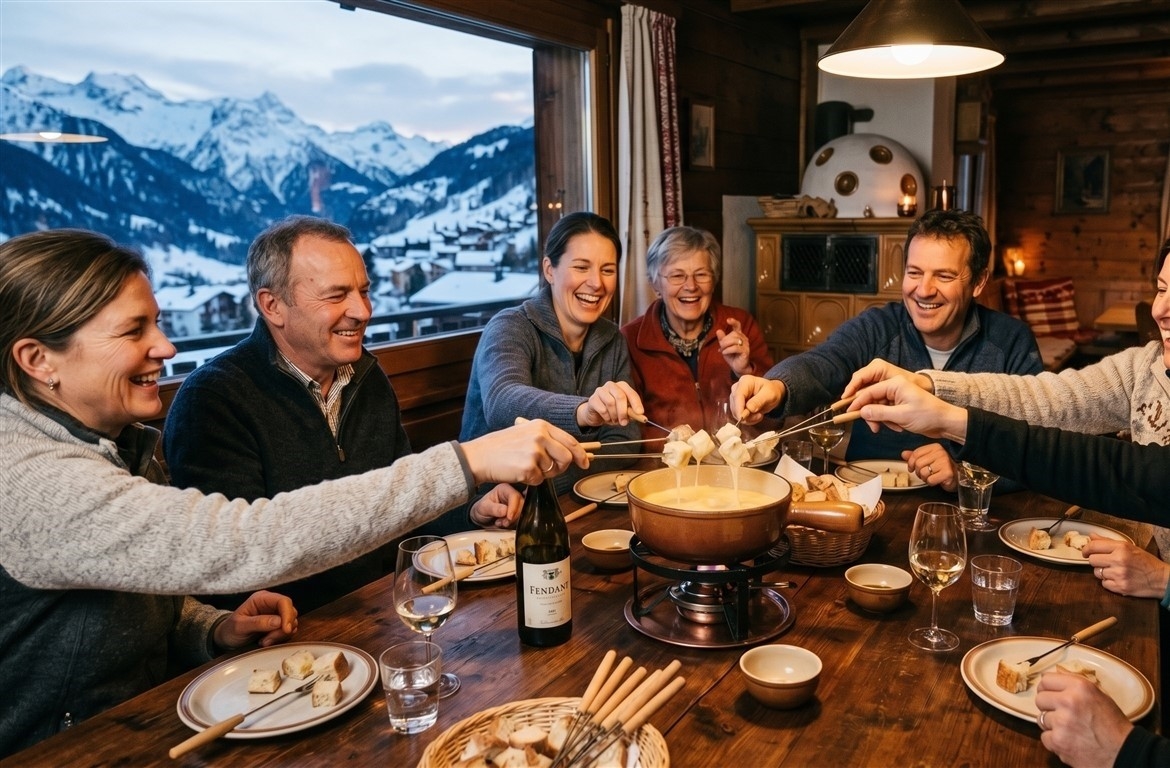
Fondue earned its national icon status because it *looked* Swiss, even before you took your first bite. Images of cheese from high mountain pastures, people gathered around a communal table, snowy landscapes, cozy wooden rooms, and a ritual that felt ancient – it was perfect fodder for posters and postcards. Swiss marketing certainly helped, but the dish truly endured because it simply worked in real life.
Even today, fondue remains one of the easiest foods for visitors to spot and recognize across Switzerland. Raclette, rösti, world-famous chocolate, and other alpine cheeses all have their loyal fans, but fondue still owns that unique, shared-pot theatricality. It’s dramatic without really trying.
Classic Swiss Fondue: Key Items
Cheeses for classic fondue
Swiss cheese fondue usually starts with firm, flavorful cheeses that melt beautifully. Gruyère often takes center stage in many blends: nutty, deep, and just a touch salty. Vacherin Fribourgeois adds a wonderfully creamy texture and a milder tang. Sometimes Emmental pops up, bringing a sweeter, gentler note. And if you want a real kick, Appenzeller can join the party. Regional blends are a big deal here; Swiss diners definitely have strong opinions about them.
Fondue moitié-moitié, the famous half-and-half style from Fribourg, masterfully combines Gruyère with Vacherin Fribourgeois. It’s rich, well-rounded, and utterly Swiss in its quiet excellence—no need to be flashy.
Wine, garlic, kirsch, and seasoning
Dry white wine is crucial. It helps the cheese transform into that silky-smooth sauce and gives the fondue a clean, bright lift. Garlic? Either rubbed inside the pot or cooked right into the mix. Kirsch, a clear cherry brandy, shows up in many traditional recipes. Sometimes it’s stirred into the cheese itself; other times, it’s served in tiny glasses on the side. A little cornstarch or potato starch keeps everything from splitting. Then, a final dash of pepper and nutmeg finishes the pot perfectly.
Balance is everything. Too much wine and it gets sharp. Too much heat and the cheese breaks. Not enough patience? It turns stubborn. Fondue truly rewards a calm, steady hand.
Bread and dipping foods
Crusty white bread is the undisputed champion dipper. It needs to be slightly firm, cut into sturdy cubes, capable of surviving a good swim through the cheese. Many Swiss restaurants stick to bread as the primary companion. That said, travelers might occasionally spot potatoes, pickles, pearl onions, mushrooms, or other veggies on some tables.
Bread is tradition. Potatoes are practical. Raw vegetables are okay, but they start pushing the whole vibe toward a buffet. Real fondue doesn’t need much fancy dressing up.
Regional Swiss Fondue Styles
This is where fondue truly gets interesting. Switzerland might look small on a map, but food traditions shift dramatically between cantons and language regions. A fondue in Fribourg won’t always taste like one from Vaud. And trust me, a mountain restaurant might guard its secret house blend with comedic seriousness.
| Style | Region linked with it | Typical character |
|---|---|---|
| Fondue moitié-moitié | Fribourg | Half Gruyère, half Vacherin Fribourgeois; creamy and balanced |
| Fondue Neuchâteloise | Neuchâtel | Often based on Gruyère and Emmental with white wine |
| Fondue Vaudoise | Vaud | Usually centered on Gruyère, with a firm cheese flavor |
| Fondue Fribourgeoise | Fribourg | Vacherin-based versions can be softer and lower in wine |
| House fondue | Across Switzerland | Restaurant blends shaped by local cheese and habit |
Fribourg’s Moitié-Moitié
Fondue moitié-moitié stands as one of Switzerland’s absolute best versions. The name, of course, means “half-and-half,” and it typically pairs Gruyère with Vacherin Fribourgeois. Gruyère brings structure and depth to the party. Vacherin softens all the edges, creating a result that feels incredibly generous without ever becoming dull or heavy.
Neuchâtel-Style Fondue
Fondue Neuchâteloise is usually associated with a blend of Gruyère and Emmental. It often comes across a bit gentler than some of the sharper regional pots, though recipes always vary from one kitchen to the next. Wine is definitely a key part of its classic flavor profile, lending the cheese a beautifully clean aroma.
Vaud’s Fondue Vaudoise
Fondue Vaudoise really leans into Gruyère. This gives it a more direct, assertive cheese flavor—firm and wonderfully nutty. In Vaud, where vineyards and dairy farms are practically next-door neighbors, pairing local wine with this regional cheese just feels like destiny.
Other local Swiss fondue
You’ll find local variations that might toss in tomatoes, fresh herbs, mushrooms, or totally different cheese blends. Some are old family traditions, others are restaurant innovations, and a few are just designed for tourists wanting something a bit quirky. For your first fondue in Switzerland, honestly, a classic cheese blend is always your safest bet. Master the original, then feel free to explore!
Making Swiss Fondue
Caquelon, burner, and forks
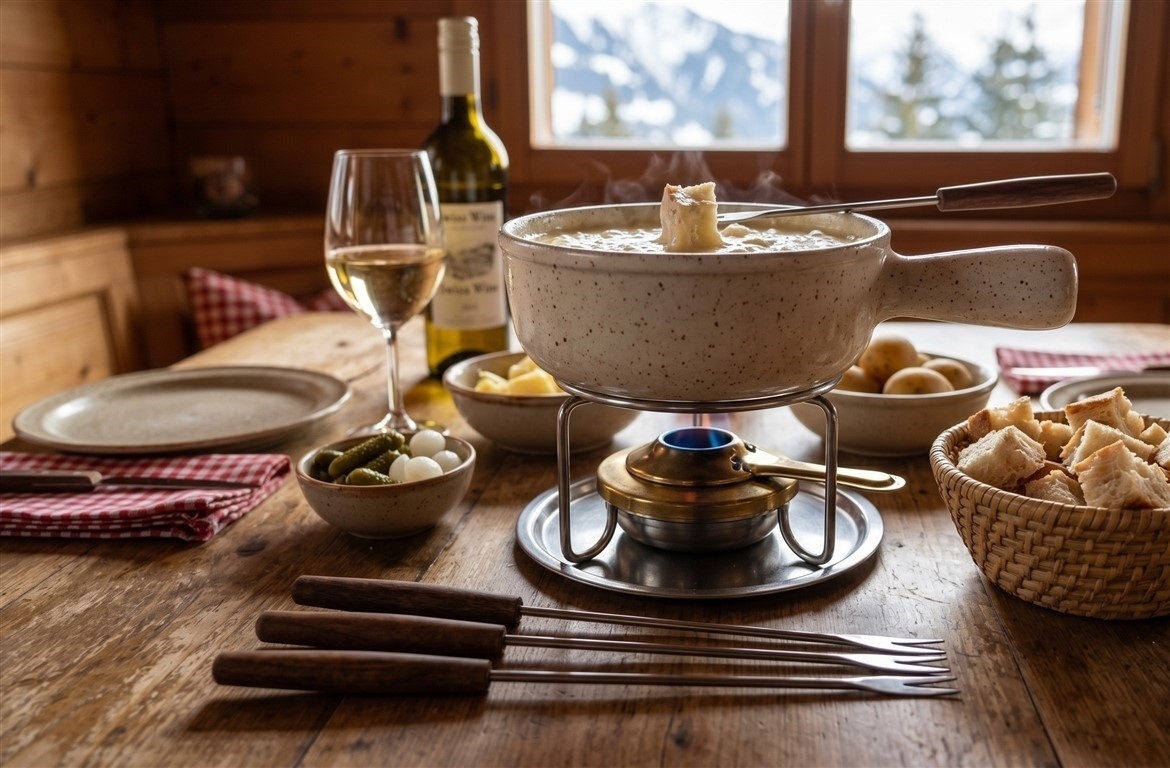
The caquelon is your fondue pot. Usually ceramic or cast iron, it needs to be wide enough for easy dipping and heavy enough to retain heat like a champ. A small burner sits underneath it, right on your table. Those extra-long forks? They let diners dip bread without accidentally dunking their sleeves into dinner, which, trust me, sounds obvious until you’ve had a second glass of wine.
Restaurants might melt the cheese in the kitchen or right at your table. If you’re making it at home, you usually melt the cheese on the stove first, then transfer it to the table burner. Remember, that little flame at the table is for keeping things warm, not for trying to salvage a botched batch.
Basic cooking steps
- Prep the pot. Rub the inside of your caquelon generously with a garlic clove. Then, add wine and warm it up gently. The goal is to perfume the pot, not overpower it with garlic.
- Add cheese bit by bit. Grated cheese always melts more smoothly than big chunks. Stir consistently in a figure-eight motion and keep the heat moderate. Rushing this step is where fondue starts getting temperamental.
- Keep it together. A touch of starch, often mixed with kirsch or a little more wine, helps the cheese and liquid emulsify perfectly. Your fondue should look glossy and smooth, never grainy.
- Season and serve. A sprinkle of pepper, a dash of nutmeg, and one final taste adjustment get the pot ready. Move it to the table burner, keeping the heat low enough to prevent any scorching.
Things to avoid
Boiling the cheese? That’s the cardinal sin. It can split the mixture, leaving a greasy mess on top. Using bland cheese? You’ll end up with a dull pot. Sweet wine? The flavor will taste clumsy. Letting the burner get too hot? You’ll burn the bottom before anyone gets to enjoy la religieuse, that coveted crust.
Oh, and one more small offense: dipping your bread and then vigorously shaking it like a paintbrush. Don’t do that. Just a slow turn, a clean lift, then eat. The Swiss way is relaxed, not sloppy.
How to Enjoy Swiss Fondue
Fondue manners at the table
Fondue etiquette is friendly, but it definitely has its unwritten rules. Use your long fork for dipping only; don’t eat straight from it, especially in a more formal setting. Keep that bread moving through the cheese to help the pot stay smooth. And resist the urge to aggressively scrape the bottom too early. Share the space, share the joy.
People often stir the fondue in a figure-eight pattern while dipping. It’s partly practical, partly ritual. Either way, it keeps everyone involved in the process.
Losing bread in the pot
Dropping your bread in the pot carries a certain comedic weight in fondue culture. Old traditions suggest playful penalties: perhaps buying a round of drinks, sharing a kiss with someone, or performing a silly dare. Restaurants won’t enforce these like actual laws. But with friends? All bets are off. Choose your dining companions wisely!
La religieuse, the crust
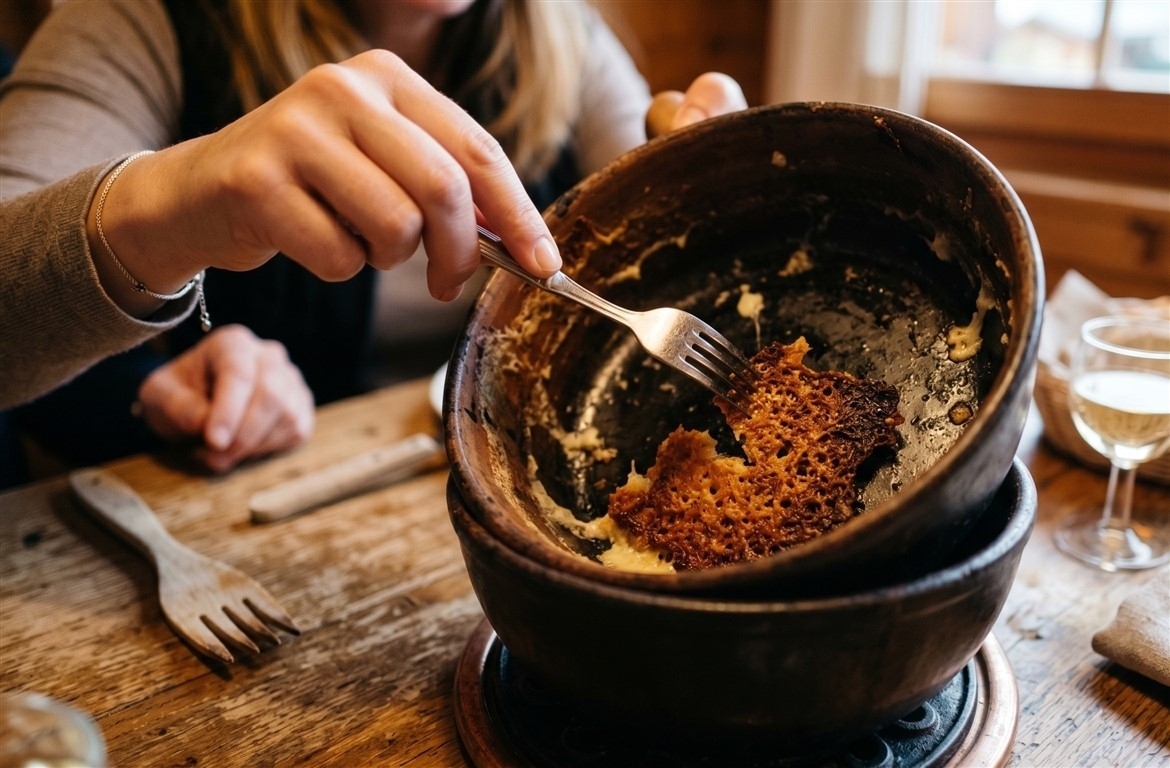
La religieuse is that beautiful, toasted cheese crust that forms at the very bottom of the caquelon. The name sounds so serious for something so incredibly delicious. When the fondue pot is almost empty, this crust gets carefully loosened and then shared. It tastes even deeper than the melted cheese itself: crisp at the edges, super concentrated, and often carrying a subtle smoky note from the heat.
What to Drink with Fondue
White wine
Dry Swiss white wine is a perfectly classic pairing with fondue. Chasselas, popular in many French-speaking regions, has a subtle profile that works beautifully with melted cheese. It refreshes your palate without ever trying to steal the show from the pot.
Tea
Hot black tea is another traditional fondue beverage and a smart pick if you’re looking to limit alcohol, especially at lunch. It does a great job of cutting through the richness, keeping the meal feeling warm and comforting from start to finish.
Kirsch
Kirsch might be mixed into the fondue recipe or served alongside the pot in tiny glasses. It’s potent, clear, and definitely not a casual thirst quencher. Sip it slowly, or if you’re feeling old-school, dip your bread in it *before* the cheese.
Drinks locals often skip
Ice-cold soft drinks aren’t really the traditional pairing. You’ll see beer on some tables, and honestly, no need to stress about it. But wine and tea just fit the traditional mood better. Water is perfectly fine. Don’t worry, the fondue police aren’t hiding under your table!
Best Time for Fondue in Switzerland
Winter truly sets the perfect stage for fondue. December through March brings ski trips, chilly evenings, bustling Christmas markets, and precisely the kind of weather that makes melted cheese feel like less of a choice and more like pure common sense. Mountain resorts absolutely lean into it, from polished fine-dining spots to rustic wooden huts where the floor groans under ski boots.
Fondue isn’t strictly confined to winter, though. Swiss folks eat it outside the ski season too, and plenty of tourist towns offer it year-round. Summer fondue can be delightful high up in the mountains after a long hike, especially when the air cools quickly and shadows stretch across the valley. During a city heatwave, however? Maybe not so much. Nobody needs heroic cheese under a blazing summer sun.
Where to Eat Fondue
Zurich
Fondue in Zurich often feels cosmopolitan but still deeply traditional. Old-town restaurants, grand guild-house dining rooms, and cozy seasonal winter terraces offer plenty of choices for visitors. Zurich works especially well for fondue first-timers, as service tends to be clear, menus often include English translations, and classic fondue is easy to find during the cooler months.
Geneva
Geneva brings a distinctly French-speaking Swiss flavor to fondue. The city sits close to both wine country and the Alps, so dining here feels naturally connected to both. If you’re aiming for a quieter, more authentic meal, seek out traditional restaurants a little removed from the busiest lakeside promenades.
Zermatt
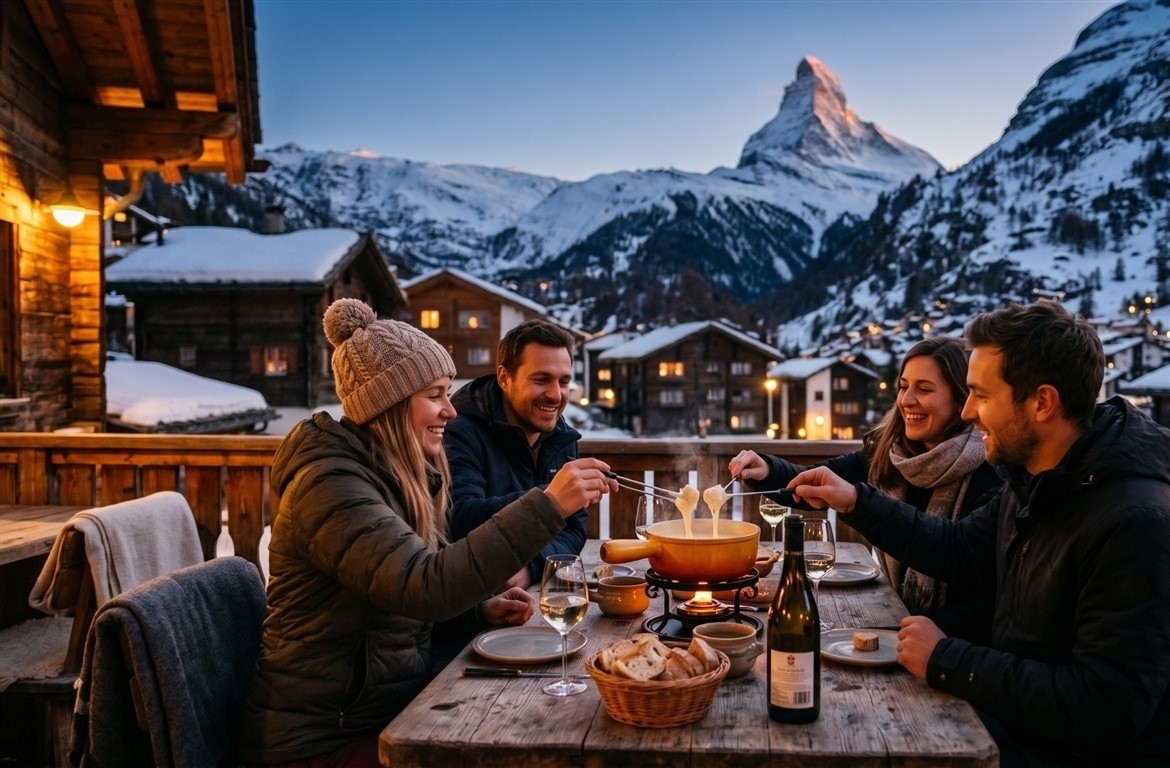
Zermatt might just be one of the most atmospheric spots for fondue in all of Switzerland. The majestic Matterhorn looming overhead, car-free streets, charming wooden chalets, and that primal ski-day hunger do half the work before your pot even arrives. Prices can get steep in these resort settings, but the overall vibe is truly unforgettable.
Interlaken
Interlaken is practically built for travelers, and fondue fits its adventurous personality perfectly. After paragliding, hiking, lake cruises, or scenic mountain railways, a shared pot of cheese feels easy, warm, and incredibly welcoming. You’ll find themed fondue experiences here, alongside more conventional restaurants.
Mountain resorts & restaurants
Mountain restaurants offer fondue its absolute best backdrop. Imagine snow falling outside, the faint echo of cowbells in the distance, rustic wooden walls, and wool hats tossed onto benches. Ski resorts across Valais, the Bernese Oberland, Graubünden, and Vaud all serve fondue in various forms throughout the winter. Making reservations is a smart move during peak season.
Fondue Adventures for Travelers
Traditional fondue eateries
Choosing a traditional fondue restaurant is often the simplest path. The pot arrives perfectly ready, the bread is pre-cut, the burner gets monitored, and the staff can expertly guide you through different cheese selections. This is the ideal setup if you want the full cultural ritual without having to test out your rental apartment’s cookware.
Chalets and alpine huts
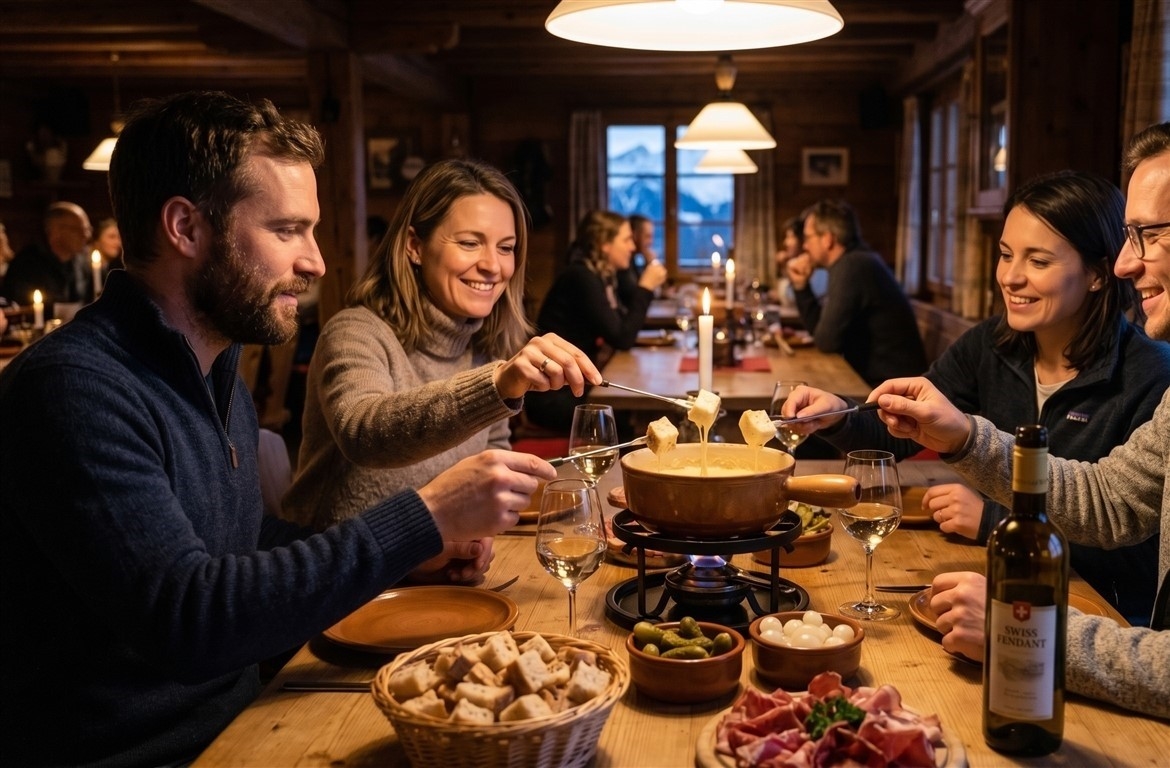
Chalets and huts lean more toward the rustic side. The room might be louder, the portions often bigger, and the air surprisingly warm. Some places even serve fondue after sledding adventures or moonlit winter walks. These meals tend to stick in your memory because the entire journey becomes part of the dining experience.
Tours and themed fondue
Tour operators in popular spots often arrange fondue evenings, walking tours that incorporate fondue, private tastings, and seasonal pop-ups. These can be genuinely fun, provided they respect the dish itself and don’t turn it into a full-blown costume party. A good themed meal still needs fantastic cheese, after all. Cute lanterns just can’t fix bland fondue.
Summer vs. winter fondue
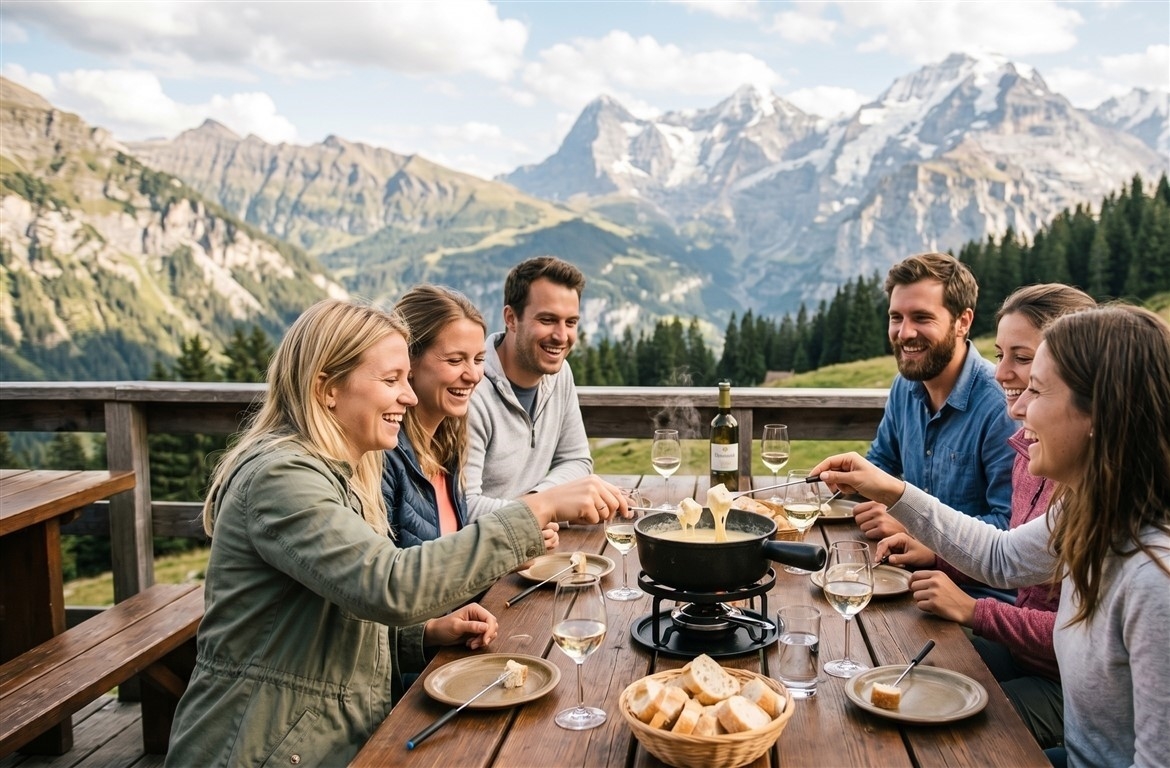
Winter fondue feels heavier, richer, and often comes with a lively buzz. Summer fondue, though, is usually more relaxed, often enjoyed with stunning mountain views or during cool evenings. The cheese itself doesn’t fundamentally change, but the setting definitely alters your appetite. A pot served at 1,800 meters after a strenuous hike just hits differently than one in a city basement in July.
Other Fondue Styles
Fondue Bourguignonne
Fondue Bourguignonne involves hot oil for cooking small pieces of meat right at your table. It’s not cheese fondue, although it shares that communal pot setup. Sauces are absolutely key here, and the meal feels more like a slow, interactive grill than a dairy-rich feast.
Fondue Chinoise
Fondue Chinoise swaps the hot oil for simmering broth. Thinly sliced meats are cooked in the broth, then enjoyed with various sauces and side dishes. In Switzerland, this style is heavily associated with festive occasions, especially Christmas and New Year gatherings.
Chocolate fondue
Chocolate fondue is the sweet relative: melted chocolate served with fresh fruit, cake cubes, or marshmallows. It’s hugely popular with visitors and incredibly easy to love. But while chocolate fondue gets plenty of applause, cheese fondue carries the deeper, more traditional Swiss culinary identity. Cheese earns loyalty.
Ordering Fondue: Quick Tips
Portion sizes
Fondue is surprisingly filling. A standard order is typically calculated per person, but that richness catches up to you fast. If the menu offers appetizers, keep them light. A fresh salad or some pickles makes far more sense than a heavy starter before diving into a pot of melted alpine cheese.
Reservations
Definitely book ahead, especially in popular ski resorts, renowned fondue spots, and smaller mountain huts. Winter weekends fill up incredibly quickly. City restaurants might be more forgiving with walk-ins, but a reservation always saves you that awkward door conversation while the delicious aroma makes you desperate.
Price expectations
Switzerland is generally an expensive country for dining, and fondue, despite its humble origins, isn’t always the cheap “peasant meal” its history might suggest. Prices fluctuate widely by city, resort, specific cheese blend, and the overall setting. Expect to pay more for stunning mountain views or a restaurant with a famous name. Always check the menu before sitting down if budget is a concern.
Avoiding tourist traps
- Look for a focused menu. A restaurant specializing in fondue as a house favorite usually delivers a better experience than one selling every Swiss cliché on a single, laminated card.
- Check the cheese blend. Menus that actually name specific cheeses—Gruyère, Vacherin Fribourgeois, Emmental, or other regional varieties—tend to inspire much more confidence than vague “Swiss cheese” descriptions.
- Observe the room. A good mix of both travelers and local diners is always a positive sign. If a place is empty right next to a crowded street, take a second look.
- Respect the season and setting. A cozy winter chalet just has natural fondue energy. A random summer terrace next to a souvenir shop, however, really has to prove its worth.
Can You Make Fondue at Home?
Yes, absolutely! Swiss fondue can definitely be made at home, as long as you use the right cheese and keep the heat gentle. A proper caquelon helps, but a heavy-bottomed pot can work for melting before you transfer it to a table burner. Remember to grate your cheese, use dry white wine, and stir steadily. Avoid those pre-shredded cheeses with anti-caking powder; they tend to melt with a sulk.
The trickiest part outside Switzerland is often sourcing the same high-quality cheese. Gruyère is widely available in many countries, but Vacherin Fribourgeois can be harder to track down. If you need to make substitutions, pick cheeses that melt smoothly and pack a genuine flavor punch. Mild supermarket blocks will just give you a flat, boring pot.
Home fondue is best enjoyed with friends who don’t mind hovering near the stove, tasting, adjusting, and laughing when that first batch turns out a bit too thick. Keep extra wine handy for thinning the mixture, and definitely keep extra bread close by because someone *always* eats half of it before dinner officially begins.
Fondue Traditions & Fun Facts
FIGUGEGL and fondue ads
FIGUGEGL is a super famous Swiss fondue slogan from German-speaking advertising. It’s actually an acronym for “Fondue isch guet und git e gueti Luune,” which means “fondue is good and puts you in a good mood.” The phrase is playful, a little quirky, and incredibly effective. It really helped link fondue with cheerfulness, not just tradition.
Fondue as a social event
The shared pot is the whole entire point. Fondue doesn’t plate neatly. It inherently crosses personal space. It makes everyone wait their turn, rescue dropped bread, playfully tease each other, and keep an eye on the flame. That physical closeness is what gives the meal its unique charm. You *could* eat fondue alone, but honestly, it would feel like doing karaoke in an empty bar.
Fondue in Swiss pop culture
Fondue pops up everywhere in Swiss humor, tourism imagery, cartoons, films, and winter advertising campaigns. It’s total shorthand for Swiss conviviality: not about luxury, not about speed, not about delicate tasting-menu behavior. Just good cheese, warming heat, and great company.
Fondue FAQs
Is fondue genuinely Swiss?
Cheese fondue is very strongly linked with Switzerland. It’s easily one of the country’s most famous national dishes. While neighboring Alpine regions certainly have similar melted-cheese traditions, Swiss fondue has its own distinct recipes, specialized equipment, unique customs, and a clear cultural identity.
What cheeses go into Swiss fondue?
Gruyère and Vacherin Fribourgeois are two of the most well-known cheeses you’ll find in Swiss fondue. Emmental, Appenzeller, and other regional cheeses also feature in different blends. The popular Fondue moitié-moitié traditionally uses a mix of Gruyère and Vacherin Fribourgeois.
Is fondue costly in Switzerland?
Fondue prices in Switzerland really vary, depending on the restaurant, city, resort, and the specific cheese blend used. Ski resorts and famous mountain towns generally cost more than modest neighborhood eateries. The dish is quite filling, so many travelers opt to treat it as their main meal rather than just one course.
Can one eat fondue alone?
You certainly can, and some restaurants will even serve a single portion. However, fondue is inherently designed for sharing. The pot, the burner, the bread basket, all those little table customs—they just make so much more sense with two or more people.
Do Swiss people eat fondue year-round?
Fondue is most traditionally associated with colder months, mountain getaways, and cozy winter evenings. Yet, it’s available year-round in many tourist areas, and Swiss diners absolutely do enjoy it outside of winter. The overall vibe just shifts with the seasons.
Which Swiss city is best for fondue?
Zurich is great for finding classic restaurants, Geneva offers a rich French-speaking Swiss food culture, Zermatt provides an unparalleled alpine atmosphere, and Interlaken suits travelers looking for themed fondue experiences. The “best” choice truly depends on your travel plans, not some single national winner.
0 Comment