


Harry Potter Filming Locations Map
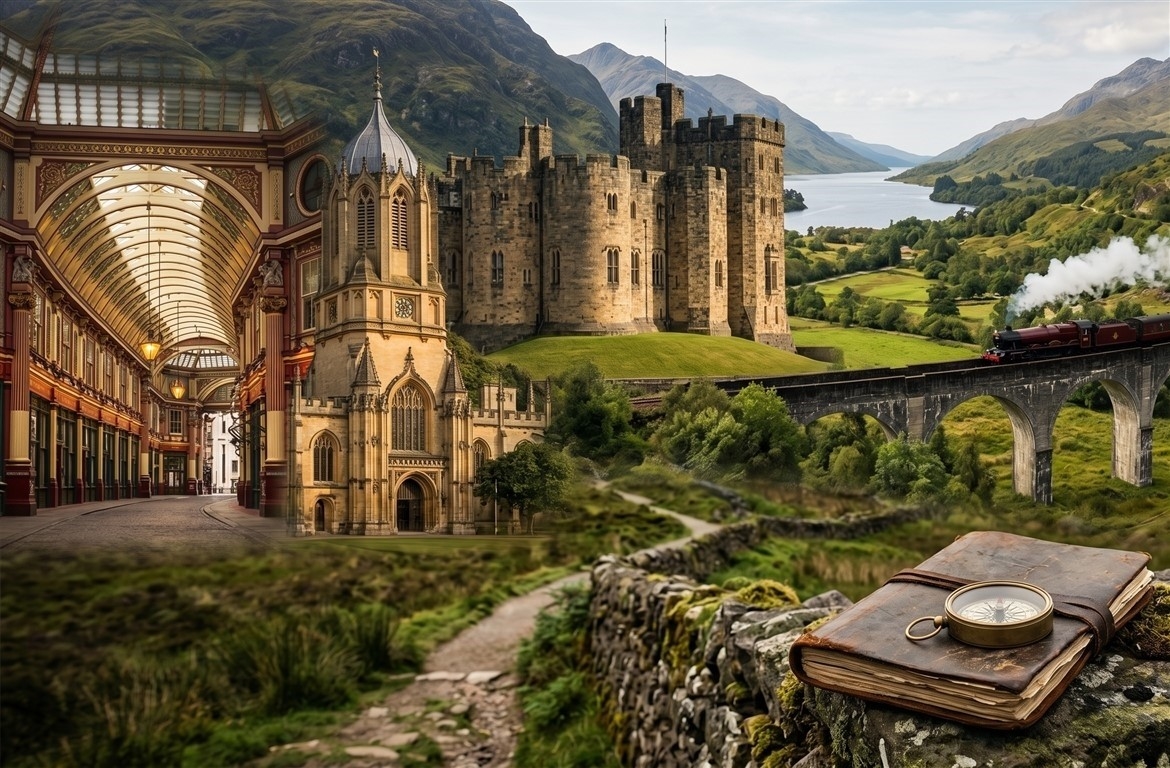
Think of a Harry Potter filming locations map as your golden ticket, transforming a jumbled wish list into a proper adventure across Britain. You’ll even find a few magical spots touching Wales and Ireland. London kicks things off, naturally: King’s Cross, Leadenhall Market, and those incredible studio sets at Leavesden. Oxford then opens up its ancient stone corridors and quiet, dusty libraries. Head north, and England offers grand castles, soaring cathedrals, charming village lanes, and historic railway platforms. Then, Scotland truly takes over, showcasing dramatic viaducts, shimmering lochs, deep glens, wide moorland, stunning waterfalls, and that iconic steam train chugging through the Highlands.
Here’s the secret: don’t try to see absolutely everything. That sounds amazing, right? But it quickly devolves into a headache of missed trains, unexpected rain, closed gates, and a genuinely exhausted family munching crisps in a soggy car park. A much smarter approach involves grouping these film locations by region, considering travel times, and thinking about the kind of scene each place represents. Some are quick city stops. Others need a whole day. And some are best appreciated as pure scenery, not as attractions with ticket booths and entry fees.
Where the Harry Potter Films Were Shot
The movies mixed up real spots with specially built studio sets. Hogwarts, for instance, wasn’t just one castle. Its look came from a blend of different places: Alnwick Castle lent its grounds for those early flying lessons, while Durham and Gloucester Cathedrals provided the cloisters and school hallways. Oxford contributed interiors, like those found in the library and infirmary scenes. Beyond these, massive constructed sets and clever digital work brought the larger magical world to life.
London acts as the actual starting point for the story. King’s Cross is forever linked to Platform 9 3/4. Leadenhall Market became the atmospheric approach to the Leaky Cauldron. Australia House provided the grand interiors for Gringotts, and the Reptile House at London Zoo made a memorable appearance in the very first film. Just a short trip northwest from the capital, you’ll find the Warner Bros. Studio Tour London, a place where the Great Hall, Diagon Alley, the Forbidden Forest, the Hogwarts Express set, original costumes, props, creature designs, and intricate models all reside under one roof.
Scotland delivers the big-screen drama. The Glenfinnan Viaduct is *the* classic shot of the Hogwarts Express. Loch Shiel, Loch Eilt, Rannoch Moor, Glen Coe, Glen Etive, Steall Falls, Loch Morar, Loch Arkaig, and Black Rock Gorge all contributed to exterior scenes or provided those breathtaking landscape backdrops used throughout the entire series. The wind, the clouds, and the vast distances do half the magic there, honestly. No need for plastic wands.
Navigating the Filming Locations Map
Think of this map in logical clusters. Begin with London and Leavesden, then move on to Oxford. After that, explore the English cathedral and castle circuit, and finally, immerse yourself in Scotland. Wales and Ireland are optional detours, as they don’t sit directly on the most straightforward northbound route. Freshwater West in Pembrokeshire, for instance, ties into the Shell Cottage scenes. The Cliffs of Moher in Ireland offered the dramatic cave approach in the sixth film.
| Region | Best Base | Transport Style | Time Needed |
|---|---|---|---|
| London and Leavesden | Central London | Tube, rail, shuttle, walking | 1 to 2 days |
| Oxford and the Cotswold edge | Oxford or Bath | Train, local bus, day tour | 1 to 2 days |
| Northern England | York, Durham, or Newcastle | Train plus car or tour | 2 to 3 days |
| Scottish Highlands | Fort William | Car, rail, steam train trip | 3 to 5 days |
| Wales and Ireland | Tenby or Galway | Car, ferry, regional rail | 2 to 4 extra days |
For your initial visit, the most efficient path goes like this: London, then Oxford, perhaps Gloucester or Lacock, continuing north to York or Durham, then Alnwick, and finally reaching Fort William and Glenfinnan. This route flows naturally northward, minimizing backtracking. Only add Freshwater West if Wales already fits comfortably into your overall trip. And definitely save the Cliffs of Moher for a dedicated Ireland visit; making a special cross-country trip for just one scene is quite a stretch.
How to Plan a Harry Potter Trip
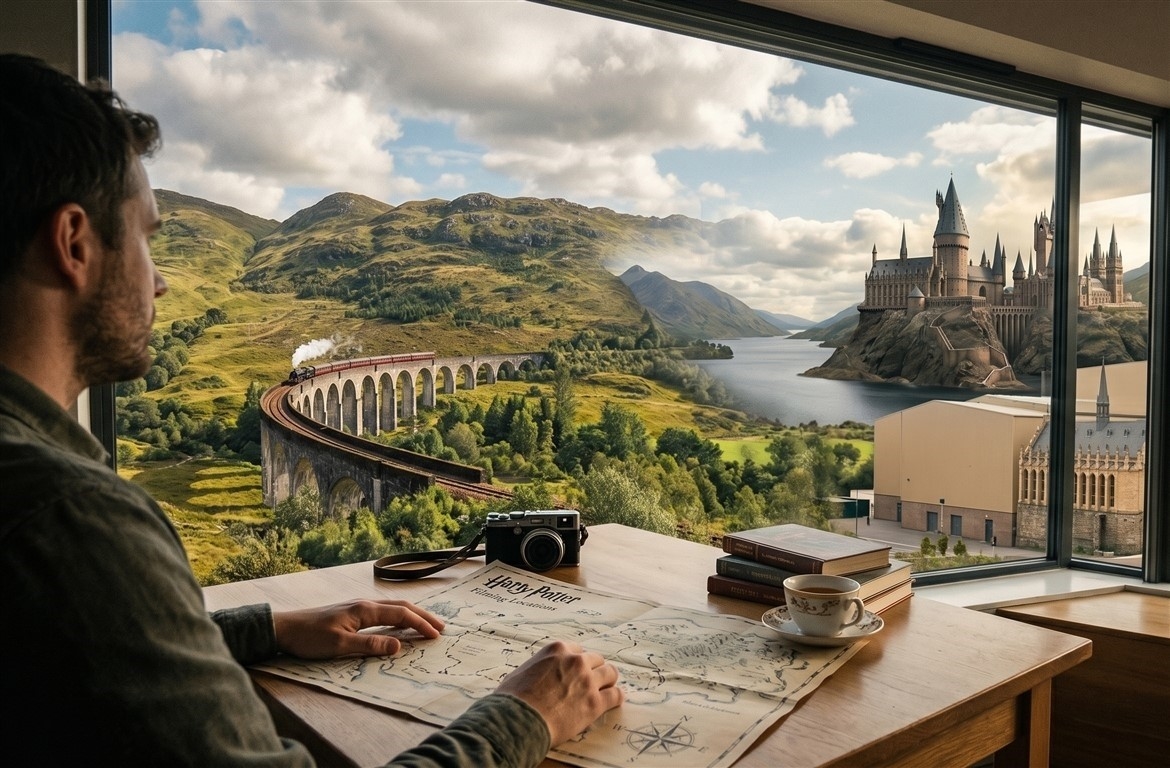
A successful Harry Potter location hunt really boils down to three key questions: how much time do you have? Are you comfortable driving? And do you prioritize seeing actual filming spots or more polished, dedicated fan experiences? The studio tour is incredibly well-organized, detailed, and completely weatherproof. Glenfinnan, on the other hand, is wide-open landscape, often bustling with crowds, has limited parking, and, well, Scottish weather does whatever it pleases. Both are absolutely unforgettable. They just feel nothing alike.
A 3-Day Adventure
Base yourself in London for this. Your first day could involve a relaxed stroll through King’s Cross, Leadenhall Market, checking out the exterior of Australia House, wandering Goodwin’s Court, and visiting the London Zoo area if it suits your interests. Keep the pace light. These are mostly city sights, not full-day attractions, with the exception of the zoo itself.
Dedicate your entire second day to the Warner Bros. Studio Tour London. Book your tickets way in advance. This visit truly takes time because the sets, props, costumes, and intricate design work are the main event, not just a quick photo op. On your third day, hop on a train to Oxford. Explore the Bodleian Library, check out New College cloisters if they’re part of your plan, wander around Christ Church, and lose yourself in the old university lanes. These streets carry that perfect mood, even if a specific doorway wasn’t used on screen.
A 5 to 7-Day Itinerary
Kick off your journey in London, then transition to Oxford. From there, consider adding Gloucester Cathedral and Lacock Abbey. Keep heading north towards York, Durham Cathedral, Goathland Station, and Alnwick Castle. With seven full days, you could even push into Scotland, perhaps starting in Edinburgh or Fort William. If you’re tighter on time, a five-day version should probably skip the Highlands or save them for a completely separate trip. That’s a hard truth, but it’s genuinely useful.
Travel by Car
Driving really makes sense for places like Lacock, Malham Cove, Alnwick, Glen Coe, Glen Etive, Loch Eilt, Loch Morar, and Black Rock Gorge. It also gives you the freedom for early starts, impromptu weather breaks, and stopping at those stunning scenic pullouts. City centers, though? Not so fun by car. London and Oxford will test your patience with traffic, expensive parking, and incredibly narrow streets.
Travel by Train and Tours
Train travel works wonderfully for London, Oxford, Gloucester, York, Durham, Edinburgh, Fort William, and Mallaig. Tours can fill in the gaps where public transport gets a bit sparse. The Jacobite Steam Train, when it’s running on its seasonal schedule, offers that famous rail experience between Fort William and Mallaig. Regular trains also use the West Highland Line, including the Glenfinnan route, so you’re not solely reliant on the steam service.
Harry Potter Spots in London
King’s Cross Station and Platform 9 3/4
King’s Cross serves as an emotional starting point for countless fans. You’ll find the public photo spot with the luggage trolley right inside the station, though the actual platforms seen in the films don’t line up perfectly with that fictional barrier. Go early for a calmer photo. Late morning can bring a queue that feels longer than a Potions essay.
Leadenhall Market
Leadenhall Market gave us that fantastic wizarding London look in the first film, with its ornate Victorian roof and gleaming shopfronts. It’s still a busy City of London market, so the energy on a weekday is totally different from a quiet weekend wander. A quick visit is best: admire the architecture, find that key doorway area, then explore the charming lanes nearby.
Australia House
Australia House, located on the Strand, was used for those incredible Gringotts interior shots. Visitors usually just see it from the outside, as it’s a diplomatic building, not a public film attraction. The grand banking atmosphere instantly makes sense: stone, marble, soaring height, impeccable order. No goblins included, unfortunately.
London Zoo Reptile House
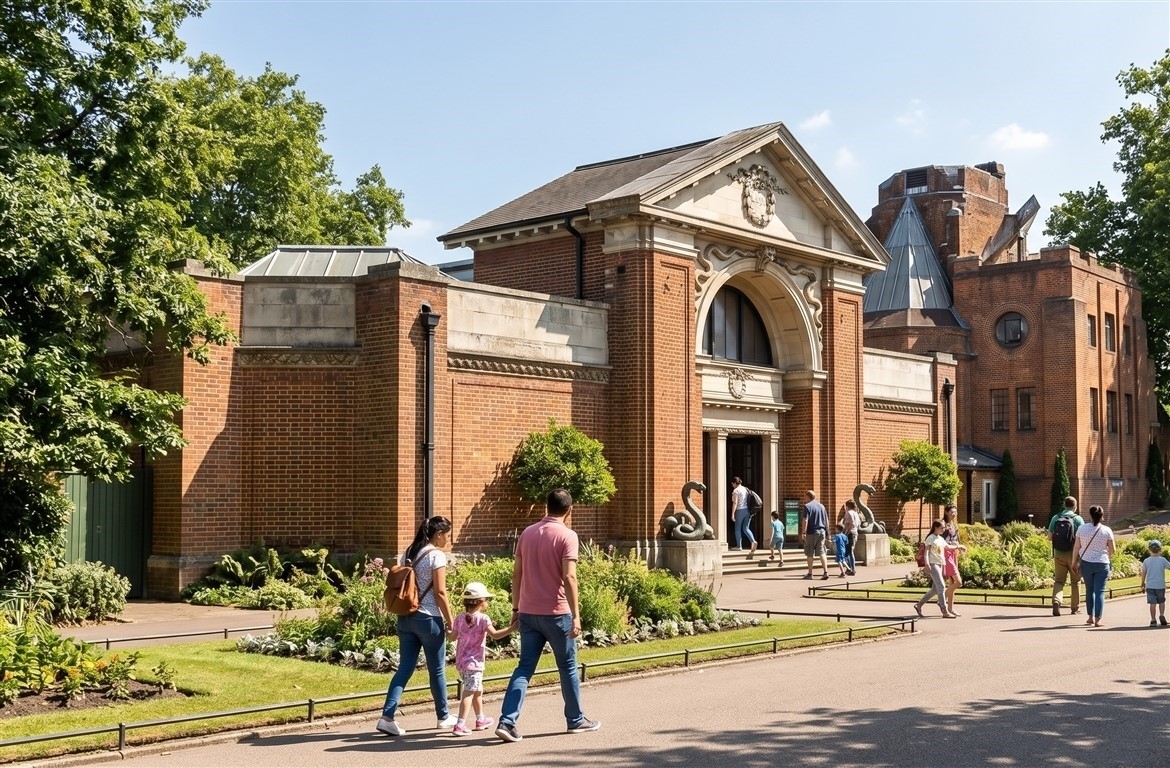
The Reptile House at London Zoo pops up in that memorable scene where Harry first realizes his strange connection with snakes. Visiting here works best for families already planning a zoo day, rather than as a quick, dedicated dash across London. It’s truly an animal attraction first, and a film stop second.
Goodwin’s Court
Fans often link Goodwin’s Court to the vibe of Diagon Alley, thanks to its narrow passage, charming bow-fronted windows, and genuine old London feel. Think of it more as atmosphere than a confirmed filming location. It’s small, feels quite residential, and is best appreciated with quiet observation.
Warner Bros. Studio Tour London
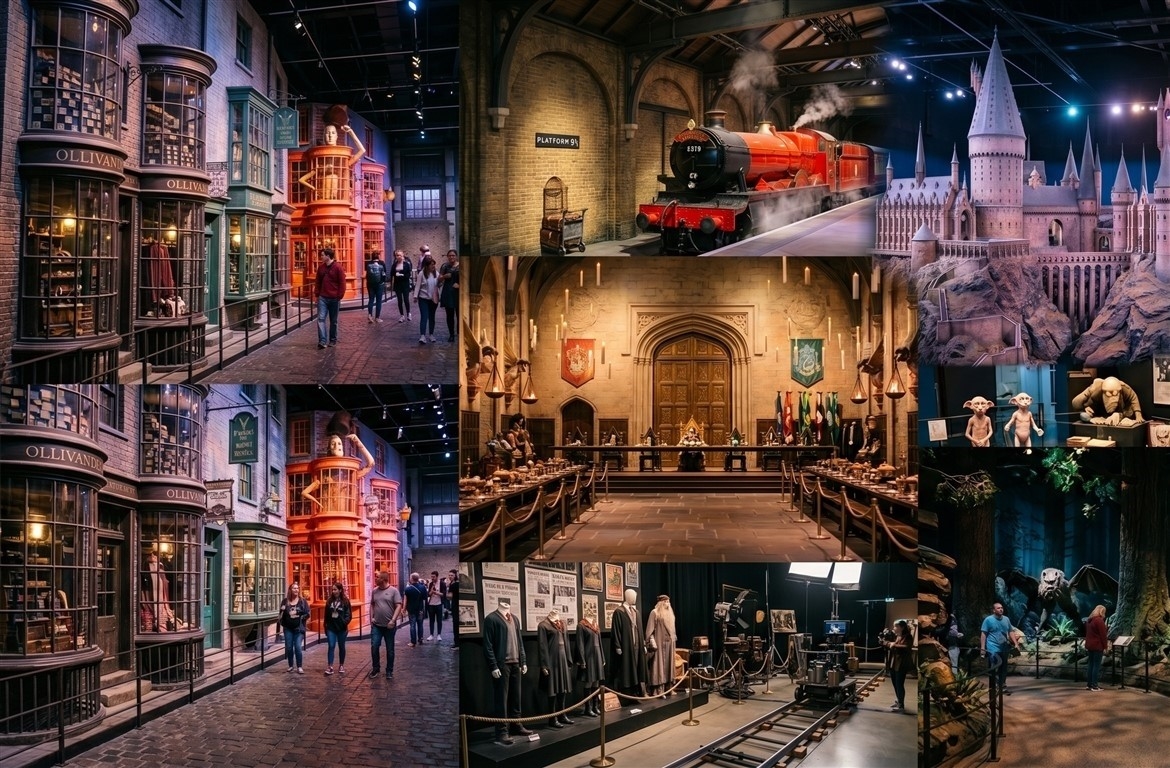
The studio tour in Leavesden offers the most comprehensive answer for anyone wanting to experience the world of the films all in one place. The Great Hall, Diagon Alley, the Forbidden Forest, the Hogwarts Express set, elements from Privet Drive, creature effects, graphic design, costumes, and the incredible Hogwarts castle model all come together to tell a complete production story. It’s not just fan service. It’s a deep dive into how these films were meticulously made – stitched, painted, carved, aged, lit, and dressed.
Harry Potter Spots in Oxford
Bodleian Library
The Bodleian Library connects to Hogwarts library and hospital wing scenes through its stunning spaces, including Duke Humfrey’s Library and the Divinity School. Entry rules vary quite a bit by room and tour type, so planning ahead is crucial. Oxford looks effortlessly grand from the outside, but it can be surprisingly particular about tickets, timed entries, college closures, and term-time restrictions.
Oxford University
Oxford University isn’t a single attraction, but rather a sprawling network of colleges, libraries, chapels, quadrangles, and ancient streets. For Harry Potter enthusiasts, its value lies partly in specific film history and partly in its incredible atmosphere: those old stone walls, echoing courtyards, lamps glowing in the rain, and students casually hurrying through doorways, completely uninterested in anyone’s photo hunt.
Hogwarts Halls, Stairs & Libraries
Several Oxford locations helped define the visual language of Hogwarts on screen. Its staircases, the inspiration for dining halls, vaulted rooms, and library interiors all contribute to that powerful feeling that the school truly has centuries of history behind it. While the Great Hall set at the studio was built specifically for filming, Oxford’s historic halls absolutely helped shape the imaginary school’s architectural grammar.
Harry Potter Places in England
Gloucester Cathedral
Gloucester Cathedral’s magnificent cloisters pop up as Hogwarts corridors in several unforgettable moments throughout the series. The fan appeal is undeniable, but the building itself deserves your time and respect beyond just the film connection. Its fan vaulting, stunning stained glass, worn stone, and peaceful corners make it one of the most rewarding non-London stops you can make.
Lacock Abbey
Lacock Abbey in Wiltshire appears in various classroom and corridor scenes, and the village itself boasts a beautifully preserved look perfect for period filming. It pairs nicely with a visit to Bath, Castle Combe, or the Cotswolds, though combining too much can lead to an incredibly packed day. Keep your route focused. Lacock truly rewards a slow, thoughtful walk.
Alnwick Castle
Alnwick Castle in Northumberland is famously linked to the broomstick lesson scenes from the earlier films. It’s also a significant historic castle in its own right, offering its own visitor programs, nearby gardens, and a strong appeal for families. For many travelers, this feels like the most “Hogwarts-like” castle they can actually explore.
Durham Cathedral
Durham Cathedral provided glorious cloister and courtyard settings for Hogwarts. Its dramatic position high above the River Wear adds to its grandeur even before you step inside. Durham is also easily accessible by train, making it one of the simpler northern locations to include without needing to rent a car.
Goathland Station
Goathland Station, nestled on the North Yorkshire Moors Railway, served as Hogsmeade Station in the very first film. The heritage railway setting gives it far more character than just a quick sign-and-photo stop. Think steam, platform lamps, crisp rural air, a touch of soot. The place has a wonderful rhythm all its own.
Malham Cove
Malham Cove in North Yorkshire appears in the camping sequence featured in the later films. The distinctive limestone pavement is absolutely striking, completely exposed, and much better suited for keen walkers than casual city tourists wearing flimsy shoes. Weather can change rapidly on open ground, so this stop demands proper footwear and a sensible extra layer.
Hardwick Hall
Hardwick Hall in Derbyshire helped stand in for the Malfoy Manor exteriors. It’s an Elizabethan country house, not a castle, with a rather stern profile and expansive grounds. Its connection is darker, more aristocratic, and feels far less cozy than the Hogwarts stops.
Lavenham
Lavenham in Suffolk was used for scenes set in Godric’s Hollow village, with its incredible timber-framed houses and charmingly crooked medieval streets. It’s a bit off the main northbound path, so it works best for travelers who are already exploring East Anglia or planning a more leisurely England itinerary.
Harry Potter Locations in Scotland
Glenfinnan Viaduct
The Glenfinnan Viaduct is practically the poster child for Harry Potter tourism in Scotland. This magnificent curved railway bridge carries trains across a breathtaking Highland valley near Loch Shiel, and its association with the Hogwarts Express draws huge crowds during peak travel seasons. The viewpoint walk is very popular, parking is limited, and honestly, the best experience usually comes from arriving early and leaving absolutely no trace.
The Jacobite Steam Train
The Jacobite Steam Train operates seasonally on the West Highland Line, running between Fort William and Mallaig. Fans recognize it as the closest real-world experience to riding the Hogwarts Express. The journey itself includes crossing the Glenfinnan Viaduct and offers incredible coastal scenery towards Mallaig. Tickets tend to sell out quickly, so booking well in advance is definitely the smart move.
Loch Shiel
Loch Shiel appears around the Glenfinnan area and played a significant role in shaping the stunning landscapes surrounding Hogwarts. From the monument area near Glenfinnan, the water stretches into a long, majestic Highland vista that feels utterly cinematic, even without a film crew anywhere in sight.
Glen Coe
Glen Coe is intrinsically linked to the rugged, outdoor feel of later Hogwarts scenes, including the area associated with Hagrid’s hut and the wider school grounds. Just remember, this glen isn’t a theme park. It’s a truly formidable landscape, incredibly beautiful and wonderfully moody, with weather that can turn sharp in an instant.
Clachaig Gully
Clachaig Gully, found near Glen Coe, is connected to the area used for Hagrid’s hut and other related exterior scenery. The hut itself was a temporary set, not a permanent attraction. Visitors come here for the terrain, the unmistakably wild backdrop, and the feeling of being right on the edge of the story, rather than inside a preserved prop.
Steall Falls
Steall Falls in Glen Nevis makes an appearance in Quidditch-related scenery and various outdoor Hogwarts views. Reaching this area requires a decent walk through dramatic Highland terrain; it’s not just a two-minute hop off a coach. Good shoes are essential. So is allocating enough time.
Rannoch Moor
Rannoch Moor offers a bleak, expansive grandeur. It features in the series through train and wider landscape shots, lending the journey north a wonderfully lonely, cinematic feeling. You won’t find any big fan facilities here, and that’s precisely the point. It’s just moorland, sky, water, railway track, and profound silence.
Loch Etive and Glen Etive
Loch Etive and Glen Etive are connected to the trio’s travels in the later films. The single-track road winding through Glen Etive is famous for its stunning scenery and absolutely demands patient driving. Always pull over properly, respect the passing places, and remember not to treat the road as a film set designed for tourists.
Loch Eilt
Loch Eilt appears in several landscape moments and is linked to the small island used as Dumbledore’s resting place. The best way to visit this area is as part of a route that includes Fort William, Glenfinnan, and Mallaig, rather than as a standalone stop.
Eilean na Moine
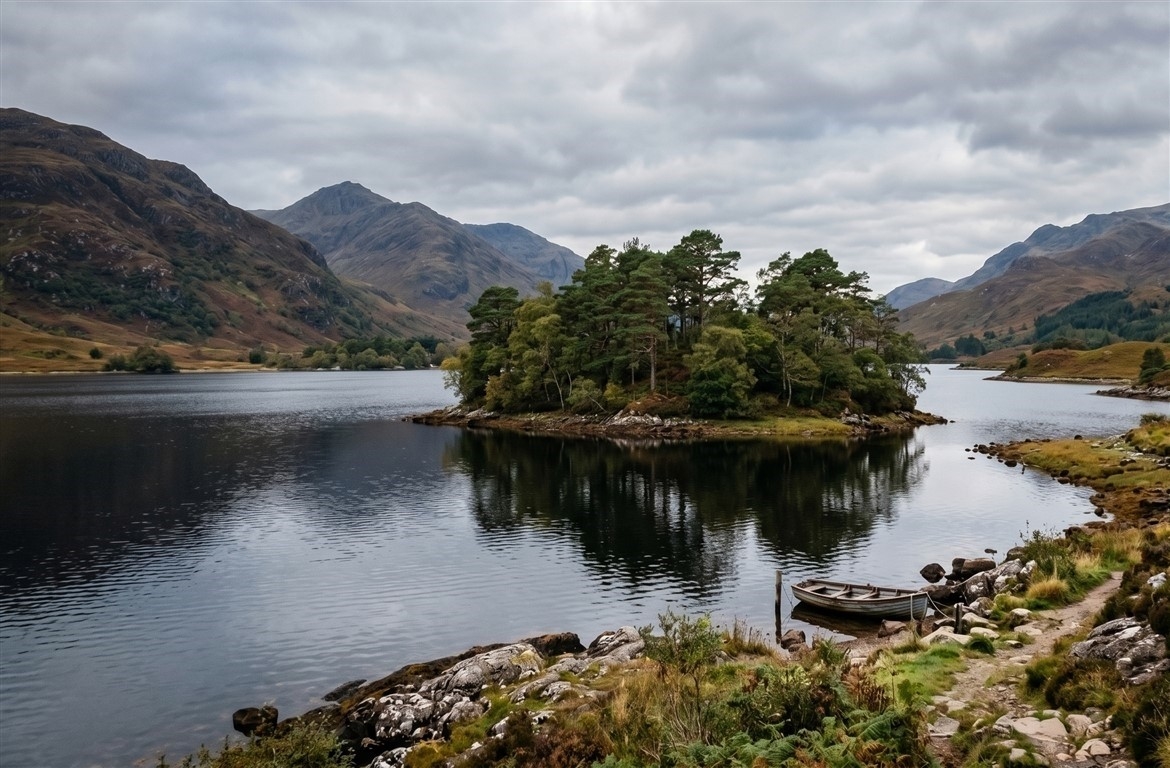
Eilean na Moine is that tiny island associated with Dumbledore’s grave. It sits within Loch Eilt and can be viewed from the surrounding area. While the film set elements are long gone, the island remains a quiet, recognizable spot for devoted fans.
Loch Morar
Loch Morar truly adds to that iconic Highland water-and-mountain atmosphere used in the films. It’s located near Mallaig, making it a natural addition after taking the Jacobite route or driving west from Fort William.
Loch Arkaig
Loch Arkaig is another Highland gem tied to the lake scenery in the series. It’s perfect for travelers with a car and enough time to enjoy slower, winding roads. The reward isn’t a ticketed exhibit, but a sweeping stretch of Scottish landscape that feels genuinely remote.
Black Rock Gorge
Black Rock Gorge, near Evanton, appears in the dragon task sequence from the Triwizard Tournament. This narrow gorge offers a darker, more perilous tone compared to the open Highland lochs. It’s a striking contrast, and a welcome one, especially if your route already takes you this far north.
Wales & Ireland Locations
Freshwater West
Freshwater West in Pembrokeshire provided the backdrop for the Shell Cottage scenes. The cottage itself was removed after filming, but the beach remains broad, beautifully windswept, and deeply tied to Dobby’s poignant story. It’s best visited as part of a larger Wales trip, rather than trying to squeeze it in between London and Scotland.
Cliffs of Moher
The Cliffs of Moher in County Clare were used for the dramatic cave approach in the sixth film. While the cave interiors were actually created elsewhere, the cliff scenery is absolutely real and utterly immense. Ireland truly deserves more than just a rushed detour, so this stop fits perfectly into a Galway, Clare, or Wild Atlantic Way itinerary.
Great Places to Visit from London
- Easy city explorations: King’s Cross, Leadenhall Market, Australia House, Goodwin’s Court, and the London Zoo can easily be combined into a single day of walking and using public transport. The order depends on where you’re staying, but King’s Cross is a very natural starting point.
- Top full-day fan experience: The Warner Bros. Studio Tour London requires advance booking and several hours on site. It provides the most in-depth look at the sets, props, costumes, and the incredible production artistry.
- Best academic atmosphere: Oxford works beautifully as a day trip by train. Remember, tours of the Bodleian Library and college access often require checking specific entry options before you arrive.
- Ideal longer day beyond the capital: Gloucester Cathedral or Lacock Abbey can be managed from London with careful planning, though trying to combine both without a tour or car might feel a bit rushed.
Exploring Harry Potter from York
York makes an excellent northern base. It’s on major rail lines and offers quick access towards Durham, North Yorkshire, and the vast moors. Goathland Station pairs perfectly with a ride on the North Yorkshire Moors Railway. Durham Cathedral is a straightforward train journey away. Malham Cove is best reached by car or an organized day tour, as public transport connections in the countryside aren’t always simple.
Alnwick Castle can be reached from the northeast rail corridor with some local transport onward, though having a car definitely smooths out the day. The north of England truly rewards travelers who resist the urge to cram too much in. One cathedral, one castle, one moorland stop. That’s already a fantastic, proper day.
Starting Your Trip from Edinburgh
Edinburgh serves as a wonderful cultural hub and a convenient starting point for tours heading to Alnwick Castle or into the Highlands. However, for that classic train-and-viaduct experience, Fort William is a much stronger base. The drive or rail journey from Edinburgh to the west Highlands takes time, and the stunning scenery absolutely deserves daylight hours.
If you’re primarily focused on Glenfinnan, the Jacobite Steam Train, Loch Shiel, Glen Coe, Steall Falls, and Loch Eilt, you should plan to stay in or near Fort William for at least two nights. This greatly reduces stress and allows for flexibility if the weather decides to misbehave. Scotland often loves to mess with rigid schedules. Then, ten minutes later, it looks utterly glorious.
Tours and Self-Guided Choices
| Option | Best For | Trade-Off |
|---|---|---|
| Self-guided city route | London and Oxford travelers | Cheaper, but requires planning |
| Organized day tour | Lacock, Gloucester, Alnwick, Highlands | Less flexible timing |
| Car route | Remote landscapes and villages | Parking, narrow roads, fatigue |
| Rail-based route | Main cities and Fort William | Rural stops need add-ons |
London-Based Tours
Tours from London usually concentrate on the studio, Oxford, Lacock, Gloucester, or city filming walks. The studio tour is definitely the safest bet for families and first-time visitors because the experience is concentrated and completely weatherproof. City walks are ideal for travelers who only have a free afternoon.
Edinburgh-Based Tours
Edinburgh tours often venture towards Alnwick Castle or into the Highlands. Before booking, double-check the actual stops, as some trips focus primarily on scenery, while others are built specifically around film references. A long day on a coach can be absolutely worthwhile, but only if the route genuinely aligns with your travel priorities.
Jacobite Steam Train Journeys
The Jacobite Steam Train is the renowned choice for die-hard Hogwarts Express fans. Seats are limited, demand is incredibly high, and operating days are seasonal. Regular rail services running along the same line remain a fantastic option for travelers who care more about the scenic route itself than specifically riding a steam locomotive.
Self-Guided vs. Organized Tour
Self-guided travel grants you ultimate freedom: linger longer at Gloucester Cathedral, spend less time at a crowded photo spot, and grab lunch whenever hunger truly strikes. Organized tours, however, brilliantly handle all the logistics. They’re perfect for visitors who’d rather not drive on the left, decipher obscure rural bus timetables, or fret about reaching Glenfinnan at precisely the right moment.
Where to Lay Your Head
Top Bases for England
London is unparalleled for visiting the studio, King’s Cross, Leadenhall Market, Australia House, the zoo, and quick day trips to Oxford. Oxford itself is excellent for exploring university locations and nearby countryside. Bath or Chippenham can serve as good bases for Lacock Abbey. York is incredibly convenient for Goathland and Malham. Durham or Newcastle makes perfect sense for reaching Durham Cathedral and Alnwick Castle.
Top Bases for Scotland
Edinburgh is a fine starting point for a wider Scotland trip, but Fort William is definitely superior for accessing the main Highland film locations. From Fort William, travelers can reach Glenfinnan, the Jacobite route, Glen Nevis, Glen Coe, and the road west towards Mallaig with significantly less hassle.
Staying Near Glenfinnan
Fort William offers the broadest selection of accommodations, dining options, rail access, and tour opportunities close to Glenfinnan. Glenfinnan itself has limited lodging, which works well for more leisurely travelers who book far in advance. Mallaig provides a lovely coastal atmosphere and ferry connections, though it places some inland locations a bit further away.
Practical Trip Planning Tips
- Book the studio and steam train tickets early. These two are often the biggest pressure points for many Harry Potter-themed journeys. Your chosen dates, entry times, and available rail seats can dictate much of the rest of your trip.
- Distinguish between actual filming sites and inspired places. King’s Cross and Glenfinnan are direct, on-screen locations. Some charming alleys, shops, and cafés
0 Comment