


Hogmanay in Scotland: Your Guide to Scottish New Year
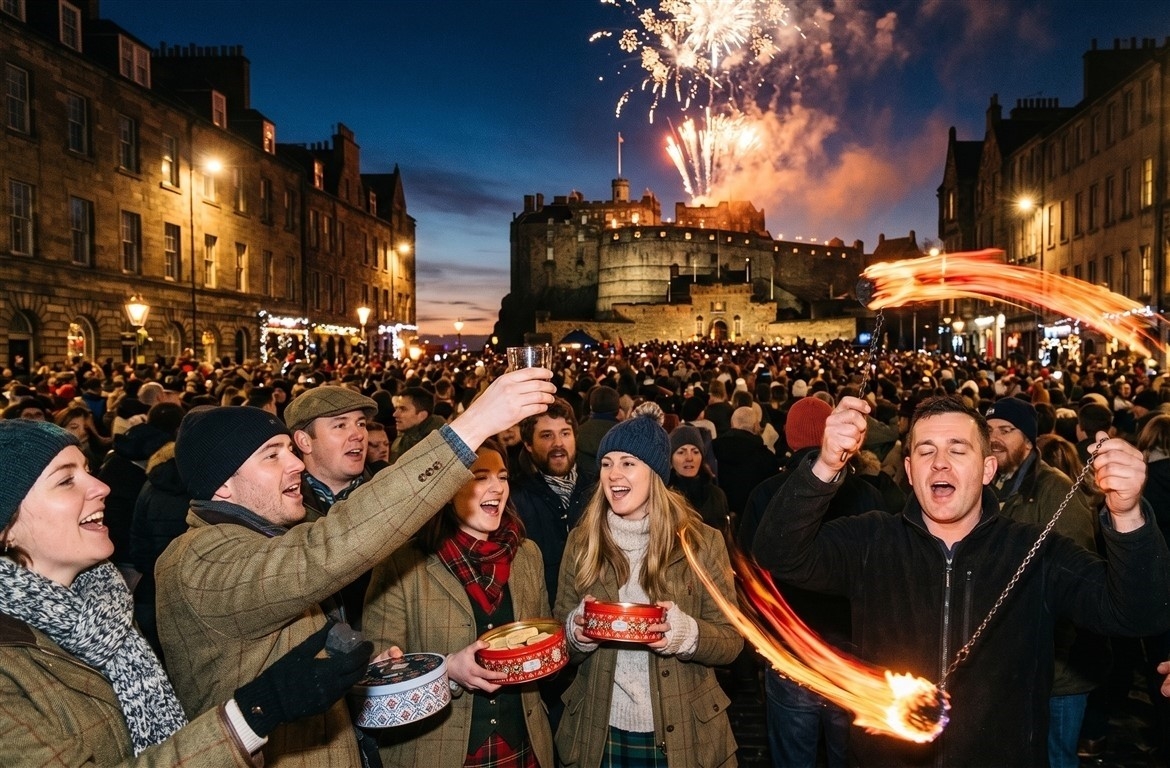
Scotland doesn’t just ease into the New Year. No, it bangs on the door, stokes the flames, pours a generous dram, sings until your bones feel the cold, and then keeps on going. Hogmanay is what Scots call the turning of the year, and in 2026, it still feels like so much more than just a calendar date. It’s bustling street parties and cozy kitchen tables. It’s fireballs lighting up the coast. It’s those familiar shortbread tins. A stranger might show up at your door, perhaps carrying whisky, a lump of coal, or a slice of black bun. And then there’s that song everyone thinks they know, right until the old Scots words start.
For visitors, Hogmanay in Scotland can be absolutely dazzling, wonderfully rowdy, surprisingly intimate, a bit odd, deeply moving, and brutally cold, sometimes all within the same evening. Edinburgh, of course, puts on the world-famous show, all vibrant lights and thrilling music under the ancient castle. Smaller towns, though, hold onto rituals that feel much, much older. The trick to truly enjoying it? Don’t just see it as one single event. Hogmanay is really a whole season of cherished customs, delicious food, spectacular fire displays, family gatherings, old superstitions, warm hospitality, and that enduring Scottish pride.
Understanding Hogmanay
What Hogmanay means and how to say it
You say Hogmanay roughly like “hog-muh-nay.” This word refers to New Year’s Eve across Scotland, though the festivities certainly spill over into New Year’s Day, and honestly, in many homes, they stretch a little further still. The word’s actual origin is quite a puzzle. Folks have connected it to French, Norse, and Gaelic influences, which honestly suits Scotland perfectly: the word feels borrowed, a bit weathered, and totally made local.
In everyday chat, Hogmanay goes beyond just a party on December 31st. It names a whole bunch of traditions centered around saying goodbye and making a fresh start: cleaning the house, catching up with neighbors, sharing food, exchanging symbolic gifts, belting out “Auld Lang Syne,” and welcoming the first person to step into your home in the New Year.
When Scots celebrate Hogmanay
The main celebration happens on December 31st, with those first few hours after midnight carrying an extra special weight. New Year’s Day, January 1st, definitely keeps that festive vibe going strong. In Edinburgh, the big public program usually spans several days right around the New Year period, packed with concerts, impressive processions, incredible fireworks, family-friendly events, and lively outdoor gatherings. For the upcoming 2026 season, if you’re traveling, be ready for accommodation and ticket demand to pick up pretty early, especially in the capital city.
Why Hogmanay is more than just New Year’s Eve
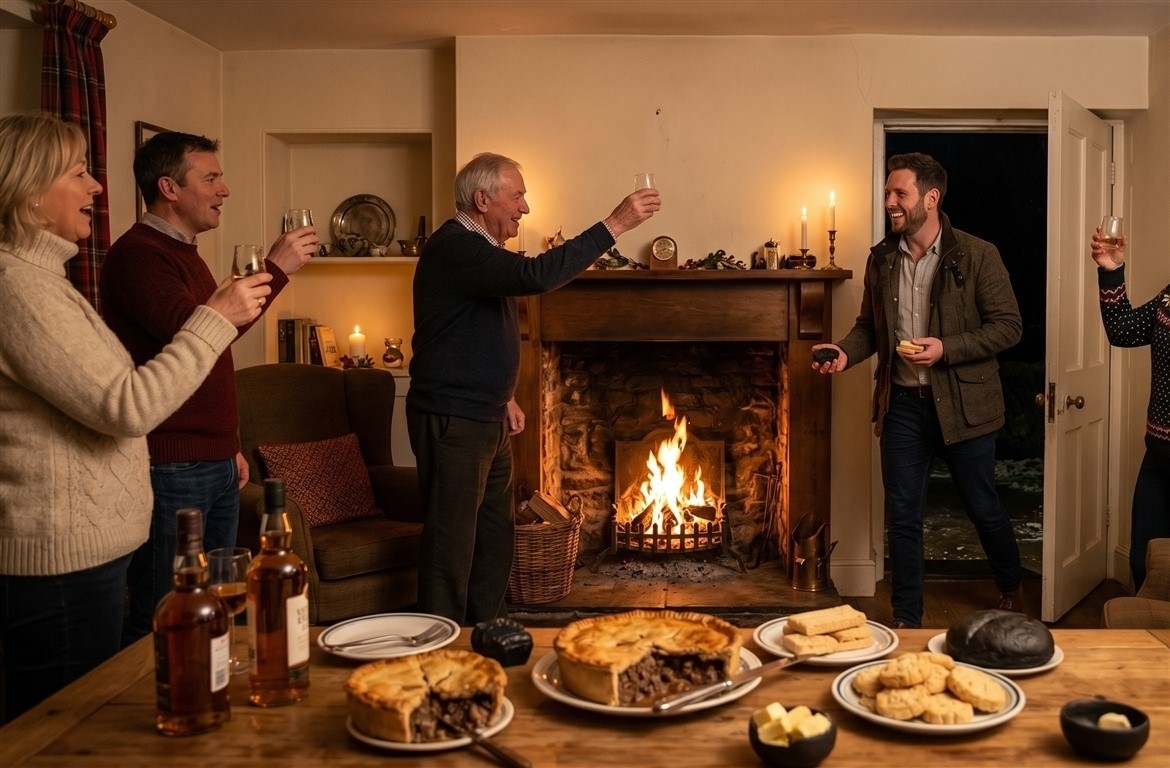
New Year’s Eve often feels like a countdown. Hogmanay, though, feels more like a deliberate handover. The old year gets pushed out, carefully swept away, dramatically burned, laughed off, and toasted with gusto. The new one is welcomed right in, always with good company. Even a quiet Hogmanay at home carries a small, almost ceremonial charge: a spotless hearth, a table laden with food, the right person being the “first-footer,” and a glass raised precisely at midnight.
Hogmanay’s Rich History
Ancient winter traditions
Scotland’s winter celebrations reach far, far back, long before our modern calendar even existed. Midwinter fire, grand feasting, visiting friends and family, and various protective customs are all part of a much wider Northern European pattern. Think long nights, harsh weather, barely any daylight. People naturally gathered indoors, marked that crucial turning point, and made plenty of noise to ward off the dark. That’s not just some romantic idea; it’s how winter communities survived, both emotionally and physically.
Norse, Gaelic, and Christian influences
Norse settlements and ongoing contact left their marks all over Scotland, especially in the north and on the islands, where fire and winter rites held incredible cultural power. Gaelic traditions shaped the hospitality, household rituals, music, and seasonal visits. Christian calendars later placed their own feasts right across the winter, though Scotland’s relationship with Christmas definitely got a bit complicated after the Reformation.
The outcome wasn’t some neat, tidy blend. Hogmanay simply grew into a rough braid of customs. Some are very domestic, others public, some playful, and some fiercely intense. A visitor can witness that exact mix all in a single night: a polite toast in one house, a roaring flaming procession in a different town, a football match the very next day, and then a crowd belting out Burns on the street.
Why Hogmanay thrived in Scotland
For centuries, Christmas never quite held the same public importance in Scotland as it did in other parts of Britain. The New Year naturally took on much more social weight. Families visited each other. Workers eagerly anticipated time off. Gifts and feasting clustered around Hogmanay instead. That unique history helps explain why Scottish New Year traditions feel unusually rich, and why Hogmanay still packs such an emotional punch.
Why Hogmanay Matters
Community and warm hospitality
Hospitality truly sits right at the heart of it all. Doors swing open wide. Neighbors pop in. Food appears in a flash, almost instinctively. A truly good Hogmanay host never lets anyone leave hungry or thirsty. The atmosphere is always generous, never fussy. A table piled high with shortbread, black bun, savory treats, whisky, tea, and whatever else is lurking in the cupboards can often do more than any meticulously planned party.
First-footing really shows this clearly. The first person to step across your threshold after midnight is thought to set the tone for your household’s luck for the entire year ahead. The best first-footer, by tradition, arrives bearing gifts like coal for warmth, whisky for good cheer, shortbread or black bun for food, and salt for prosperity. A tall, dark-haired man has long been considered a particularly fortunate visitor in old custom. No need to stage it too formally, though. The real charm is simply in the visiting.
Christmas and New Year traditions
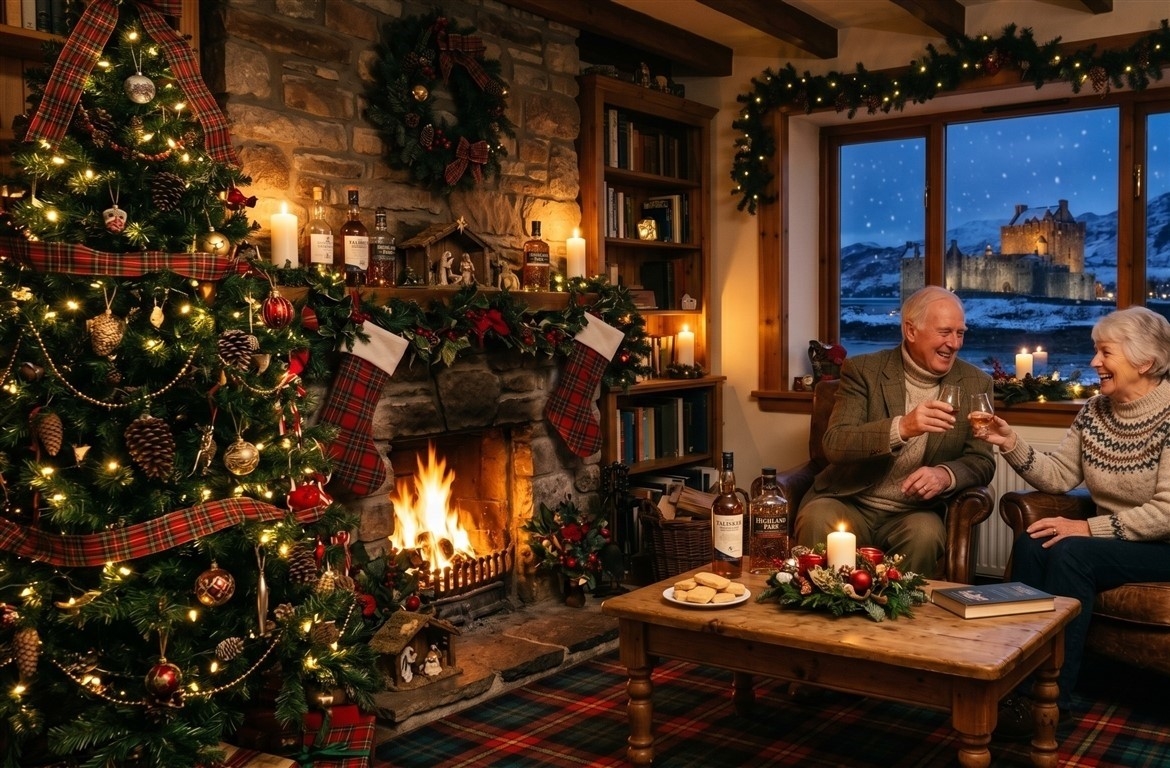
Scotland’s historical restrictions around Christmas actually helped shift much of the festive focus onto the New Year. Christmas Day only became a public holiday in Scotland relatively recently, in the twentieth century. By then, the New Year already boasted a vibrant social life, so Hogmanay kept its prominent spot even after Christmas regained its public favor.
Scottish identity and winter resilience
Hogmanay is basically Scottish identity brought to life: the music, the language, the fire, the weather, that distinct friendliness, and sheer, stubborn endurance. It doesn’t need a museum label. It just *happens* – in the streets, at the harbors, in old town squares, outside pubs, and especially in family kitchens where someone knows the second verse of “Auld Lang Syne,” and everyone else just mumbles along with heart.
Classic Hogmanay Customs
First-footing tradition
First-footing ranks among the most widely known Hogmanay traditions. Right after midnight, the initial visitor steps into a home, bringing gifts and warm wishes. Coal, whisky, salt, shortbread, and black bun all carry symbolic weight, representing warmth, cheer, prosperity, and abundance. The custom feels beautifully simple. That’s its real strength. One person crosses a threshold, and the entire year kicks off with a sense of welcome, not isolation.
Redding the house ritual
“Redding” means getting the house thoroughly in order before the New Year arrives. Floors are scrubbed, ashes cleared, clutter banished, and any debts settled where possible. This custom reflects a basic human desire: don’t drag yesterday’s mess into tomorrow. There’s a real psychological punch to it. Clean that hearth. Clear the sink. Start totally fresh.
Fire rituals and torchlight events
Fire zips through Hogmanay like a live wire. Flames purify, they protect, and they absolutely dramatize that shift from the old year to the new. Torchlight processions, enormous bonfires, blazing barrels, and spectacular fireballs all carry echoes of ancient winter rites. They’re beautiful, yes. But they’re not merely quaint. Stand close to a Scottish fire festival in a December wind, and you’ll feel something ancient deep in your bones, long before your mind even catches up.
Giving gifts and the hearth
Traditional Hogmanay gifts tend to be either practical or deeply symbolic. Coal promises warmth. Food promises fullness. Whisky promises fellowship. Lighting the fireplace, if a home still has one, connects the household to older notions of protection and comfort. A modern flat with central heating can’t quite replicate that exact feeling, but candles, shared food, and a midnight toast still carry the same heartfelt gesture.
New Year’s Day activities
New Year’s Day isn’t just for recovering. Football matches, bracing walks, invigorating sea dips, family visits, and various charity events unfold across Scotland. The famous Loony Dook, known for its costumed, cold-water plunges near the Firth of Forth, has become quite the modern New Year spectacle. Brave? Absolutely. A bit foolish? Both can be true. The icy water, quite frankly, doesn’t care.
Hogmanay’s Food and Drink
Hogmanay food is all about being generous, not precious. It perfectly suits winter: rich baking, hearty savory dishes, hot plates, plenty of butter, oats, meat, potatoes, and of course, whisky. What’s on a household spread might differ by region and family, but certain names pop up time and time again.
- Black bun: This is a rich fruit cake, wrapped in pastry, historically linked with Scottish New Year visits. It’s dense, spiced, wonderfully dark, and absolutely made for thin slices served with tea or a dram.
- Haggis, neeps, and tatties: Haggis served alongside mashed turnips (“neeps”) and potatoes (“tatties”) belongs to Scotland’s broader food culture and naturally makes an appearance during winter gatherings.
- Shortbread: Buttery, delightfully crisp, and always a welcome gift. Shortbread fits perfectly for first-footing, those festive tins, and late-night nibbling when nobody really wants a formal dessert.
- Whisky: A dram right at midnight is part ritual, part warm hospitality. Scotch whisky boasts regional character, from the smoky island malts to the smoother Speyside styles.
None of this needs to be overly fancy. The best Hogmanay food just feels sturdy. It patiently waits on the table while people come and go. It feeds the cousin who showed up late, the neighbor who only meant to stay five minutes, and that friend who’s been singing a bit too loudly since eleven o’clock.
Auld Lang Syne Explained
Robert Burns and the song’s origins
“Auld Lang Syne” is famously linked to Robert Burns, Scotland’s national poet. He sent a version of this song to the Scots Musical Museum in the late eighteenth century. Burns actually drew from much older Scots song traditions rather than simply inventing every single line from scratch. That shared ancestry really helps explain why the song feels so communal, like it belongs to everyone, not just one performer.
What the song actually means
The phrase “auld lang syne” is generally understood as “old long since,” or, more naturally, “days gone by.” The song then asks if old acquaintance should truly be forgotten, and quickly answers with such warmth: no, bring forth that cup of kindness. At New Year, that sentiment lands perfectly. People look back, perhaps miss someone, offer a little forgiveness, chuckle at old follies, or at least try to.
Why it’s sung at New Year
By the twentieth century, “Auld Lang Syne” had become *the* global New Year song, yet it remains profoundly Scottish in both its language and its mood. In Scotland, it’s sung right at midnight with linked arms, crossed hands, and a level of confidence not always matched by perfect lyrical accuracy. That hardly matters. The song truly works because everyone understands the feeling long before they know all the words.
Top Hogmanay Spots
Scotland truly offers more than just one kind of Hogmanay. Edinburgh brings the sheer scale. Stonehaven offers fire and crisp sea air. Biggar keeps a grand town bonfire tradition alive. Burghead hosts the Burning of the Clavie in January, linked to an older calendar. Comrie sees flaming torches paraded through its Perthshire streets. Dufftown leans into that wonderful whisky country warmth. So, definitely pick your desired mood before you even open the map.
| Place | Known for | Best fit | Planning note |
|---|---|---|---|
| Edinburgh | Street party, concerts, fireworks | Big-city celebration | Book tickets and rooms early |
| Stonehaven | Fireballs swung through town | Fire tradition seekers | Arrive early for viewing spots |
| Biggar | Large New Year bonfire | Town-square atmosphere | Dress for standing outdoors |
| Burghead | Burning of the Clavie | Older winter customs | Held in January, not Dec. 31 |
| Comrie | Flambeaux procession | Village fire ritual | Check local event details |
| Dufftown | Whisky-country celebrations | Food and drink travelers | Plan transport before drinking |
Edinburgh’s Hogmanay Magic
Why Edinburgh’s party is famous
Edinburgh hosts one of the most famous New Year celebrations on the entire planet. The setting alone does half the work: a majestic castle looming above, ancient stone buildings all around, and a low-slung winter sky. Then come the roaring crowds, the multiple stages, the incredible music, the dazzling fireworks, and that wild, civic confidence the city just oozes when it decides to put on a grand show.
The torchlight procession
The torchlight procession is one of the most atmospheric elements of the Edinburgh program, whenever it’s scheduled. Flames snaking through the city create a slow, almost ceremonial kickoff to the festivities. It photographs absolutely beautifully, but the true joy is purely sensory: the smell of smoke, the crisp cold air, the rhythmic footsteps, the murmur of voices, and that warm glow on the ancient buildings.
Street party and fireworks
The street party represents the big-ticket version of Hogmanay: live entertainment, outdoor bars, pumping music, and massive crowds eagerly awaiting midnight. Fireworks exploding over Edinburgh Castle remain the iconic image. Visitors should absolutely treat this event like a proper winter outdoor festival, not just a casual night out. Warm layers, comfortable shoes, plenty of patience at the barriers, and a clear route home are all non-negotiable.
Live music and family options
Concerts and family-friendly events expand the celebration far beyond just late-night revelry. The program shifts year to year, so anyone planning a trip for the 2026 season should definitely check official listings before booking based on a specific act or event. Families can absolutely still enjoy Hogmanay without needing to stand shoulder-to-shoulder at midnight; daytime events, early evening activities, and New Year walks can often be a much calmer, more enjoyable choice.
Hogmanay Fire Festivals
Why fire is so important
Fire gives Hogmanay its most raw and unforgettable images. It signifies cleansing, protection, warmth, and pure spectacle. In the deep winter darkness, a flame isn’t just decoration. It’s a powerful declaration. Scottish fire festivals manage to keep that ancient feeling alive, without ever turning it into a dusty museum piece.
Stonehaven Fireballs
In Stonehaven, specially trained participants swing blazing fireballs right through the streets at midnight before the flaming remains are dramatically cast into the harbor. This event is incredibly dramatic and deeply rooted in local tradition. Visitors absolutely must respect the barriers and marshals. The flames are very real; that inherent danger is precisely why the ritual commands such powerful attention.
Comrie Flambeaux
Comrie’s Flambeaux procession, held in Perthshire, features flaming torches carried through the village. This custom is linked with driving out the old year and warmly welcoming the new. It’s on a much smaller scale than Edinburgh, which is precisely its appeal. You really feel the heart of the village all around you.
Other Scottish fire traditions
Biggar’s bonfire and Burghead’s Burning of the Clavie clearly demonstrate just how varied Scotland’s winter fire traditions actually are. Burghead’s ritual takes place in January and truly follows its own unique calendar logic, so don’t lazily fold it into your December 31st plans. That specific detail matters. Travelers who chase these traditions need to be there on the right night, not just in the right town.
Celebrating Hogmanay Like a Scot
The Scottish way is much less about performance and much more about genuine participation. Bring something along. Sing, even if your voice wobbles a bit. Never arrive empty-handed after midnight. Please don’t treat local rituals as merely a backdrop for selfies. Stay genuinely warm, be kind, and always be mindful of the people who actually live there long after visitors have left.
- Get your home or room ready: Clear out clutter, tidy the kitchen, lay out some food, and just make the place feel prepared before midnight. Even in a rented apartment, that ritual of starting fresh has a quiet, satisfying pull.
- Bring first-footing gifts: Shortbread, whisky, or something small and practical fits the tradition perfectly. Coal is symbolic, though perhaps less handy for many modern homes. The true spirit here is pure generosity.
- Learn the chorus of “Auld Lang Syne”: Nobody expects perfection. Knowing that chorus simply lets you really join in the moment instead of just filming it from the sidelines.
- Share your table: Hogmanay food tastes best when it’s passed around freely. A slice of black bun, a plate of haggis, tea for the designated driver, whisky for the midnight toast.
- Go with the local flow: A small town fire event is absolutely not a city festival. Listen to the stewards, observe where residents gather, and always leave space for the families who come every single year.
Planning Your Hogmanay Trip
When to book your stay
Accommodation in Edinburgh and other popular celebration towns can vanish quickly for New Year. Prices tend to climb as December gets closer, and those central rooms are usually the very first to go. Travelers aiming for Edinburgh’s Hogmanay really should book early and avoid banking on any last-minute availability near the Old Town or New Town.
What to wear for winter
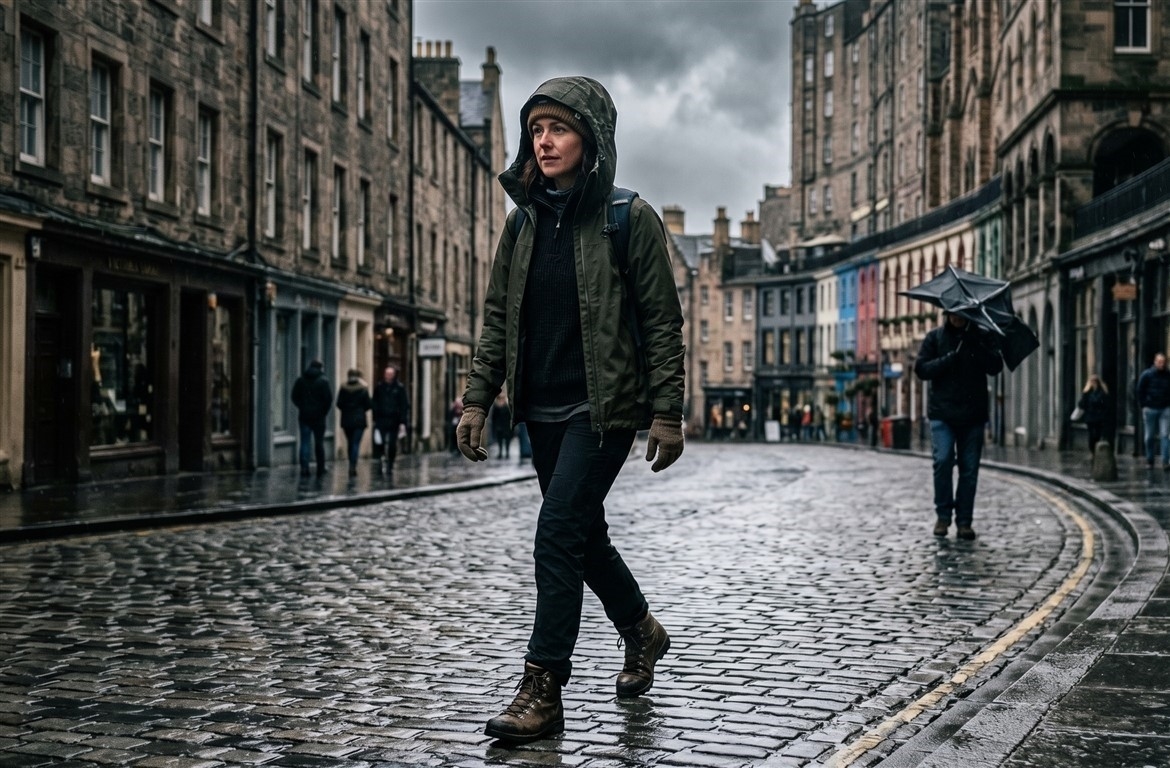
Scottish winter is typically damp, often windy, and capable of changing its mood within mere minutes. Layer up, definitely wear a waterproof outer shell, grab some warm socks, gloves, and shoes that can easily handle wet pavement. Umbrellas often lose battles against Edinburgh’s fierce wind. A hooded waterproof jacket, however, usually wins.
Travel smart for New Year events
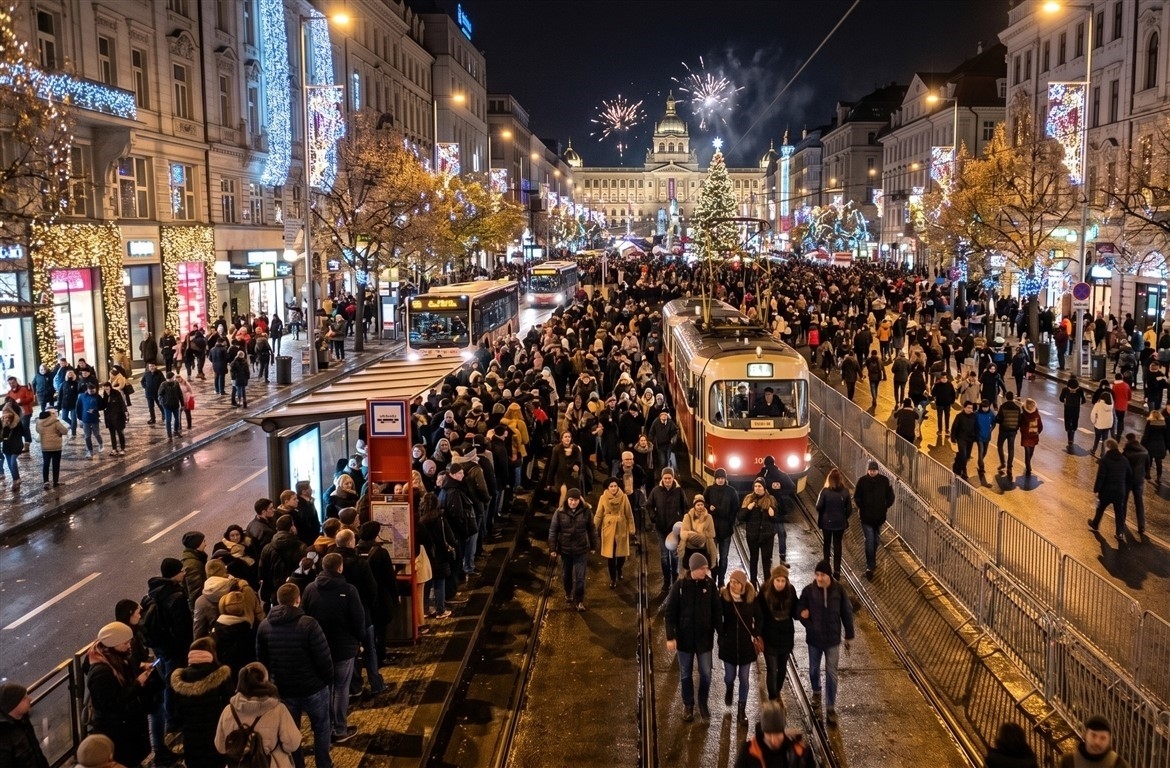
Public transport schedules can definitely change around New Year. Roads near major events might close entirely. Taxis become incredibly scarce after midnight. Plan your return journey *before* your first drink, not after the fireworks finale. In smaller towns, parking spots can be limited, and streets might be blocked off for processions.
How long should you stay?
A three-night stay often works perfectly for Edinburgh: arrive before the main celebrations, truly savor New Year’s Eve, and then leave some breathing room for New Year’s Day. A longer winter break could easily include Glasgow, Stirling, the dramatic Highlands, or the Speyside region. Daylight hours are short, which changes the rhythm of travel. Start your days earlier than feels natural. Keep your plans flexible enough to handle whatever weather comes your way.
Combine Hogmanay with a winter break
Hogmanay fits beautifully with exploring ancient castles, visiting whisky distilleries, taking invigorating winter walks, popping into museums, enjoying live music in pubs, and even catching the tail end of Burns season later in January. The cold is simply part of the trip, not a flaw. Scotland in winter offers bare trees, dark, reflective water, warmly lit orange windows, and hills that look much sharper than they do in summer.
Edinburgh or a Smaller Fire Festival?
| Edinburgh’s Hogmanay | Smaller Scottish fire festivals |
|---|---|
| Ideal for travelers seeking big concerts, large crowds, spectacular fireworks, and a world-famous city backdrop. | Perfect for visitors drawn to authentic local rituals, more intimate crowds, and older, less commercialized customs. |
| Requires more advance booking, careful ticket planning, and patience with bustling, busy streets. | Demands precise timing, dedicated local transport planning, and profound respect for community spaces. |
| Works wonderfully for first-time visitors who want a comprehensive New Year program experience. | Suits repeat visitors or travelers specifically seeking a rawer, more personal, and perhaps rugged atmosphere. |
| Accommodation choices are abundant but face extremely high demand around New Year’s period. | Accommodation options can be limited, often requiring stays in nearby towns for overnight lodging. |
Hogmanay FAQ
What does Hogmanay mean?
Hogmanay is Scotland’s special name for New Year’s Eve and all the vibrant celebrations that welcome the arrival of the New Year. The exact origin of the word itself is still quite debated, with potential links to older European languages and various customs.
Is Hogmanay just New Year’s Eve?
Hogmanay certainly includes New Year’s Eve, but the Scottish celebration extends far beyond just a midnight countdown. It encompasses unique household customs, the tradition of first-footing, delicious food, powerful fire traditions, lively music, and various New Year’s Day activities.
What are the key Hogmanay traditions?
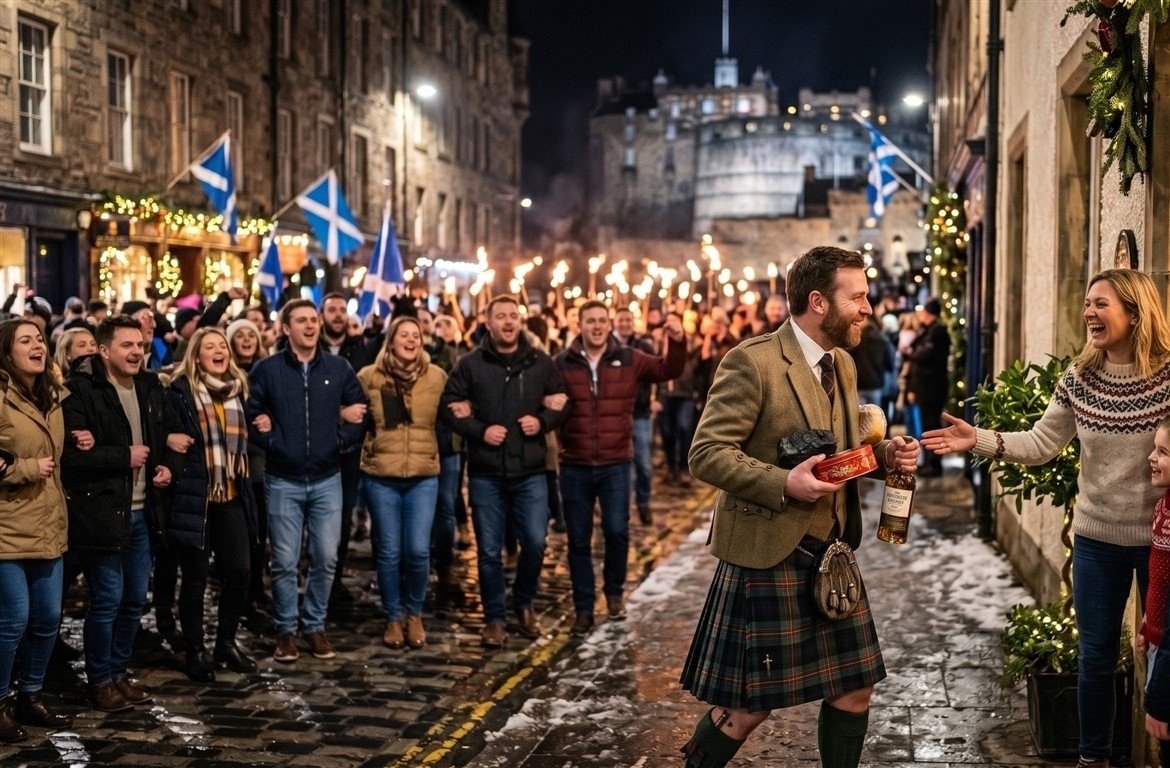
First-footing, singing “Auld Lang Syne,” thoroughly cleaning the house before midnight, generously sharing food and whisky, lighting celebratory fires, and joining public festivities are among the most recognized and cherished customs.
Where’s the best place for Hogmanay?
Edinburgh stands out as the most famous choice for a large-scale Hogmanay experience. However, Stonehaven, Comrie, Biggar, Burghead, and Dufftown are fantastic options for travelers who prefer regional customs, dramatic fire rituals, or a more intimate Scottish setting.
What food is typical for Hogmanay?
Traditional Hogmanay food can feature black bun, shortbread, haggis with neeps and tatties, other festive baking, and plenty of warming drinks. Family habits differ, but the goal for the table is always to feel abundant and generous.
Why do Scots sing Auld Lang Syne?
“Auld Lang Syne” is closely connected to Robert Burns and older Scots song traditions. Its heartfelt theme of remembering old friends perfectly suits the New Year, which helped the song spread far beyond Scotland’s borders.
Is Edinburgh’s Hogmanay family-friendly?
Families can absolutely enjoy Edinburgh’s Hogmanay through various daytime events, early evening activities, and dedicated New Year’s Day options. The late-night street party, though, is typically bustling, loud, cold, and generally better suited for older children, teenagers, and adults who are comfortable in very large crowds.
A truly great Hogmanay trip really starts with the simple things: a warm coat, a comfy place to sleep, a solid plan for getting back home, and enough genuine curiosity to simply follow the sound of pipes or that enticing glow of fire down a winter street. Scotland, rest assured, will take care of the rest.
0 Comment