

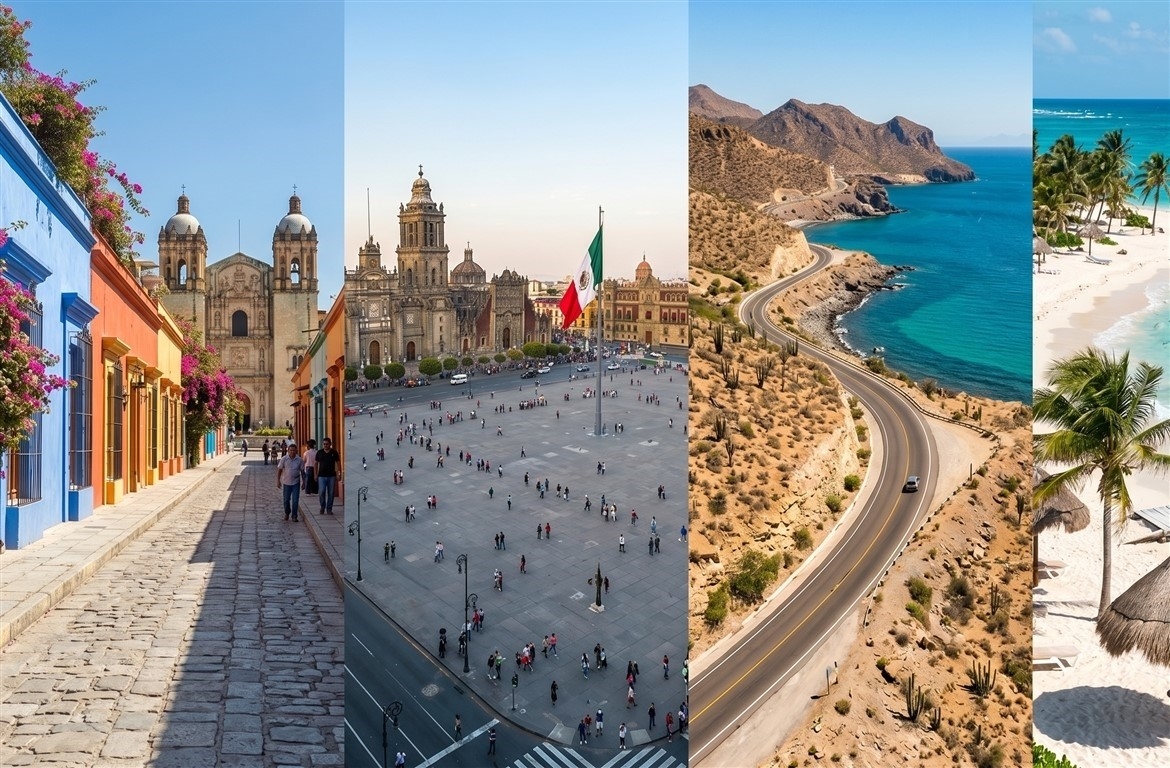

Discovering Mexico’s Best Travel Spots
Mexico truly rewards those who map out their adventures by region, not just straight-line distances on a map. Think about it: a laid-back beach week along the Riviera Maya feels utterly different from a deep dive into Oaxaca’s culinary scene, or an art-filled museum crawl through Mexico City, or even a rugged road trip across Baja California Sur. This country is huge, incredibly diverse, and absolutely packed with incredible destinations that deserve much more than just a quick pit stop.
The perfect trip really hinges on the time of year, your preferred pace, and what kind of days you’re dreaming of. Many first-timers find Mexico City, Oaxaca, Merida, Cancun, Playa del Carmen, or Puerto Vallarta incredibly welcoming. Getting around these spots is often straightforward, and lining up services is a breeze. If you’ve got more time on your hands, consider adding Chiapas, the dramatic Copper Canyon, the vibrant Huasteca Potosina, serene Bacalar, historic Campeche, or those dreamy islands off both the Caribbean and Pacific coasts.
Why You Should Absolutely Visit Mexico
Mexico somehow manages to squeeze stunning beaches, ancient cities, charming mountain towns, vast desert coastlines, incredible wildlife reserves, world-class art museums, mouth-watering street food, and distinct regional cooking all into one vibrant nation. Imagine this: you could spend your morning exploring a Maya ruin, cool off with a swim in a cenote after lunch, and then feast on cochinita pibil in a gorgeous colonial plaza come evening. Or, on a completely different adventure, you might find yourself riding a mountain railway through the Copper Canyon, or marveling at gray whales in Baja California Sur.
Mexico also caters to pretty much any budget out there. You’ll find luxury resorts lining Los Cabos and the Riviera Maya, no doubt. But don’t worry if you’re watching your wallet! Guesthouses, local eateries, public buses, and easily walkable city centers in places like Oaxaca, Puebla, Merida, Guanajuato, and Mexico City make an incredible trip totally doable. Back in 2025, Mexico welcomed around 47.8 million international tourists. That number speaks volumes about its global appeal. But really, the best reason to go is just how many different kinds of trips you can experience within its borders.
When to Plan Your Trip to Mexico
Honestly, there’s no single “perfect” month for traveling across every single region of Mexico. The Caribbean coast, central highlands, Pacific beaches, vast deserts, lush jungles, and towering mountain areas all dance to their own rhythm. A smart plan really kicks off by checking the weather, then sprinkles in local festivals, prime wildlife seasons, and, of course, hotel prices.
Dry Season Against Rainy Season
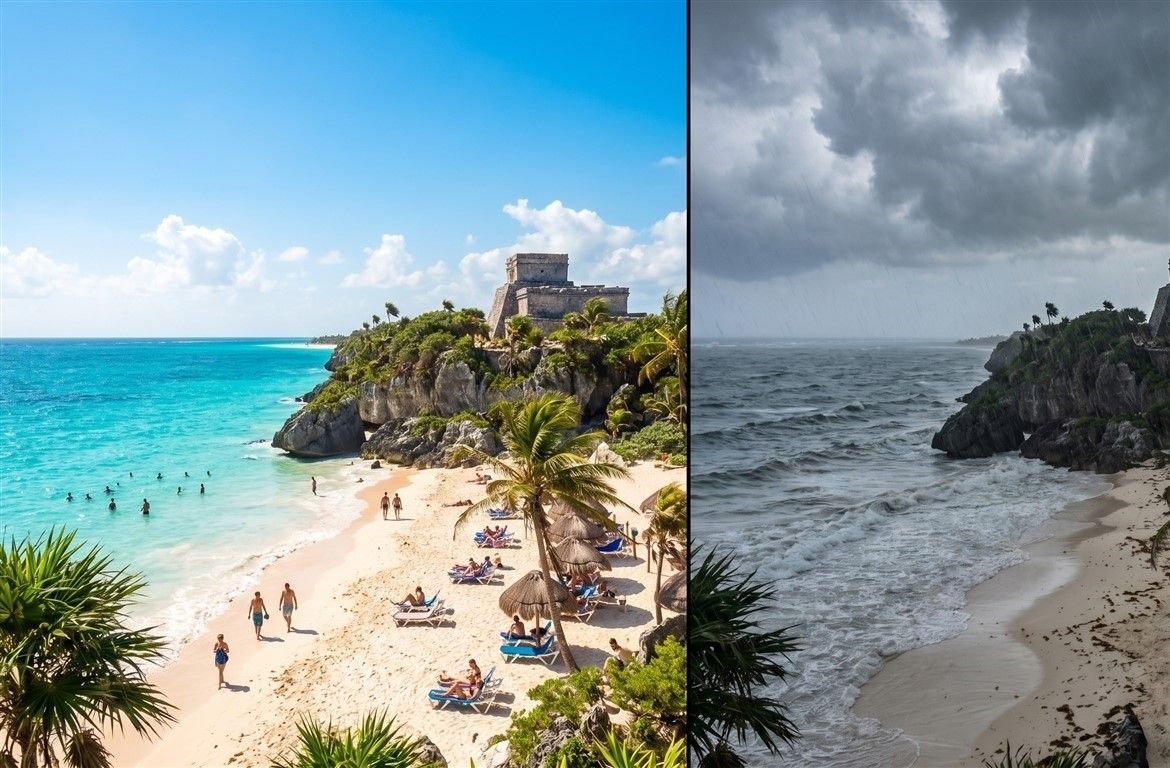
The dry season generally stretches from November through April. This window is your safest bet for clear blue skies in those stunning beach areas, super comfortable city strolls, and all sorts of outdoor excursions. Just be aware: December through March typically sees higher hotel prices in Cancun, Tulum, Playa del Carmen, Los Cabos, and Puerto Vallarta, especially around Christmas, New Year’s, and spring break.
The rainy season, conversely, usually runs from May through October. Often, showers arrive in the late afternoon or evening, leaving your mornings perfectly clear for exploring ruins, wandering markets, and enjoying beach time. The Caribbean side does face the possibility of tropical storms and hurricanes from June through November, with the most active period often hitting between August and October. So, if you’re traveling then, solid travel insurance and flexible plans become even more crucial.
Top Months for Beaches, Cities, and Outdoor Fun
For hitting the beaches, January through April is a popular sweet spot, as the weather’s wonderfully warm and the sea is generally delightful. If Mexico City, Puebla, Oaxaca, San Miguel de Allende, and Guanajuato are calling your name, October through April offers beautifully cooler walking weather. And for Baja California Sur, winter and early spring are simply fantastic for whale watching, snorkeling adventures, and desert hikes.
| Trip type | Good months | Places to consider |
|---|---|---|
| Beach resorts | January to April | Cancun, Riviera Maya, Los Cabos |
| Culture and food | October to April | Mexico City, Oaxaca, Puebla |
| Whale watching | January to March | La Paz, Los Cabos, Baja lagoons |
| Monarch butterflies | January to early March | Michoacan and Estado de Mexico |
| Waterfalls and rivers | Late rainy season | Huasteca Potosina, Chiapas |
Key Festivals and Seasonal Fun
Día de Muertos, or Day of the Dead, draws in visitors to Oaxaca, Mexico City, Patzcuaro, and various smaller towns from late October through early November. Seriously, book your accommodations super early! The best central spots often get snatched up months in advance. Semana Santa, which is the week leading up to Easter, brings a surge of local travelers to beaches and colonial cities alike.
Here are a couple of modern travel notes worth tucking away: whale shark tours typically run seasonally around Isla Mujeres and Holbox, but keep in mind that dates and specific rules can vary by operator and conservation policies. And for the monarch butterfly sanctuaries near Angangueo and Valle de Bravo, you’ll have the best experience on warmer, sunny days when those gorgeous butterflies are at their most active. If seeing wildlife is *the* main reason for your trip, build your entire itinerary around that specific season instead of just trying to tack it on as an afterthought.
Navigating Your Way Through Mexico
Distances in Mexico can be surprisingly long. What looks like a short hop on a map might be a full day’s journey. For instance, a trip from Mexico City to Oaxaca makes perfect sense by bus or a quick flight. However, Mexico City to Cancun? Most travelers are better off flying. The Yucatan Peninsula, Baja California Sur, and parts of central Mexico are fantastic for road trips, especially if you’re keen on exploring small towns, hidden beaches, ancient ruins, and enjoying flexible stops.
Flights Within Mexico

Domestic flights are a real time-saver on routes like Mexico City to Cancun, Mexico City to Merida, Mexico City to Tuxtla Gutierrez, and Mexico City to Los Cabos. Mexico City International Airport sits on the eastern side of the city center, while the newer Felipe Angeles airport serves some routes further north. Always double-check that airport code before you book anything. You’ll want your arrival airport to perfectly match your hotel and transfer plans.
Buses and Personal Transfers
Long-distance buses are surprisingly comfortable on many popular routes. ADO, a major bus company, serves over 120 destinations and is especially handy in the southeast. This includes routes connecting Cancun, Playa del Carmen, Tulum, Merida, Oaxaca, Puebla, and Mexico City. Cancun Airport even has ADO buses going to downtown Cancun, Playa del Carmen, and Tulum. Just remember, they’ll drop you at the bus station, not directly at your hotel door.
Private transfers are a smart choice if you’re arriving late, traveling with kids, hauling surfboards or diving gear, or staying somewhere far from a main bus station. In the Riviera Maya, many hotels can arrange pickups from Cancun Airport, though prices will naturally vary based on distance and the type of vehicle. For shorter island jaunts, ferries link Cancun with Isla Mujeres, and Chiquila with Isla Holbox.
Driving in Mexico
Driving really shines in Baja California Sur, the Yucatan Peninsula, and specific areas within Querétaro, Guanajuato, and San Luis Potosi. Roads connecting Merida, Valladolid, Izamal, Chichen Itza, and the cenote regions are quite popular with visitors. The distances are totally manageable. In Baja, having a car gives you vastly better access to those gorgeous beaches around La Paz, Todos Santos, Los Cabos, and the East Cape.
Definitely use toll roads when they cut down on your travel time. Avoid driving between cities at night, and read that rental contract super carefully. Liability insurance, security deposits, and credit card holds can significantly change the actual cost of your rental. For big cities like Mexico City, bringing a car is often more trouble than it’s worth. Parking, traffic, and unfamiliar road rules can really slow down your trip.
Getting Around Cities and Tourist Zones
Mexico City boasts one of the most user-friendly public transport networks for visitors. Metrobus Line 4 links the airport area directly with the Historic Center, and Metro Line 5 serves the Terminal Aerea station, which is right by Terminal 1. For popular neighborhoods like Roma, Condesa, Polanco, Coyoacan, and Centro Historico, rideshare apps and taxis from official stands are often the easiest choice, especially after dark.
In beach towns, transport options can really differ. Puerto Vallarta has local buses running along its hotel zone and south coast road. Los Cabos, on the other hand, is much more spread out, making taxis, rental cars, and prebooked transfers the preferred methods. On Isla Mujeres, golf carts, taxis, bicycles, and simply walking pretty much cover all visitor needs.
Top Destinations to Explore in Mexico
The very best Mexico itinerary usually blends a major city or cultural region with a more laid-back spot. Trying to cram both coasts, several ancient ruins, mountain towns, and islands into one short trip just turns your travel days into the main event. Pick a region you love, then add nearby places that naturally fit into the same route.
Mexico City
Culture, Museums, Food, and Day Trips Galore
Mexico City is absolutely the best jump-off point for anyone craving museums, amazing food, stunning architecture, beautiful parks, and exciting day trips. Pick your stay in Roma Norte, Condesa, Juarez, Polanco, Coyoacan, or Centro Historico—it just depends on your vibe. The National Museum of Anthropology, Chapultepec Park, Palacio de Bellas Artes, the Frida Kahlo Museum in Coyoacan, and the canals of Xochimilco can easily fill several days without you feeling rushed at all.
Honestly, plan at least four nights if you want a truly relaxed visit. Teotihuacan makes for a classic day trip; head there early via a tour, private driver, or bus from Terminal del Norte. Puebla also works as a long day trip, though it really deserves an overnight stay to properly soak in its food and architecture.
Oaxaca City
Food, Art, Markets, and Natural Beauty Nearby
Oaxaca City shines as one of Mexico’s premier spots for food enthusiasts. Its markets, like Benito Juarez and 20 de Noviembre, are treasure troves for tlayudas, rich chocolate, mole ingredients, mezcal, and all sorts of local snacks. The historic center is wonderfully walkable, with Santo Domingo, art galleries, vibrant textile shops, charming rooftop restaurants, and cozy mezcal bars all nestled close together.
Monte Alban, an ancient Zapotec site, sits just a stone’s throw outside the city and is absolutely the top archaeological excursion from Oaxaca. Mitla, Teotitlan del Valle, Tule, and Hierve el Agua can be easily combined into a single trip with a tour or private driver. Aim for three to five nights; that gives you plenty of time to eat incredibly well, explore nearby villages, and avoid feeling like you’re just ticking off a list.
San Miguel de Allende
Colonial Streets and Romantic Escapes
San Miguel de Allende is an absolute gem: polished, incredibly photogenic, and just built for leisurely wandering. The iconic pink towers of Parroquia de San Miguel Arcangel firmly anchor the city center. From there, cobblestone lanes wind their way through a maze of art galleries, charming boutique hotels, hidden courtyards, and delightful rooftop terraces. It’s a fantastic choice for couples, solo travelers who appreciate calm evenings, and anyone looking to add a touch of central Mexico elegance to their Mexico City adventure.
The closest major airports are Querétaro and León/Guanajuato. Many visitors opt to arrive by shuttle or private transfer. Two or three nights usually suffice for exploring the central area, catching a few stunning sunset viewpoints, relaxing at the hot springs near town, and enjoying some truly memorable, long meals.
Guanajuato
Colorful Streets, History, and Viewpoints
Guanajuato feels more genuinely local and wonderfully playful than San Miguel. This city literally climbs steep hillsides, painting the landscape with bright houses, winding underground roads, bustling plazas, youthful student energy, and that incredible panorama from El Pipila. It’s a stellar pick for travelers who just love walking, soaking in vibrant street life, diving into history, and capturing stunning photographs.
Try to base yourself right in the center if you’re not a fan of navigating steep hills late at night. Guanajuato pairs beautifully with San Miguel de Allende and Querétaro, making for a perfect central Mexico road trip. Two nights should give you ample time to explore the main viewpoints, wander the captivating alleys, visit the theaters, and see the museums without feeling rushed.
Puerto Vallarta
Beaches, Nightlife, and Pacific Adventures
Puerto Vallarta isn’t just a resort strip; it’s a real beach city, brimming with distinct neighborhoods. You’ve got the Romantic Zone, Centro, Marina Vallarta, and the Hotel Zone, each catering to different budgets and travel vibes. Take a leisurely stroll along the Malecon, indulge in some incredible seafood, hop on a boat to the charming village of Yelapa, hike from Boca de Tomatlan to discover hidden beach coves, or simply watch a breathtaking sunset from a hillside restaurant.
Families, couples, LGBTQ+ travelers, and solo adventurers all find themselves right at home here. The airport is conveniently close to the city, which keeps your arrival logistics super simple. Plus, December through April brings the best weather and, excitingly, whale season in Banderas Bay.
Los Cabos
Resorts, Beaches, and Desert Scenery
Los Cabos actually covers three main areas: the lively Cabo San Lucas, the more tranquil San Jose del Cabo, and the string of resorts connecting them. Cabo San Lucas definitely buzzes with more activity – think buzzing nightlife, boat tours to the iconic El Arco, bustling marina restaurants, and lively beach clubs. San Jose del Cabo, on the other hand, offers a much calmer historic center, lovely art walks, and an overall slower, more relaxed atmosphere.
Los Cabos truly excels for those seeking resorts, golf, deep-sea fishing, indulgent spa trips, and that unique desert-meets-sea scenery. Just a heads up: not all beaches are safe for swimming due to strong currents, so if ocean swimming is a must, choose your hotel wisely. Santa Maria Bay, Chileno Bay, and Medano Beach are popular choices for easier water access.
Baja California Sur
La Paz, Balandra, and Espiritu Santo
La Paz actually makes for a much better home base than Los Cabos if you’re craving incredible marine life and a truly peaceful waterfront. Balandra Beach is justly famous for its incredibly shallow, turquoise waters and those iconic desert hills. Meanwhile, tours to Isla Espiritu Santo offer fantastic snorkeling, chances to swim with sea lions, and views of dramatic volcanic coastlines. The Malecon in La Paz? It’s wonderfully relaxed, perfect for sunset strolls.
Grabbing a rental car really opens up the area, letting you easily reach Todos Santos, El Triunfo, the beaches north of La Paz, and the road back towards Los Cabos. Plan for three or four nights in La Paz; that gives you enough time for a boat tour, a visit to Balandra, enjoying local seafood, and a bit of weather flexibility.
Yucatan Peninsula
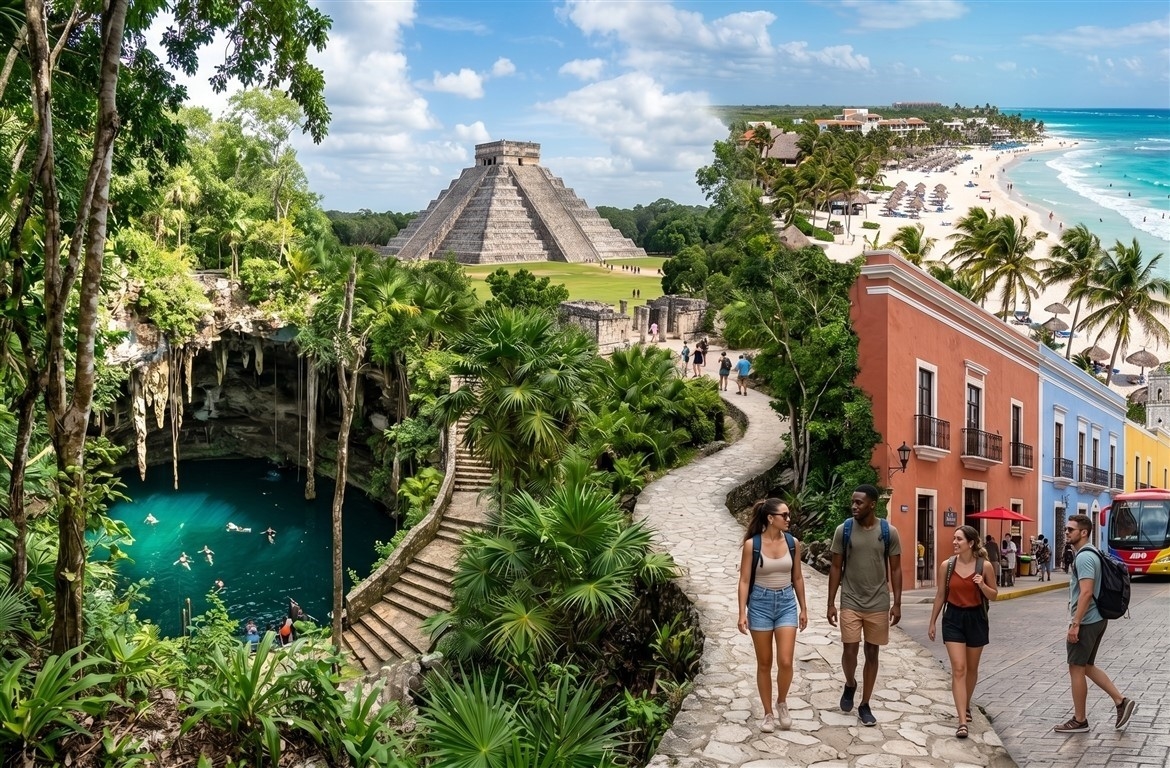
Cenotes, Ruins, Cities, and Beaches
The Yucatan Peninsula is honestly one of the simplest regions for a first-time Mexico trip. Why? It perfectly combines stunning beaches, ancient ruins, charming colonial cities, magical cenotes, beautiful islands, and an excellent bus network. Cancun serves as the main flight hub. From there, travelers effortlessly fan out: south to Playa del Carmen and Tulum, west to Valladolid and Merida, or even further south to the serene Bacalar.
A smart route might look something like this: arrive in Cancun or Playa del Carmen, head to Valladolid for Chichen Itza and cenotes, then to Merida for a dose of culture and fantastic food, and finally wind down in Bacalar or Isla Mujeres for some glorious water time. Renting a car truly helps if you’re eager to explore more cenotes and smaller towns, while ADO buses expertly cover those main city-to-city segments.
Tulum
Beach Clubs, Ruins, Cenotes, and Wellness
Tulum neatly divides itself into three main zones: the vibrant beach road, the town center, and some newer residential pockets. The beach area is undeniably scenic and stylish, but be prepared for higher prices. The town, however, offers more budget-friendly food, easy bus access, and quick routes to cenotes. The signature sight, of course, is those incredible seaside ruins, especially if you get there early in the morning before the heat and crowds really kick in.
Tulum truly shines for travelers seeking design hotels, yoga retreats, chic beach clubs, refreshing cenotes, and fantastic restaurants. It’s probably not the best fit for anyone expecting a simple, all-inclusive resort experience. For smoother logistics, it’s a good idea to compare Tulum with Playa del Carmen before you finalize your booking.
Cancun and Riviera Maya
Resorts, Families, and First-Time Trips
Cancun and the Riviera Maya are fantastic choices for travelers who want beautiful beaches, well-organized tours, all-inclusive resorts, and super easy airport transfers. Cancun’s Hotel Zone is literally built for resort stays and lively nightlife. Playa del Carmen offers more walkability, easy ferry access to Cozumel, and straightforward bus connections to other spots.
Families often gravitate towards the resorts nestled between Cancun and Playa del Carmen. Transfers are manageable, and day trips are simple to arrange. Parks like Xcaret, refreshing cenotes, snorkeling adventures around Cozumel, the Akumal turtle bay, and the ancient ruins at Tulum or Coba can all comfortably fit into a week-long stay. When booking tours, make sure the pickup details are clearly listed; distances along this coast can be longer than you might initially expect.
Isla Mujeres
Relaxed Beaches Near Cancun
Isla Mujeres is a sweet, small island, super easy to reach by ferry from Cancun. Playa Norte is the absolute star of the show for beaches: shallow water, incredibly soft sand, and restaurants right nearby. The island works perfectly for a two- or three-night stay after you’ve explored the mainland a bit.
If beach access is your top priority, definitely stay near Playa Norte. The southern end is much quieter and offers stunning views, but you’ll find yourself using taxis or a golf cart more often. Isla Mujeres is a brilliant pick when you’re craving island time without any complicated travel hassles.
Isla Holbox
Car-Free Island Life and Wildlife
Isla Holbox boasts sandy streets, charming low-rise hotels, laid-back beach bars, hammocks strung over shallow waters, and a decidedly slower rhythm than Cancun or Tulum. Cars are mostly off-limits here, so everyone gets around by walking, cycling, golf carts, or small taxis. You reach this island paradise by taking a ferry from Chiquila.
Holbox is best suited for travelers who don’t mind a few rustic edges in exchange for incredibly quiet sunsets and a truly relaxed island vibe. Just a heads up: heavy rain can flood the streets, so the dry season is definitely much easier for getting around. If whale sharks are on your bucket list, remember those tours are seasonal, and always book with operators who strictly adhere to wildlife protection rules.
Bacalar
The Lagoon of Seven Colors
Bacalar is nestled right beside a long freshwater lagoon, famous for its mesmerizing, bright shades of blue. This isn’t your typical beach resort destination, though. Here, the magic lies in kayaking, sailing, swimming from docks, catching stunning sunrise paddles, and enjoying leisurely meals right by the water. The town itself is a perfect fit for travelers seeking calm after the hustle and bustle of busier stops like Tulum or Playa del Carmen.
Many visitors arrive in Bacalar by ADO bus from Tulum, Playa del Carmen, Cancun, or Chetumal. Two nights is really the minimum to get a feel for the place, while three gives you ample time for a lagoon tour, a visit to Los Rapidos, and some well-deserved downtime.
Merida
Yucatecan Culture, Food, and Day Trips
Merida stands out as one of the best bases for travelers eager to soak up culture without the usual beach crowds. This city is renowned for its mouth-watering Yucatecan dishes like cochinita pibil, sopa de lima, panuchos, and papadzules. Exploring Paseo de Montejo, Plaza Grande, the bustling local markets, and the beautifully restored mansions makes it a truly rewarding experience on foot.
From Merida, you can easily take day trips to Uxmal, Izamal, Celestún, Progreso, and the cenotes around Homún. Keep in mind, the city gets hot for a good chunk of the year, so mornings and evenings are often best for walking tours. Three or four nights work wonderfully if you’re planning more than one day trip.
Chichen Itza
Mexico’s Famous Ancient Site
Chichen Itza, one of Mexico’s most visited archaeological sites, is a huge draw from Cancun, Playa del Carmen, Tulum, Merida, and Valladolid. The Temple of Kukulcan is obviously the icon, but don’t rush past the ball court, observatory, various platforms, and intricate carved details – they all deserve your time. Aim to arrive right at opening time. You’ll beat the heat and the biggest tour groups.
Valladolid makes for the most pleasant home base if you want to visit Chichen Itza without a rushed day tour. From there, you can easily add in nearby cenotes and spend your evening in a charming colonial town, rather than rushing straight back to the coast.
Campeche
Colorful Streets and Coastal History
Campeche is a captivating walled coastal city, boasting pastel-colored houses, wonderfully quiet streets, beautifully restored forts, and a relaxed Malecon. Itis significantly less hectic than Merida, making it a dream to explore at your own speed. The historic center perfectly suits travelers who have a soft spot for great photography, classic architecture, and low-key, peaceful evenings.
Campeche pairs quite naturally with a visit to Merida and the Puuc Route, or even as part of a longer journey heading toward Palenque. Two nights is plenty to soak in the city, while adding an extra day allows you to visit Edzna, an archaeological site that feels far more intimate and uncrowded compared to the bustle at Chichen Itza.
Chiapas
San Cristobal, Palenque, and Sumidero
Chiapas stands as one of Mexico’s most incredible regions for both scenery and culture. San Cristobal de las Casas offers crisp mountain air, vibrant markets, cozy cafes, and access to unique Indigenous villages nearby. Sumidero Canyon is typically explored by boat departing from Chiapa de Corzo, while Palenque features stunning jungle ruins that carry a very different, more atmospheric mood than the sites found in the Yucatan.
Try to fly directly into Tuxtla Gutierrez for easier access to San Cristobal and Sumidero Canyon, or look at using Palenque as a gateway between your Chiapas adventures and your Yucatan route. Roads in this area can be slower than they appear on a map, so give Chiapas a bit more time than you think you’ll need. Four to seven nights is a much better fit than trying to squeeze it all into a quick side trip.
Copper Canyon
Train Journeys, Hiking, and Mountains
Copper Canyon, located in Chihuahua, is absolutely tailored for travelers who crave dramatic mountains, scenic train travel, vast viewpoints, and serious hiking. The famous Chepe train route winds between Los Mochis and Chihuahua through rugged canyon country, with recommended stops in places like El Fuerte, Creel, and Divisadero. Remember, the scenery is the reason you’re coming here—not for nightlife or resort luxuries.
Plan your schedule with care because train departures, hotel locations, and local transfers will dictate your entire experience. Creel serves as a common base for exploring valleys, lakes, and Tarahumara culture. Divisadero is your best bet if you’re prioritizing canyon views and proximity to the adventure park area.
Puebla
Talavera Tiles and Traditional Food
Puebla sits roughly two hours by road from Mexico City, making it a perfect day trip or an easy overnight stay. The city is famous for its colorful Talavera tiles, gorgeous churches, traditional colonial streets, mole poblano, cemitas, and incredible views of nearby volcanoes whenever the sky is clear. The historic center is compact and very walkable.
Nearby Cholula adds another layer to the trip, offering a massive pyramid, more churches, a lively student energy, and fantastic volcano vistas. Puebla acts as a great bridge between Mexico City and Oaxaca if you want to pace your route more slowly and add another essential food city to the mix.
Morelia and Patzcuaro
Historic Towns and Cultural Traditions
Morelia features elegant stone architecture, a grand cathedral, impressive aqueduct views, and a very refined historic center. Patzcuaro feels a bit smaller and deeply traditional, with its plazas, craft shops, and easy access to Lake Patzcuaro. This entire area is world-renowned for its Día de Muertos traditions, during which time demand for accommodation rises very sharply.
Travelers who adore colonial-era history and culture should dedicate several nights to Michoacan rather than just passing through. As always, check current safety guidance before building your route through this state, prioritize staying within established tourist corridors, travel during daylight hours, and listen to local advice on transportation.
Huasteca Potosina
Waterfalls, Rivers, and Adventure Travel
Huasteca Potosina, located in San Luis Potosi, is arguably one of Mexico’s top adventure hubs. The abundance of waterfalls, turquoise rivers, deep caves, and thick jungle scenery makes it a playground for rafting, swimming, rappelling, and boat excursions. Ciudad Valles serves as the standard base for most tours.
Make sure to hit top spots like Tamul Waterfall, Puente de Dios, Minas Viejas, Micos, and the wonderfully surreal garden of Las Pozas in Xilitla. Having a rental car or booking a guided tour package makes the region much easier to handle because the sights are quite spread out. Four or five days is a much better pace than a frantic weekend dash.
Hierve el Agua
Petrified Waterfalls and Natural Pools
Hierve el Agua is a natural wonder in Oaxaca, featuring mineral formations that uncannily resemble frozen waterfalls. The infinity pools and the expansive cliff views are the main draw, especially during the early or late hours of the day. Many organized tours combine this with stops in Mitla, Tule, Teotitlan del Valle, and a local mezcal distillery.
This site is significantly easier to visit as a day trip from Oaxaca City rather than trying to base yourself nearby. Pack water, sun protection, and footwear that can handle uneven, rocky paths. Swimming conditions and access regulations can occasionally change, so verify the latest details locally before you head out from Oaxaca.
Monarch Butterfly Reserve
A Rare Wildlife Experience
The Monarch Butterfly Biosphere Reserve acts as a protected wintering ground for monarch butterflies within the high forests of Michoacan and the Estado de Mexico. Sanctuaries like El Rosario and Sierra Chincua are typically reached from Angangueo, Zitacuaro, Morelia, or Valle de Bravo. The absolute best days for a visit are sunny and mild because butterflies tend to cluster tightly together when it’s cold.
Visits usually involve navigating mountain roads and walking at a high altitude; some sanctuaries even offer horses for part of the trek. Always choose a responsible guide, stick strictly to the marked paths, and keep noise to a minimum. This experience feels much more profound when you treat it as a wildlife observation visit rather than just a quick photo opportunity.
Best Places in Mexico by Travel Style
Matching your chosen destination to your personal travel style is the best way to save time and money. Cancun is incredibly convenient, but it won’t necessarily satisfy someone hunting for authentic street food and deep cultural museums. Oaxaca is fantastic for culture, but it’s not the right pick for a classic beach resort vacation.
Use this table as a quick reference to help narrow down your options. Once you identify your preferred style, build your route around neighboring destinations rather than attempting to cross the entire country in one trip.
| Travel style | Best places | Why they fit |
|---|---|---|
| First trip | Mexico City, Oaxaca, Riviera Maya | Easy logistics and strong variety |
| Beach vacation | Isla Mujeres, Puerto Vallarta, Los Cabos | Good hotels, water, and restaurants |
| Food travel | Oaxaca, Puebla, Merida, Mexico City | Regional dishes and market culture |
| Adventure | Chiapas, Huasteca Potosina, Copper Canyon | Rivers, mountains, hiking, and canyons |
| Couples | San Miguel, Holbox, Bacalar, Todos Santos | Slower pace and romantic settings |
| Families | Riviera Maya, Cancun, Puerto Vallarta | Resorts, tours, and simple transfers |
Best Places for First-Time Visitors
Mexico City, Oaxaca, Merida, Cancun, Playa del Carmen, and Puerto Vallarta are the most logical first-trip choices. They offer robust tourism infrastructure, a huge range of accommodation, simple transportation, and enough activity to fill several days without feeling overwhelmed. A first trip shouldn’t aim to chase down every famous landmark; instead, it should leave plenty of space to enjoy the food, the neighborhoods, and the rhythm of travel.
Best Beach Destinations
If you’re seeking resort-style beaches, pick Cancun, Riviera Maya, or Los Cabos. For a genuine city located right on the ocean, Puerto Vallarta is your winner. If you want calmer waters and a more intimate, smaller-scale environment, try Isla Mujeres, Holbox, Bacalar, La Paz, or Zihuatanejo.
Best Cultural Cities
Mexico City, Oaxaca, Puebla, Merida, Guanajuato, Morelia, Campeche, and San Cristobal de las Casas are all excellent cultural contenders. Each possesses a distinct vibe: Mexico City is vast and packed with museums, Oaxaca is centered on its culinary mastery, Puebla is defined by its architecture, Merida is inherently Yucatecan, and San Cristobal is firmly tied to the highlands of Chiapas.
Best Hidden Gems
Bacalar, Campeche, Patzcuaro, Xilitla, El Fuerte, and various parts of Huasteca Potosina offer a less predictable experience than the major hubs. These spots still require some planning, especially regarding transport and lodging. Traveling to these “hidden” gems works best when you are comfortable with fewer direct flight options and a much more relaxed pace.
Best Places for Nature and Adventure
Chiapas, Copper Canyon, Baja California Sur, Huasteca Potosina, and the butterfly reserves offer some of Mexico’s most incredible natural escapes. These locations reward travelers who wake up early, carry light luggage, and keep a close watch on weather windows. Booking professional guided tours is often worth the extra cost, especially when accessing remote areas or visiting protected zones.
Best Places for Food Lovers
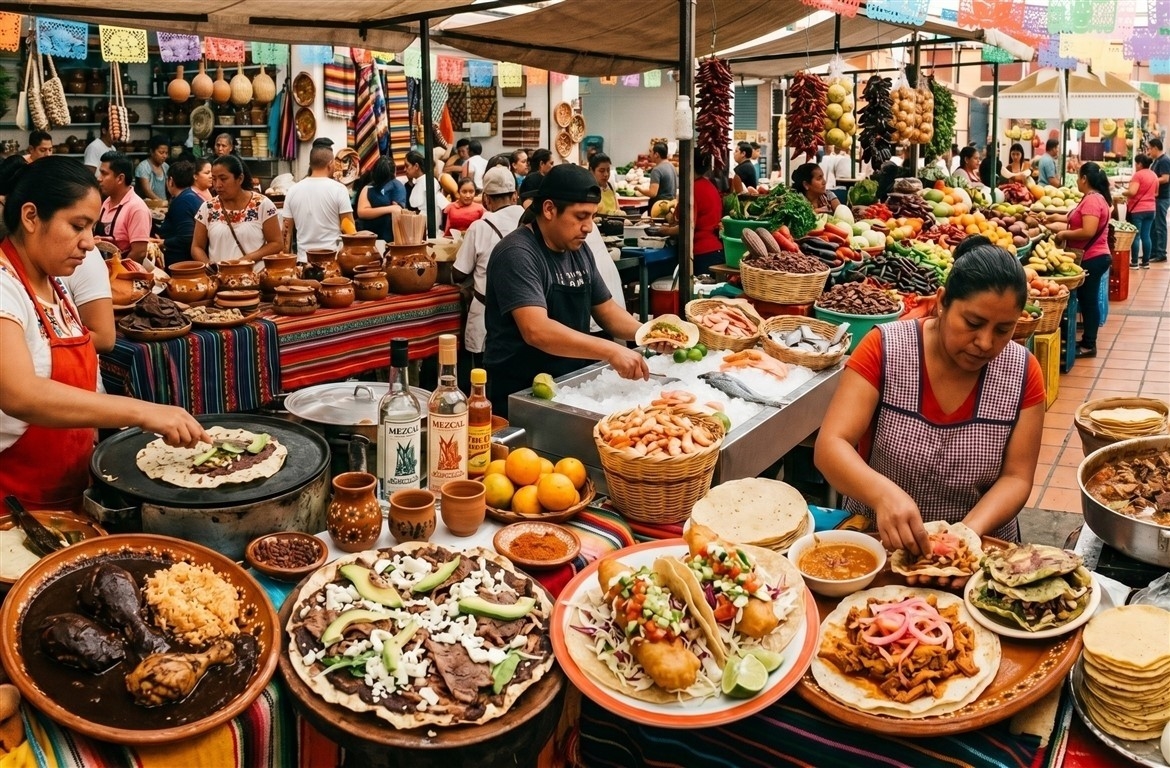
Oaxaca, Mexico City, Puebla, Merida, Ensenada, and Guadalajara are truly elite food destinations. Oaxaca is legendary for mole, tlayudas, mezcal, chocolate, and vibrant markets. Puebla is famous for its mole poblano and cemitas, while Merida serves as the perfect base for authentic Yucatecan cuisine.
Best Places for Couples
San Miguel de Allende, Holbox, Bacalar, Todos Santos, Puerto Vallarta, and boutique stays tucked away in Oaxaca are wonderful for couples. The ideal choice really depends on the pace you want: San Miguel is sophisticated and romantic, Holbox is barefoot and simple, Bacalar is tranquil, and Puerto Vallarta mixes beach life with a bit more of a city nightlife scene.
Best Places for Families
Families usually find success with simple transfers, safe swimming spots, and enough activities right near the hotel. Cancun, Riviera Maya, Puerto Vallarta, Merida, and Mexico City can all work well with children. When visiting Mexico City, pick your neighborhood carefully and plan out shorter sightseeing days that include plenty of parks and easy food stops.
Mexico Travel Planning Tips
A successful trip to Mexico is about more than just picking beautiful locations. Timing, transport choices, selecting the right neighborhood, managing cash, and maintaining basic safety awareness all shape your experience. A little forethought keeps your plans flexible without leaving too much to blind luck.
Safety Tips for Travelers
Stick primarily to well-traveled tourist zones, try to schedule your travel between cities during the daytime, and rely on official taxis, verified hotel transfers, or trusted rideshare apps where they operate. In large cities, select a base that has easy access to restaurants so you aren’t forced to travel long distances late at night. Always check your country’s official travel advisory before departing, as conditions can vary by state and shift over time.
Keep beach safety in mind as well. Not every stunning beach is safe for swimming, particularly in regions around Los Cabos and certain Pacific zones. Pay attention to warning flags, chat with hotel staff about local currents, and steer clear of isolated beaches once the sun goes down.
Visas and Entry Rules
Many travelers can enter Mexico for tourism without a visa, but the specifics depend on your nationality, passport type, residency status, and even airline requirements. You should always have a valid passport, proof of onward or return travel if asked, details on your accommodation, and sufficient funds for your stay. Some visitors might need to complete a digital migration form, particularly when arriving via land borders.
Never rely on outdated advice from online forums regarding entry regulations. Check the official Mexican consulate or embassy in your home country before you purchase any non-refundable flights. If your travel route includes a transit through the United States, Canada, or another country, make sure to consider those transit visa rules as well.
Money, Cards, and Tipping
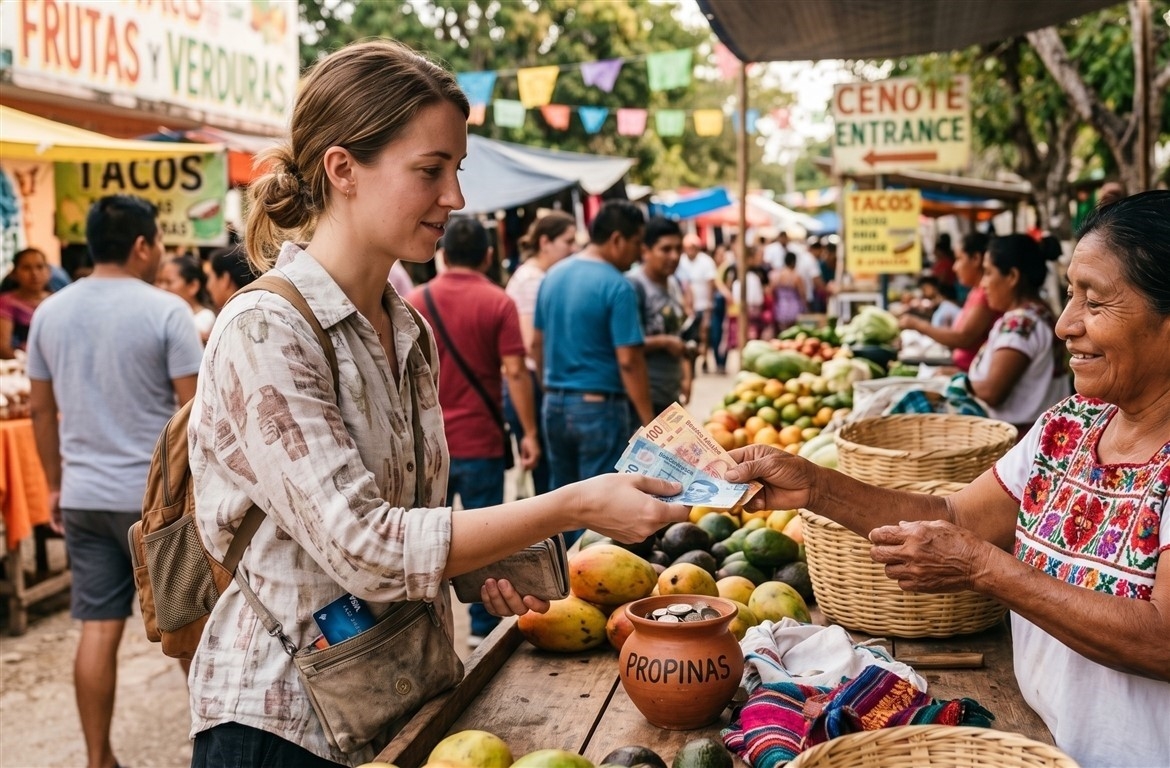
Cards are widely accepted in many hotels, restaurants, and tour offices, but cash remains essential for local markets, taxi rides, small food stands, tips, public bathrooms, local buses, and entrance fees for cenotes. Use bank-affiliated ATMs located inside branches or secure areas, decline dynamic currency conversion options, and always try to keep smaller denominations of bills handy.
Tipping is standard practice in restaurants, for guided tours, hotel services, and private transfers. In restaurants, a tip of 10 to 15 percent is standard when the service charge isn’t already included. For tours, base your tip on the duration of the trip, the level of service provided, and the size of your group.
Internet and SIM Cards
Travelers can use international roaming plans, pick up a local SIM card, or set up an eSIM. Telcel offers the most comprehensive coverage across Mexico, while eSIMs are incredibly convenient if your device supports them. Purchase your connection before you leave the airport if you need immediate access to digital maps and transportation apps.
Be aware that remote areas like Copper Canyon, deep jungle zones, beaches situated far from town, and certain mountain roads may have very limited service. It’s a good idea to download offline maps, store your hotel addresses, and save ticket confirmations before you begin moving between regions.
What to Pack for Mexico
Your packing list should be dictated by your specific region and the time of year. Mexico City, San Cristobal, Guanajuato, and other highland towns can get quite chilly at night, whereas Merida, Campeche, Tulum, and the Pacific coast stay hot and humid. A suitcase packed only with beachwear will feel very out of place in the mountains.
Pack for the trip you’re actually taking, not the idealized postcard version of Mexico. These items are generally useful for most mixed itineraries:
- Light, breathable clothing for hot regions
- A warm sweater or jacket for high-altitude cities
- Sturdy, comfortable shoes for cobblestones and archaeological sites
- Swimwear and a quick-dry towel for cenotes and beach days
- Sun hat, sunglasses, and reef-safe sunscreen
- Insect repellent for jungle, lagoon, and coastal environments
- A reusable water bottle for refilling with filtered water
- A compact daypack for daily tours, buses, and market browsing
Travel Insurance
Travel insurance is especially valuable for Mexico itineraries that include ferry travel, domestic flights, rental cars, adventure tours, beach stays during hurricane season, or journeys into remote areas. Carefully verify your medical coverage, trip delay policies, rental car exclusions, and activity coverage. If you’re planning on rafting, diving, trekking, whale watching, or canyon expeditions, double-check that those activities are specifically covered by your plan.
Suggested Mexico Itineraries
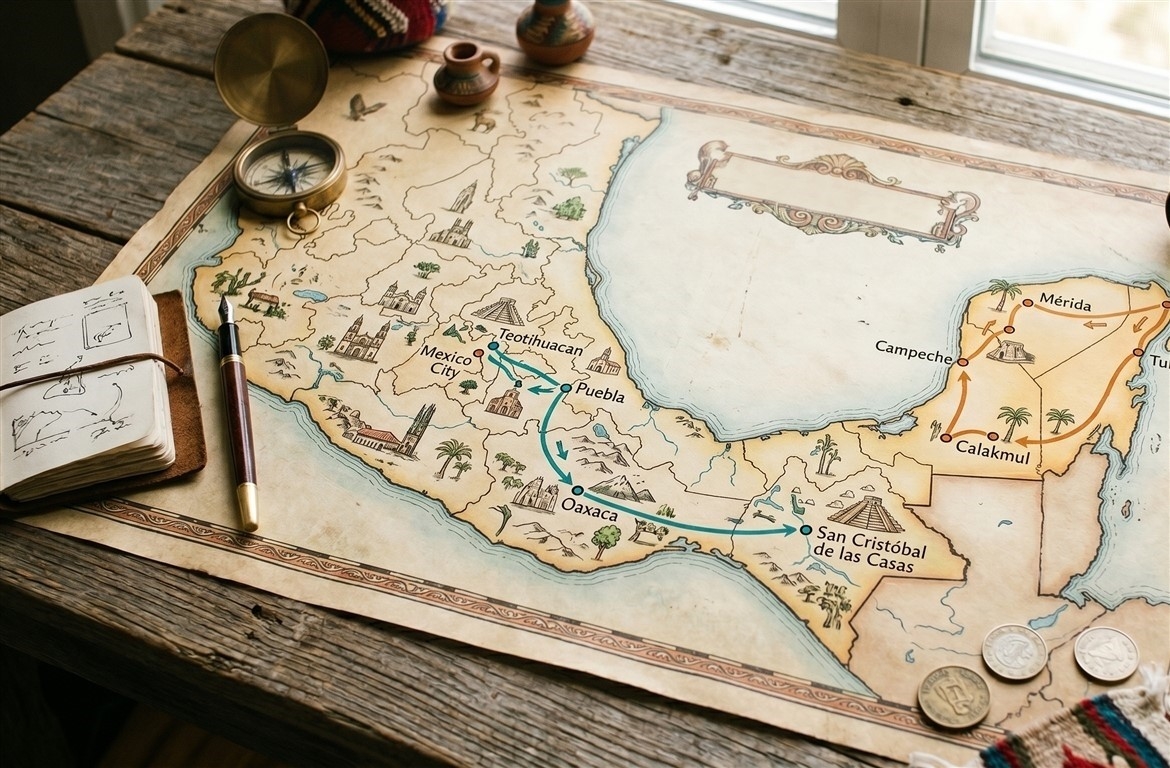
Itineraries are most successful when they respect the reality of travel distances. Mexico is not a small island where every famous destination sits conveniently next to the next. Focus on one region for a week, or combine two connected regions for a two-week trip.
One Week in Mexico
For your first week, pick one specific route: Mexico City and Oaxaca, Cancun combined with Valladolid and Isla Mujeres, Puerto Vallarta paired with Sayulita or Yelapa, or La Paz joined with Todos Santos and Los Cabos. Each of these routes offers plenty of variety without forcing you to waste entire days in airports or on endless bus transfers.
A great cultural route involves three nights in Mexico City, three nights in Oaxaca, and one final night near the airport for your departure. A beach-and-ruins route might include two nights in Valladolid, three nights in Playa del Carmen or Tulum, and two final nights on Isla Mujeres.
Two Weeks in Mexico
Two weeks grants you the freedom to create a much richer experience. You could combine Mexico City, Puebla, Oaxaca, Merida, Valladolid, and the Riviera Maya, provided you use one or two domestic flights to save time. For a slower, more deliberate route, combine Mexico City, Oaxaca, and Puerto Escondido, using either ground transport or a flight depending on your budget and preference.
If you’re exploring Baja California Sur, two weeks can comfortably cover Los Cabos, Todos Santos, La Paz, Balandra, Isla Espiritu Santo, and the East Cape. Rent a car for this route unless you intend to stick primarily to town centers.
Mexico City, Oaxaca, and Yucatan
This route is perfect for travelers who want to hit food, history, museums, ancient ruins, and beaches in one comprehensive trip. Begin in Mexico City for four nights, fly or take a bus to Oaxaca for another four nights, then fly onward to Merida or Cancun for the Yucatan portion of your journey. Include Valladolid for Chichen Itza and cenotes, then conclude your trip on Isla Mujeres, Playa del Carmen, or Bacalar.
You really need at least two weeks for this route to feel balanced. With only ten days, it’s better to cut either Oaxaca or the Yucatan coast. The most common mistake is cramming too many one-night stops into the schedule.
Pacific Coast and Baja Route
A Pacific-focused journey could start in Puerto Vallarta for the food and beaches, then head to Sayulita, San Pancho, or Yelapa for a smaller, more intimate setting. Alternatively, focus your energy on Baja California Sur: fly into San Jose del Cabo, spend time in Los Cabos, drive over to Todos Santos, and then continue on to La Paz for Balandra and Isla Espiritu Santo.
This route appeals to those who prioritize sunsets, fresh seafood, desert landscapes, and boat excursions over ancient ruins and colonial city hopping. January through April is particularly great because the weather is pleasant and marine wildlife seasons are in full swing.
Common Mexico Travel Questions
Where should I go in Mexico first?
Mexico City combined with Oaxaca remains the top choice for culture and food. Cancun, Playa del Carmen, Valladolid, and Isla Mujeres are generally the best picks for beaches, ruins, and logistical ease. Puerto Vallarta is the most recommended first spot for travelers who specifically want a beach city rather than an isolated resort.
What is the prettiest place in Mexico?
Beauty is subjective, but Bacalar, Balandra Beach, Copper Canyon, Hierve el Agua, Isla Holbox, Guanajuato, and the Oaxaca coast all have strong arguments. For a single location with easy access and stunning water, Bacalar is hard to top. In terms of architectural city beauty, Guanajuato and San Miguel de Allende are standout winners.
What is the safest place to visit?
Popular tourist hubs like Merida, Valladolid, San Miguel de Allende, Puerto Vallarta, the Riviera Maya resort corridors, and many neighborhoods in Mexico City are common picks for cautious travelers. Safety does vary based on location, road conditions, and the time of day, so smart planning is key. Choose a secure base, utilize reliable transport, and verify current state-level travel advice before your departure.
What is Mexico’s most visited place?
Cancun and the Riviera Maya are easily Mexico’s biggest international tourism magnets due to direct flights, huge resort capacity, beaches, tour availability, and airport accessibility. Mexico City also records massive visitor numbers thanks to its massive business travel sector, culture, food, and its role as the national flight hub.
How many days do you need?
Seven days is perfect for focusing on one region. Ten days works for a city-and-beach pairing. Two weeks allows you to combine Mexico City, Oaxaca, and a section of the Yucatan, or explore Baja California Sur at a relaxed pace. A month allows you to hop through multiple regions without turning your vacation into a race.
Final Thoughts on Planning Your Mexico Trip
The most rewarding travel experiences in Mexico aren’t always found in the loudest or most famous names. While Cancun works perfectly for a quick resort getaway, destinations like Oaxaca, Puebla, Merida, Chiapas, Baja California Sur, and Guanajuato offer a much deeper connection to the country. Mexico City is a must-visit for anyone who appreciates a city packed with food, history, museums, and distinct personality.
Define your route by your mood: seek comfort on the Riviera Maya or in Los Cabos, culture in Oaxaca and Mexico City, wildlife in Baja, ruins in the Yucatan, or adventure in Chiapas and Huasteca Potosina. Keep your travel days realistic, stay longer in fewer places, and give every region enough time to show you why so many people keep returning to Mexico.
0 Comment