

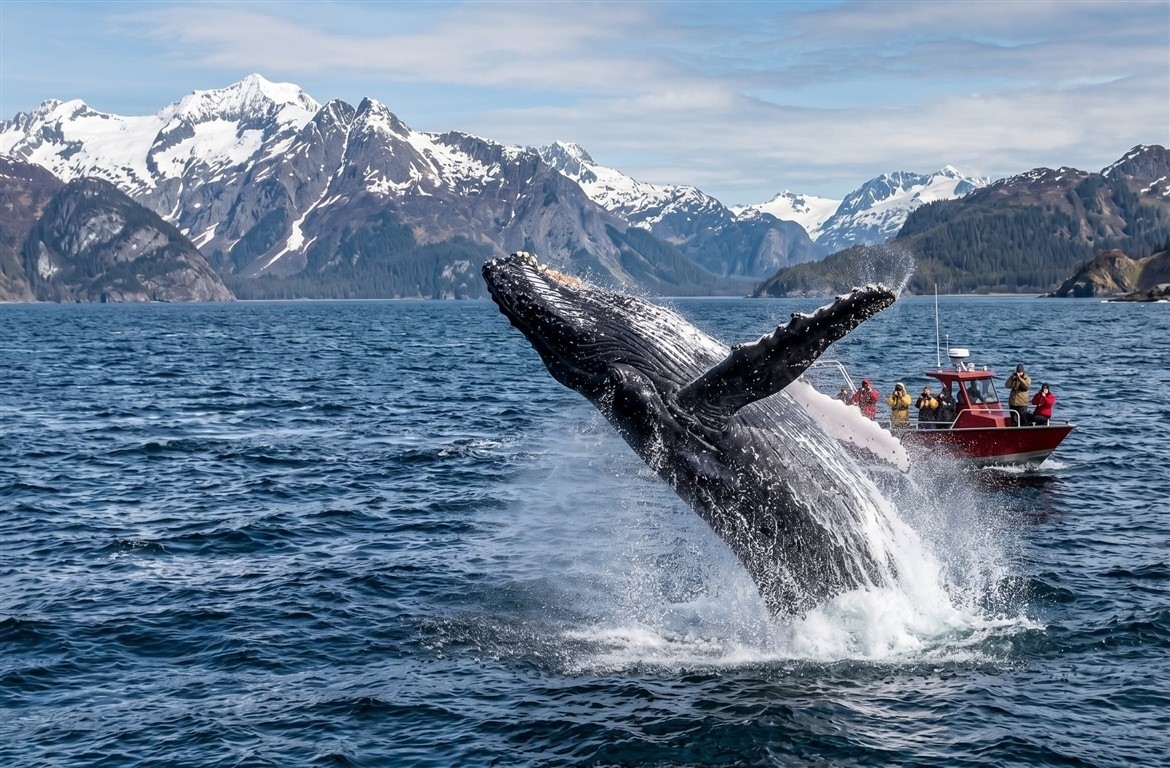

Top Spots Globally for Whale Watching
Sure, the finest places to watch whales aren’t just pretty coastlines with a few boat trips slapped on. No, these are genuine migration superhighways, critical feeding grounds, quiet, sheltered bays, vast deep-ocean shelves, icy fjords, warm birthing waters, and even tiny harbors. In these places, the whole town seems to just stop when a whale’s fluke breaks the water offshore. Even in 2026, whale watching remains one of life’s truly epic wildlife experiences. But here’s the secret: the smartest trips really hinge on timing – think season, target species, prevailing sea conditions, and, of course, the standards of your chosen tour.
Some spots offer a gentle, easy experience. Imagine a paved cliff path in South Africa, a peaceful Maui beach at sunrise, or a relaxed harbor cruise straight from Monterey. Other locations feel a bit wilder, rougher around the edges. Take northern Norway in the dead of winter. Or a long, sometimes turbulent Pacific crossing off Colombia. The Indian Ocean’s powerful roll near Sri Lanka. Pick the precise right spot and month, though, and suddenly the entire ocean just hums with life in the most incredible way.
Whale Watching Hotspots: A Quick Look
| Destination | Best season | Main whale species | Best viewing style |
|---|---|---|---|
| Baja California, Mexico | January to April | Gray whales, humpbacks, blue whales | Lagoon boat trips |
| Hermanus, South Africa | June to November | Southern right whales, humpbacks | Clifftop viewing |
| Kaikōura, New Zealand | Year-round | Sperm whales, dusky dolphins, humpbacks | Boat tours and scenic flights |
| Monterey Bay, USA | All year, species shift by month | Humpbacks, gray whales, blue whales, orcas | Boat tours and coastal viewpoints |
| Azores, Portugal | April to October | Sperm whales, blue whales, fin whales | Small-boat tours |
| Maui, Hawaii | December to April | Humpback whales | Shore viewing and boat trips |
Baja California, Mexico
Baja California just seems purpose-built for whale watching. On its Pacific side, gray whales arrive after completing one of the absolute longest mammal migrations on Earth. They journey all the way from icy Arctic feeding waters to the warm, welcoming Mexican lagoons. You’ll hear names like San Ignacio Lagoon, Scammon’s Lagoon, and Magdalena Bay come up again and again, and for excellent reasons: these spots offer sheltered waters, serve as historic gray whale calving grounds, and feature a truly bizarre calm that washes over your boat when a mother and her calf surface nearby.
The prime season kicks off in January and runs right through April. February and March, in particular, bring fantastic odds for gray whale encounters within these lagoons. Over in the Sea of Cortez and around Loreto, blue whales become a major draw during late winter and spring, while humpbacks make their appearance near Los Cabos. What’s cool is this is one of those rare regions where a single well-timed trip can give you gray whales, humpbacks, dolphins, sea lions, and, if you’re really lucky, the biggest animal alive.
Just make sure you choose operators who genuinely respect the local rules within the lagoons. Boat numbers are strictly limited, routes are controlled, and the best captains? They don’t chase. They wait. Honestly, that quiet waiting is half the magic.
Vancouver Island, Canada
Vancouver Island sits right on the edge of incredibly rich Pacific waters. You can find tours leaving from places like Victoria, Tofino, Ucluelet, Telegraph Cove, and Campbell River. The island is super famous for its orcas, but lately, humpback sightings have really taken off across many of these routes. Plus, gray whales regularly pass by the west coast during their epic migrations.
The broadest whale watching season spans from spring right through autumn. Tofino and Ucluelet are fantastic for catching gray whales and soaking in that rugged coastal scenery. Victoria is a super convenient option for travelers looking for an easy day trip. Meanwhile, Telegraph Cove has long been the go-to spot for seeing northern resident orcas. Be warned: the weather here changes fast. One minute, fog rolls in, then the sun blasts through, and suddenly the water’s alive with whale blows.
For anyone new to whale watching, Vancouver Island is incredibly practical. It boasts great tourism infrastructure, tons of licensed operators, a variety of trip lengths, and a whole mix of other wildlife beyond just whales. You’ll see sea otters, bald eagles, seals, and even black bears along the coast, which really adds something special to your day.
Húsavík and Reykjavík, Iceland
Iceland gives whale watching a distinct northern vibe: crisp, cold air, dramatic dark volcanic headlands, and boats heading out from tiny harbors into waters where minke whales, humpbacks, white-beaked dolphins, and porpoises are commonly spotted. Húsavík, located on the north coast, is widely celebrated as Iceland’s unofficial whale watching capital. Reykjavík offers a more accessible option if you’re just looking for a quick city break.
The main season runs from April to October. Summer, naturally, brings longer daylight hours and generally smoother trip logistics. Húsavík has earned its stellar reputation for humpback whales and provides a truly dedicated whale watching atmosphere. Reykjavík works perfectly for travelers who want a half-day tour without venturing far from the capital. In northern Iceland, though, trips often feel more immersive. Skjálfandi Bay, for example, offers incredible space, stunning scenery, and a much deeper sense of truly being out in proper whale country.
Just remember, cold is part of the deal. Wear more layers than you think you’ll need. Then, seriously, add one more.
Kaikōura, New Zealand
Kaikōura stands out as one of the world’s truly year-round whale watching destinations, and here’s why: incredibly deep water sits right up against the shore. The famous Kaikōura Canyon helps funnel nutrient-rich conditions super close to the coast. This, in turn, supports an abundance of marine life and provides a consistent, reliable feeding ground for sperm whales. If you’re someone who really wants a solid chance at seeing sperm whales without venturing into the remote open ocean for days on end, this is your place.
Sperm whales are definitely the star attraction here. But you’ll also likely encounter playful dusky dolphins, curious fur seals, majestic albatrosses, and even seasonal migrating humpbacks. Boat tours are the classic choice, offering a close-up perspective. However, scenic flights provide a completely different kind of drama: you can see the whale’s entire body visible just beneath the surface, its long shadow stretching out, and the stunning, clean geometry of the ocean from above.
Kaikōura delivers in every season. The ocean conditions, though, really dictate the mood. A calm day feels almost like a gift. A rough day? That’s when everyone gets a vivid reminder of who’s truly in charge out there.
Azores, Portugal
The Azores islands are way out there in the Atlantic, and that very isolation is precisely what makes them so special. Deep ocean currents, dramatic volcanic islands, and major whale migration routes all combine to make this archipelago one of Europe’s premier whale watching regions. You can spot sperm whales for most of the season, while magnificent blue whales, fin whales, and sei whales typically pass through, primarily in the spring months.
Your main whale watching window stretches from April to October. Spring is highly prized, as that’s when massive baleen whales are moving through. Summer brings warmer weather and a lovely, relaxed rhythm to island life. Pico, São Miguel, and Faial are among the more popular starting points, where small-boat tours and even age-old lookout traditions still play a role in how sightings are made.
The Azores are perfect for travelers who love to mix whale watching with other adventures: think hiking, exploring crater lakes, relaxing in hot springs, marveling at basalt coastlines, and enjoying peaceful village evenings. Less of a theme park, more authentic Atlantic weather and a little salt spray on your jacket.
Hermanus and Western Cape, South Africa
Hermanus stands as one of the absolute best shore-based whale watching spots anywhere on Earth. Southern right whales come incredibly close to the coast during their breeding season. The cliffs ringing Walker Bay offer visitors a prime grandstand seat, no boat required. From June right through November, people line the paths, perch on benches, dine at restaurants, and find spots on rocky ledges, all scanning the water. Suddenly, a blow rises. Then a dark back. Then a massive tail. The entire promenade lights up with pointing fingers.
The strongest months usually fall between August and October. Hermanus itself, plus De Kelders, Gansbaai, and the broader Western Cape coast, all boast fantastic viewing potential. Boat tours are available too, of course, but that land-based viewing is the signature experience here. It’s truly perfect for families, anyone prone to seasickness, and really, anyone who prefers a leisurely coastal stroll to a rigidly scheduled cruise.
Southern right whales are definitely the main event. Humpbacks also migrate along certain parts of this coastline, and Bryde’s whales actually live in South African waters year-round.
Mirissa and Dondra Head, Sri Lanka
Sri Lanka’s south coast is celebrated for its incredible blue whale watching opportunities. Boats typically depart from Mirissa and neighboring harbors, heading out towards the rich waters off Dondra Head. The most favorable season generally runs from around November to April, when the seas on the south coast are much calmer and more predictable.
Blue whales are the undisputed main attraction here, often joined by sperm whales, various dolphin species, and other fascinating marine life. The experience can be absolutely thrilling. But it can also be quite demanding: expect early starts, long hours out at sea, intense tropical sun, and sometimes very choppy water. Your choice of operator really matters here, probably more than many travelers realize. A truly responsible boat will maintain a respectful distance, actively avoid crowding animals, and definitely won’t turn the encounter into some kind of mad race.
Bring a good dose of patience. Blue whales are vast, yes, but the ocean is even vaster. Sightings, after all, still belong to wild nature, not some fixed booking calendar.
Alaska, USA
Alaska holds its own as one of the very best places to witness humpback whales feeding. The Inside Passage, Juneau, Icy Strait, Sitka, and the Kenai Fjords all offer fantastic summer whale watching. It’s an experience wrapped in glaciers, dense spruce forests, misty rain, and cold, vibrant blue water. Watching humpbacks engage in their “bubble-net feeding” is one of the marine world’s truly great spectacles, though, naturally, no single behavior can ever be fully guaranteed.
May through September marks the primary season for most tours. Humpbacks are undoubtedly the stars of the show. However, orcas, gray whales, minke whales, porpoises, sea lions, sea otters, and bald eagles all broaden the incredible wildlife picture. While cruise passengers can certainly book excursions, independent travelers who spend a bit more time in Juneau or Seward often gain a much richer, more intimate feel for the coast.
Alaska simply feels enormous, even when you’re on a small boat. A whale surfaces, the towering mountains loom behind it, and that sheer scale does something really strange to your perception of distance.
Monterey Bay, California, USA
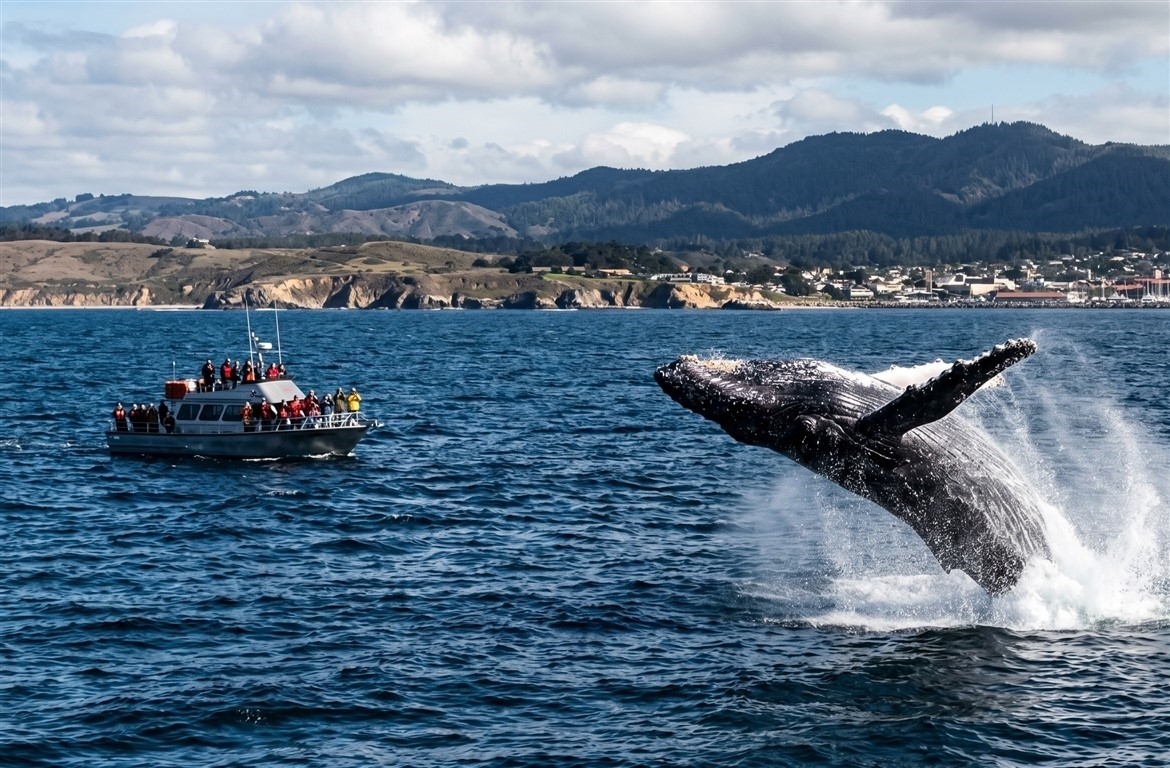
Monterey Bay is an absolute whale watching powerhouse. Why? Because deep, nutrient-rich submarine canyon waters lie incredibly close to shore. This unique geography supports abundant feeding opportunities, bringing several different species well within reach of day tours. Humpback whales are a common sight during the warmer feeding months. Gray whales migrate past the coast throughout winter and spring. Blue whales make appearances in especially productive years. And orcas? They show up when prey patterns align just right.
One of Monterey’s real strengths is its remarkably long season. There’s almost always a compelling reason to scan the offshore waters, even though the target species naturally shifts as the calendar turns. Boat tours from Monterey and Moss Landing are hugely popular. And don’t underestimate land-based viewing; it can be incredibly rewarding from various points around Pacific Grove, Point Lobos, and numerous coastal pullouts, especially when whales venture closer to shore.
It’s also super easy to weave this destination into a broader California trip. San Francisco, Big Sur, Carmel, and Santa Cruz are all easily accessible. Convenient, yes. But still gloriously wild.
Lofoten and Vesterålen Islands, Norway
Northern Norway offers whale watching with a decidedly sharper climate and a more dramatic, darker mood. Around the Vesterålen islands, particularly near Andenes, deep waters incredibly close to shore support fantastic sperm whale trips during the warmer months. Come winter, orcas and humpbacks might follow vast herring schools deep into the northern fjords. Tromsø and Skjervøy are commonly used as bases, depending heavily on the season’s specific conditions and where the whales are.
Summer brings the surreal midnight sun, countless seabirds, and tours that focus heavily on sperm whales. Winter, on the other hand, means biting cold, incredibly short days, the breathtaking possibility of northern lights, and the chance to witness orcas and humpbacks in an utterly dramatic Arctic setting. Nothing here feels soft. That, truly, is its immense appeal.
Travelers should definitely plan to build in some extra days. Weather often cancels trips. The wind whips up. Harbors fall silent. Then, bright and early the next morning, the sea often opens up again, ready to reveal its wonders.
Maui and the Hawaiian Islands, USA
Hawaii is universally famous for its humpback whales, and Maui serves as the quintessential base for seeing them. Every single winter, North Pacific humpbacks make their incredible journey to Hawaiian waters. Why? To breed, to give birth, and to nurse their young calves. The shallow, protected channels around Maui, Lānaʻi, Molokaʻi, and Kahoʻolawe create an absolutely superb viewing area, both from boats and directly from the shore.
The season runs from December to April, with peak activity typically happening from January through March. Lahaina’s harbor has historically been a central hub for tours, and operators all across Maui continue to tailor their trips around this spectacular seasonal humpback migration. Shore viewing can be surprisingly excellent from the south and west coasts. Grab your binoculars, and those distant splashes transform into clear, observable behaviors: powerful blows, thunderous tail slaps, graceful pectoral fin waves, and breaches that just seem too impossibly large to be real.
For anyone experiencing whale watching for the very first time, Maui is simply unbeatable. The warm weather, incredibly high seasonal whale density, abundant boat choices, and easy-to-access shore viewpoints make the whole experience feel wonderfully accessible.
Samaná Bay, Dominican Republic
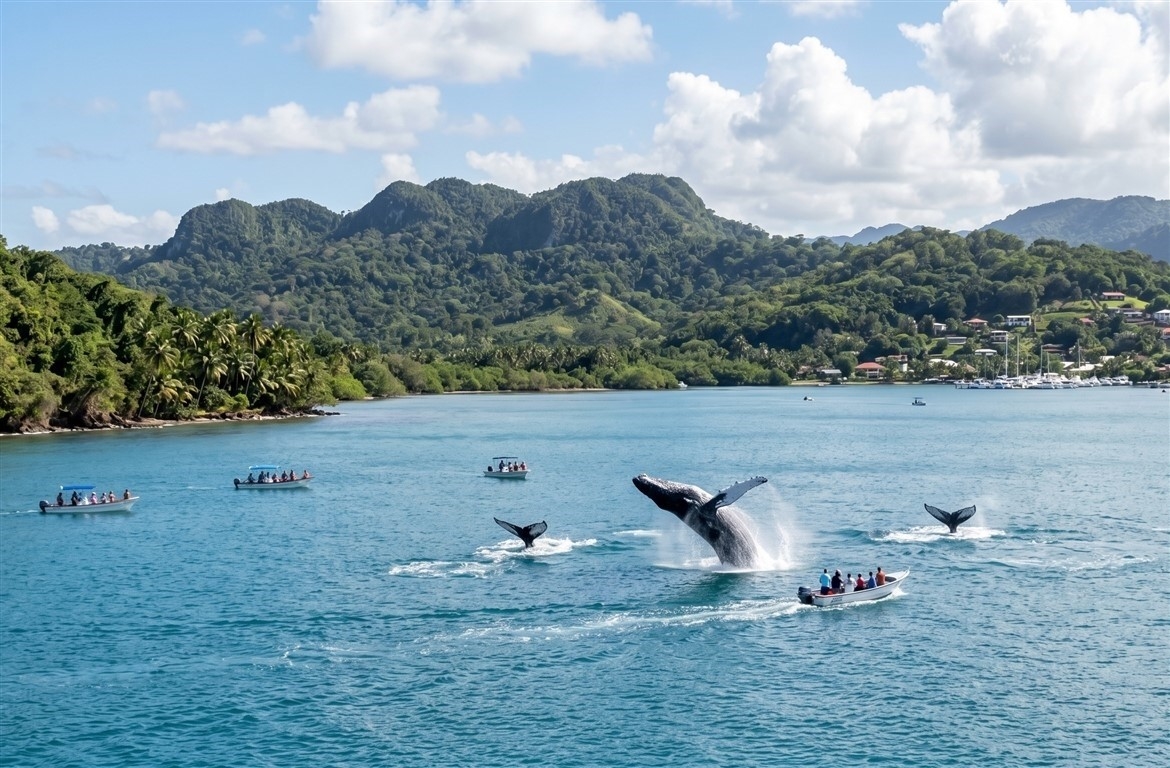
Samaná Bay is widely known as one of the Caribbean’s most important humpback whale breeding areas. These magnificent whales arrive during winter to mate and calve in the warm, inviting waters. The bay boasts a long-standing, vibrant whale watching season, typically centered from January right through March.
This destination perfectly suits travelers who are looking for a tropical getaway with a clear, exciting wildlife focus. Samaná town and its nearby beaches offer easy boat access. Plus, the surrounding peninsula features stunning waterfalls, lush coconut groves, and a much slower, more authentic Dominican rhythm compared to the bustling big resort zones. Humpbacks are the undeniable star species here. The experience is seasonal, incredibly concentrated, and truly unforgettable when conditions align.
Always, always choose licensed operators and actively avoid any boats that crowd the animals. In a sensitive breeding area like this, restraint isn’t just a nice extra; it’s the entire point.
Tonga
Tonga offers something truly unique because regulated in-water encounters with humpback whales are a core part of its travel allure. Humpbacks journey to Tongan waters specifically to breed and calve, making this one of the precious few places globally where travelers can join licensed operators for carefully managed whale swims.
The season generally stretches from July to October. Vavaʻu is the most famous base, though other island groups also welcome the whales. This isn’t just a casual add-on to a trip. These excursions are highly weather-sensitive, available spaces are strictly limited, and the rules governing swimmers, boats, and whale behavior are incredibly strict when properly adhered to.
The reward, however, can be utterly extraordinary: imagine just hanging motionless in crystal blue water while a curious calf gently drifts near its colossal mother. No shouting is ever needed. Honestly, nothing beats the profound silence in that moment.
Valdés Peninsula, Argentina
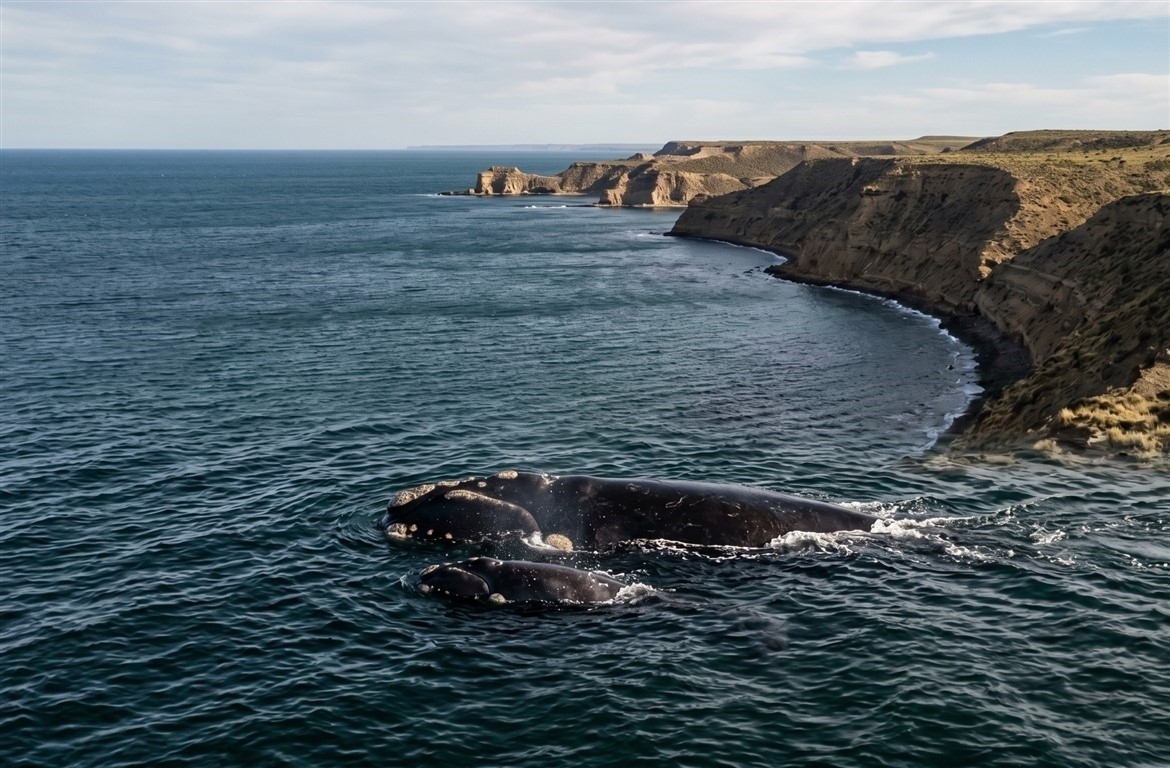
Argentina’s Valdés Peninsula stands as one of South America’s undisputed marine wildlife powerhouses. Southern right whales gather around its sheltered coastal waters roughly from June to December. Puerto Pirámides acts as the main base for boat tours. From the shore, places like El Doradillo can offer truly remarkable views when whales approach the beach incredibly close.
The wider peninsula itself adds a whole host of other incredible creatures: elephant seals, sea lions, penguins, guanacos, and, in certain spots and seasons, even orca activity right near the shore. The landscape here is dry, incredibly open, and stark. Don’t expect lush postcard scenery. Instead, you get dramatic cliffs, dusty gravel roads, relentless wind, and an ocean that just keeps delivering unforgettable moments.
September through November is particularly popular for whale watching, though the season does stretch wider. For travelers who adore a high density of wildlife combined with raw, untamed coastal geography, Valdés is absolutely superb.
Colombia’s Pacific Coast
Colombia’s Pacific coast warmly welcomes humpback whales, which migrate all the way from their Antarctic feeding grounds to these warm tropical waters for breeding and calving. Nuquí, Bahía Solano, and the waters surrounding Utría National Natural Park are among the main starting points. The season typically runs from July to October.
This coastline is lush, often wet, wonderfully remote, and deeply atmospheric. Here, the dense rainforest meets dark, black-sand beaches. Boats weave between small, vibrant communities. Humpbacks breach offshore while the ever-present rain hangs heavy in the trees. It’s certainly not the easiest whale watching destination, but that very challenge is a huge part of its unique character.
Travel logistics here demand careful planning: think flights, boat transfers, sometimes limited infrastructure, and unpredictable tropical weather. The payoff, however, is a less polished, far more immersive wildlife adventure.
Great Spots for Shore-Based Whale Watching
Not every truly great whale encounter demands a boat trip, you know. Shore-based whale watching can be a much slower, more affordable, calmer, and certainly kinder option for your stomach. It also lets you really linger. Ten minutes. Two hours. Or even a whole afternoon, with your coffee gradually going cold in your hand.
- Hermanus, South Africa: The clifftop paths above Walker Bay provide some of the world’s best land-based views of southern right whales during their winter and spring breeding season.
- Monterey Bay, California: Various coastal vantage points around Pacific Grove, Point Lobos, and nearby headlands can yield fantastic sightings when whales feed or migrate close to the shore.
- Maui, Hawaii: The west and south Maui beaches, numerous public lookouts, and even hotel-front paths are excellent during humpback season, especially if you’ve got binoculars.
- Valdés Peninsula, Argentina: El Doradillo is justly famous for southern right whales coming incredibly close to the beach during their season.
- Depoe Bay, Oregon: A compact harbor combined with numerous coastal viewpoints makes this a strong U.S. shore-watching stop. Gray whales are frequently seen along the Oregon coast both during their migration and resident periods.
Best Times for Whale Watching
When to go whale watching really hinges on migration patterns, feeding schedules, breeding cycles, and the specific local ocean conditions. Winter in one hemisphere might be prime season for warm-water breeding grounds, while summer often brings intense feeding activity in the colder, nutrient-rich seas.
| Season | Strong destinations | What travelers may see |
|---|---|---|
| Winter | Hawaii, Baja California, Samaná Bay | Humpback breeding, gray whale lagoons, calves |
| Spring | Azores, Monterey Bay, Iceland | Large whale migration, gray whales, early feeding |
| Summer | Alaska, Iceland, Tonga, Colombia | Humpbacks feeding or breeding, sperm whales, dolphins |
| Autumn | Hermanus, Valdés Peninsula, Monterey Bay | Southern right whales, humpbacks, coastal sightings |
Top Spots for Specific Whale Species
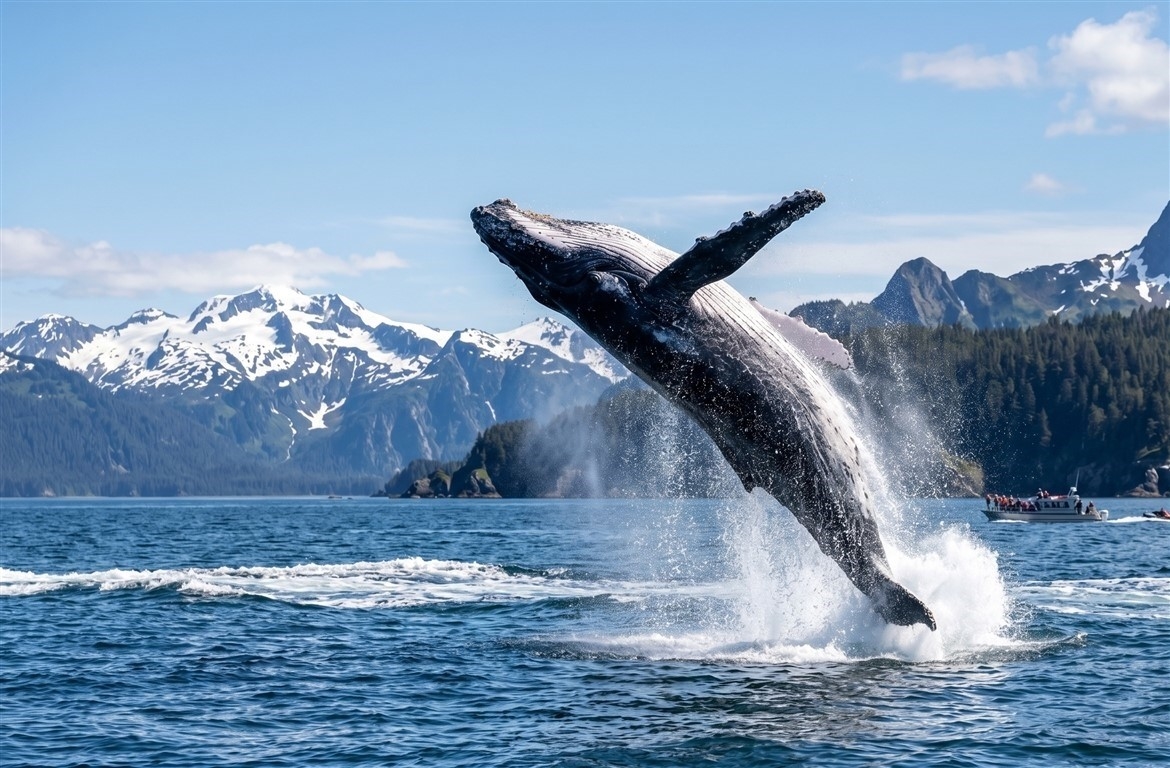
Picking your trip based on a specific species often makes planning much clearer. Humpback whales, for instance, are incredibly widespread and well-known for their spectacular surface behaviors, making them a top choice for a first-time trip. Blue whales are far rarer and much more sensitive to precise seasonal timing. Sperm whales, on the other hand, require incredibly deep water. Gray whales are intrinsically linked to specific Pacific migration routes. And orcas? They demand extra research, as their movements are tightly tied to their prey’s patterns.
For humpbacks, definitely consider Maui, Alaska, Samaná Bay, Tonga, Colombia, Iceland, and South Africa. If blue whales are your dream, strong contenders include the Azores in spring, Monterey Bay during productive seasons, Baja California near Loreto, and Sri Lanka’s south coast during its season. For sperm whales, Kaikōura, the Azores, Dominica, and northern Norway really stand out. Gray whales? Baja California and the entire west coast of North America are classic choices. And for orcas, pay close attention to Vancouver Island, parts of the San Juan region, northern Norway, Alaska, and Monterey Bay.
How to Pick a Whale Watching Trip
Start with the *month* you plan to travel, not just some dreamy fantasy. A destination can be absolutely world-class, but it might still be completely wrong for your actual travel dates. After that, choose the species you’re hoping to see. Then, decide how much time you genuinely want to spend out on the sea. Some people crave a zodiac, salt spray in the face, the whole raw experience. Others prefer a gentle cliff path, a comfy bench, and a nice lunch nearby. Both approaches are perfectly valid.
- Match the season *before* booking flights: Double-check the local whale calendar for the *exact* region you’re targeting, not just the general country. Iceland’s north coast, Hawaii’s Maui channels, and Mexico’s Baja lagoons all operate on distinct rhythms.
- Pick a specific species or just embrace the surprise: Travelers dead set on seeing blue whales need much tighter timing than those perfectly happy with humpbacks, dolphins, seabirds, and whatever else the ocean decides to reveal.
- Choose your viewing style: Boat trips generally get you closer to offshore feeding grounds and deep-water species. Shore viewing offers freedom, comfort, and zero seasickness. Families or nervous sailors might much prefer those land-based spots.
- Check operator standards: Always look for licensed guides, clear rules about distance, small-group policies where possible, and honest language about truly wild sightings. Any tour offering “guaranteed drama” is usually a big red flag.
- Build in extra time for weather: Coastal trips get canceled. It happens. A two- or three-night stay gives you much better odds than squeezing in one tight afternoon between flights.
Boat Tours vs. Shore-Based Viewing
| Boat tours | Shore-based viewing |
|---|---|
| Better access to offshore feeding areas and deep-water species. | More relaxed, with no seasickness and no fixed return time. |
| Guides can interpret behavior, identify species, and track safe routes. | Works well in places where whales come close to cliffs or beaches. |
| Weather, swell, and cancellations matter more. | Binoculars are essential for distant blows and tail flukes. |
| Costs more, especially in remote regions or small-group vessels. | Can be free or low-cost once you reach the viewpoint. |
Smart Planning for Your Whale Trip
Always book with responsible operators. The cheapest tour can actually end up being the most expensive if the boat crowds whales, ignores approach rules, or treats precious wildlife like some kind of performance. Good operators will talk openly about maintaining distance, respecting behavior, understanding sea conditions, and the importance of conservation, all without making it feel like a lecture.
Check the season *before* you even think about buying flights. Then, check it again. A gorgeous beach town in the wrong month is still a gorgeous beach town, but it probably won’t deliver a whale watching trip. Even in warm places, bring layers, because the wind on open water changes absolutely everything. Eat lightly before departure if you’re prone to seasickness. And take any medication early, *before* the boat starts rolling, not after.
Keep your expectations loose. Sometimes, a distant blow on the horizon might be your entire encounter. Other times, a humpback might breach so close that everyone completely forgets they even have a camera. That’s the thrilling, unpredictable nerve of wild travel.
What to Pack for Whale Watching
- Binoculars: Absolutely essential for shore watching and incredibly useful from boats when whales surface at a distance. Compact, waterproof models are definitely the easiest to carry.
- Camera with zoom lens: Your phone works for quick memories, but whales rarely pose close enough for truly crisp images. A proper zoom lens really helps, without pressuring boat captains to get too close.
- Warm layers: Open water is always colder than the harbor. Good fleece, windproof shells, and waterproof jackets will quickly prove their worth.
- Sun protection: The glare off the sea is incredibly deceptive. Sunglasses, sunscreen, and a wide-brimmed hat are vital, even on cloudy days.
- Motion sickness remedies: Tablets, patches, bands, ginger—whatever works for your body. Take action well before departure, not once you’re caught in the swell.
Whale Watching: Your Top Questions Answered
Which Spot is Best for Global Whale Viewing?
There’s no single “best” place that fits every traveler’s needs. Baja California is unparalleled for gray whales, Maui shines for humpbacks, Kaikōura is fantastic for sperm whales, the Azores offer amazing Atlantic diversity, and Hermanus provides superb shore-based southern right whale viewing.
What Month is Peak Whale Watching Time?
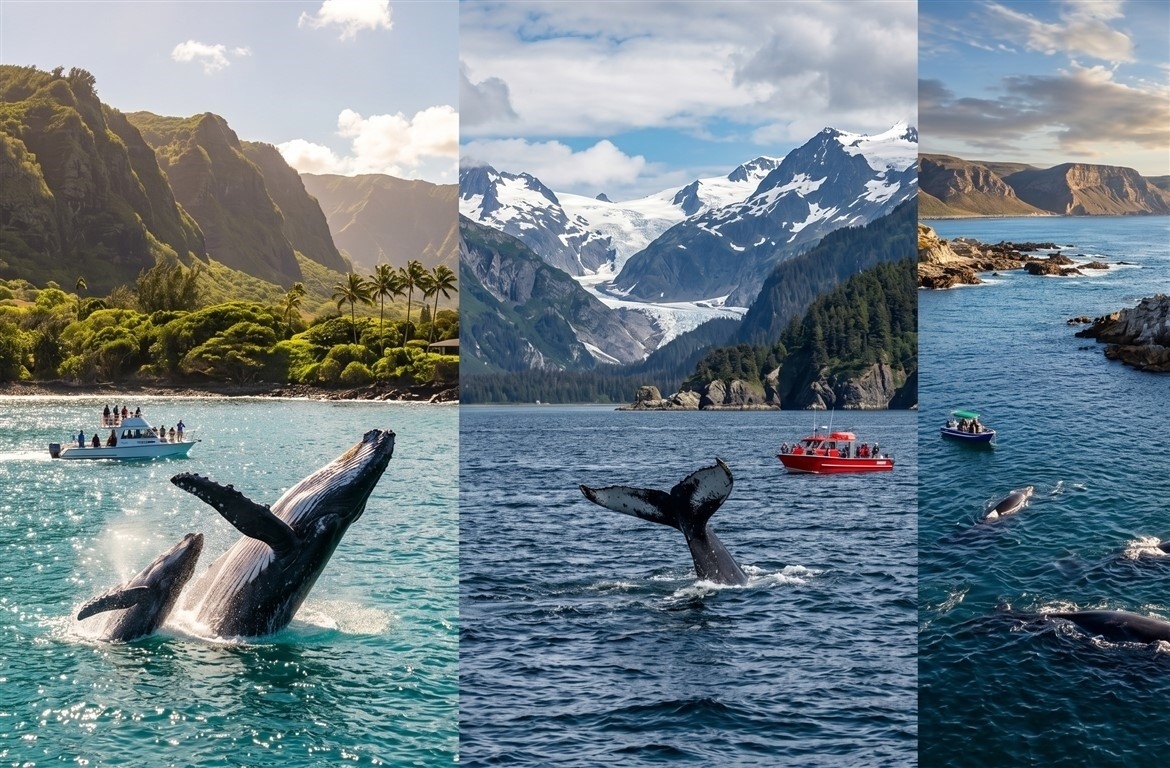
February is a standout month for Baja California, Maui, and Samaná Bay. July and August are perfect for Alaska, Iceland, Tonga, and Colombia. September and October are absolutely excellent around Hermanus and the Valdés Peninsula.
Where Can You Watch Whales from Shore?
Top shore-based choices include Hermanus in South Africa, Maui in Hawaii, Monterey Bay in California, Depoe Bay in Oregon, and the Valdés Peninsula in Argentina.
Where’s the Best Place to See Blue Whales?
The Azores, Sri Lanka’s south coast, Baja California around Loreto, and Monterey Bay during productive seasons are among the most well-known blue whale destinations.
0 Comment