


What to Wear in Korea: Seasonal Packing Guide
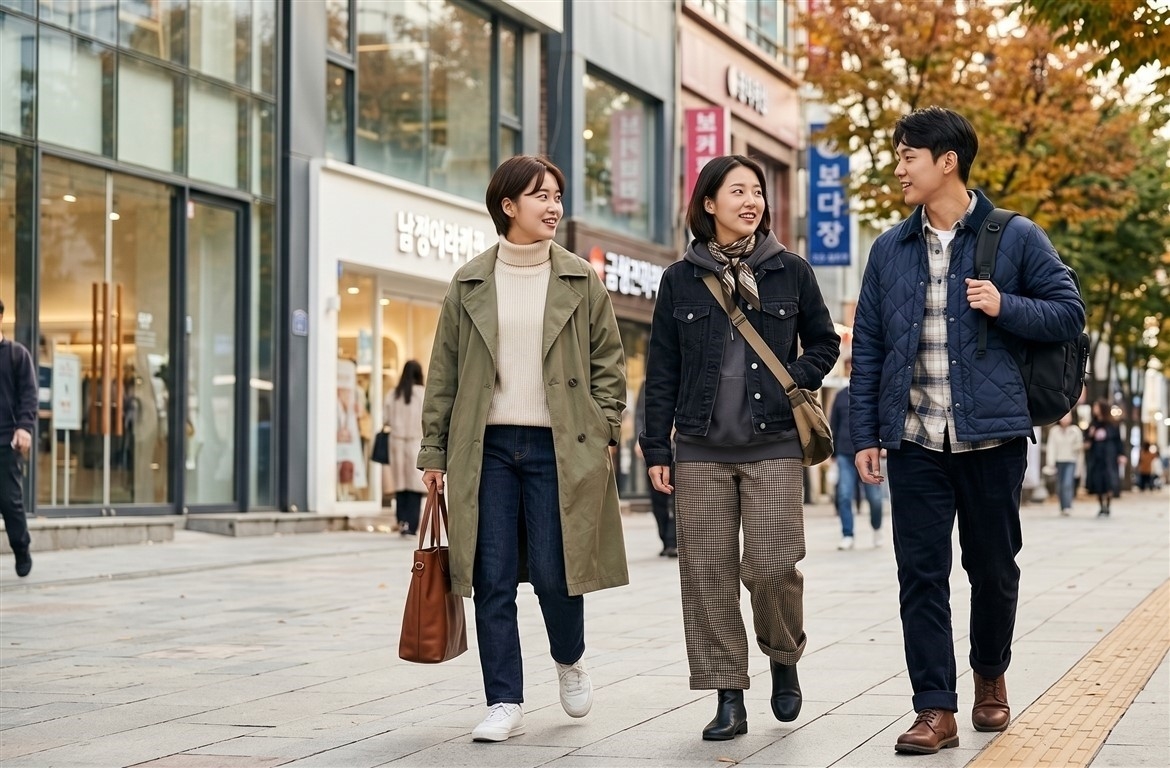
Figuring out what to wear in Korea boils down to one simple truth: folks here dress for everything. They dress for the weather, for the busy subway, for walking down the street, and yes, for the ever-present camera. Seoul can feel crisp and put-together at breakfast, then suddenly drench you by late afternoon. Busan brings its own brand of sea wind. Jeju? That island just laughs at any neatly laid plans you might have. So, pack clothes that let you move, that layer up or down easily, that dry quickly, and honestly, still look pretty decent when you finally step into a café where everyone else somehow seems perfectly styled.
Good news! Korea isn’t a place where travelers need a giant bag of fashion tricks. Think clean lines. Seriously good shoes work even harder. A jacket that can genuinely block the wind matters so much more than some dramatic outfit that only looks fantastic for ten minutes outside Gyeongbokgung Palace. The smartest Korea packing list is always neat, super flexible, and not too precious.
Korea Style: What to Know Before You Pack
Korean street style covers a huge spectrum. You’ll spot everything from oversized blazers and wide-leg trousers to crisp shirts, long coats, classic denim, and sleek sneakers. Think soft knits, baseball caps, puffy padded jackets, delicate pleated skirts, and a palette of quiet colors that somehow still feel incredibly sharp. Black, cream, gray, navy, beige, that perfect denim blue. Then, boom—a pop of red lipstick, a super glossy bag, some cool silver earrings, or maybe even a quirky little charm dangling from a phone case. It’s polished, for sure, but never stiff.
For us travelers, the practical takeaway is straightforward: build your outfits with balance in mind. If your top is loose, keep the bottom half looking tidy. Got a big, cozy coat? Make sure your shoes look intentional, not like an afterthought. If your day involves a ton of walking, don’t fight the city with shoes that hurt. Seoul’s metro stations have stairs. Lots of them. Those cute but uncomfortable shoes? They’ll turn cruel faster than you can say “next stop.”
Modesty also plays a role, especially when you visit traditional sites, temples, or quieter neighborhoods. Korea is definitely fashionable, but it’s not rigid. Short skirts are super common. Low-cut tops? Less so. For those palace visits, temple stays, family restaurant dinners, or any slightly more formal setting, having your shoulders covered, or just adding a light layer, will make you feel much more at ease.
Your Seasonal Korea Wardrobe Guide
Korea in Spring
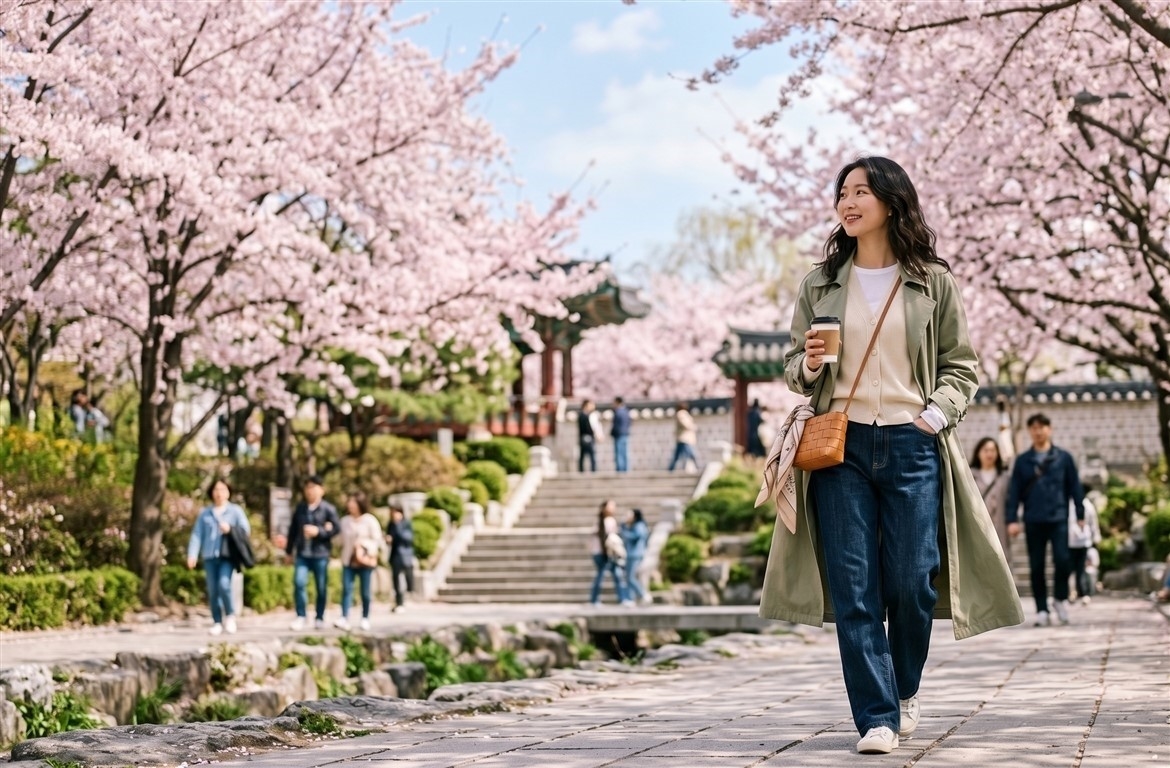
Korean spring is Instagram-perfect. Think cherry blossoms, sunny café terraces, and soft, dreamy light. But it also means annoying temperature swings. A beautiful day can turn into a chilly evening, making everyone instinctively zip up their jackets. So, pack layers: long-sleeve tees, thin knits, a classic trench coat, a versatile denim jacket, a comfy cardigan, and some relaxed trousers or jeans.
Spring shoes need to be comfortable. You’ll walk a lot—palace grounds, bustling shopping streets, long strolls along the Han River. Clean sneakers are your absolute safest bet. Loafers can work for city days if you’ve already broken them in. A scarf comes in handy, especially in March and early April. Don’t forget sunglasses; the light can be surprisingly bright even when the air still feels cool.
Try this strong spring outfit: straight-leg jeans, a simple white tee, a soft cardigan, and a trench coat. Or maybe a midi skirt with ankle boots and a cropped jacket. Nothing fussy. Nothing floppy. Just perfectly ready for a day that will definitely change its mind about the weather halfway through lunch.
Korea in Summer
Summer means hot, humid, and wet. The rainy season can make streets slick and feel incredibly heavy. Step into the subway, and it’s like a cool, air-conditioned rescue shelter. Pick breathable fabrics: cotton, linen blends, light technical materials, loose shirts, relaxed dresses, airy trousers, and shorts that don’t cling. Seriously, nothing clingy.
A thin overshirt or a light cardigan is a lifesaver indoors. Malls, trains, and cafés blast the AC, and it gets cold after that outdoor heat. Bring a compact umbrella or a rain jacket that packs down small. Sandals are fine for super casual days, but slippery soles? Big mistake. Water-resistant sneakers or supportive sandals with good grip make way more sense than delicate flats here.
For Seoul in summer, a loose button-down over a tank, paired with wide-leg trousers, feels just right. Heading to Busan? Toss in swimwear, easy shorts, a beach shirt, and sandals that can handle sand. Jeju demands clothes that brave the wind, sudden showers, and those beautiful coastal walks. Pretty, yes, but always practical. The island truly rewards smart packing.
Korea in Fall
Fall in Korea is by far the easiest season to dress for. The air turns wonderfully clear, colors sharpen, and your layers finally behave. A light sweater, jeans, trousers, a smart shirt jacket, a blazer, or a trench coat will easily cover most city days. As the season progresses, you’ll want to add a wool coat or a padded vest.
This is the sweet spot for putting together Seoul outfits: loafers with socks, wide trousers, fitted knit tops, oversized shirts, denim jackets, long skirts, and chic crossbody bags. Planning hiking trails or day trips? That calls for a slightly different mindset. Grab a fleece or a reliable windbreaker, especially if you’re heading to the mountains, islands, or starting your day early.
Fall evenings can get cool, fast. That thin layer you almost left back at the hotel? Take it. Korea has a sneaky way of making late dinners feel much colder than the forecast ever promised.
Korea in Winter
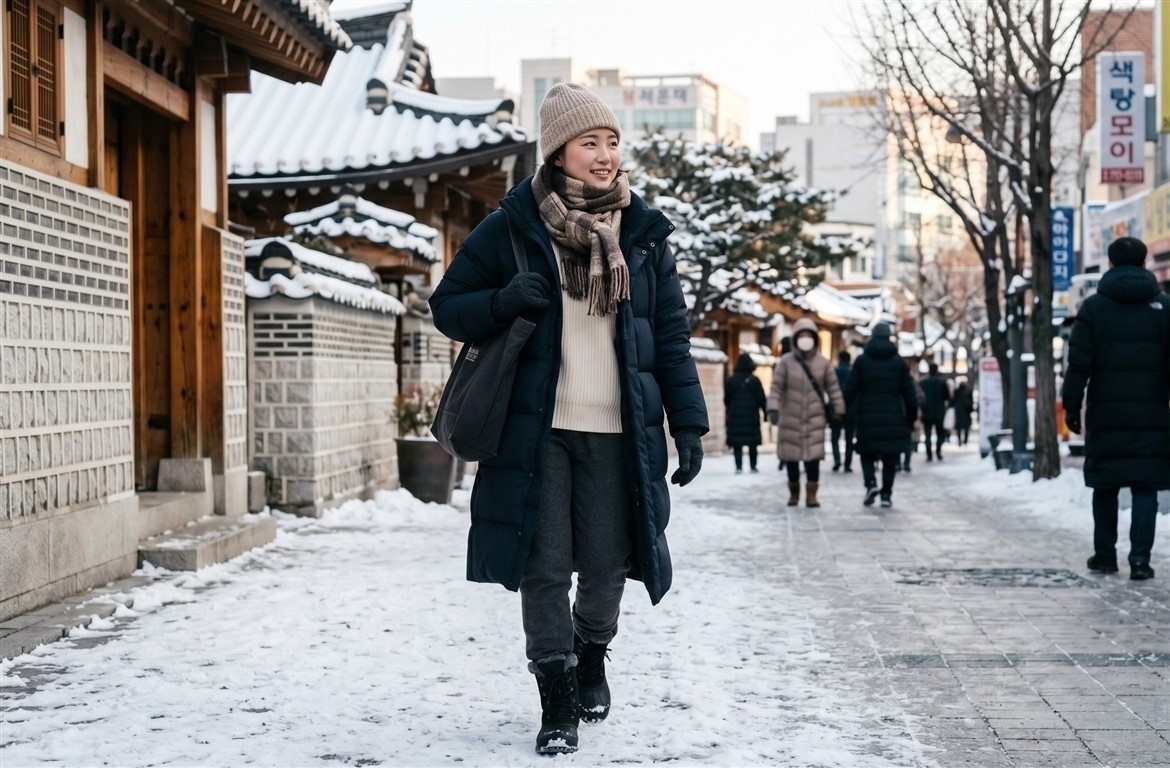
Winter in Korea gets seriously cold. Seoul can feel absolutely biting when that wind whips between buildings. Pack a proper, functional coat, not just a decorative one. A well-padded jacket, a thick wool coat with plenty of warm layers underneath, thermal base tops, cozy sweaters, lined trousers, gloves, a beanie, and warm socks are essential. They belong in your suitcase.
Footwear absolutely needs warmth and grip. Insulated boots or sturdy leather sneakers can work perfectly for city travel. If snow or icy sidewalks are on the forecast, choose soles with serious traction. Thin canvas sneakers? That’s a brave choice, but honestly, not a very smart one.
Indoor heating is incredibly strong in so many places, so layering remains key. Think thermal top, then a knit, then your coat. Peel layers off as needed. For a nice dinner out in Seoul, dark trousers, ankle boots, a turtleneck, and a long coat look perfectly polished without making you suffer. For winter trips outside the city, add extra heat-tech layers and a scarf that actually covers your entire neck.
Seasonal Clothing Table for Korea
| Season | Weather Feel | Best Clothing | Footwear |
|---|---|---|---|
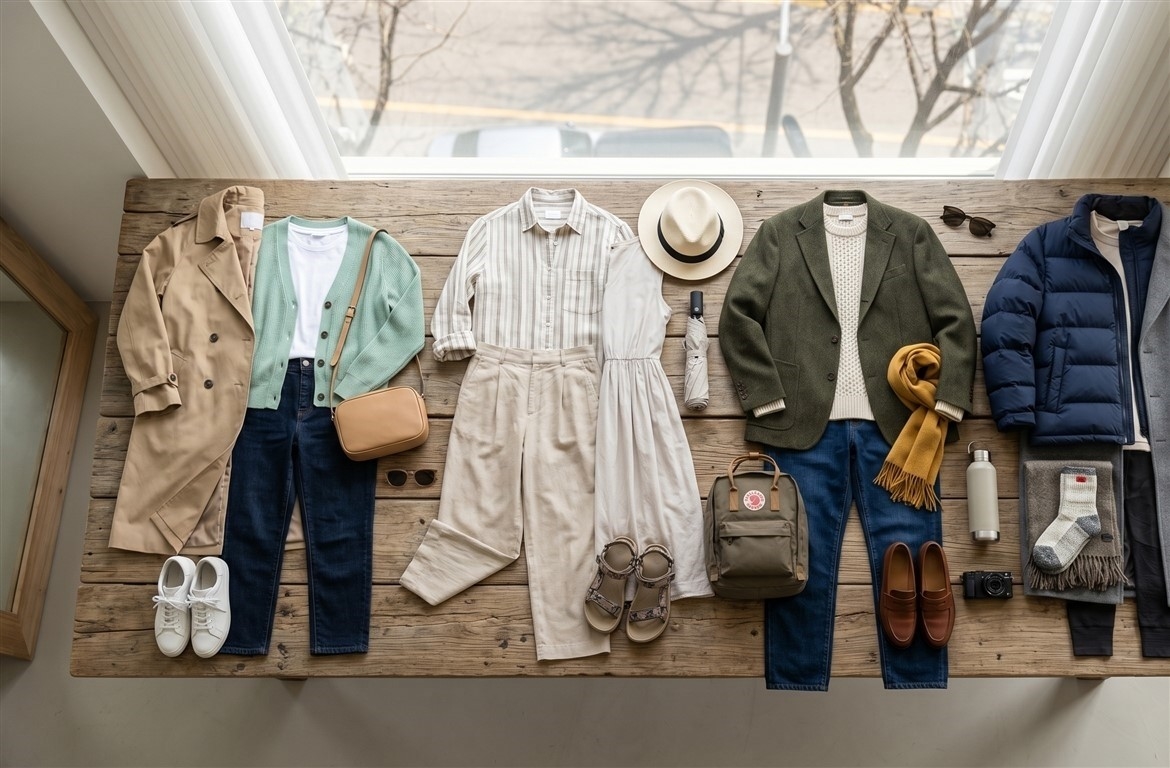
| Spring | Mild days, cool mornings, breezy nights | Trench coat, cardigan, jeans, light knits | Sneakers, loafers, ankle boots |
| Summer | Hot, humid, rainy, strong indoor cooling | Linen blends, loose shirts, dresses, rain layer | Grip sandals, breathable sneakers |
| Fall | Clear, mild, cooler after sunset | Blazer, sweater, denim, light coat | Sneakers, loafers, light boots |
| Winter | Cold, dry, windy, icy on some days | Puffer, wool coat, thermals, scarves | Warm boots, sturdy sneakers |
| Jeju trips | Windy, changeable, softer winters | Windbreaker, layers, casual outdoor pieces | Walking shoes with grip |
Korea Packing List for Travelers
- Tops: Pack some tees, long-sleeve tops, button-down shirts, and one slightly smarter blouse or knit. Korea appreciates clothes that can look casual at noon but still tidy for dinner. Think thin layers; they’re better than one bulky item.
- Bottoms: Jeans, wide-leg trousers, relaxed pants, skirts, or dresses—all work. Pick pieces that feel comfortable for those long train rides and extended meals. Super tight waistbands get old fast after a street-food crawl in Myeongdong.
- Outerwear: Bring the appropriate, real jacket for the season. A trench for spring, a rain layer for summer, a blazer or light coat for fall, and a padded coat for winter. A stylish coat can instantly elevate a plain outfit without much effort.
- Shoes: Comfortable sneakers are almost non-negotiable. Add boots in winter, sandals in summer, or loafers for those dressier city days. New shoes are a rookie mistake. Korea involves far too much walking for footwear experiments.
- Bags: A crossbody bag or a small backpack works wonders for sightseeing. Keep it light, secure, and easy to open when you’re on the metro. Leave some space inside for skincare, snacks, extra socks, and all those random little things you’ll buy at the station because they just looked useful.
- Accessories: Sunglasses, a compact umbrella, a scarf, a cap, a warm hat, gloves, and simple jewelry can completely transform the same outfit multiple times. Summer absolutely needs sun protection. Winter requires serious insulation. Spring and fall? They just need your patience.
How to Dress Like a Local
Dressing like a local in Korea isn’t about perfectly copying a specific look. It’s more about a subtle restraint. Clothes tend to be neat. Hair usually looks intentional. Sneakers are always clean. Bags are chosen with purpose, not just grabbed at random. Even the most casual outfits here have structure and shape.
Oversized pieces are everywhere, but they never look sloppy. A boxy shirt sits perfectly with tailored trousers. A long, flowing coat looks incredibly calm over a pair of jeans. Wide-leg pants can feel truly elegant when paired with a simple top and understated earrings. The whole outfit quietly says, “Yes, I thought about this, but I didn’t stress.”
Layering is a quiet, cultivated skill here. A tee under a shirt, under a jacket. A thin turtleneck peeking out beneath a dress. A cardigan over a tank top for that summer air-conditioning blast. The city’s temperature shifts constantly—from street to train to café to rooftop bar—and the best-dressed people just seem ready for every tiny climate ambush.
Color palettes often stay muted, but they’re never dull. Think black and cream. Gray and denim. Beige paired with a deep burgundy. Navy accented with silver jewelry. If you love bright clothes, absolutely wear them! Just make sure to anchor your look with one calmer piece. Head-to-toe loudness can feel a bit out of place in many Seoul neighborhoods, though Hongdae, bless its heart, will forgive almost anything.
For temples, palaces, and traditional villages, a slightly more covered outfit just feels respectful and, frankly, practical. A light shirt over a sleeveless top solves any potential problem. So does a midi skirt, comfortable trousers, or a dress that lets you sit and walk easily. No judgment here. Just smoother travels.
Outfit Ideas for Seoul, Busan, Jeju
Sightseeing in Seoul
Lace up clean sneakers, pull on some jeans or comfortable trousers, add a breathable top, and bring a layer you can easily take off. Palaces, bustling markets, quiet museums, and countless metro transfers can fill your entire day before you even realize your feet are complaining. A trusty crossbody bag keeps your tickets, lip balm, and transportation card right where you need them.
Cafes, Shopping, Museums
Here’s where you can step up the polish a little. A knit top with wide trousers, a midi skirt with loafers, or dark denim paired with a crisp shirt fits right in with café-rich neighborhoods like Seongsu, Hannam, and Ikseon-dong. Korean interiors are incredibly photogenic, yes, but comfort still absolutely wins when you’re standing in a weekend queue.
Dinner and Drinks
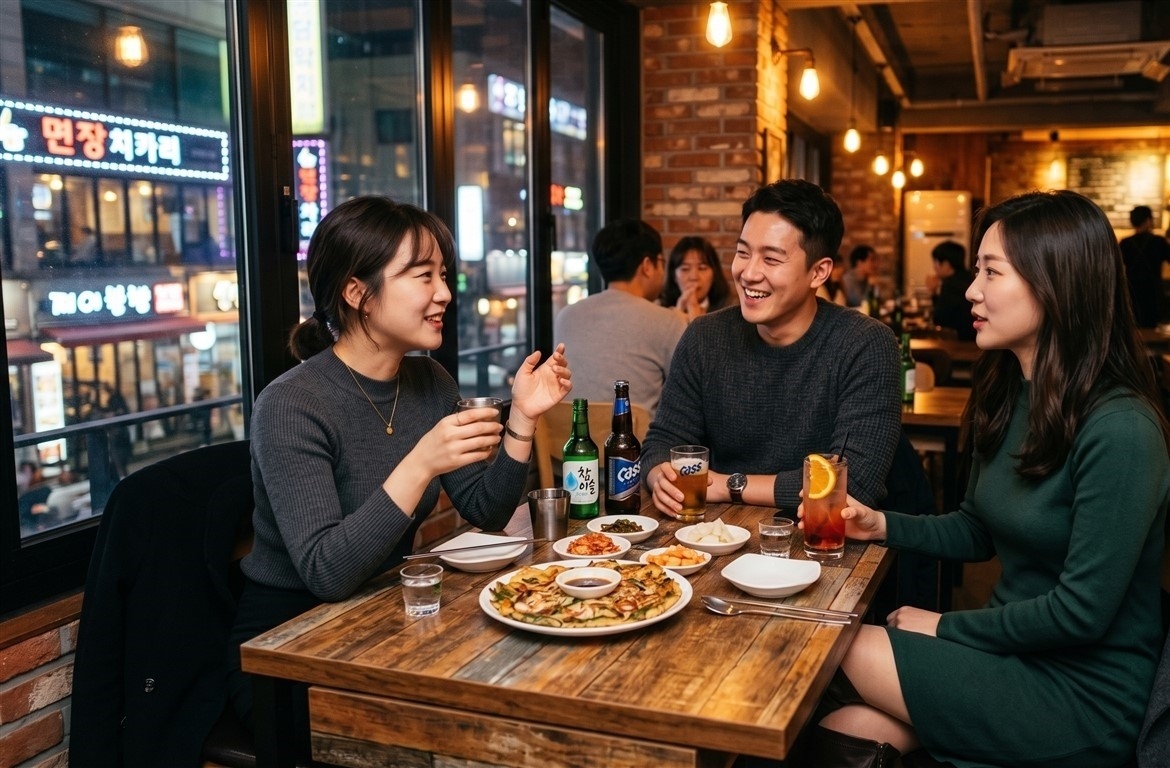
Korea’s dinner style can swing from super relaxed to incredibly sleek, totally depending on the area. For barbecue, definitely skip delicate fabrics that’ll just soak up all that smoke. For a nicer restaurant or a cocktail bar, dark trousers, a fitted knit, boots, or a simple dress under a coat feel like safe bets. Avoid anything too theatrical unless the place explicitly demands it.
Busan Beach Days
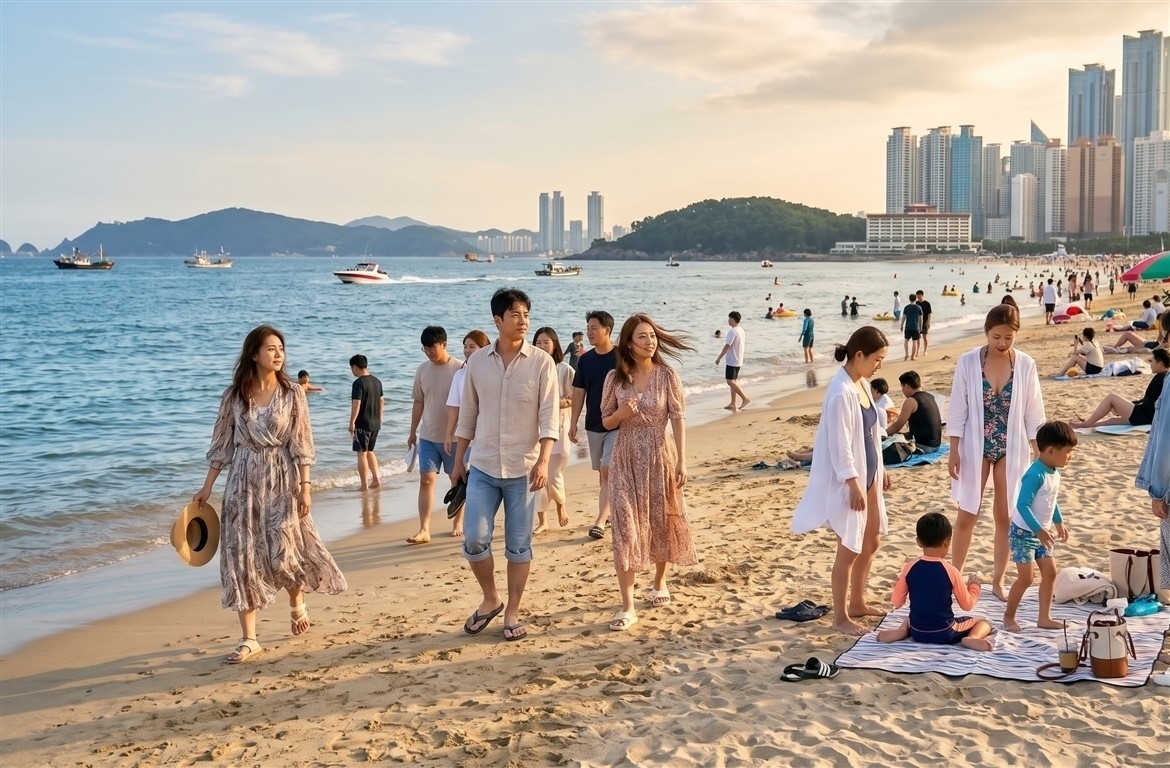
Busan calls for lighter clothes, especially near the coast: linen shirts, shorts, breezy dresses, swimsuits, sandals, and a good cover-up. Always bring an extra layer for the evening sea air. It has a habit of sneaking in right after sunset, making even summer feel just a little less lazy.
Jeju Road Trips & Walks
Jeju is stunning, and it’s always windy. Wear comfortable pants, a tee or light knit, a reliable windbreaker, and shoes that can really handle uneven paths. A dress might work for cafés and viewpoints, but definitely wear shorts underneath if the wind decides to put on a dramatic show. (It often does.)
Rainy Days
A good rain jacket, cropped trousers, water-resistant shoes, and a compact umbrella will make those rainy days far less miserable. Long hems drag through puddles. Suede just sulks. Thin white trousers invite absolute chaos. When the forecast looks wet, stick to darker colors or quick-dry fabrics.
Korea Capsule Wardrobe
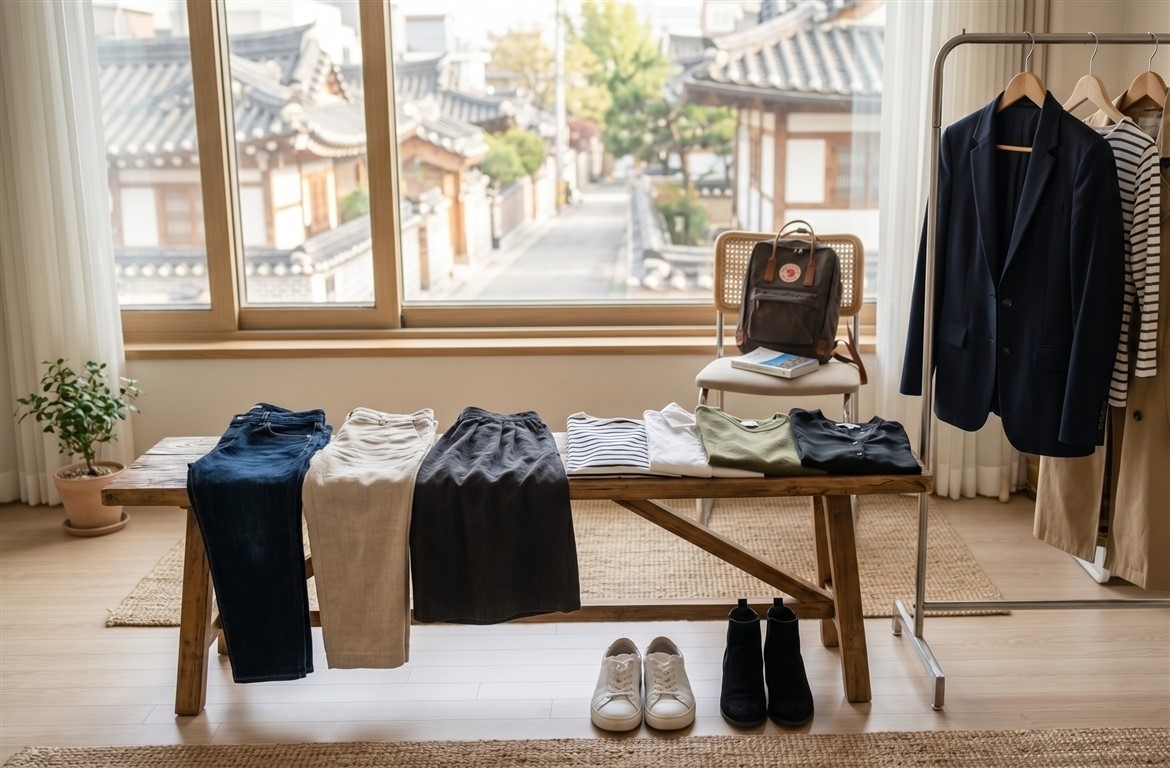
For a quick trip to Korea, build your wardrobe around three bottoms, four tops, one smart layering piece, one weather-appropriate outer layer, and two pairs of shoes. That combination comfortably covers sightseeing, café visits, casual dinners, and travel days without making your suitcase feel like a burden.
Staying for five to seven days? Then add one dress or a slightly smarter outfit, a second mid-layer, and your season-specific accessories. Rewearing clothes is totally normal here. Laundry facilities are easy to find in many areas, and most hotels will have options nearby. Pack versatile pieces: that shirt that looks good with both jeans and a skirt, those trousers that work equally well with sneakers or boots, and that one jacket that just makes everything look sharper.
For winter, the capsule wardrobe definitely shifts. One strong, statement coat will do most of the visual heavy lifting. Underneath, pack thermal tops, cozy sweaters, warm trousers, wool socks, gloves, and a hat. Your photos will mostly feature your coat, so pick one you genuinely love. Sounds a bit vain, but it truly saves packing space.
Summer means a lighter capsule, but one that needs more thought. Sweat, rain, and humidity mean extra tops are super useful. Pack breathable pieces that can dry overnight, a light layer for those aggressively air-conditioned interiors, and footwear that can survive wet pavement. Trust me, a small laundry plan beats a suitcase full of damp cotton any day.
Seoul vs Busan Travel Outfits
| Seoul | Busan |
|---|---|
| Sharper city layers: blazers, trench coats, dark denim, tailored trousers. | Softer coastal pieces: linen shirts, casual dresses, shorts, light jackets. |
| Clean sneakers or boots for subway stairs, palaces, shopping streets. | Sandals, sneakers, and slip-on shoes for beaches, markets, and hills. |
| Neutral outfits fit cafés, museums, galleries, and dinner neighborhoods. | Color and relaxed fabrics feel natural near Haeundae and Gwangalli. |
| Winter needs serious insulation and wind protection. | Winter can feel milder, yet sea wind still asks for a warm layer. |
What Not to Wear in Korea
- Painful shoes: Korea is absolutely a walking destination, even with its excellent subway system. Cobblestones, station stairs, palace grounds, bustling shopping alleys, and those late-night walks will punish bad shoes extremely fast.
- Single-use outfits: That huge, fancy dress, super delicate jacket, or bulky sweater you’ll wear only once just eats up precious suitcase space. Rewearable pieces make your travel much easier and leave room for all that great shopping.
- Clothes that can’t layer: The weather shifts, indoor cooling, and heated rooms make layering incredibly useful almost all year round. Pieces that only work on their own are simply less practical.
- Weak rain choices: Summer downpours and sudden showers can completely ruin suede, make long hems drag, and turn slippery sandals into a hazard. Always bring at least one solid rain-ready plan.
- Overly bare outfits for quiet sites: They might feel awkward at temples, traditional houses, or more formal restaurants. A light cover-up easily fixes this without you needing to change your entire look.
FAQ
What do tourists wear in Korea?
Tourists in Korea typically wear casual, neat clothes, focusing on comfortable walking shoes and versatile layers. Jeans, trousers, skirts, dresses, tees, shirts, sweaters, light rain jackets, and appropriate season-specific coats all work well. The best outfits look tidy but still handle long days exploring outside.
Can I wear sneakers in Korea?
Absolutely, yes! Sneakers are hands down one of the best footwear choices for Korea. Clean white sneakers, sporty trainers, cool retro styles, and classic leather sneakers are all super common across Seoul, Busan, and other cities. Always prioritize comfort over just brand hype.
What should I wear in Seoul?
Opt for polished casual outfits in Seoul: think trousers or neat jeans, a clean top, a stylish jacket or coat, and comfortable shoes. Throw in a crossbody bag and a light extra layer for the subway or when you pop into cafés. Seoul’s style leans towards neat, modern, and very practical.
What to pack for Korea in summer?
For summer, pack breathable shirts, loose trousers, shorts, dresses, a light cardigan, a compact umbrella, good rain protection, and shoes with solid grip. Summer is notoriously humid and rainy, so quick-dry fabrics are incredibly useful. Avoid heavy denim on the hottest days unless you actually enjoy regret.
What to pack for Korea in winter?
For winter, pack a really warm coat, thermal base layers, cozy sweaters, lined pants, thick wool socks, gloves, a scarf, a hat, and sturdy boots or reliable sneakers. Seoul and inland areas can get intensely cold, especially when the wind hits open streets and bridges.
Do I need waterproof shoes?
Waterproof shoes definitely come in handy during summer and whenever the forecast predicts rain. You won’t need them every single day, but water-resistant sneakers or boots make navigating rainy travel much, much easier. In winter, good grip is just as vital as warmth.
Is Korea conservative on clothing?
Korea boasts modern fashion and plenty of bold street style, yet some settings definitely feel more modest. Low-cut tops can sometimes draw more attention than short skirts. For temples, palaces, and traditional spaces, covered shoulders and generally tidy clothing will make you feel more comfortable.
What colors work for Korea outfits?
Black, white, cream, beige, gray, navy, denim blue, and soft brown are super easy to style in Korea. You can always add pops of color with a scarf, a bag, some lipstick, a cap, or a bright sweater. Keeping to a compact color palette simplifies packing and helps all your outfits look more intentional.
0 Comment