

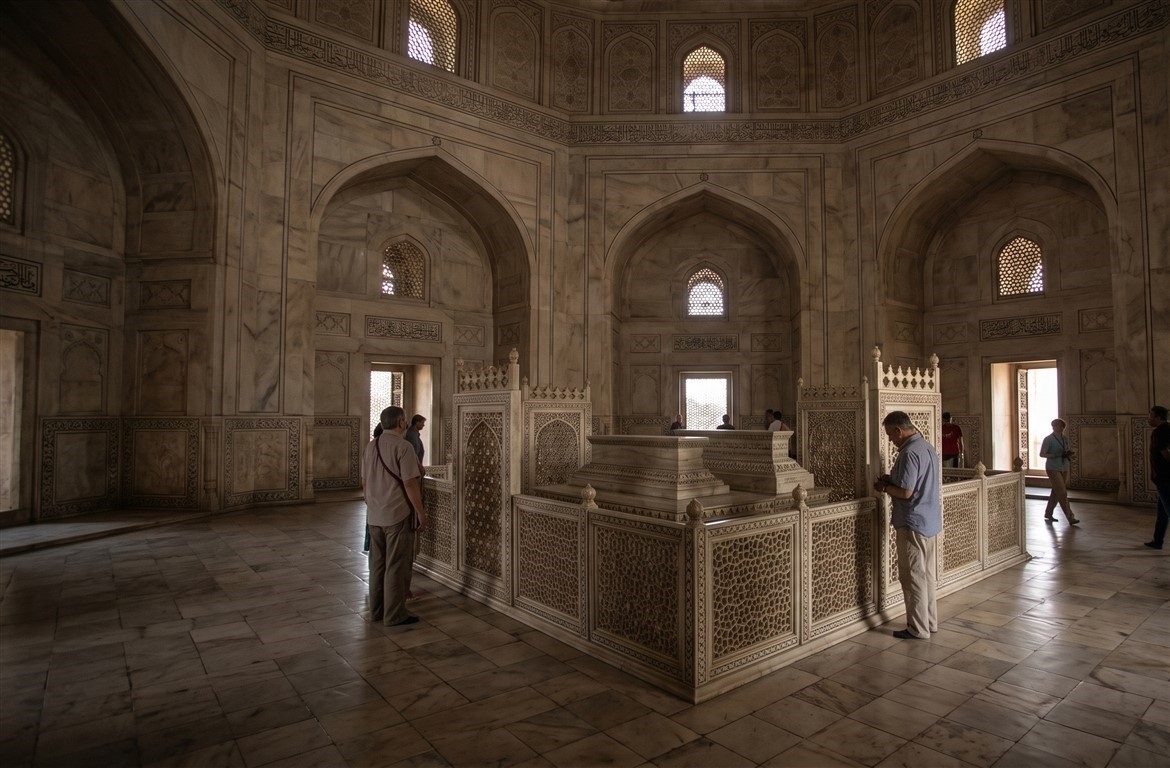

Exploring the Taj Mahal’s Interior
Absolutely, you can step inside the Taj Mahal. A standard visitor ticket gets you into the sprawling complex, the lovely gardens, that impressive marble platform, and, if you’ve got the correct add-on, the main mausoleum itself. Your time inside the tomb chamber will feel managed, calm, and probably quicker than you expect. This isn’t a place for wandering through endless rooms, long corridors, royal apartments, or hidden passages. Remember, the Taj Mahal is a grand mausoleum, not some sprawling palace.
Knowing that one simple detail clears up so much for many visitors. Folks often see that massive white marble structure from afar and picture a huge, elaborate interior tour. But once you’re inside, the experience is actually quite focused. You’ll enter the central chamber, take in the intricate marble screens and the symbolic cenotaphs for Mumtaz Mahal and Shah Jahan. You move with the flow, then step back out onto the platform and into the gardens. It still hits you hard. It’s just not vast on the inside.
Stepping Inside the Monument
The Taj Mahal’s interior welcomes visitors during regular hours, though it’s important to remember the monument closes for general viewing on Fridays. On typical visiting days, doors open half an hour before sunrise and close half an hour before sunset. That timing is crucial because Agra’s light changes dramatically throughout the day: a pale silver at dawn, stark and bright around noon, then turning a warm honey in the late afternoon.
Access to the main mausoleum is treated as distinct from the broader complex entry. Travelers really should check current ticket options ahead of time, as the mausoleum portion has been a separate add-on in recent ticketing systems. The marble tomb building forms the very heart of the visit, so skipping it to save a small fee feels a bit like flying all the way to Agra just to eat lunch in the parking lot. That’s my honest opinion. Still, the gardens and exterior views alone can be more than enough for anyone with mobility challenges or a super tight schedule.
Inside the mausoleum, guards and barriers keep everyone moving. The vibe can shift from hushed reverence to a bit of a mild scramble, especially when big tour groups arrive. Nobody really gets much time to linger at the cenotaphs during peak hours. Going early helps. So does having a good dose of patience.
What You’ll See Inside
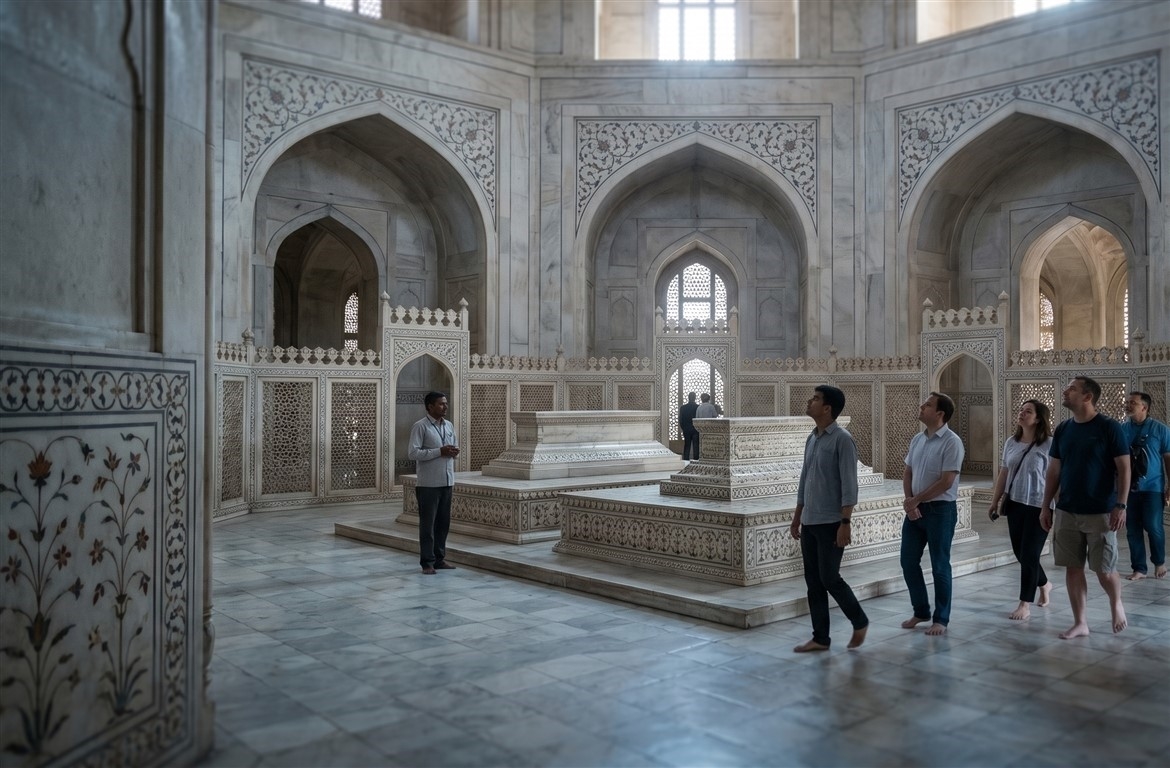
The Main Tomb Chamber
The white marble mausoleum is exactly what most people mean when they ask, “Can I go inside the Taj Mahal?” And yes, you can. Visitors walk up to the raised marble platform, deal with their shoes as instructed (either covers or removal), and then enter the central tomb chamber via the designated path. Inside, the marble feels cooler, the light becomes softer, and the intricate carved surfaces somehow appear even more delicate than they do in any photograph.
This chamber houses the cenotaphs of Mumtaz Mahal and Shah Jahan. Just so you know, these aren’t the actual burial spots that regular visitors get to see. The real graves lie in a lower chamber, entirely separate from the typical tourist route. That subterranean space isn’t part of your standard visit. Public access there has only happened during rare ceremonial events, never for everyday sightseeing.
The Inner Sanctum
The inner chamber is quite compact. Its intricate pietra dura inlay, delicate carved marble latticework, Quranic calligraphy, and echoing acoustics define the experience far more than its size. It’s easy to miss the finer details if the line is moving quickly. Take a moment to really examine the stonework around the screens, then look up. This building was designed with geometry and ancient ritual in mind, not with modern visitor flow. That small mismatch is now just part of the whole experience.
Keep your camera put away inside the main mausoleum. Guards repeat this rule constantly, and anyone who ignores it can quickly find themselves getting some very sharp attention. While you can carry phones within the complex, snapping pictures inside the chamber is a definite no-go. This ban helps protect the space, reduces crowding, and stops the tomb from turning into a chaotic, flash-lit queue.
Mosque and Guest House
On the Taj Mahal’s west side, you’ll find the stunning red sandstone mosque. Over on the east side sits the jawab, often simply called a guest house or a balancing structure. Their perfect symmetry truly frames the white mausoleum beautifully. The mosque remains an active religious site, so visitors absolutely need to act respectfully. Your shoes, noise levels, and how you take photos all matter here.
These flanking buildings truly show why the Taj Mahal complex feels so wonderfully complete. Of course, the famous marble tomb naturally grabs all the attention, but the entire layout is a meticulously balanced Mughal masterpiece: the grand gate, serene gardens, flowing water channels, the main platform, the mosque, and the river’s edge. Take away even one piece, and that perfect rhythm just breaks.
Gardens, Platforms, and River Views
The gardens are open with your main ticket and truly deserve your time. Many visitors rush straight for the central pool to get that classic photograph, then push onward to the mausoleum. Take a moment to slow down. The charbagh garden layout, the long, reflective water channel, the stately cypress lines, and the changing perspective of the dome all frame your approach beautifully.
Behind the mausoleum, the Yamuna River offers a quieter, more reflective edge to the monument. The back platform can feel less theatrical than the front, but it powerfully shows how the Taj Mahal truly sits right on the river rather than just floating in some postcard void. On hazy days, the far bank might look a little faded. On a clear morning, Mehtab Bagh across the river makes perfect sense as another superb viewpoint.
Things You Can’t Do Inside
The Taj Mahal stands as both a protected heritage monument and an active place of memory. This means its interior isn’t treated like some museum gallery where you can just wander freely. You absolutely cannot touch or scratch the marble surfaces, lean on protected screens, sit where barriers block access, or turn the mausoleum into your personal photo studio. Loud conversations inside the tomb chamber are strongly discouraged. That rule sounds a bit harsh until you hear ten overlapping tour groups chatting under a marble dome.
Food, tobacco products, drones, tripods, large bags, phone chargers, wires, and many bulky items are either restricted or completely banned at security. Rules can be enforced with very little patience, so just bring less stuff. That’s honestly the simplest strategy.
- No photos inside the main mausoleum. That no-photo rule applies even if you see others trying to sneak a shot. Outside, photography is totally fine and part of the experience, but the tomb chamber operates by a different standard.
- Don’t touch carved marble or inlay work. The stone has endured centuries of weather, pollution, cleaning, and countless visitors. Fingers leave oils and grit. One tiny touch might seem harmless; millions of tiny touches definitely are not.
- Avoid carrying a large daypack. Security checks are thorough, and dealing with storage options can really waste your precious time. A small bag with just the essentials is much easier, cleaner, and calmer.
- Leave drones or tripods behind. Drone use around the Taj Mahal is restricted, and tripods just create crowd and security headaches. Don’t even factor them into your plan.
- Friday is not a normal visiting day. The entire monument is closed for general viewing on Fridays. Instead, plan to explore Agra Fort, Mehtab Bagh, or the bustling old city.
Taj Mahal Tickets and Entry for 2026
Taj Mahal tickets are categorized by visitor type, with different prices for Indian citizens, guests from SAARC and BIMSTEC countries, and other international travelers. Access to the main mausoleum has been handled as an additional ticket component, so if you plan to enter the tomb chamber, make sure you choose the option that includes it. It’s best to sort this out before you get to the security line if you’re buying online. Nobody enjoys figuring out ticket details under the hot Agra sun with a queue of people breathing down their neck.
Buying online is definitely the smoother approach for 2026. It cuts down on time spent near the gate, helps you plan better, and keeps your visit from starting with a scramble at the ticket counter. On-site counters have historically operated at the East and West gates, with the South Gate not typically used for regular entry in recent public visitor arrangements. Gate usage can shift based on authority decisions, so the current official ticket portal and local notices are your most reliable references on the day you visit.
Foreign visitor tickets have often included nice extras like shoe covers or a water bottle under certain arrangements. Don’t build your day around these small perks. Focus instead on timing, managing the heat, and navigating the crowds.
Entry Gates and How to Get In
East Gate Access
Many travelers staying in hotels on Agra’s east side prefer the East Gate. It can feel a bit smoother at sunrise, though crowd levels always vary with the season and tour group movements. From the drop-off zone, visitors either walk or use approved electric transport to reach the security area. Regular motor vehicles are kept away from the monument zone to cut down on pollution near the precious marble.
West Gate Access
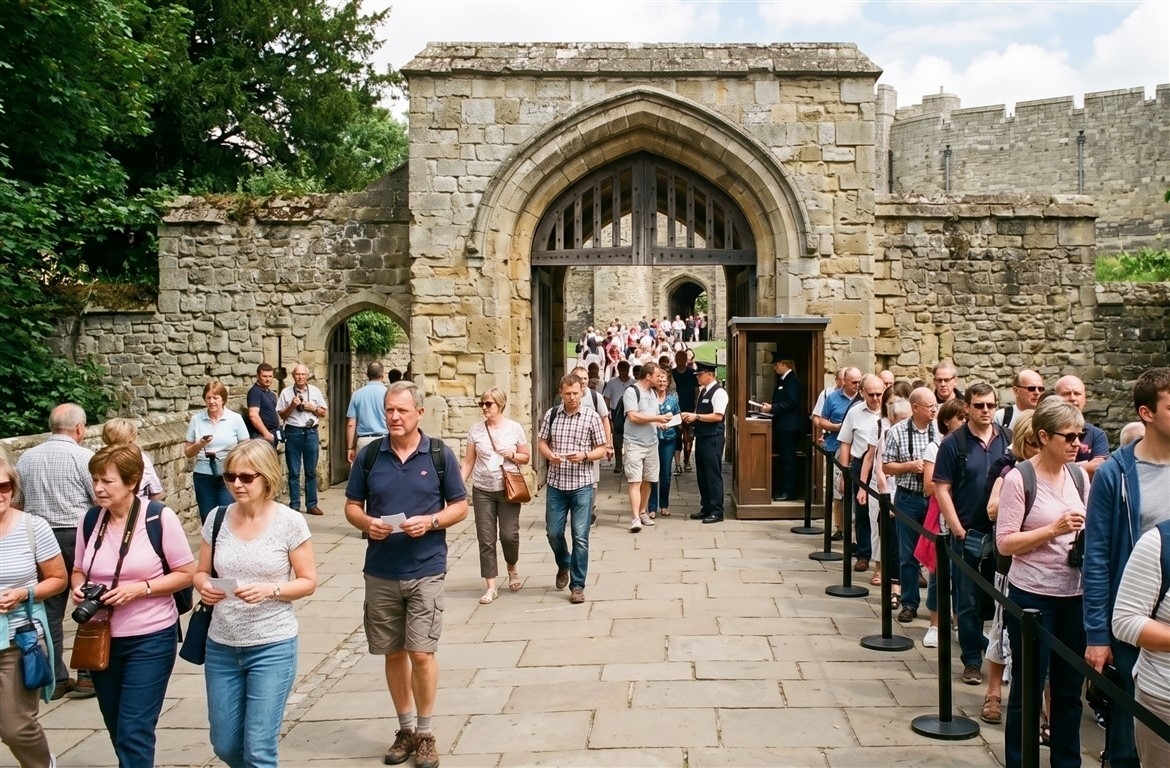
The West Gate is frequently used by domestic visitors and can definitely get busier, particularly during holidays and weekends. It’s still a very practical gate, just don’t expect it to be the quiet secret some travelers hope for. Arrive early, carry minimal items, and have your ticket ready to go.
South Gate Access
The South Gate area connects with the older streets and vibrant market life surrounding the monument, but it hasn’t served as a regular entry gate under recent visitor arrangements. It’s mostly been an exit route. Travelers staying nearby should absolutely check local access information before assuming they can enter there.
Security Checks
Security comes before the beauty. Bags get screened, visitors pass through checks, and any banned items will be confiscated. The line moves much faster when people aren’t trying to unpack half a hotel room at the inspection table. Just keep your passport or ID, phone, wallet, ticket, any essential medications, and sun protection handy. That’s usually all you need for most visits.
Best Time to Visit
Sunrise is famous for a solid reason. The temperature is much more pleasant, the light is soft, and that first view through the great gate can still give you goosebumps, even if you’ve seen the image a thousand times. The catch: everyone else has heard the same advice. So, sunrise isn’t exactly empty. It’s just significantly better than the brutal heat and massive crowds of later midday flows.
Late afternoon has its own distinct charm. The marble starts to glow with warmer colors, shadows stretch out, and visitors on quick day trips might begin to head out. Sunset light from inside the complex can be absolutely stunning, while Mehtab Bagh across the Yamuna provides a completely different perspective after your main visit.
Winter brings cooler walking weather, though you might encounter occasional fog. A dense morning haze can completely hide the dome until the sun finally lifts it, which can either be a bit disappointing or strangely beautiful, depending entirely on your mood. April through June can be intensely hot. Monsoon months deliver humidity, clouds, and lush, greener gardens. October through March offers the most comfortable travel window for many visitors, with December and January requiring some flexibility for potential morning mist.
| Area | Visitor Access | Useful Note |
|---|---|---|
| Main mausoleum | Open with the right ticket | The visit is structured and can feel quick with large crowds. |
| Inner tomb chamber | Accessible via the guided visitor path | Absolutely no photography allowed inside this chamber. |
| Lower grave chamber | Not part of your standard visitor experience | Regular visitors see the symbolic cenotaphs upstairs. |
| Gardens and water channel | Open with your complex entry ticket | Best enjoyed before the midday heat really kicks in. |
| Mosque and jawab | You can enter if you behave respectfully | The mosque is an active religious spot, not a casual hangout. |
| Night viewing | Limited dates and separate rules apply | Offered on specific full moon nights when scheduled. |
What to Bring and What to Leave
The ideal Taj Mahal bag is hardly a bag at all. Agra truly rewards light travelers. Security checks are quicker, walking around is easier, and you’re far less likely to lose something while juggling shoe covers, your camera, ticket, and phone. A small crossbody bag or a slim pouch works much better than a loaded backpack.
- Keep your ticket and ID handy. Make sure they are super easy to reach. Foreign visitors should keep their passport or other accepted identification available, as ticket category checks and security screening can be quite direct.
- Bring sun protection. A hat, sunglasses, and sunscreen make a huge difference on that bright marble platform and in the gardens. The white stone reflects sunlight fiercely around midday.
- Wear comfortable shoes. Your visit involves quite a bit of walking from the gate area, across gardens, up to the platform, and through queues. Pretty shoes lose their charm very quickly on hot paving.
- Dress respectfully for the site. There isn’t some theatrical dress code for tourists, but modest clothing certainly suits the mausoleum, mosque area, and the general local atmosphere. Light cotton or linen fabrics work perfectly in warmer months.
- Leave snacks, bulky gear, and extra electronics behind. Food, large bags, tripods, drones, chargers, and various other gadgets just create problems at security. A phone and a small personal camera are much simpler to manage.
Photography Rules and Guides
Taking photos outside the mausoleum is genuinely one of the great joys of visiting the Taj Mahal. The grand gate perfectly frames the dome, the long central pool provides that iconic reflection, and the marble platform opens up incredible new angles towards the minarets and the river. Early morning light softens the building. Harsh noon light tends to flatten it. Late afternoon gives the stone a wonderfully warm glow.
Inside the main mausoleum, however, put that camera away. No phone shot is worth the embarrassment of being stopped under the dome. The chamber is dimly lit, often crowded, and deeply sacred in its tone. Just look instead. Yes, that sounds old-fashioned. But it truly works.
Licensed guides can add tremendous context to your visit, especially concerning Mughal architecture, calligraphy, garden symbolism, and the moving story of Shah Jahan and Mumtaz Mahal. Just be aware that a rushed guide can completely ruin your pace. Agree on a clear plan before you even enter: how much time for photos, how long inside the mausoleum, and some moments to simply step back from the crowd. Audio tours and reputable mobile options suit travelers who prefer a quieter experience. You’ll find professional photographers waiting around the monument, and some are incredibly skilled at capturing those classic angles. Always agree on the price and the number of images before you pose. No awkward bargaining afterward, please.
How Much Time You’ll Need
A really quick visit takes about 90 minutes if the lines are manageable and the weather cooperates. A much better visit, though, will take two to three hours. That allows ample time for the grand gate reveal, garden photographs, exploring the mausoleum’s interior, seeing the mosque side, enjoying the river platform, and even a few minutes of just doing absolutely nothing. Doing nothing here is seriously underrated.
Travelers coming from Delhi on a day trip absolutely must protect their morning schedule. Train arrivals, road traffic, ticket checks, and meeting up with guides all eat into your time. The monument itself shouldn’t be squeezed into a frantic hour unless you truly have no other choice.
A relaxed pacing plan might look like this: enter right at opening or later in the afternoon, pause at the great gate for that first framed view, snap your garden photographs before the crowds thicken, visit the mausoleum interior, then loop towards the side buildings and the river platform. Save that central pool shot for your return if the crowd has shifted. It often does.
Night Visits to the Taj Mahal
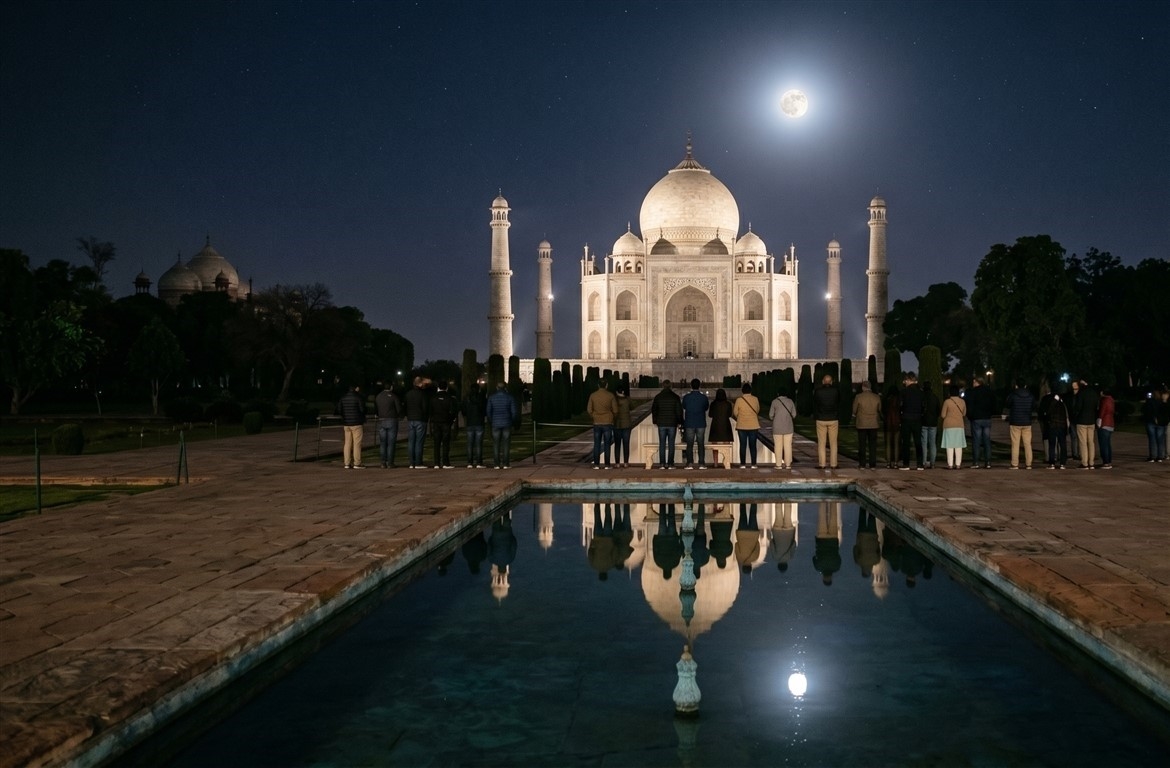
Night viewing is a completely different experience from a normal daytime visit. It’s extremely limited, requires separate tickets, and is tied to the full moon period, with access managed under much stricter rules. Visitors don’t just wander freely through the entire complex at night. This experience is shorter, much quieter, and far more controlled.
The romance of moonlit marble is absolutely real, but weather conditions can sometimes dampen the effect. Clouds, haze, and city light pollution all play a part in what visitors ultimately see. Anyone planning a night visit should definitely treat it as a special add-on, not as a substitute for daytime entry. Daylight reveals the exquisite inlay work, the perfect garden geometry, the river setting, and the sheer scale of the platform. Moonlight offers pure mood. Both are wonderful in their own ways.
Getting to Agra and the Monument
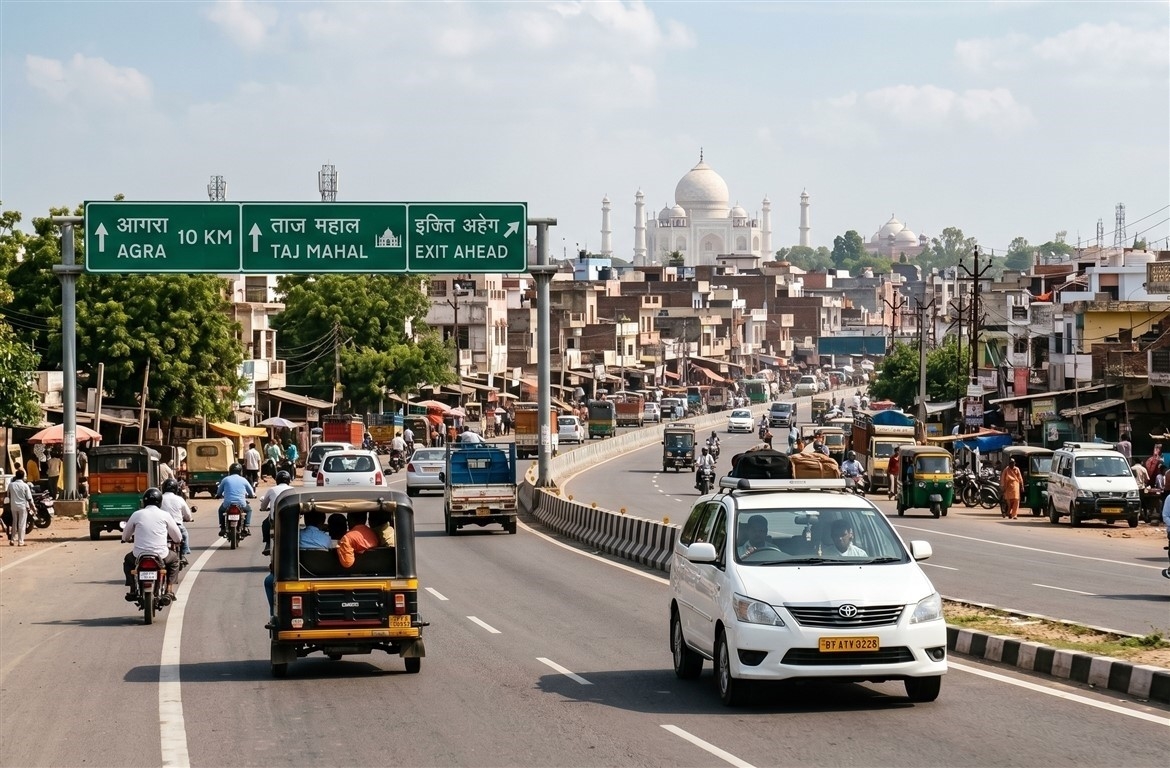
Agra sits in Uttar Pradesh, roughly a half-day’s journey from Delhi by road or rail. This depends heavily on traffic, your train choice, and transfer times. Fast trains from Delhi to Agra remain a super popular choice for day visitors. Private cars are also common for travelers who want to combine the Taj Mahal with Agra Fort or Fatehpur Sikri. The highway can be smooth; however, that last stretch into city traffic can still really test your patience.
Within Agra, vehicles are restricted near the Taj Mahal to protect the monument zone itself. Expect a final transfer by walking, battery-powered bus, electric cart, or even a cycle rickshaw from designated areas. Hotels located near the East Gate can make a sunrise visit much easier. Staying overnight in Agra removes the worst pressure from a Delhi day trip and provides a wonderful opportunity for a second look from Mehtab Bagh.
Other Nearby Sights for Your Day
Agra Fort naturally pairs beautifully with the Taj Mahal. This isn’t just some filler stop. The red sandstone and marble fort showcases Mughal power from a completely different angle: grand palaces, serene courtyards, impressive audience halls, and views right back towards the Taj Mahal. Visit it either before or after the Taj, depending on the heat and your ticket timing.
Mehtab Bagh, the garden across the Yamuna River, gives you that gorgeous rear view of the Taj Mahal. Sunset is the big draw here. The atmosphere is noticeably quieter than the main complex, with the river flowing peacefully between you and the marble. It can feel almost like the monument is letting out a long, quiet sigh after a busy day of crowds.
Fatehpur Sikri demands more time, as it’s located outside Agra. It works much better as part of a full Agra day or an overnight stay. This abandoned Mughal capital offers stunning courtyards, majestic gateways, and dramatic red sandstone architecture without ever repeating the Taj Mahal experience.
Frequent Traveler Questions
Can you touch the marble inside?
No, please don’t. Visitors should never touch, scratch, lean on, or rub the marble surfaces. This monument is protected, and its interior surfaces require extremely careful preservation.
Can you take photos inside?
You can definitely take photos in many outdoor areas of the complex, but photography is strictly prohibited inside the main mausoleum. Keep your phones and cameras tucked away in the tomb chamber.
Is there a time limit for visiting?
Ticketing and crowd control systems have included time limits in recent visitor arrangements. Many travelers typically spend two to three hours inside the complex. Do check the current ticket terms before you arrive, as enforcement details can certainly change.
Can you visit at night?

Night viewing is offered on limited dates around the full moon, with separate tickets and much stricter access rules. It’s not the same extensive experience as a full daytime visit.
Is the Taj Mahal accessible?
Parts of the complex are manageable for visitors with mobility needs, and wheelchairs have been available through visitor services. However, the raised marble platform and the crowds can still pose challenges. Arriving early and traveling with a companion will make the visit considerably easier.
Can you bring food or bags?
Large bags and food items are generally poor choices for a Taj Mahal visit and might be refused at security. Just carry a small bag with only your absolute essentials. It’s always best to check current water rules and permitted personal items before entering, as security staff always make the final call.
What the Interior Feels Like
That very first sight of the Taj Mahal from the main gate gets all the attention, but the interior is where the monument gains its real human weight. Outside, it’s all about symmetry and the sheer perfection of marble. Inside, the experience narrows down to grief, ritual, incredible craftsmanship, and crowd control, all at once. It’s a strange mix. One guard might be politely asking people to keep moving along, while someone next to you whispers quietly under the dome, and another visitor is trying to understand why the actual graves aren’t visible. Travel is rarely tidy, after all.
The best way to enter the Taj Mahal is with realistic expectations. Don’t expect sprawling palace rooms. Don’t expect absolute silence during peak hours. Do expect a brief, profoundly memorable passage through one of the world’s most carefully protected mausoleums. Buy the correct ticket, arrive with as little baggage as possible, respect that crucial no-photo rule inside, and give yourself plenty of time to explore outside the tomb chamber. The marble really needs both distance and closeness to be fully appreciated.
0 Comment