

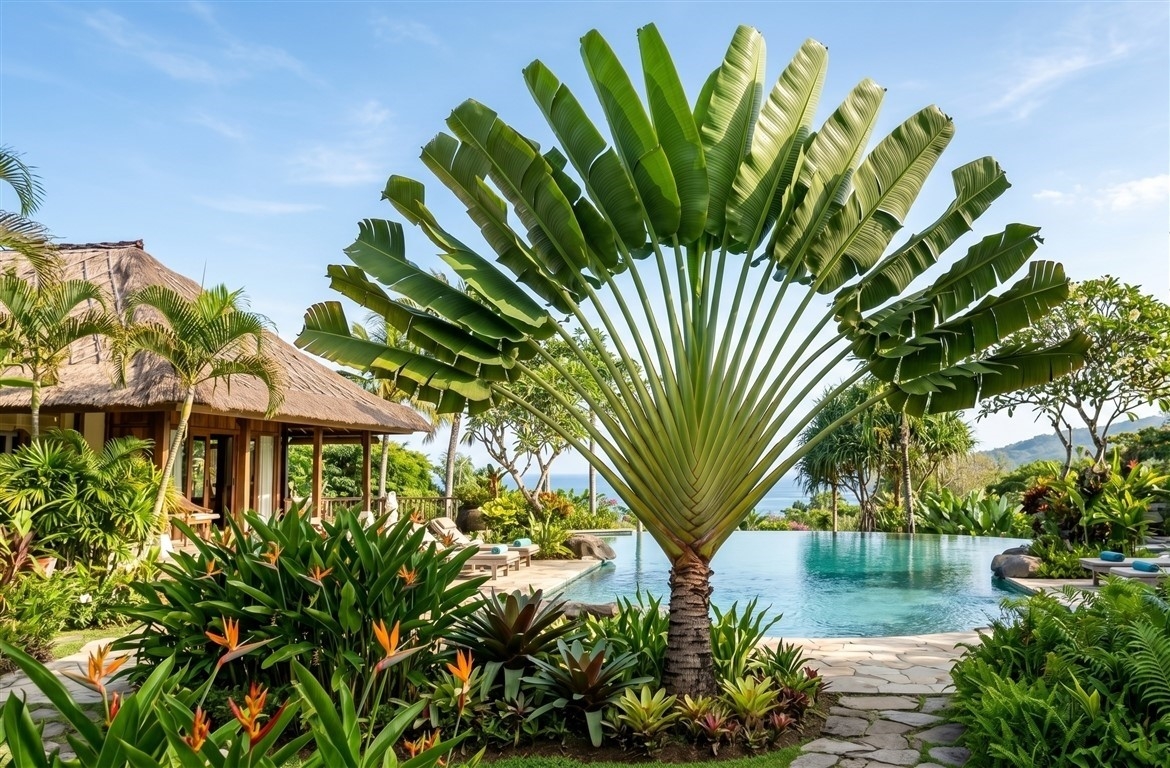

Travelers Palm: A Unique Tropical Beauty
The travelers palm, officially known as Ravenala madagascariensis, stands out as one of the most striking tropical plants around. Its signature look? Those giant leaves spread out in a flat, upright fan, truly unforgettable. Picture a fully grown plant acting as a living piece of architecture; that’s why you often spot it near fancy resort entrances, beside sparkling pool gardens, on patios, in courtyards, and dominating huge, sunny yards. Here’s a little secret: it’s not actually a “true” palm, despite the common name. This plant belongs to the Strelitziaceae family, just like the bird of paradise, meaning its growing habits and care needs are much more akin to a massive tropical flowering plant than any typical drought-tolerant palm you might imagine.
If you’ve got plenty of warmth, ample space, and a flair for bold, structured greenery, this plant is absolutely for you. This isn’t some tiny houseplant you squeeze into a narrow bed or a forgotten corner indoors. When you give the travelers palm the right climate and all the room it craves, it transforms into an incredible focal point. Strong vertical lines, lush foliage, and that unmistakable fan shape make it a showstopper.
Meet the Travelers Palm
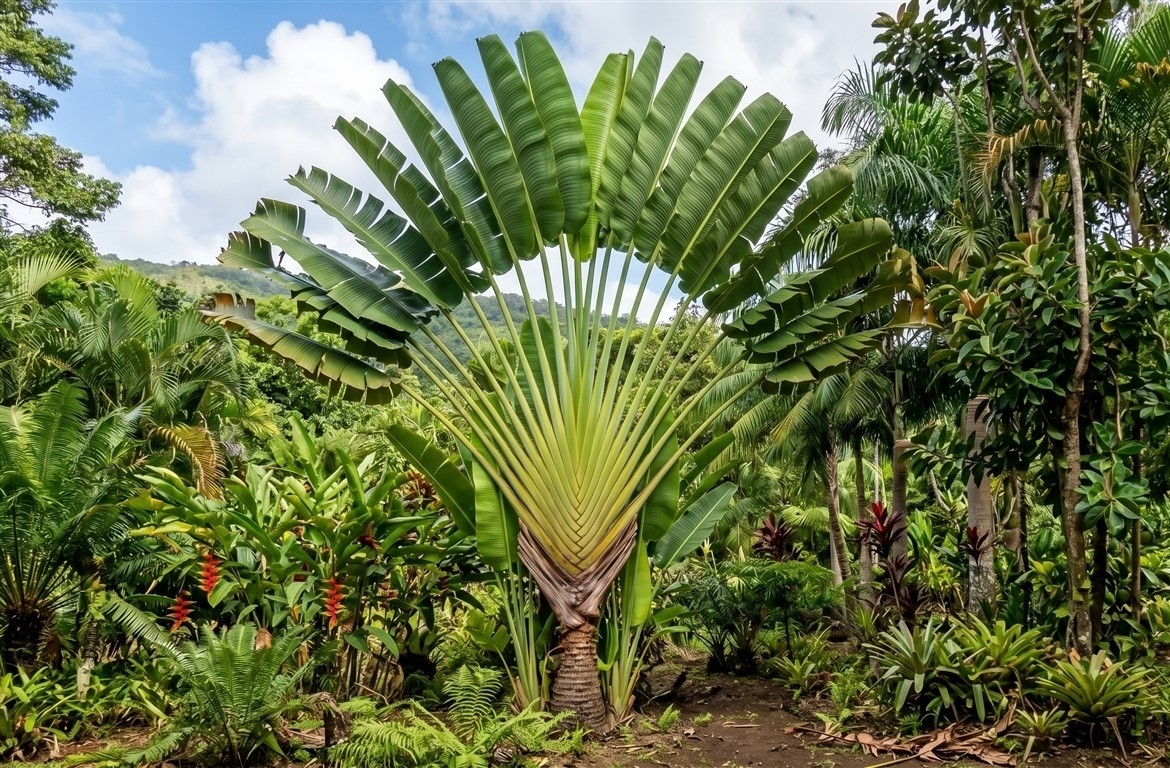
Ravenala madagascariensis is a truly enormous evergreen tropical plant that calls Madagascar home. It develops a sturdy, trunk-like base, which then sprouts long leaf stalks topped with broad blades. These blades unfurl in a single, dramatic plane, much like a hand fan. People call it travelers palm, traveller’s palm, travelers tree, or simply fan palm. The “travelers” part of its name comes from the way rainwater collects in its leaf bases; old tales suggested weary travelers could find water there during their journeys.
Heads up: that water in the leaf bases isn’t safe to drink in your garden! It can easily gather dust, insects, plant bits, and even bacteria. The plant’s real charm lies purely in its looks. Its towering fan, huge leaves, and undeniable tropical vibe make it one of the most visually powerful options for landscaping in warm climates.
Plant classification
We classify the travelers palm as Ravenala madagascariensis. It’s the most famous plant in the Ravenala genus, and it’s actually much more closely related to bird of paradise plants than to genuine palms. Real palms are part of the Arecaceae family, while the travelers palm sits firmly within the Strelitziaceae family.
Common plant names
- Travelers palm
- Traveller’s palm
- Travelers tree
- Fan palm
- Ravenala
Is it a real palm?
Nope, it’s not. Sure, this plant might have the towering height and a tropical feel that reminds you of a palm, but everything else—its leaves, its flowers, even its botanical family—is totally different. Those wide, banana-like leaves and boat-shaped flower bracts scream “bird of paradise,” not “coconut” or “date palm.”
Ravenala Basics
| Feature | Details |
|---|---|
| Botanical name | Ravenala madagascariensis |
| Plant family | Strelitziaceae |
| Plant type | Big evergreen tropical perennial |
| Mature height | Often 15-30 ft in gardens; even taller in perfect tropical spots |
| Mature spread | Spans 15-25 ft when fully grown |
| Light | Full sun to bright partial shade |
| Hardiness | Thrives in USDA Zones 10-11 |
| Main use | Key focal point, tropical screen, courtyard feature |
Size at maturity
In most maintained landscapes, a travelers palm typically reaches a height of 15 to 30 feet, and its spread can easily take over an entire planting bed. However, if you’re in a super warm tropical zone with rich soil and really long growing seasons, it might get even bigger. That fan can stretch 15 to 25 feet across, so this plant absolutely demands serious elbow room on both sides.
How fast it grows
It grows at a moderate to fast pace, especially when it gets plenty of heat, sun, water, and nutrients. Young plants usually spend some time beefing up their roots and building a solid base before the fan really starts gaining height. Once settled, you’ll see much more noticeable growth during the warmer months.
Leaves and fan shape
The leaves are definitely the main show! Each one has a long, strong stalk and a really broad blade, looking a lot like a banana leaf. All these leaves stand in a neat, flat row, creating that famous fan shape. Wind can definitely tear these blades, so don’t be surprised if even perfectly healthy plants show some splits along their leaves.
Flowers, fruit, seeds
Once mature, these plants can produce stunning white flowers, held within stiff, boat-shaped bracts. After the flowers fade, woody capsules might form. Inside, the seeds are famous for their vibrant blue coverings—a truly eye-catching detail when the fruit finally opens up.
Safety and toxicity
Travelers palm is mostly grown for its good looks. It’s best that pets and children don’t chew on its leaves, seeds, or any other plant parts. If you’ve got this plant in a family garden, pick a spot where it’s easy to clean up any fallen leaves or old bracts.
Where Travelers Palm Comes From
The travelers palm hails from Madagascar, specifically the eastern and southeastern parts of the island. Its natural home boasts warmth, lots of rain, high humidity, and abundant light. These specific conditions perfectly explain why this plant absolutely thrives in frost-free climates but really struggles when it’s stuck in cold, dry, or cramped spots.
In the wild, this plant forms a strong, vertical fan that can truly tower above all the surrounding vegetation. Its flowers provide nectar, and the plant has a well-known ecological connection with local wildlife in Madagascar. In our gardens, though, it takes on a different role: providing impressive height, welcome shade, some privacy, and that uniquely striking tropical silhouette.
Native to Madagascar
Madagascar boasts an incredibly unique plant kingdom, with tons of species found nowhere else on Earth. The travelers palm is easily one of its most celebrated ornamental exports. This plant’s bold appearance quickly made it a favorite in tropical and subtropical landscapes far beyond its island home.
Climate conditions
This plant absolutely loves warm temperatures, needs consistent moisture, and thrives in fertile, well-draining soil. It really dislikes frost, long cold spells, and soggy ground around its roots. Strong winds can badly damage its big leaves, especially in exposed coastal gardens or on open hillsides.
Ideal Growing Conditions
The perfect spot for a travelers palm is warm, bright, incredibly spacious, and shielded from harsh winds. Once it’s established, it can easily take full sun, especially if you’re in a humid climate. Younger plants, or those kept in containers, often look much better with a bit of light afternoon shade until their root systems really get strong.
Soil quality truly matters. This plant adores fertile ground rich with organic matter, but excellent drainage is non-negotiable. Consistently wet soil will damage its roots and cause the plant to decline. A happy, healthy plant usually shows strong, upright leaf stalks, steady new growth, and a solid, firm base.
- Light: Full sun outdoors works best, though partial shade helps young plants in scorching climates.
- Temperature: Warm conditions are paramount; make sure to shield this plant from chilly nights.
- Humidity: Moderate to high humidity keeps the foliage looking cleaner and a vibrant green.
- Soil: Rich, loose, and well-drained soil, packed with organic matter.
- Wind: Providing shelter really helps improve its leaf appearance and prevents severe tearing.
Hardiness zones
Travelers palm truly shines in USDA Zones 10-11. If you’re in Zone 9b, it might just scrape by, but only in super protected microclimates, and even then, cold snaps can really hurt its leaves. In colder areas, you absolutely must grow it in a container and bring it inside—or into a greenhouse—before the cold weather hits.
Light needs
Outdoors, full sun brings strong growth and that tight, upright fan shape. Partial shade can work perfectly in really hot regions, especially for newly planted specimens. Indoors? Only a super bright sunroom, a conservatory, a greenhouse, or a very tall atrium will give it enough light to grow well long-term.
Temperature, humidity
Warmth is what fuels its growth. This plant thrives when temperatures consistently stay above a comfortable 60°F. Cold stress can show up as blackened leaves, limp growth, or completely stalled new shoots. If your indoor air is too dry, you might see brown edges, so container plants definitely need careful watering and humidity control.
Soil needs
Always use fertile soil that drains super quickly after watering. If you have heavy clay, you absolutely need to improve it before planting. Also, avoid any low spots where water tends to sit. For container plants, grab a chunky, well-draining mix instead of dense garden soil.
Wind protection is key
Those huge leaves easily catch the wind. A breezy site won’t usually kill the plant, but it can make the fan look pretty ragged. Planting it near a sturdy wall, a dense hedge, a sheltered courtyard, or any other wind-filtering feature will really help its foliage stay much more attractive.
How to Plant a Travelers Palm
Successful planting really starts with choosing the right spot. A young travelers palm in a nursery pot might seem manageable, but a mature plant needs serious height, width, and root space. Whatever you do, don’t put it under low eaves, next to narrow walkways, too close to windows, or directly against a fence. That magnificent fan needs plenty of room to open up naturally.
Planting during the warm season gives the roots ample time to get established before any cooler weather rolls in. Give the plant a good drink before you even think about removing it from the pot, keep the root ball completely intact, and make sure to plant it at the exact same depth it was growing in the container. Once it’s in the ground, water slowly and deeply, then mulch the root zone, being super careful not to cover the base.
Best planting spot
The absolute best spot is a sunny, open location that offers some wind protection and plenty of clearance for the fully grown fan. Leave at least 8-10 feet between the plant and any buildings, walls, or rooflines. If you’re planting rows or groups, give each plant enough distance so every fan can be admired individually, rather than being squished into a crowded mess.
Outdoor planting steps
- Pick a warm, bright spot with good drainage and enough room for the mature plant.
- Water the nursery pot thoroughly before you start planting.
- Dig a hole twice as wide as the root ball, but no deeper than the pot itself.
- Carefully slide the plant out and gently loosen only the tightest outer roots.
- Position the fan so it faces the direction where you’ll see it most often.
- Backfill with soil, water thoroughly halfway, then finish backfilling, and water again.
- Spread mulch around the root zone, making sure to keep it away from the trunk.
- Only stake the plant if it feels wobbly, and remove those supports once it’s firmly anchored.
Plant spacing tips
If you’re aiming for a single focal plant, surround the fan with plenty of open space so it can truly shine on its own. For screening, about 6-8 feet between plants can work, though wider spacing often gives a much cleaner, more architectural look. Planting too close together creates more shade, excessive leaf overlap, and definitely more maintenance.
Container planting advice
Grab a heavy container with nice, big drainage holes. The pot absolutely must be wide enough to prevent tipping, because those huge leaves act like sails in the wind. A young plant can happily live in a container for several years, but eventually, a mature travelers palm gets big and incredibly heavy.
Moving established plants
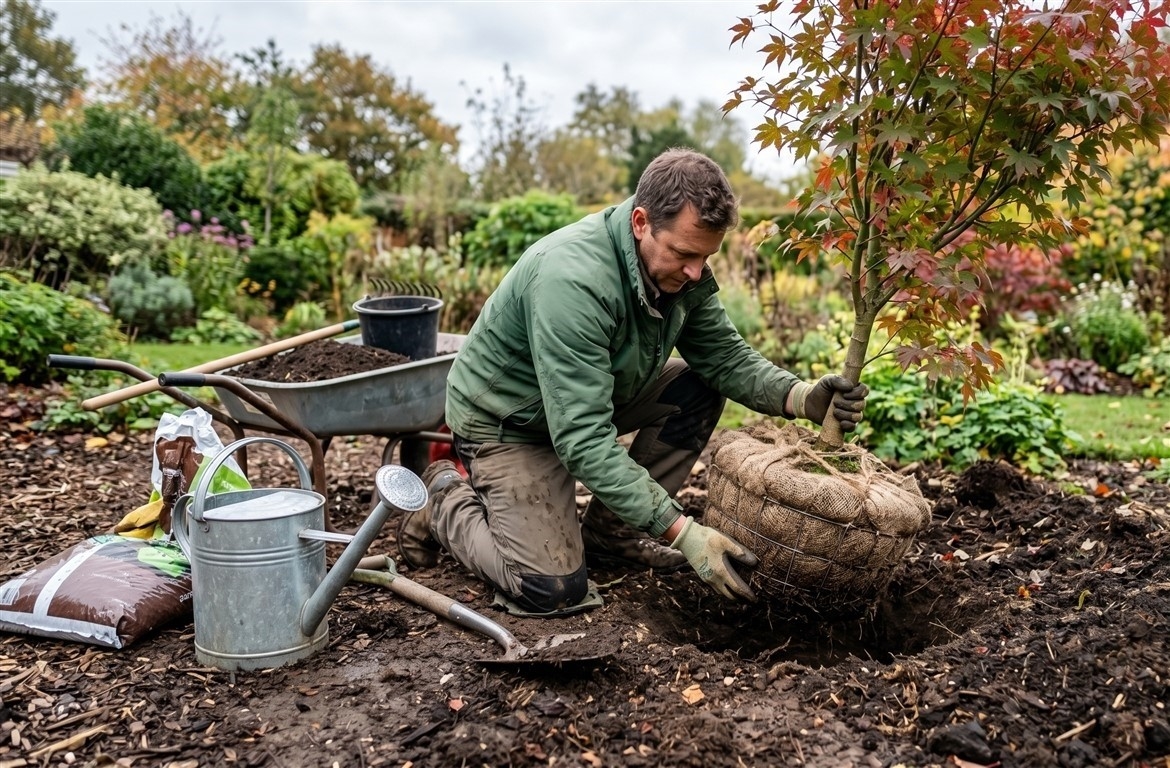
Transplanting large specimens can be pretty tough. Why? Because the plant has a massive crown, and its root system really doesn’t like being handled roughly. Try to move young plants whenever you can. Always keep the root ball firm, protect it from wind exposure after the move, and water consistently while those roots are recovering.
Travelers Palm Care
Caring for this plant is surprisingly simple, as long as it’s growing in the right spot. Water it deeply while it’s getting established, give it some food during the warm season, mulch properly, and snip off any damaged leaves when they pop up. Believe it or not, too much care can cause just as many problems as neglect, especially if you’re watering too often or going overboard with fertilizer.
This plant definitely tells you what it needs. Yellow leaves? That often points to water stress or maybe a nutrient deficiency. Brown edges might mean dry air, salt buildup, or inconsistent watering. Shredded leaves, on the other hand, usually just mean it’s been hit by too much wind, not some disease.
Watering habits
A newly planted travelers palm absolutely needs consistent moisture as its roots spread into the surrounding soil. Water slowly to make sure that moisture reaches the entire root ball. Once it’s established, the plant can handle short dry spells, but it truly looks its best with steady moisture during warm weather. Just remember to avoid any standing water around its base.
Fertilizing needs
Feed it during its active growth period. Use a balanced, slow-release fertilizer that’s specifically made for palms or other tropical landscape plants. Apply it around the root zone, not directly against the trunk. Container plants, though, need a lighter touch with fertilizer because salts can easily build up in potting mix.
Mulching benefits
Mulch really helps keep the soil cool and consistently moist. Go for organic mulches like bark, wood chips, or well-composted material. Always leave a clear gap around the trunk; this lets the base breathe and stay nice and dry.
Pruning and leaf removal
Grab clean tools and snip off any dead, broken, or really badly torn leaves. Don’t go crazy and cut off too many green leaves all at once. The fan absolutely relies on healthy foliage to power its growth, and heavy pruning will just ruin its natural shape.
Cleaning tasks
Old leaf bases and bits of debris can pile up around the plant. Make sure to clean the base during your regular garden rounds, especially before warm, humid weather sets in. This little habit cuts down on hiding spots for pests and keeps your plant looking super neat.
Growing Travelers Palm Indoors
You can definitely grow a travelers palm indoors while it’s young, but let’s be real: it’s rarely a forever houseplant. This plant gets really tall, super wide, and incredibly heavy. Plus, it needs way more light than most rooms can ever provide. A bright sunroom, a heated conservatory, or a greenhouse is a much better bet than some dim corner.
Indoor plants demand extra careful watering because potting mix can dry out unevenly. The top might look bone-dry, but the lower root zone could still be soaking wet. Always use a pot with good drainage, empty those saucers after watering, and regularly rotate the plant so its fan doesn’t constantly lean towards the strongest window.
Houseplant potential?
Yes, it can, but mostly when it’s young. It needs tons of bright light, really high ceilings, good humidity, and a huge container. A mature plant will almost certainly outgrow typical indoor living spaces.
Indoor light and space
Position the plant right by the brightest window you’ve got. Ideally, it should get several hours of direct or very bright filtered light. The fan truly needs room on both sides. If the leaves start pressing against walls or glass, they’ll tear and brown much faster.
Pot size, drainage
When you repot, pick a sturdy pot that’s just a tiny bit larger than the current root ball. Overly large pots hold too much moisture, which really ups the risk of rot. Drainage holes are absolutely essential.
Indoor humidity, water
Water it when the top few inches of the mix feel dry, then let any extra water drain away completely. Brown tips are a common sign in dry rooms. A pebble tray, grouping plants together, or even a humidifier can make a huge difference, especially during those heated winter months.
Moving it outside
Only move it outdoors once nights stay consistently warm. Acclimate the plant gradually over one to two weeks. This prevents its leaves from scorching in sudden, intense sun.
Using Travelers Palm in Landscapes
Travelers palm truly shines where its unique shape can be admired from a distance. Think a plain wall, an expansive lawn, a pool backdrop, or a modern courtyard – these settings let the fan really pop. Cluttering the base with too much busy planting actually weakens its visual impact and makes maintenance a headache.
Treat this plant as a focal point, not just some filler. It deserves a spot where its fan can perfectly frame an entrance, anchor a seating area, or add a dramatic tropical line against the sky. For smaller gardens, a more compact alternative is usually the smarter pick.
Tropical focal point
Just one travelers palm can totally define an entire garden space. It looks fantastic by front entries, along hotel-style driveways, on open patios, or in courtyards with enough vertical height. For the biggest impact, always orient the fan to face the main viewing angle.
Screen or accent plant
A few plants together can create a magnificent tall tropical screen, but spacing is critical. Plant them too close, and the fans will overlap and look messy. Wider spacing keeps each plant looking more like a distinct sculpture.
Pool and patio planting
Travelers palm brings that amazing resort-style vibe near pools and patios, but don’t plant it right on the edge. Leaves, bracts, and old debris can easily drop into the water or seating areas. Give it enough setback to make cleanup simple.
Plants that pair well
Good companions usually stay lower and offer a nice contrast to those big leaves. Consider options like croton, dwarf clusia, silver buttonwood, shell ginger, philodendron, dwarf schefflera, and other bird of paradise varieties. Stick to fewer plant types for a cleaner, more impactful design.
Best & worst spots
| Good Placement | Poor Placement |
|---|---|
| Open courtyard | Narrow side yard |
| Large pool backdrop | Under low roof eaves |
| Sunny entrance bed | Wind tunnel between buildings |
| Wide lawn edge | Small foundation bed |
| Protected tropical garden | Cold, exposed slope |
How to Propagate Travelers Palm
You can grow travelers palm from seed or by carefully separating offsets when they show up. Starting from seed is slower, but it’s great if you want to cultivate strong young plants right from the beginning. Dividing offsets is quicker, but it only works if the plant actually produces offsets with enough roots to thrive on their own.
Clean conditions are super important during propagation. Warmth, good drainage, and a dose of patience are far more helpful than constant watering. Young plants usually fail because of rot, cold soil, or being thrown into harsh sun too quickly.
Growing from seed
Use fresh seed whenever you can get it. Sow them in a clean, well-draining mix and keep the medium warm and just lightly moist. Germination can take a while, so resist the urge to constantly dig into the tray to check on them.
Dividing offsets
Only separate offsets once they’ve developed their own root system. Use a clean, sharp blade for the job and keep the newly divided plant shaded while it recovers. Water it lightly until you see new growth, which confirms the roots are doing their job.
Young plant care
Seedlings need warmth, bright filtered light, and consistent moisture. Pot them individually once they’re big enough to handle gently. Gradually increasing their light exposure helps prevent leaf scorch.
Common propagation errors
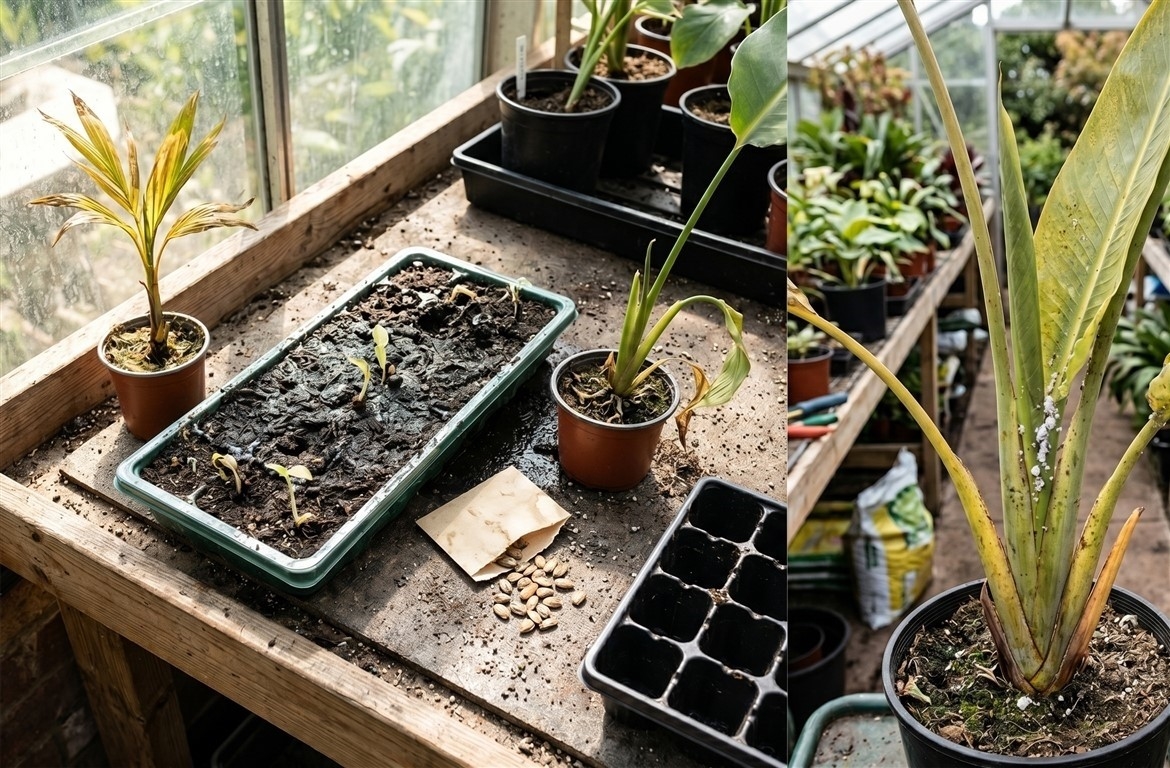
- Using old seed that won’t sprout.
- Keeping the growing mix constantly soggy.
- Separating offsets with too few roots.
- Putting young plants in intense sun too early.
- Using heavy soil that traps water around the base.
Pests and Diseases
Generally, healthy outdoor travelers palms are pretty tough. However, stressed plants are like a magnet for pests. Indoor plants tend to face more pest problems because dry air and weak light slow down their recovery. Always check leaf bases, undersides, and those tight folds where insects love to hide.
Root rot is definitely the most serious disease you’ll encounter. It usually kicks off because of poor drainage, overwatering, or a pot that just stays wet at the bottom. You’ll see leaf spots and fungal marks more often when air circulation is bad and the foliage stays damp for extended periods.
Scale insects
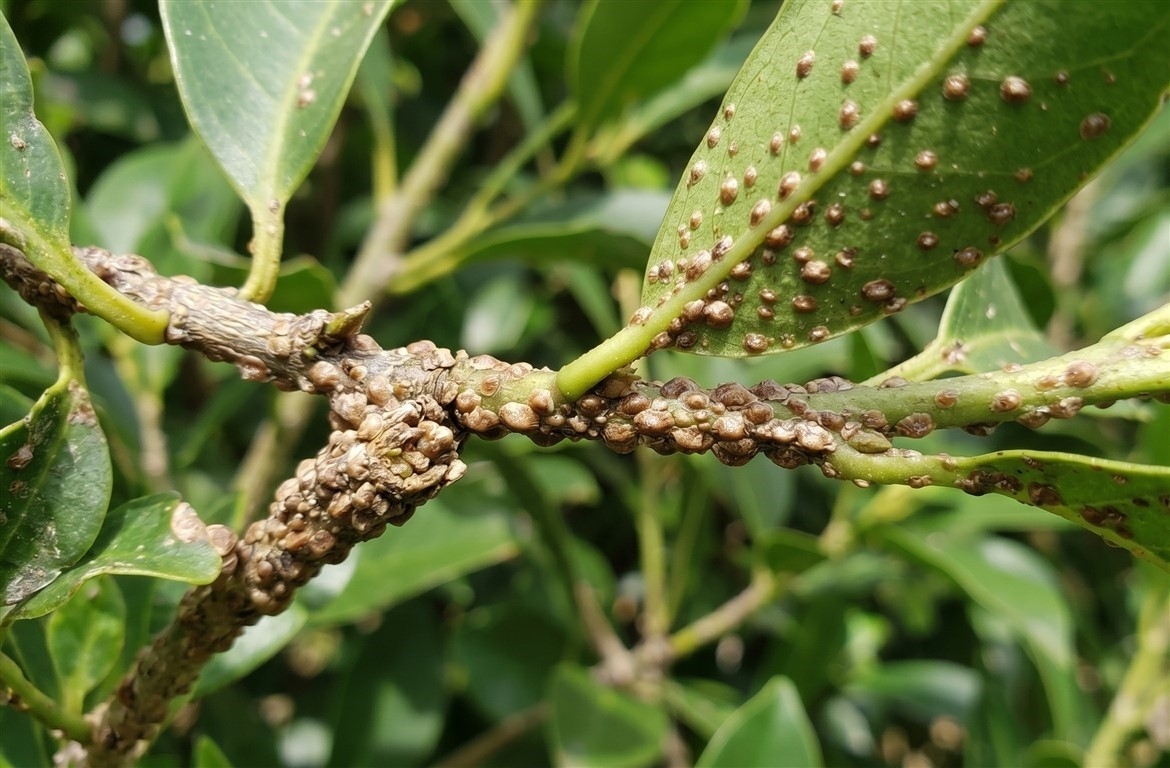
Scale looks like tiny bumps on stems, leaf stalks, and the undersides of leaves. For light infestations, you can simply wipe them away. More serious cases might need horticultural oil; just make sure to follow the product label carefully.
Mealybugs
Mealybugs appear as white, cottony clusters. They absolutely love to hide in leaf bases and fresh new growth. You can remove visible insects with a cotton swab dipped in alcohol. Then, check weekly until you’re sure no new ones have popped up.
Spider mites
Spider mites just thrive in dry indoor air. Your leaves might start looking dusty, pale, or have fine speckles. Rinse the foliage thoroughly, boost the humidity, and keep affected container plants away from your other houseplants.
Root rot issues
Root rot makes leaves yellow and wilt, roots turn soft, and the soil might smell sour. Cut back on watering immediately, improve drainage, and if it’s a container plant, repot it into fresh mix if necessary.
Leaf spots & fungi
Fungal spots often show up after wet weather or if you’re watering from overhead. Remove any badly affected leaves and work on improving air movement around the plant. When possible, water the soil directly instead of spraying the foliage.
Troubleshooting Common Problems
| Problem | Fix |
|---|---|
| Yellow leaves | Check drainage, reduce overwatering, and feed during warm growth. |
| Brown leaf edges | Water more consistently, flush container soil, and boost indoor humidity. |
| Torn leaves | Add wind protection or move container plants to a calmer spot. |
| Slow growth | Increase light, warmth, and nutrition during the growing season. |
| Leaning plant | Firm the root zone, rotate containers, and stake briefly if needed. |
| Cold damage | Wait for warmer weather, then trim away dead tissue. |
Yellow leaves
Yellowing usually points to issues with water, weak roots, cold soil, or a lack of nutrients. Before you even think about adding fertilizer, always check the soil moisture. Feeding a plant with damaged roots simply won’t fix the real problem.
Brown leaf edges
Brown edges often pop up because of dry air, a buildup of salts, not enough water, or sudden shifts in light. For container plants, make sure to water them thoroughly and then let them drain completely.
Torn or shredded leaves
A little bit of tearing is totally normal; those leaves are massive, after all. But if you see severe shredding, it means your plant is getting too much wind. A sheltered spot will help that fan stay much tidier.
Slow growth
Slow growth usually signals that the plant is too cold, too shaded, underfed, or still trying to get its roots established. Growth will absolutely pick up when warm weather returns and its root system becomes active.
Leaning plant
Leaning can happen right after planting, if the soil is too loose, or if an indoor plant is constantly reaching for a single window. Outdoors, a short-term stake can help. Indoors, just rotate the pot regularly.
Frost or cold damage
Cold damage typically shows up as blackened or collapsed leaves. Don’t rush into heavy pruning if more cold weather is on the way. Wait until temperatures stabilize, then remove all the dead tissue.
Travelers Palm vs. Similar Tropicals
People often mix up travelers palm with banana plants, bird of paradise, and even true palms. But these differences really matter! Each plant fits a different garden size and requires a unique maintenance approach. The travelers palm gives you that super strong fan shape, but it also needs the most room to grow.
| Plant | Main Difference |
|---|---|
| Travelers palm | Flat fan, huge scale, architectural form |
| Banana plant | Softer clump, quicker tropical foliage effect |
| White bird of paradise | Similar look, narrower habit, easier in some gardens |
| True palms | Different family, fronds instead of banana-like leaves |
Travelers palm vs. banana
Banana plants grow in softer clumps and usually offer a looser, more natural tropical appearance. The travelers palm, though, is much more formal and architectural because its leaves align in that striking single fan.
Travelers palm vs. bird of paradise
From a quick glance, a white bird of paradise might look similar to a travelers palm, but its leaves simply don’t form the exact same fan shape. Plus, it’s often a much easier fit for smaller tropical gardens.
Travelers palm vs. real palms
True palms have fronds and belong to a completely different plant family. Many genuine palms can handle drought or wind much better than a travelers palm, even though they won’t give you that distinctive flat fan silhouette.
Buying a Travelers Palm
Always buy your travelers palm from a nursery that really knows its tropical landscape plants. A healthy plant should have firm leaf stalks, fresh new growth pointing upwards, clean foliage, and absolutely no sour smell coming from the potting mix. Steer clear of any plants with sticky leaves, visible cottony insects, soft bases, or roots heavily circling the pot.
A larger, nursery-grown plant—like a 15-gallon or 25-gallon specimen—will usually get established in your landscape much faster than a tiny starter. Don’t hesitate to ask whether the plant grew in sun or shade, how long it’s been in its current container, and what cold temperatures it might have recently experienced.
Healthy plant checklist
- Firm, upright leaf stalks.
- Fresh, vibrant green new growth.
- No sticky residue or obvious pests.
- No rotten smell from the pot.
- Roots present but not severely circling.
- A straight, stable base.
Choosing the right size
Smaller plants cost less and are easier to move, but they definitely need more time to create a significant landscape impact. Larger plants provide instant structure, but they demand careful planting and might need stronger staking while they get established.
Nursery vs. seed plants
Nursery-grown plants are usually the easiest option for most homeowners because they’re already sized for immediate landscape use. Seed-grown plants, on the other hand, are perfect for patient gardeners who want the satisfaction of raising their own specimens from scratch.
Questions to ask the nursery
- Was this plant grown in full sun or shade?
- How often has it been watered here at the nursery?
- Has it recently been treated for pests?
- How long has it lived in this pot?
- What mature spacing do you recommend for our local conditions?
Practical Growing Notes
Before you even backfill the planting hole, make sure you orient the fan correctly. Many gardeners completely forget this small but crucial detail and end up with their best view facing a fence, a service path, or the neighbor’s wall. Take the time to turn the plant so that its fan perfectly frames the main view from your patio, driveway, or favorite window.
And please, don’t panic if a few leaves split. Large tropical leaves often tear along their natural lines during windy weather or heavy rain. Your plant can stay perfectly healthy even with some cosmetic damage. Just remove the very worst leaves, keep the base clean, and give your plant consistent care throughout the warm season.
- Keep mulch well away from the trunk base.
- Water deeply right after planting, then let the soil surface dry out a bit.
- Shield young plants from strong winds.
- Rotate container plants to prevent them from leaning.
- Clean up old debris from leaf bases and around the trunk regularly.
- Always check regional guidelines before planting in ecologically sensitive tropical areas.
Frequently Asked Questions
How big can travelers palm get?
Many landscape specimens reach heights of 15-30 feet, with a spread of 15-25 feet. In truly ideal tropical conditions, mature plants can actually grow even taller.
How quickly does travelers palm grow?
Its growth is moderate to fast in warm climates that provide strong light, consistent water, and fertile soil. Growth definitely slows down in cooler weather or dim light.
Does travelers palm need full sun?
Established plants handle full sun very well. Younger plants, however, might benefit from a bit of light shade during the hottest part of the day.
Can travelers palm survive cold?
This is strictly a warm-climate plant. Cold nights can damage its leaves, and frost can severely injure or even kill the plant. It truly thrives best in USDA Zones 10-11.
Can travelers palm grow in pots?
Yes, absolutely, especially when it’s young. A container plant needs bright light, excellent drainage, and a heavy pot that won’t easily tip over.
Is travelers palm invasive?
Its status can vary by region. Gardeners in warm, wet climates should always check their local invasive plant guidelines before planting it near natural areas.
Why is it called travelers palm?
The name comes from rainwater that collects in the bases of its leaves. The story is famous, but water collected from garden plants should never be considered safe for drinking.
How often should it be watered?
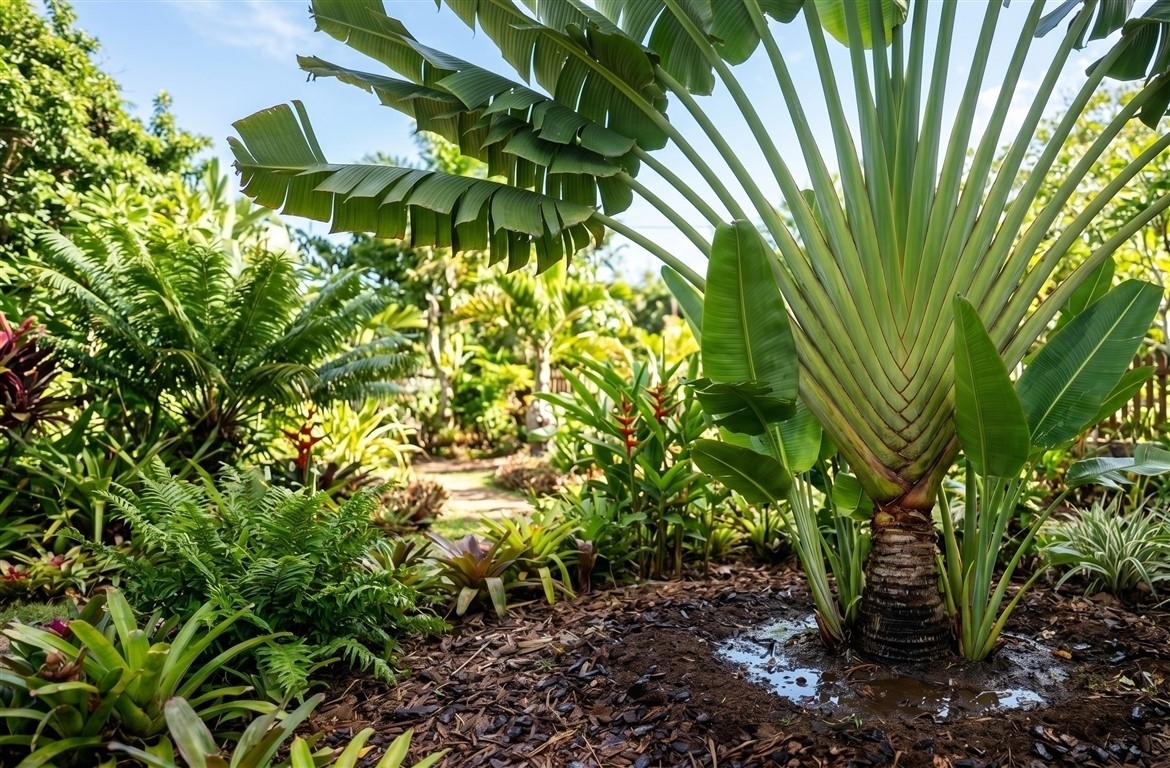
Water young plants consistently while they’re establishing their roots. Mature plants need deep watering during dry spells, with enough time for the soil surface to dry slightly between waterings.
Should damaged leaves be cut?
Go ahead and cut off any dead, broken, or severely shredded leaves. But make sure to keep healthy green leaves; they’re essential for feeding the plant and maintaining that iconic fan shape.
Is travelers palm good for small gardens?
Typically, no. It simply gets too wide and too tall for cramped spaces. A large container might work for a while, but eventually, the plant will need much more room to truly flourish.
0 Comment