


Mastering Italian Style: Your Guide
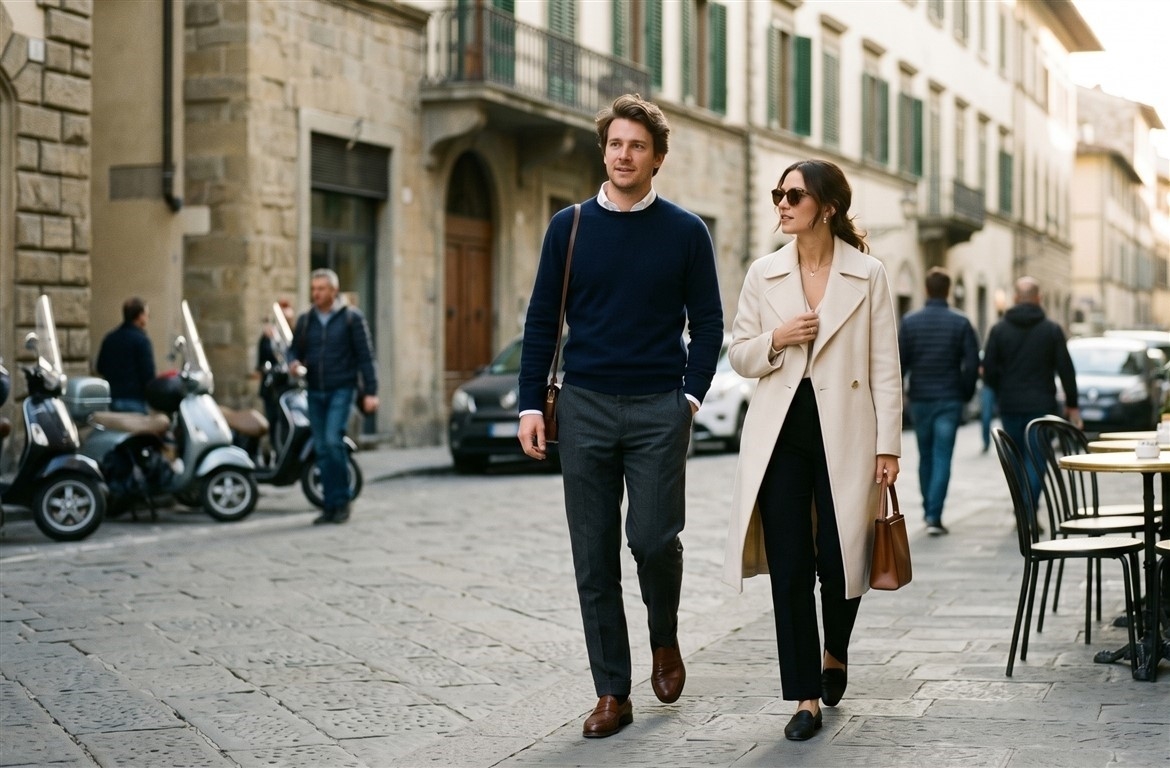
Italian style has this reputation, right? It almost feels a little unfair sometimes. Picture a guy in Rome. He’s just wearing a navy sweater, gray trousers, and some loafers. Yet, he somehow looks sharper than someone lugging around three massive suitcases packed with “vacation outfits.” Or imagine a woman strolling through Milan. Black pants, a cream coat, sunglasses – and the whole look just screams *finished*. Not loud. Just… complete.
So, what’s the deal with Italian dressing in, say, 2026? Look, let’s be real: not “everyone looks like a fashion editor.” People actually wear jeans, sneakers, puffers, sandals, linen shirts, gym clothes on their way to the gym. All the normal stuff modern Europeans wear. The true magic lies in the details: fit, grooming, fabric quality, proper shoes, and a distinct refusal to appear sloppy in public. Even super casual outfits in Italy usually hold some kind of intentional shape.
Understanding Italian Style
Italian style really centers on polish, not over-the-top extravagance. Clothes tend to look deliberately chosen. A simple outfit can absolutely shine if your trousers are properly hemmed, your shirt sits perfectly at the shoulders, your shoes aren’t falling apart, and your colors complement each other gently, without yelling across the piazza.
You’ll spot a lot of neutral shades: black, navy, white, beige, camel, gray, olive, and denim blue. Head to coastal towns, and the colors relax a bit. In Milan, things tighten up, leaning more sophisticated. Naples has a vibrant flair, Rome feels laid-back yet still put-together, and those northern mountain towns bring in practical outerwear without losing that clean silhouette. Italy definitely isn’t a one-wardrobe nation.
Texture plays a huge role too. Think crisp linen in summer, rich wool coats when winter bites. Quality leather shoes, soft suede jackets, elegant silk scarves, and cotton shirts that haven’t given up the ghost yet. Of course, cheap clothes exist everywhere, but the Italian preference often leans towards fewer pieces that age beautifully.
Key Italian Style Habits
Focus on Quality, Not Quantity
A bursting closet isn’t the goal here; a better shirt is. Italians often re-wear their clothes, and they do it well: dark jeans paired with various knitwear, one immaculate coat over outfits for half a week, leather shoes that effortlessly transition from lunch to dinner. This is actually super helpful for travelers, meaning your Italy packing list can be much lighter than you might expect.
Keep Your Outfits Polished
“Polished” doesn’t mean “formal.” It simply means you’ve taken a quick look at your outfit before stepping out. A wrinkled T-shirt, baggy cargo shorts, flip-flops, and a slung-on backpack near the Trevi Fountain just scream “exhausted tourist.” Change just two things—a well-fitting tee and proper sneakers—and suddenly, that same person looks vibrant and alert.
Stick to Classic Colors
Classic colors make traveling a breeze. Black trousers, a crisp white shirt, a navy sweater, tan sandals, dark denim, a chic beige trench. These pieces play nice together; they don’t clash. Plus, they look absolutely fantastic in photos against ancient stone streets, dramatic seaside cliffs, historic churches, and those sunny yellow apartment walls that just beg for a camera snap.
Emphasize Fit and Tailoring
Fit is the quiet powerhouse of Italian fashion. An inexpensive blazer can still look fantastic if the shoulders are just right. Jeans, even casual ones, can appear sharp if they’re not sagging, dragging on the ground, or stretched into weird shapes. Tailoring in Italy isn’t only for fancy suits. It’s an everyday habit, even for the simplest garments.
Accessorize Thoughtfully
Accessories rarely seem haphazard. Sunglasses are often large, but never goofy. Bags are practical, yet they almost always have a structured elegance. Scarves appear in spring and autumn with such effortless grace; they’re never costume-y. Jewelry tends to be chosen with care, not piled on by the handful.
Daily Italian Dressing
Casual Italian Outfits
Italian casual style is surprisingly refined compared to what many visitors anticipate. Yes, you’ll definitely see jeans. Lots of them. But you’ll also spot straight-leg trousers, slim chinos, simple skirts, neat knitwear, classic leather jackets, white sneakers, loafers, and elegant long coats during the colder months.
A typical casual morning coffee look might involve dark jeans, a fitted jacket, ankle boots, and sunglasses. Nothing dramatic at all. Still incredibly stylish. That subtle difference sometimes puzzles travelers because it feels like everyone else got a secret memo. They didn’t. They just grew up in places where presenting yourself well truly matters.
Smart Casual Looks
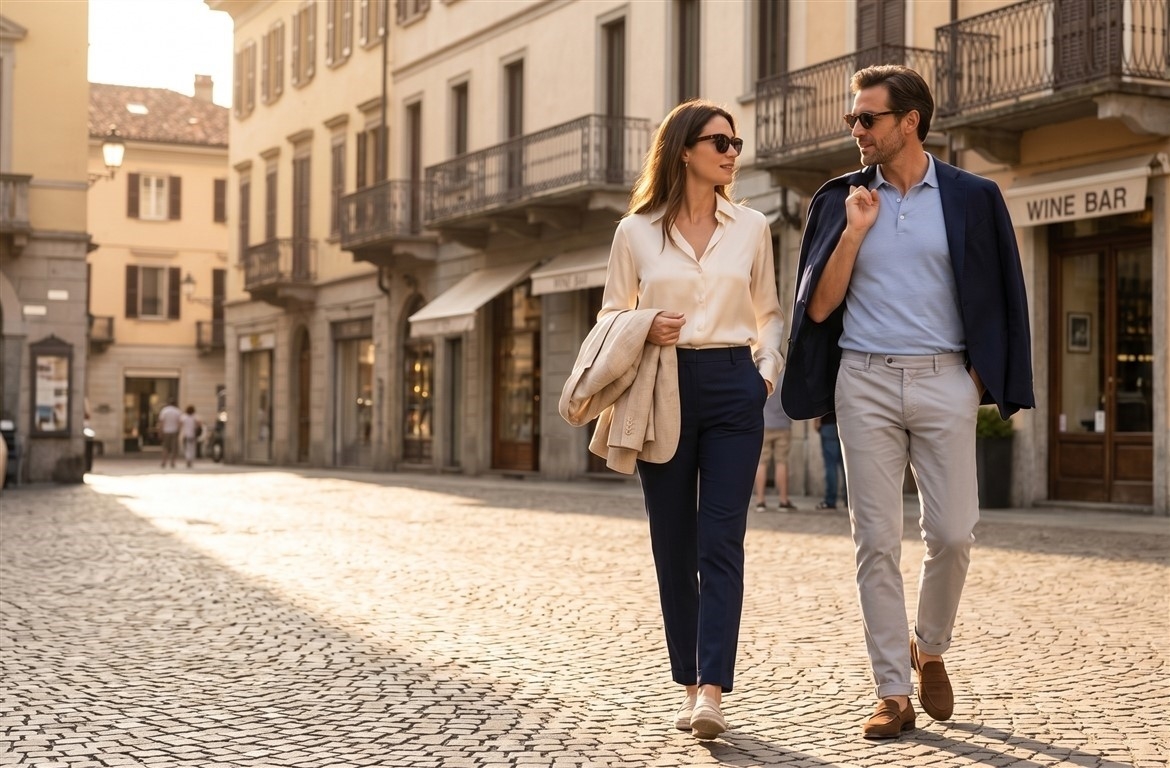
Smart casual hits the sweet spot for most Italian adventures. It works beautifully for museums, train rides, lunch dates, wine bars, shopping streets, and relaxed restaurants. Think tailored trousers instead of gym shorts, elegant blouses or neat polos instead of oversized souvenir tees, and perhaps a soft blazer or a light cardigan when the evening air gets a bit crisp.
Dinner Outfits
What you wear for dinner really depends on the restaurant, but Italians generally tidy up a bit. A local trattoria certainly doesn’t demand a suit. For men, a sharp shirt, dark jeans or trousers, and nice shoes are usually perfectly fine. Women can opt for a stylish dress, tailored pants, a skirt with a blouse, or dark denim paired with an elegant top. Beach clothes at dinner away from the coast? Absolutely not. Just… don’t.
Work and Business Style
Business attire in Italy remains more formal than in many of the relaxed American offices we know, though creative industries do allow for more flexibility. In finance, law, luxury sectors, and corporate environments, suits, refined separates, fine knitwear, structured coats, polished leather shoes, and understated colors really dominate. The precise cut of the clothing truly speaks volumes here.
What Women Wear
Everyday Italian Women’s Style
Women in Italy dress with an incredible range. Walk down one street and you might see wide-leg trousers, crisp white sneakers, a chic cropped jacket, and a leather crossbody bag. Just a few steps later, a woman in a simple black dress and flat sandals might pass by with a grocery bag, looking utterly composed. Then, a student in jeans and a puffer. It’s real life, not just a runway show.
For visitors, the most reliable choices include tailored trousers, dark or straight-leg jeans, midi skirts, simple dresses, breathable linen shirts, well-fitting T-shirts, cardigans, blazers, and a light trench or coat. The idea isn’t to meticulously copy local women piece by piece – that can quickly feel strange. Instead, aim for neat, unfussy, and incredibly versatile pieces.
Dresses, Skirts, and Trousers
Dresses are invaluable during warmer months because they transition from sightseeing to dinner with almost no effort at all. Midi lengths are particularly good for visits to churches, museums, and restaurants. Skirts serve a similar purpose. Trousers, especially linen or cotton blends in summer and wool or heavier cotton in winter, maintain a polished look without sacrificing comfort during your travels.
Tops, Blouses, and Layers
Light layers are absolutely essential for survival in Italy. Churches can feel surprisingly cool, trains might be overly air-conditioned, and evenings can change rapidly in spring and autumn. A classic button-down shirt, a fine cardigan, a silk scarf, or a cropped jacket can easily save an outfit and also provide shoulder coverage when required.
Shoes and Accessories
Italian shoes for women are generally practical yet incredibly attractive: think stylish leather sandals, classic loafers, chic ankle boots, comfortable ballet flats, or sleek sneakers. While heavy hiking sandals might be physically comfortable in central Florence, honestly, they tend to look like a desperate cry for fashion help. For bags, a secure zipped crossbody or a compact shoulder bag is far superior to an open tote in busy stations and crowded areas.
What Men Wear
Everyday Italian Men’s Outfits
Men in Italy often rely on a core of simple pieces: dark jeans, sharp chinos, classic polos, button-down shirts, fine sweaters, versatile overshirts, bomber jackets, elegant wool coats, and polished leather shoes. Even when the look is relaxed, the proportions are usually very controlled. Not baggy everywhere. Definitely not tight everywhere, either.
A tourist can absolutely nail it with navy chinos, clean white sneakers, a breathable linen shirt, a lightweight jacket, and some stylish sunglasses. Throw in a blazer for dinner in Rome or Milan, and suddenly that suitcase looks far more sophisticated than its price tag suggests.
Shirts, Polos, and Knitwear
Collared shirts are a common sight, especially in cities and during evening meals. Linen shirts in summer are a classic for excellent reasons: they breathe beautifully, wrinkle charmingly, and simply look better than a damp graphic tee. Polos work best when they fit well. Knitwear, ranging from fine merino sweaters to cozy, chunky winter layers, forms a significant part of men’s style in Italy.
Trousers, Jeans, and Shorts
Jeans are completely normal in Italy, but cleaner, dark denim typically looks more local than distressed, oversized, or heavily branded pairs. Shorts are perfectly acceptable in hot weather, along the coast, and for casual daytime sightseeing. However, very short athletic shorts in city restaurants just look out of place. Longer, tailored shorts are a much safer bet for summer travel.
Shoes, Jackets, and Accessories
Men’s footwear tends towards smart loafers, sleek leather sneakers, versatile ankle boots, desert boots, and impeccably polished dress shoes. A good jacket matters more than many travelers realize. A sharp Harrington jacket, a chore jacket, a blazer, or a classic wool coat can instantly elevate an entire outfit. One quality belt makes a difference. So do sunglasses that don’t look like they just came from a beach volleyball tournament.
Seasonal Italian Attire
Italy changes rapidly depending on the season and specific region. Palermo in February is a world away from Bolzano in February. Venice in November feels entirely different from Naples in November. So, pack for your actual itinerary, not for some dreamy postcard fantasy.
| Season | Best Clothing Choices | Useful Extras |
|---|---|---|
| Spring | Light trousers, jeans, shirts, cardigans, trench coats | Scarf, compact umbrella, closed shoes |
| Summer | Linen shirts, dresses, skirts, tailored shorts, sandals | Hat, sunglasses, breathable layers for churches |
| Autumn | Knitwear, dark denim, ankle boots, light wool jackets | Rain jacket, scarf, layered evening pieces |
| Winter | Wool coats, sweaters, trousers, boots, warm dresses | Gloves, heavier scarf, thermal layer in the north |
| Coastal Trips | Linen, cotton, sandals, relaxed dresses, light shirts | Swimwear for beach areas only, sun protection |
Spring
Spring in Italy is absolutely perfect for layering. Mornings can be quite chilly, afternoons often turn warm, and evenings might be damp. A trench coat, a blazer, or a short jacket over shirts and knitwear works wonderfully in most cities. Your shoes should be able to handle cobblestones and an unexpected rain shower.
Summer
Summer means heat, crowds, and bright sunshine. Natural fabrics truly earn their keep here: linen, cotton, lightweight viscose, and thin denim only if you can really tolerate the warmth. In cities, keep beachwear strictly away from streets and restaurants. Along the coast, relaxed clothing is totally fine, but walking through town in just a swimsuit still comes across as a bit uncaring.
Autumn
Autumn might just be the absolute best season for Italian outfits. Think dark denim, stylish boots, soft wool blazers, cozy sweaters, chic scarves, and cool leather jackets. The natural colors of the streets only add to the vibe. Rome and Florence look simply stunning in camel, olive, rich wine tones, navy, and classic black.
Winter
Winter demands proper clothing, especially if you’re heading to northern Italy. Milan, Venice, Turin, and the Alpine regions can get genuinely cold and wet. A substantial coat, sturdy boots, warm sweaters, and thick socks belong firmly in your suitcase. Southern Italy is milder, but it’s certainly not tropical. People still dress appropriately for the season.
Italian Footwear Choices
Shoes can either make or completely break a travel day in Italy. Those charming cobblestones are lovely until your feet start protesting loudly. The secret is finding comfort without giving up on style. Sleek sneakers, loafers, versatile ankle boots, comfortable flat sandals, and low block heels almost always work better than flimsy flip-flops or those brand-new, stiff dress shoes.
- For city walking: Go for quality leather sneakers, supportive flats, classic loafers, or ankle boots with decent soles. White sneakers are common, but they need to be clean enough to look intentionally stylish.
- For evenings: Men can choose loafers, smart dress sneakers, or polished boots. Women can wear elegant flats, chic sandals, low heels, ankle boots, or even dressy sneakers with the right outfit.
- For the coast: Sandals are perfectly fine near beaches and seaside towns. Save rubber flip-flops strictly for the pool, beach, or your hotel room unless the setting is incredibly casual.
- For religious sites: While shoes are less strictly regulated than shoulders and knees, clean, respectful footwear fits the sacred environment far better than beach slides.
Jeans, Shorts, and Leggings in Italy
Are Jeans Popular in Italy?
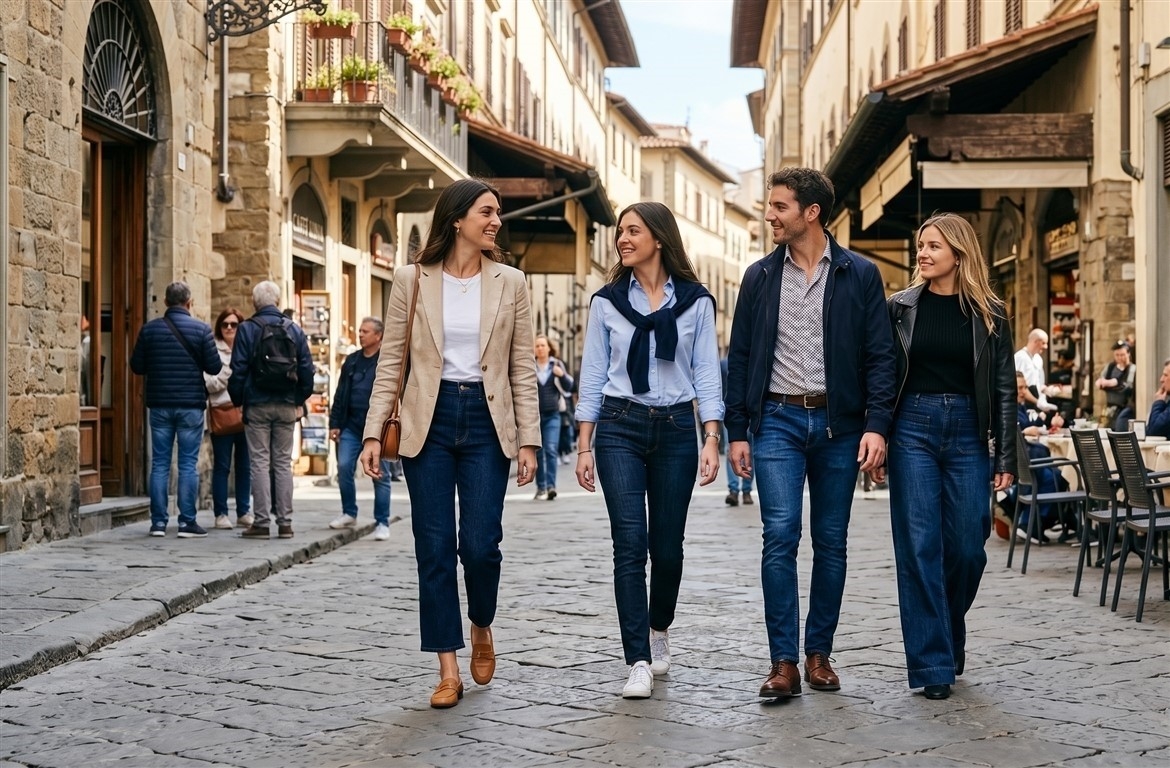
Oh yes. Italians wear jeans constantly. The crucial difference lies in the style. Dark, straight-leg, slim-fit, cropped, or wide-leg jeans always appear more polished than ripped, sloppy, or overly distressed pairs. Pair them with a blazer, a neat shirt, a knit top, or elegant leather shoes, and they can genuinely work almost anywhere casual.
Are Shorts OK in Italy?
Shorts are absolutely normal during hot weather, along the coast, and for daytime sightseeing. However, in churches, some major religious sites expect knees to be covered, so even longer shorts might not quite fit the solemn mood of the place. For dinner in cities, trousers or a dress usually present a much better appearance.
Do Italians Wear Leggings?
Leggings definitely exist in Italy, mostly for fitness activities, quick errands, students, and very casual home settings. As a general travel uniform for museums, restaurants, and historic city centers, they can often look a bit underdressed unless they’re expertly styled with a long coat, a structured sweater, boots, or a clean oversized shirt. Just plain athletic leggings with running shoes and a hoodie scream “gym,” not “aperitivo.”
What Not to Wear
Knowing what not to wear in Italy isn’t about rigid prohibitions; it’s more about understanding the vibe. Italians are very accustomed to tourists; they’ve truly seen it all. Still, certain outfits will make a visitor stick out instantly, and not in that charming, Fellini-esque way.
- Beachwear far from the beach: Swim trunks, bikini tops, sheer cover-ups, and rubber flip-flops belong squarely near the water. In city streets, churches, museums, and restaurants, they feel profoundly disrespectful and just awkward.
- Excessive travel gear everywhere: Huge backpacks, clanging water bottles, visible neck wallets, and multi-pocket safari vests practically brand someone as distracted. A compact crossbody, a small daypack, or a structured tote is much cleaner and far safer.
- Sloppy athletic clothing: Running shorts, old gym tees, sweatpants, and worn-out trainers are perfectly fine for working out. For sightseeing in central Rome or dining in Florence, however, they look unfinished.
- Flashy logos and bad fit: Big, bold logos do not equate to Italian style. A simple, quiet shirt that fits you well will always outperform a loud designer name plastered across your chest.
How to Blend In (Stylishly)
Curate a Small Capsule Wardrobe
A smart capsule wardrobe for Italy starts with highly versatile, re-wearable pieces. Think two pairs of tailored trousers, one pair of dark jeans, several diverse tops, a dress or a blazer, one elegant outer layer, two pairs of practical shoes, and a few accessories that can shift the entire mood. That’s actually enough for many trips. Laundry facilities exist, you know. Nobody on the street knows you wore that same navy sweater in Siena!
Add an Elegant Layer
A blazer, a trench coat, a leather jacket, a soft cardigan, or a refined wool coat completely transforms everything. It instantly elevates a plain T-shirt, provides warmth on a cool evening, and makes dining out a breeze. Travelers often pack too many tops and not enough crucial finishing layers. Italy truly rewards that extra layer.
Choose Practical, Chic Bags
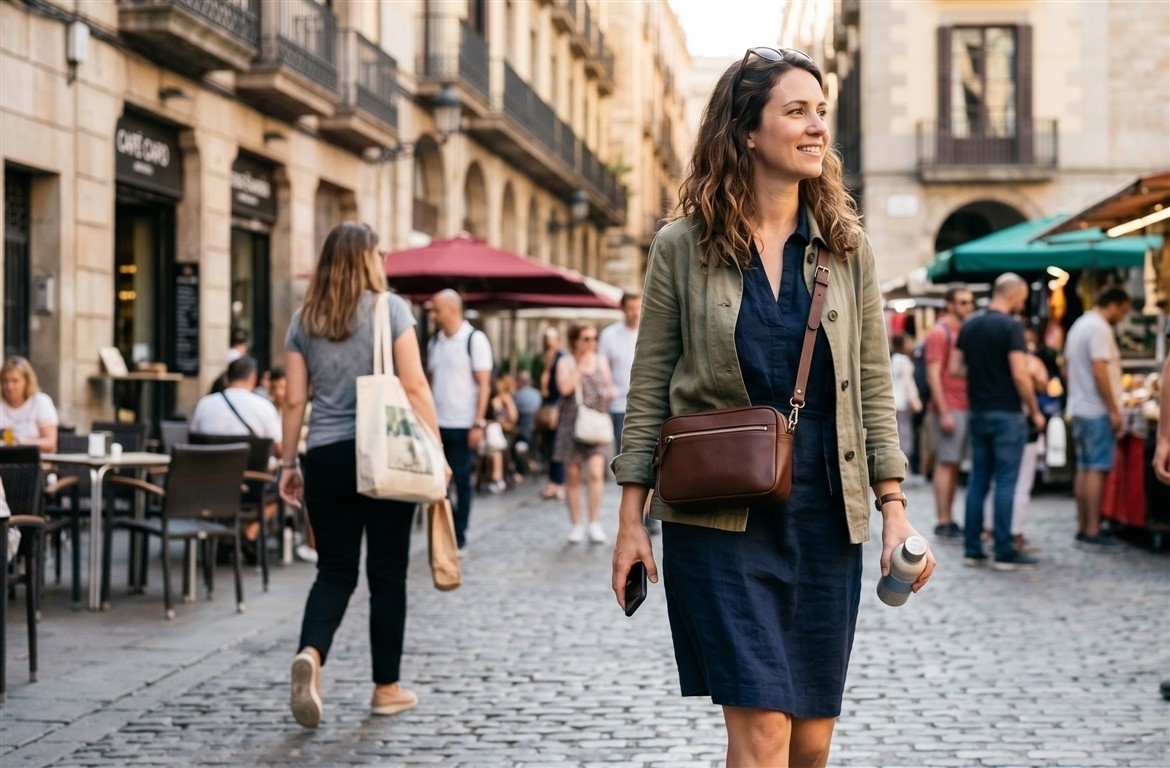
A zipped crossbody bag is an incredibly smart choice for stations, bustling markets, and crowded landmarks. Pickpocketing is a known concern in busy tourist areas, so open bags and back pockets are absolutely not your friends. Style still matters, of course: leather, nylon, canvas, and structured shapes all work beautifully when the bag is clean and not overwhelmingly large.
Dress Modestly in Churches
Many major churches and significant religious sites specifically ask visitors to cover their shoulders and knees. The Vatican Museums and St. Peter’s Basilica are the most famous examples for travelers, but this expectation is much more widespread than just Rome. A simple scarf, a light shirt, a midi skirt, tailored trousers, or a longer dress easily solves this without any fuss.
Italian Dress Codes by Locale
Italian Cities
In vibrant Milan, historic Florence, bustling Rome, elegant Turin, charming Bologna, and romantic Venice, smart casual attire works almost everywhere. Wear truly comfortable shoes, but make sure they look presentable. Always bring an extra layer. And avoid dressing as if your entire day is one long beach transfer, unless, of course, you’re actually heading to a beach.
The Coast
Coastal towns naturally feel much more relaxed. Breathable linen shirts, comfortable sandals, flowing dresses, woven bags, and lighter colors feel perfectly right here. Even on the coast, however, restaurants and the evening *passeggiata* (stroll) often encourage people to lean back towards polish. Italians might spend their day by the water and still change before dinner. That lovely little ritual is truly part of the pleasure.
Restaurants
Casual restaurants will accept casual clothing, but “casual” in Italy still generally means clean, neat, and definitely not dripping wet from the beach. Upscale restaurants might expect jackets, dresses, tailored trousers, or dress shoes. When in doubt, it’s almost never a mistake to dress just one notch above what you think you need.
Shopping and Sightseeing
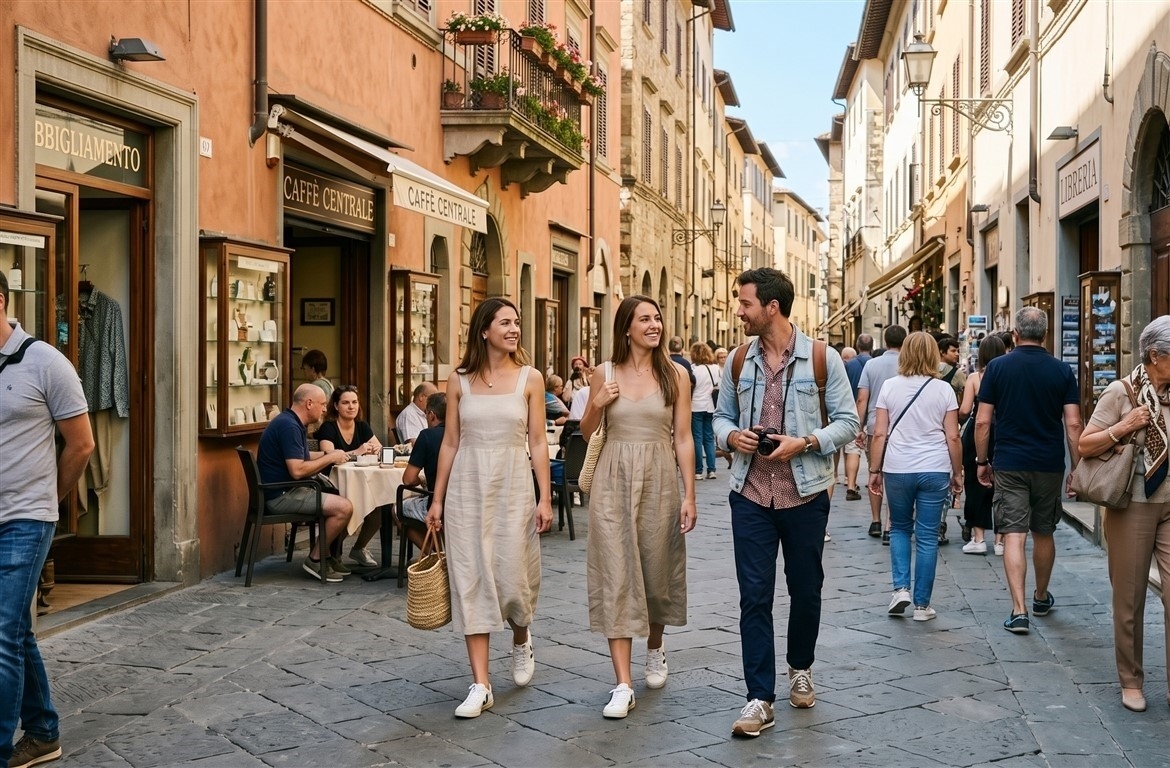
Shopping streets are essentially public theater. People will look. Not aggressively, but with that keen Italian eye for proportion and style. Sightseeing clothes should absolutely be comfortable: sneakers, trousers, shirts, dresses, jackets. The trick is to avoid looking like you’re in a costume of sheer exhaustion. Fewer zip-off pockets, please. More calm elegance.
Your Italy Packing List
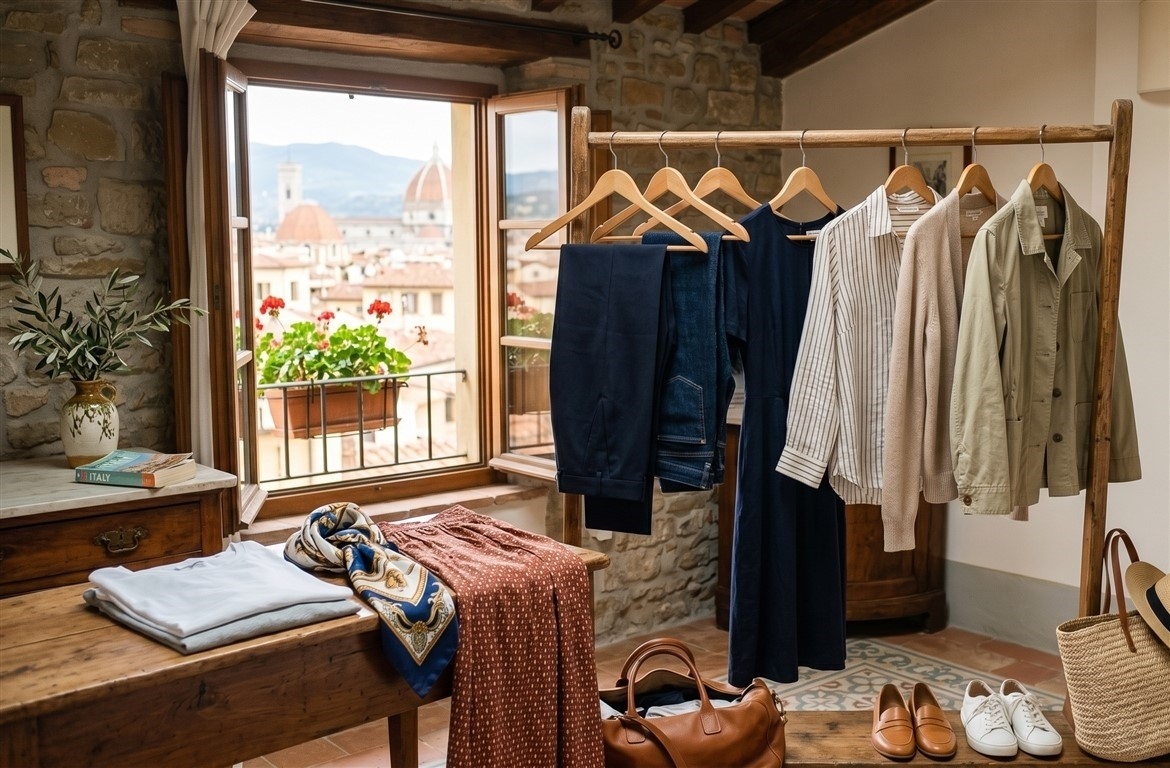
Clothing Essentials for Women
Pack tailored trousers, dark jeans, one or two versatile dresses, a skirt if that’s your style, several simple tops, a chic blouse or linen shirt, a practical cardigan, a light jacket, and a scarf. In summer, breathable fabrics are far more important than fleeting trends. In winter, definitely add a proper warm coat and sturdy boots.
Clothing Essentials for Men
Bring chinos or tailored trousers, dark jeans, a few polos or button-down shirts, a linen shirt for those warm months, a fine sweater, a lightweight jacket or a casual blazer, and a substantial coat for winter trips. One slightly dressier outfit is worth the space if you’re planning on dining at nicer restaurants.
Shoes and Accessories
Two pairs of shoes are usually sufficient for a shorter trip: one super comfortable walking pair and one smarter pair. Don’t forget sunglasses, a good belt, a compact, secure bag, and a scarf or hat, depending on the season. New shoes are a rookie trap, by the way. Italy’s cobblestones have a way of punishing optimism.
Seasonal Extras
Summer absolutely calls for sun protection, plenty of linen, and a shoulder-covering layer for church visits. Spring and autumn will need reliable rain gear and easily adaptable layers. Winter, especially in the north and center, requires genuine warmth, particularly for evenings, early morning trains, and damp days spent exploring ancient stone streets.
Frequently Asked Questions
Do Italians Dress Up Daily?
Not every single day, and not every single person. Still, everyday clothing in Italy often appears more considered and intentional than in cultures that lean heavily towards very casual attire. Even jeans and sneakers are typically styled with much cleaner lines.
What Colors Are Most Worn?
Black, navy, white, beige, gray, camel, olive, and denim blue pop up repeatedly. Summer sees more white, cream, pale blue, and brighter coastal colors. Milan’s love affair with black is well-known for good reason: it simply works.
Can You Wear Sneakers?
Yes, absolutely. Sneakers are extremely common, especially clean leather or minimalist styles. Bulky running shoes are fine for serious walking mileage, but they do tend to look quite sporty. If you rely on them, make sure the rest of your outfit is a bit sharper to balance it out.
Do Italians Wear Sandals?
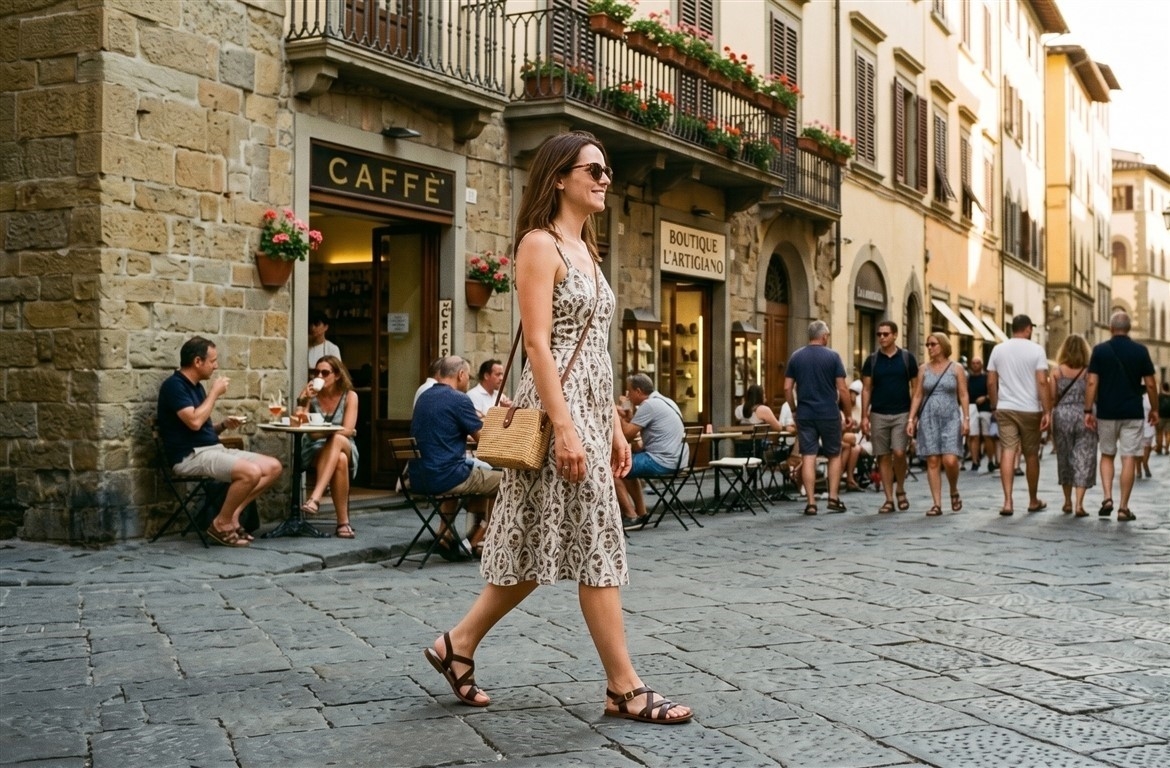
Yes, they do, predominantly in warm weather. Leather sandals almost always look more polished than rubber flip-flops. In cities, your sandals should be comfortable enough for uneven streets and neat enough for cafes and shops.
Should I Bring a Hat?
For summer, yes, definitely. The sun can be incredibly intense, and shade often vanishes right when you need it most. Choose a hat that’s easy to pack and genuinely complements your clothes, rather than a novelty travel hat that makes every outfit look accidental.
Blazer or Jacket Needed?
A blazer is incredibly useful for both men and women, especially in cities like Rome, Milan, Florence, and Venice. A lighter jacket can serve the same purpose if your plans are more casual. For winter, your coat becomes a central part of your entire outfit, so pick one you’ll actually enjoy seeing in all your photos.
How Much to Pack?
Pack less, but ensure each piece truly works harder for you. Italy rewards versatile clothing: trousers that pair with three different tops, shoes that handle both walking and dinner, and layers that smoothly transition from a museum visit to an aperitivo. And do leave a little space if you’re thinking of shopping. You might. You probably will, actually.
0 Comment