

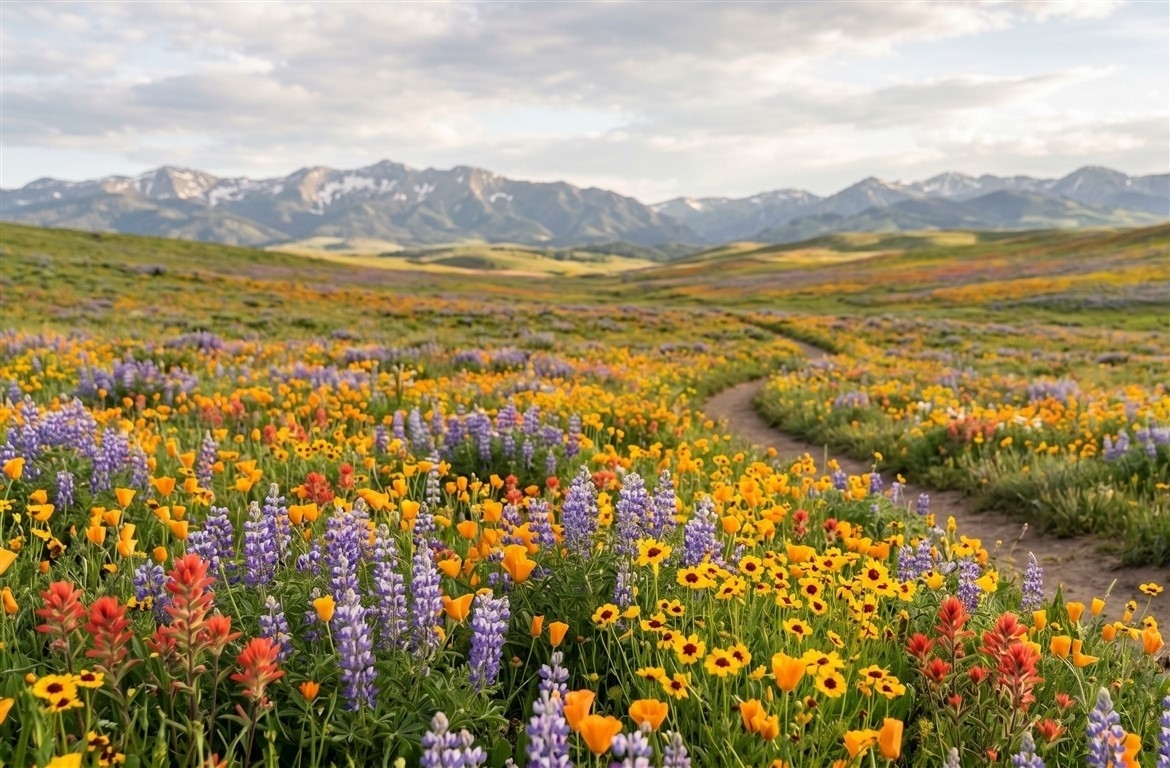

Top Spots for Wildflowers Across the U.S.
America’s finest wildflower displays stretch far and wide. Picture low desert washes in California bursting with color. Think foggy Appalachian coves, high alpine basins, dusty Texas ranch roads, and mountain meadows still buried under snow until deep into July. The real trick here? It’s all about timing. A spot looking completely barren in February can explode with vibrant hues just a few weeks later, only to fade away before summer hikers even get a chance to unlace their boots.
Planning a wildflower trip in 2026 still rides on nature’s old rhythm: rain, sun, snowmelt, heat, elevation. There’s no app that can magically make poppies open. No travel calendar promises a superbloom. The most rewarding journeys come from diligently tracking local bloom reports, hitting the road early, and treating these delicate blossoms with the respect they deserve, not just as a pretty backdrop.
When Wildflowers Put on Their Show
Wildflower season isn’t just one single period. It sweeps across the country like a wave of color, slowly moving. It begins in the warm deserts and wraps up high above the tree line, where snow stubbornly hangs around into summer. A robust winter can truly awaken the desert. A parched spring might mute a meadow’s display. And a late snowpack? That can push alpine blooms all the way into August.
Early Spring Spectacles
February through April is prime time for deserts and lower valleys. You can see spectacular sights in places like Anza-Borrego Desert State Park, Death Valley National Park, Picacho Peak, and parts of Arizona’s Sonoran Desert. Expect poppies, lupines, brittlebush, desert lilies, phacelia, and countless tiny annuals hugging the ground. They look fragile, these flowers. But they’re tough as nails. Then they’re gone.
These desert blooms really need that just-right combination of winter moisture and mild temperatures. Too little rain? You get a sparse show. Too much heat arriving too fast? The show ends quickly. Wind can knock petals around. People, sadly, can cause even more damage.
Peak Spring and Summer Color
March through June brings incredible color to Texas Hill Country, the Southeast, the Mid-Atlantic, and even lower mountain trails. Bluebonnets famously line roads near Austin, Fredericksburg, Llano, and Brenham. Meanwhile, in Great Smoky Mountains National Park, delicate spring ephemerals emerge before the forest canopy fully closes. Think trillium, violets, bloodroot, Dutchman’s breeches. Small flowers, but with a mighty reputation.
By late spring, you’ll find Shenandoah’s Skyline Drive, Wisconsin’s barrens, South Dakota’s grasslands, and Oregon’s trail corridors beginning to show their own, often quieter, beauty. Not every bloom needs to cover everything like a carpet. A really good meadow can be scattered, a little wild, totally alive.
Alpine Blooms in Late Season
June through August is when the mountains truly shine. Places like Crested Butte, Mount Rainier, Glacier, Cedar Breaks, and Utah’s high ridges often hit their peak after the snow finally melts. Meadows there get just a short window to grow, flower, set seed, and brace for the cold again. Keep an eye out for paintbrush, avalanche lilies, lupine, columbine, asters, beargrass, monkeyflower. Their names sound cheerful. The weather up there, though, doesn’t always play nice.
| Region or Destination | Typical Bloom Window | Flowers or Landscape | Trip Note |
|---|---|---|---|
| California and Arizona deserts | February to April | Poppies, lupines, brittlebush, desert lilies | Heat and wind can shorten the season quickly |
| Texas Hill Country | March to April | Bluebonnets, Indian paintbrush, evening primrose | Roadside fields are popular; use legal pullouts |
| Southern Appalachians | March to May | Trillium, bloodroot, violets, spring ephemerals | Forest flowers bloom before full leaf-out |
| Rocky Mountain meadows | June to August | Columbine, lupine, paintbrush, asters | Snowmelt drives timing at higher elevations |
| Pacific Northwest alpine parks | July to August | Avalanche lilies, beargrass, lupine, paintbrush | Trail openings can lag after heavy snow years |
Great Wildflower Spots Across the U.S.
The famous places are famous for good reason. Yet, the most incredible wildflower experiences often happen just outside that perfect postcard shot. Maybe it’s a quiet side road, a short trail, a windy overlook, or a hidden meadow right behind the visitor center everyone else zoomed past.
Antelope Valley Poppy Reserve, California
Antelope Valley is *the* iconic California poppy destination. Rolling Mojave grasslands, vibrant orange petals, a vast sky, and wind that truly couldn’t care less about your hat. In years with exceptional blooms, the reserve can look almost too good to be true. The state protects these fields with designated trails and clear rules. Why? Poppies close up in cold, wind, and shade. They also crush incredibly easily under thoughtless feet.
Spring is your target. Always check the reserve’s current bloom updates before driving all the way out. Some years are sparse. Other years are absolutely wild.
Anza-Borrego Desert State Park, California
Anza-Borrego feels much more expansive, more raw. The flowers might pop up in sandy washes, at canyon mouths, along roadside flats, and across bajadas where ocotillo plants raise their red torches above the desert floor. The desert sun gets intense here very quickly. Morning visits are far more pleasant.
Popular bloom zones shift depending on rainfall, so visitors will do much better checking current park reports rather than relying on old social media posts. Bring water – more than you think you’ll need. And make sure your spare tire isn’t already limping.
Death Valley National Park, California
Death Valley’s “superblooms” have grabbed headlines, but honestly, they’re rare occurrences. They depend on a very precise sequence of rainfall, temperature, and calm weather. Many years bring more modest floral displays instead: desert gold, gravel ghost, sand verbena, tiny blossoms tucked into the most improbable patches of ground.
This park’s sheer size changes the entire trip. Lower valleys might flower early, while higher roads hold color later on. Distances are vast. Gas, water, shade. These seem like boring details until suddenly, they’re not.
Picacho Peak State Park, Arizona
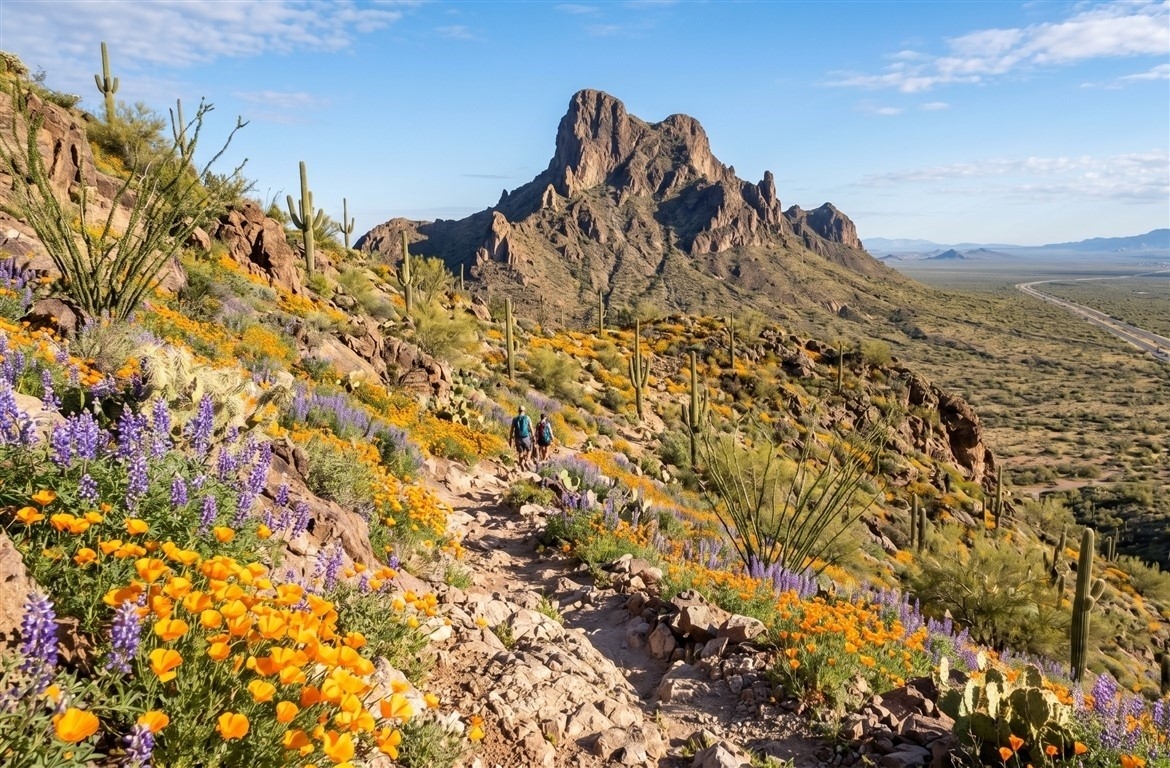
Picacho Peak can deliver a bold Sonoran Desert spring. You’ll find Mexican gold poppies and lupines blanketing the ground around a dramatic, jagged volcanic landmark, right off Interstate 10. The trails are rocky, exposed, and absolutely sun-baked by midday. What looks like a quick hike can feel much tougher than you expected.
Go early. Stick to the established paths. And always watch the slope before taking a step. The desert floor is teeming with life right at shoe level.
The Superstition Mountains, Arizona
East of Phoenix, the Superstition Mountains have a wilder, rougher vibe. Think saguaro silhouettes, volcanic rock, spring annuals, and trails that wind towards hidden canyons and old mining stories. Wildflowers here are simply part of the expansive desert landscape, not some manicured field set up just for photos.
March often hits the sweet spot, especially after a good wet winter. But be warned: heat can arrive like a door slamming shut.
Hill Country, Texas
Texas Hill Country is synonymous with bluebonnets, though the best drives offer much more than just blue. Indian paintbrush, pink evening primrose, phlox, winecup, and coreopsis add a looser, vibrant palette along ranch roads and limestone hills. Towns like Fredericksburg, Llano, Burnet, Marble Falls, and the famous Willow City Loop see heavy spring traffic when the blooms are spectacular.
Remember, these roadside flowers are next to working land and private property. Always pull off safely. Don’t climb fences. No photo is worth that kind of trouble.
Great Smoky Mountains NP, Tennessee
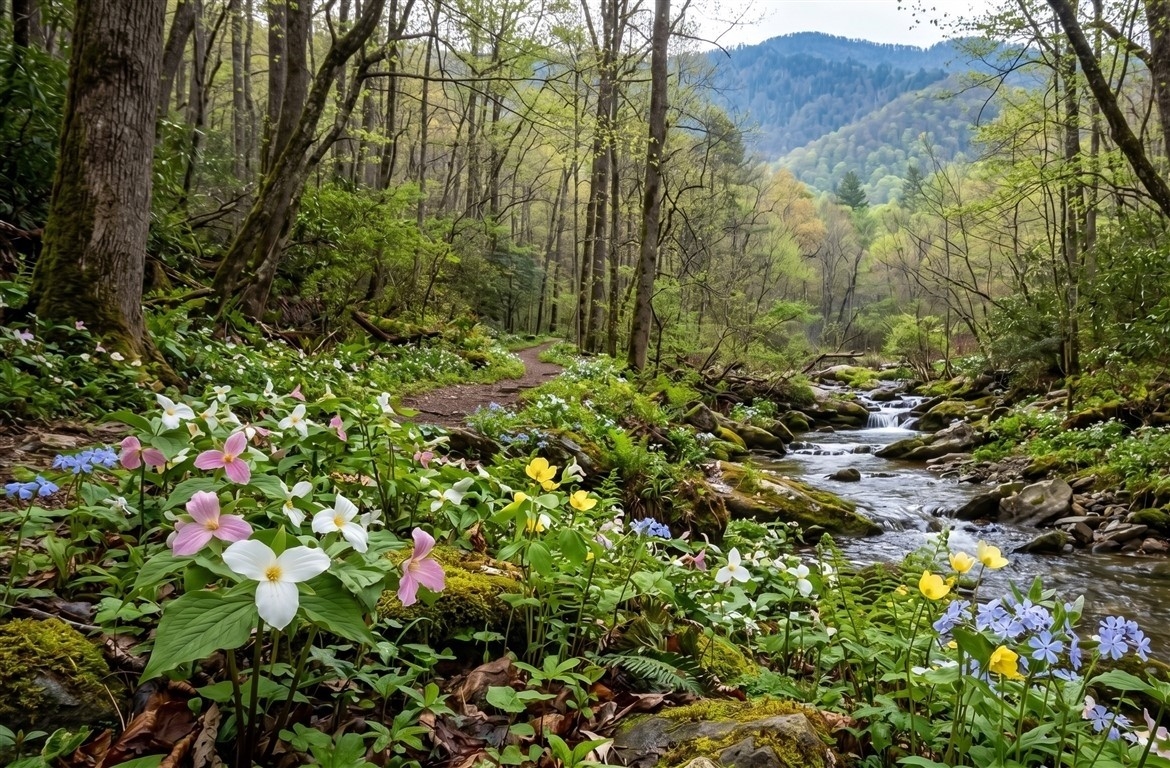
The Smokies truly stand as one of the country’s richest wildflower parks. It boasts thousands of plant species and enjoys a long spring bloom season. This season is shaped by elevation, moisture, and how dense the forest cover is. Lower valleys awaken first. Higher trails follow later. The whole show feels wonderfully intimate: flowers underfoot, beside babbling creeks, beneath leafless branches, in cool pockets of air.
Trails around Little River, Porters Creek, and Deep Creek are particularly well-known for their spring blooms. Crowds can get thick during peak weeks, but thankfully, the forest absorbs sound far better than asphalt pullouts ever could.
Shenandoah National Park, Virginia
Shenandoah offers super easy access and generous spring color right along Skyline Drive. Plus, there are countless trailheads that lead down into hollows or climb up towards rocky overlooks. Trillium, violets, wild geranium, columbine, and mountain laurel give the park a beautifully long floral arc, stretching from spring well into early summer.
The drive itself makes casual viewing a breeze. Still, the truly magical moments almost always happen when you’re out on foot.
Crested Butte, Colorado
Crested Butte proudly calls itself the Wildflower Capital of Colorado, and that claim absolutely holds weight. Alpine and subalpine meadows surrounding the town explode with blooms after the snow melts, typically in July. You’ll see mule’s ears, lupine, paintbrush, columbine, larkspur, and sunflowers lighting up the hillsides.
Trails near Gothic, Snodgrass Mountain, and Kebler Pass can get totally packed during peak bloom. Weather up here changes fast. Mud sticks to everything. Afternoon storms roll over the ridges with very little warning.
West Elk Scenic Byway, Colorado
The West Elk Scenic Byway connects mountain towns, aspen groves, ranchland, and high passes. It holds incredible potential for summer wildflowers. It’s less about one single famous field and more about the journey itself: a surprising bend in the road, a quiet trailhead, or a slope bursting with color above a rushing creek.
Kebler Pass is a true highlight when conditions are right. Always check the road surface and seasonal openings before you head out.
Mount Rainier National Park, Washington
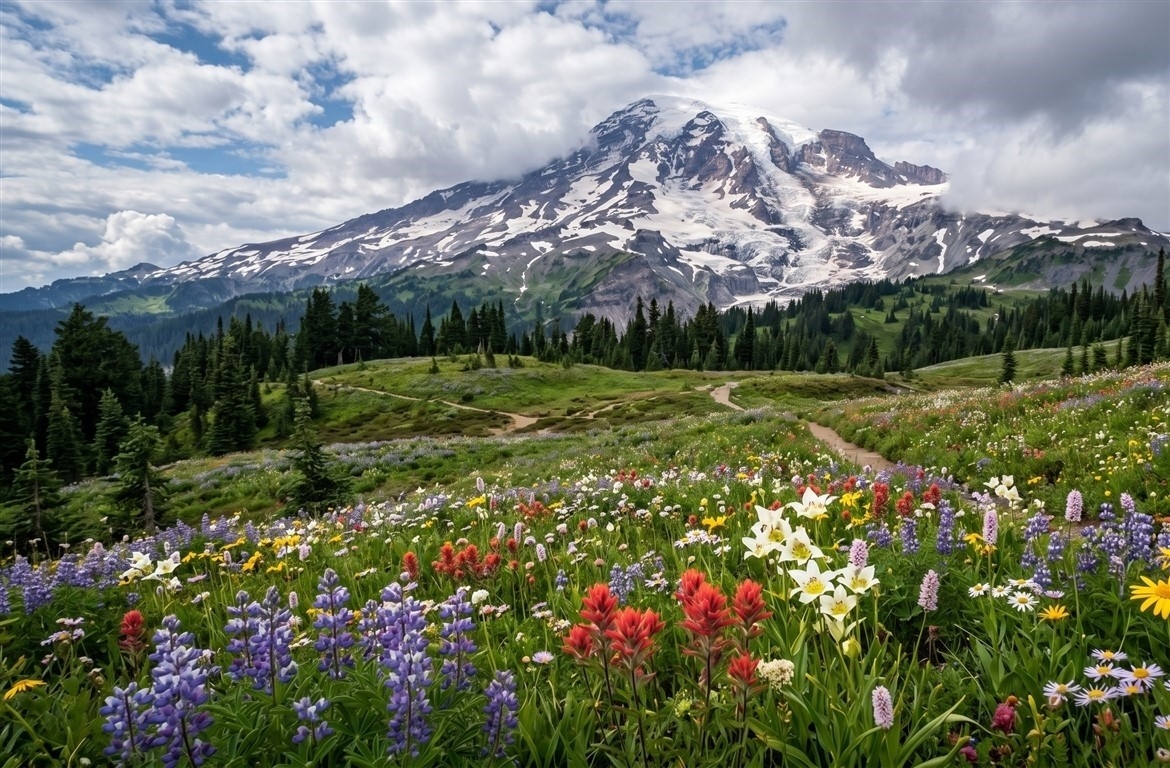
Mount Rainier’s wildflower meadows are legendary, and for excellent reason. Areas like Paradise and Sunrise can absolutely glow with avalanche lilies, lupine, paintbrush, asters, and bistort once the snow finally pulls back. The massive mountain itself presides over everything, often moody and hidden behind clouds, until suddenly, there it is.
Trails might open later in years with heavy snow. Meadows here are incredibly delicate, and park staff are quite direct about the need to stay on paths. Good. They absolutely need to be.
Glacier National Park, Montana
Glacier’s flowers cling to the very edge of snow and rock, living through a short alpine summer. Beargrass blooms are famously spectacular when they happen, joined by glacier lilies, paintbrush, lupine, and many other tiny high-country species along trails near Logan Pass and other alpine zones.
Visitor access has changed quite a bit in recent seasons, with reservation systems and timed-entry rules. Be sure to check park requirements *before* building your route, not when you’re in the parking lot with zero signal.
Cedar Breaks National Monument, Utah
Cedar Breaks sits way up high, over 10,000 feet, where summer feels fleeting and the grand amphitheater drops away in stunning red limestone bands. Wildflowers here bloom later than in Utah’s deserts, often hitting their peak around mid to late summer. You’ll find meadows of lupine, paintbrush, columbine, and other high-elevation plants.
The altitude is no joke. Walk slowly, drink plenty of water, and carry an extra layer even when the valley far below is absolutely scorching.
Sugar Hill, New Hampshire
Sugar Hill is most famous for its lupine season. During this time, gorgeous purple and pink spikes rise majestically against classic New England fields and breathtaking mountain views. The bloom generally arrives around June, but local conditions will always dictate the exact timing. It’s truly a village-scale experience, not some grueling wilderness trek.
That’s a big part of its charm: old winding roads, rustic farm edges, crisp cool mornings, and a distinctly softer, gentler kind of flower trip.
Premier Western U.S. Wildflower Destinations
The West truly owns the dramatic bloom narrative. Its landscapes shift so quickly: desert to foothill, canyon to alpine pass, sagebrush to snowbank. A smart Western wildflower trip usually follows the elevation changes rather than sticking to a rigid date.
California Wildflower Spots
California offers travelers the most incredible range within a single state. Think Mojave poppies, Anza-Borrego desert annuals, Death Valley’s rare finds, Sierra foothill blooms, and high-country meadows later in the year. Carrizo Plain National Monument, when conditions really cooperate, can be another major spring destination. Goldfields and tidy tips spread out across vast open ground there.
California bloom trips demand flexibility. Rainfall varies wildly by region. Fire closures, muddy roads, and jam-packed weekends can easily force a change of plans even before breakfast.
Oregon Wildflower Spots
Oregon’s flower season transitions from Columbia River Gorge balsamroot and lupine in spring to stunning Cascade meadows in summer. The Gorge is celebrated for its early color, persistent winds, and views that make even a short hike feel epic. Later in the season, trails around Mount Hood and Central Oregon pick up the floral thread.
Trail conditions are a big deal after winter storms. Watch out for poison oak in lower areas. Ticks also become a springtime topic you’ll want to remember.
Idaho Wildflower Spots
Idaho’s most beautiful wildflower moments often appear in mountain valleys and forest openings. You’ll find camas meadows, lupine, paintbrush, and arrowleaf balsamroot. The Sawtooths and central Idaho routes can be absolutely breathtaking once the snow finally recedes, though access definitely shifts with elevation.
Idaho truly rewards travelers who appreciate space. Expect fewer headline-grabbing crowds, more driving, and much bigger skies.
Utah Wildflower Spots
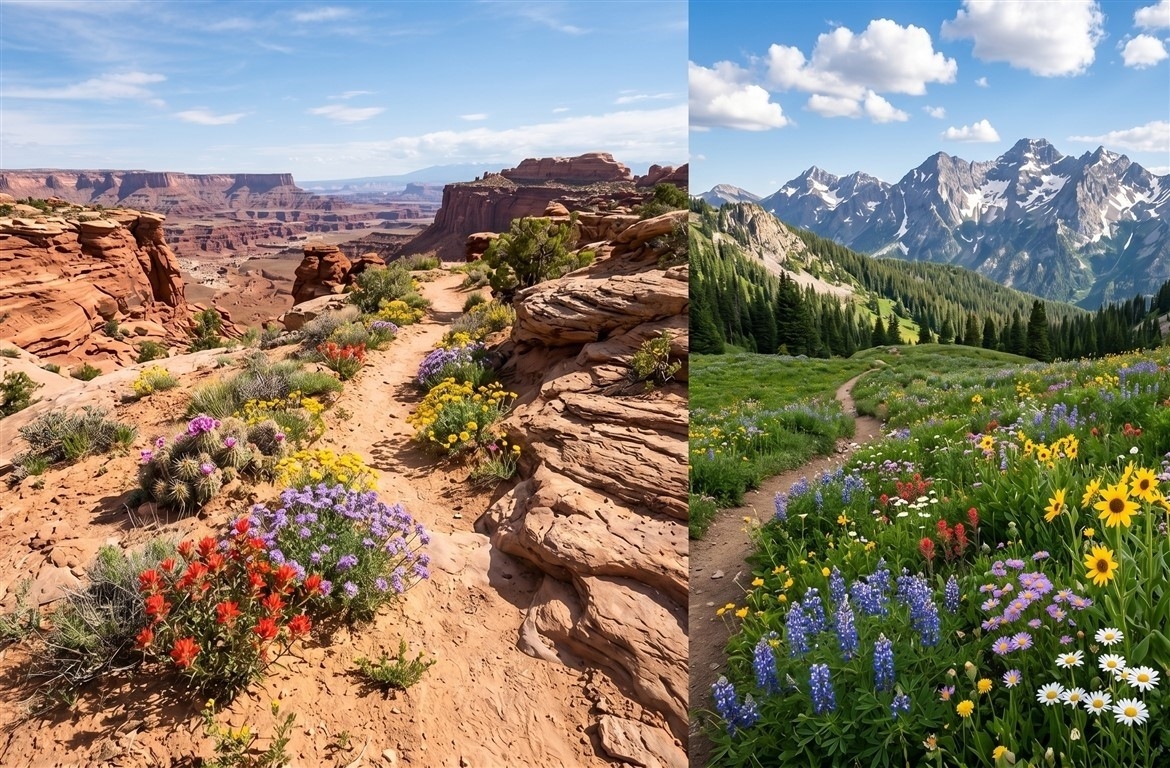
Utah presents two distinct personalities. Spring brings desert flowers around its incredible canyon country and at lower elevations. Summer then lifts the show up to the Wasatch, the Tushars, Cedar Breaks, and various high plateaus. Ben Lomond Peak and other northern Utah trails can produce spectacular alpine displays after the snowmelt.
Remember, desert crust is fragile. Alpine meadows are fragile. Different landscapes, same crucial rule: your boots belong on durable ground.
Wyoming Wildflower Spots
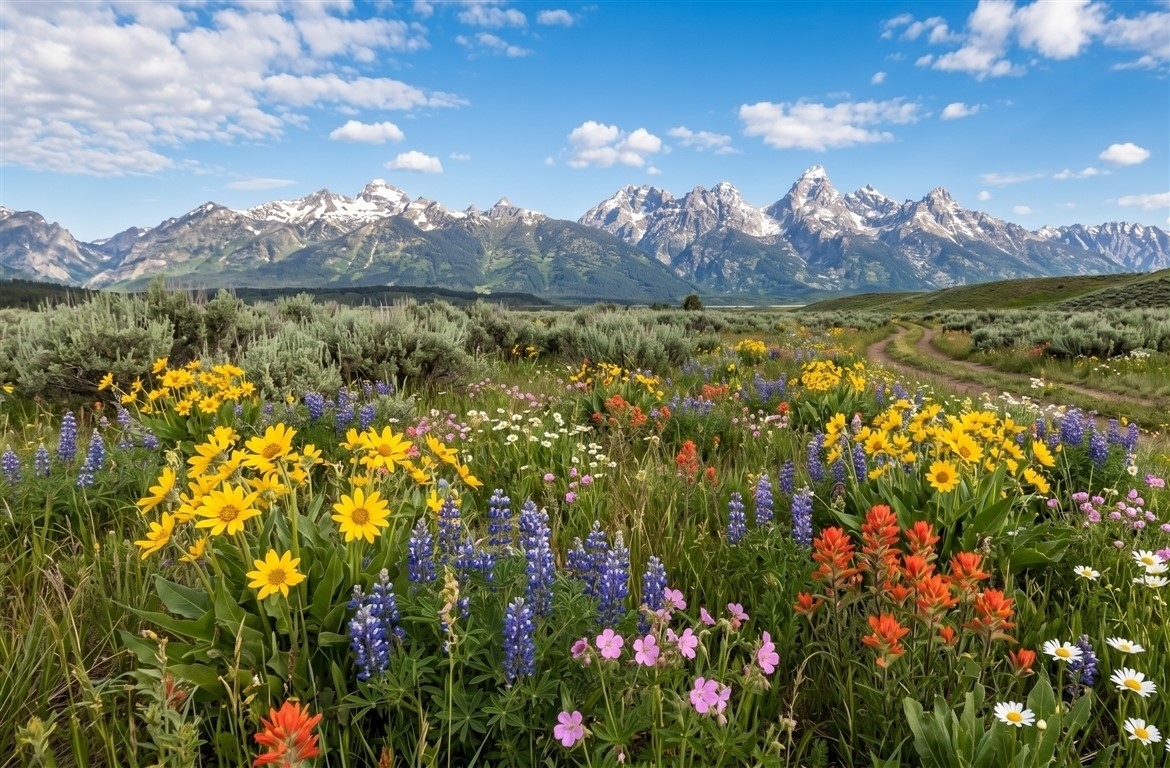
Wyoming’s wildflowers are deeply tied to its mountain parks, sagebrush basins, and high meadows. Grand Teton National Park and the surrounding public lands can display balsamroot, lupine, paintbrush, sticky geranium, and various alpine species throughout the summer. The season here is short, brilliantly bright, and often prone to sudden weather shifts.
Definitely pack for wind. Wyoming simply doesn’t do gentle breezes on command.
Best National Parks for Flower Viewing
National parks provide well-maintained trails, visitor information, and protected habitats, making them incredibly useful for flower travel. Of course, they also attract crowds. The smarter, quieter approach is simple: arrive early, choose less-famous trailheads, and leave the tripod circus behind when a meadow is already bustling.
Great Smoky Mountains National Park
The Smokies truly stand out for their sheer diversity. You’ll find spring ephemerals, rhododendron, flame azalea, and various summer blooms appearing across different elevations and habitats. The park’s popular annual spring wildflower events have certainly helped build its strong reputation among both serious botanists and casual hikers.
Mount Rainier National Park
Rainier is the go-to for those grand, sweeping views. When Paradise or Sunrise hits peak bloom, the meadows can look absolutely painted in bands of purple, white, red, and yellow. Patches of snow might even sit right next to the flowers. Marmots whistle. Someone invariably exclaims, “The mountain is out!” as if announcing royalty.
Glacier National Park
Glacier’s alpine flowers are just one part of a much larger high-country drama. Think towering cliffs, vast snowfields, cascading waterfalls, agile mountain goats, and sudden shifts in weather. Wildflower viewing here pairs beautifully with short hikes near visitor corridors, though parking and access rules really demand advance planning.
Death Valley National Park
Death Valley isn’t a guaranteed flower trip. That’s precisely the point. When conditions align perfectly, the contrast between the vibrant blooms and the stark desert floor feels absolutely astonishing. During quieter years, patient visitors can still find smaller flowers tucked along roadsides, in washes, and at higher elevations later in spring.
Shenandoah National Park
Shenandoah is easily one of the most accessible national parks for a wonderfully low-stress wildflower outing. Skyline Drive offers quick access to trailheads and scenic overlooks, while its forest paths provide gorgeous spring color without needing a full-blown expedition. Mountain laurel and other later blooms stretch the season well beyond the initial spring rush.
Forest Service Flower Viewing Areas
Forest Service lands often feel less manicured than national parks, and for many, that’s exactly the appeal. Roads might be rougher, signs fewer, cell service spotty. The trade-off? More space: open ridges, serene pine barrens, quiet alpine openings, and old trails where the flower show feels completely natural, less staged.
West Pine and Dry Creek Ridge
West Pine and Dry Creek Ridge are officially recognized Forest Service wildflower viewing areas. They’re cherished for their open slopes and beautiful seasonal displays. These spots are perfect for travelers who prefer a less packaged experience and are willing to check local road and trail conditions before heading out.
Mt. Eddy
Mt. Eddy, located in Northern California, rises within a botanically rich section of the Klamath region. Its unique serpentine soils and varying elevations support distinctive plant communities. The hiking can be quite strenuous, and you might find snow lingering high up well into the season.
McCall Nature Preserve
McCall Nature Preserve offers a much quieter wildflower setting compared to the blockbuster parks. These smaller, protected landscapes are incredibly important. They preserve local plant diversity without the crushing crowds of more famous trailheads. Slow, mindful walking works much better here than simply racking up mileage.
Starrigavan Recreation Area
Starrigavan Recreation Area, near Sitka, gives you a distinct coastal Alaska feel: dense forest, wetlands, shimmering water, and a bloom season shaped by abundant rain and cool air. The flowers here aren’t desert-bright. They perfectly belong to the moss, the spruce trees, and that soft tidewater light.
How to Plan Your Wildflower Adventure
A wildflower trip truly rewards flexible planning much more than rigid scheduling. Pick a general region, diligently track conditions, then craft a route with plenty of backup options. A washed-out trail or a weak bloom doesn’t have to ruin your entire trip when another gorgeous valley, pass, or park is nearby.
- Always check current bloom reports before you leave. Park websites, state park updates, local visitor bureaus, botanical groups, and recent ranger posts are far more accurate than old travel blogs. A photo from three years ago tells a lovely story, but it doesn’t reflect today’s conditions.
- Start your day early. Morning light is beautifully soft, parking is easier to find, desert heat is less dangerous, and popular fields feel much calmer. Some flowers do open wider as the day warms, but the trade-off for crowds and harsh glare is rarely worth it.
- Plan around elevation changes. Low deserts bloom first. Foothills follow. Alpine meadows emerge only after the snowmelt. A route that gradually climbs through different elevations gives you much better odds than simply chasing one specific field.
- Pack for truly ugly weather. Bring a rain shell, a warm layer, a sun hat, plenty of water, salty snacks, and shoes with excellent grip. Wildflower season often means mud, unexpected wind, chilly mornings, sweltering afternoons, and trails that look dry until they suddenly swallow your boot.
- Opt for modest photography gear. A phone or a lightweight camera is perfectly sufficient for most travelers. A macro lens helps capture tiny flowers beautifully. A long lens keeps people from feeling the need to step off trail for close-ups. That last point is critically important.
Weekend crowds can be absolutely intense at places like Antelope Valley, Mount Rainier, Glacier, and along Texas bluebonnet roads. Weekdays are usually much calmer. So are lesser-known trailheads. The flowers, after all, don’t care whether their spot is famous.
Wildflower Viewing: A Guide to Etiquette
Wildflowers are living, breathing plants, not just props for your photos. Many annuals absolutely depend on setting seed for the next generation. Alpine plants grow in incredibly harsh conditions and recover very slowly. Delicate desert soils can be severely damaged by just one careless shortcut.
- Stay strictly on marked trails and durable surfaces. A narrow social path cut through flowers quickly becomes a permanent scar after just a few dozen people follow it. In fragile alpine meadows and desert crust, recovery can take many, many years.
- Never pick flowers. Picked flowers die quickly, and then the plant loses its vital chance to produce seeds. In protected parks and reserves, collecting any plants can also lead to legal penalties.
- Keep pets only where they are allowed. Many parks have restrictions on dogs on trails. Where pets *are* permitted, leashes are essential to protect wildlife, other visitors, and the delicate plants along trail edges.
- Skip drone flights unless rules explicitly allow them. National parks ban recreational drone use without special authorization, and many state or local sites have their own strict restrictions. Drone noise completely alters the serene mood of a peaceful meadow.
- Use only legal parking spots and pullouts. Roadside blooms can tempt drivers into making really bad decisions. Blocking lanes, crushing fragile shoulders, or trespassing on private ranchland turns what should be a pretty drive into a major local headache.
Questions People Often Ask
Which State Has the Best Wildflowers?
California boasts the broadest range, from incredible desert superblooms to poppy reserves and stunning Sierra meadows. Texas is simply unmatched for bluebonnet road trips. Colorado, Washington, and Montana are champions for their alpine flowers. And Tennessee and North Carolina offer deep botanical diversity throughout the southern Appalachians.
Where Can I Find a Superbloom?
Superblooms are most often associated with California’s desert landscapes. Think Anza-Borrego, Death Valley, Carrizo Plain, and Antelope Valley. But they are totally irregular. Winter rain
0 Comment