

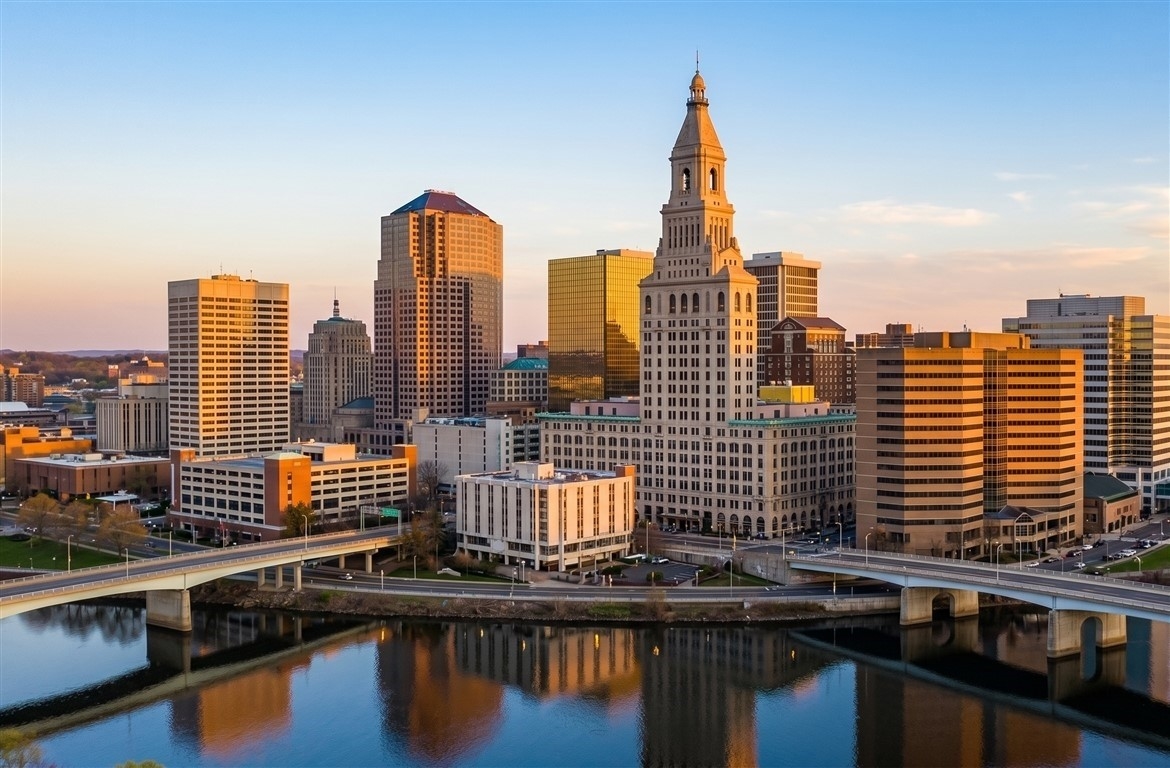

Travelers Tower: Hartford History and Design
Rising high above the downtown streets, Travelers Tower gives Hartford its most recognizable silhouette. This isn’t just another office block. It’s a foundational piece of the local skyline, forever linked to the growth of the insurance industry, the evolution of early skyscraper design, and the city’s deep connection to the Connecticut River. Finished back in 1919, this massive project was a bold statement for New England, holding its own as one of the city’s most impressive vertical landmarks ever since.
You can find the structure at One Tower Square, Hartford, Connecticut 06183. It sits right within the sprawling Travelers campus, neighbors with the Wadsworth Atheneum, the historic Old State House, and the modern Connecticut Science Center. Between its sheer height, massive clock faces, and intricate classical details, it’s a beacon for anyone driving into town or crossing the river. If you’re planning a trip to Hartford, just keep in mind that the tower is an architectural marvel to admire from the sidewalk rather than a place you can wander through on a casual tour.
What Defines Travelers Tower?
The tower was built as a headquarters for the Travelers insurance company, which has been an anchor for the Hartford business community for generations. Reaching 527 feet (roughly 160.6 meters), the building features 24 primary floors. You might occasionally read that it has 34 stories, but that usually happens when people include the mechanical and observation levels at the top of the tower, leading to some discrepancy in local records.
Back in 1919, the building was a global heavyweight, earning the title of the tallest structure in all of New England. That distinction turned Hartford into a genuine skyline player. While City Place I technically nudges past it in height today, Travelers Tower commands more respect among locals, largely because of its age and the sheer character packed into its masonry.
| Feature | Detail |
|---|---|
| Official area | One Tower Square, downtown Hartford |
| Completed | 1919 |
| Height | 527 feet / about 160.6 meters |
| Main floors | 24 commonly listed office floors |
| Architect | Donn Barber of New York |
| Architectural character | Classical high-rise design with a granite exterior |
| Current use | Office building within the Travelers campus |
Locating the Travelers Tower
Tucked into the heart of downtown, the tower is just a stone’s throw from the river and the city’s main cultural hubs. The official address is One Tower Square, Hartford, CT 06183. Since it is part of a secure, working corporate complex, you’ll get your best photos and views from the surrounding public walkways.
For a nice stroll, wander near the Old State House on Main Street and head south toward the campus. You’ll see the tower looming over the shorter buildings nearby. If you’re coming from Hartford Union Station, it’s a quick 15 to 20-minute walk. Just follow Union Place to Asylum Street, navigate toward Main Street, and look for the tower peaking over the civic district.
Hartford runs on a bus-based transit system. There isn’t a subway here. You can use CTtransit to navigate the city, and the Route 30 Bradley Flyer is your best bet if you’re arriving from the airport. Once you get to Union Station, you can easily hop on a local bus or grab a quick rideshare to the Main Street or Pearl Street areas.
Construction and History
The campus didn’t arrive all at once. The company had already established a base with a Renaissance Revival building on Main Street in 1906. As their workforce expanded, they kept building southward. The 1919 tower was the final vertical exclamation point on that growth.
Architect Donn Barber brought a serious, refined aesthetic to the project. Instead of chasing the minimal, stripped-back looks that became popular later, he leaned into symmetry, heavy stone work, and vertical accents. It was designed to look like a fortress of finance, not just a utilitarian office box.
Opening just after the First World War, the building arrived at a time when American architects were experimenting with the limits of height. While New York was already reaching for the clouds, Hartford used this tower to prove that a regional hub could hold its own. It was a perfect marriage of high-stakes corporate ambition and regional pride.
Why It Remains a Landmark
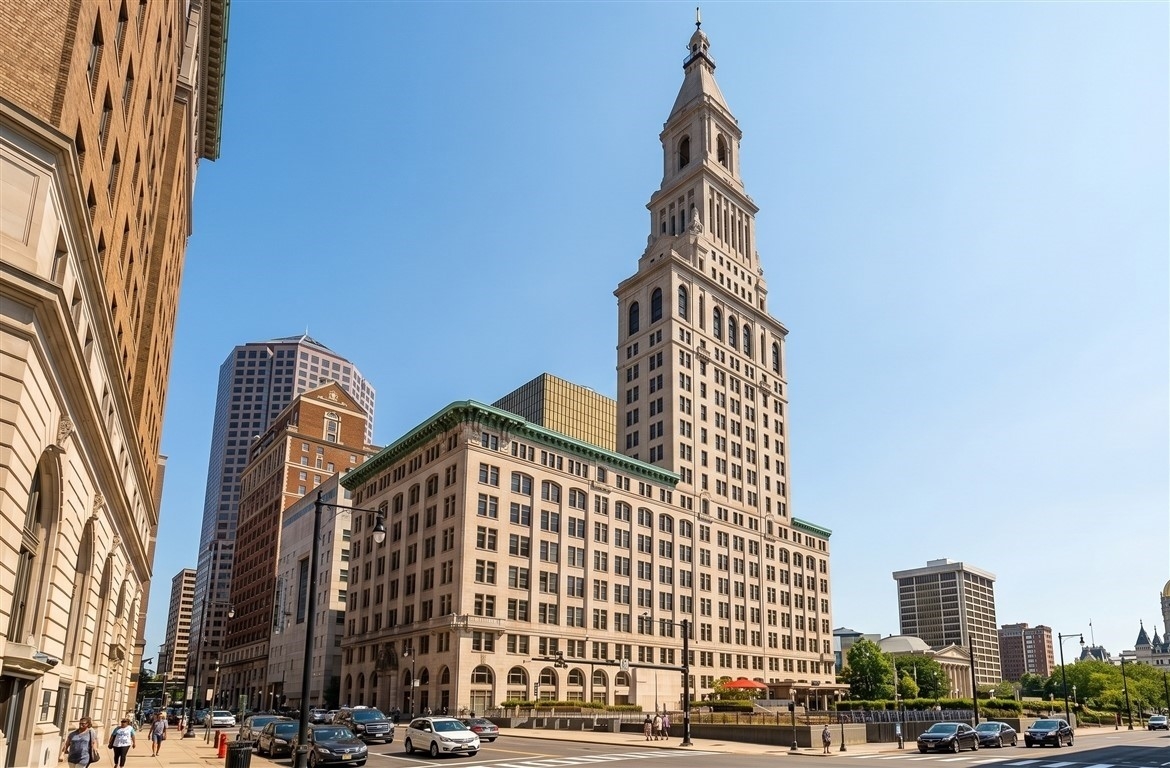
This tower succeeded because it gave Hartford a definitive visual identity. Most cities have their old churches or courthouses, but having a massive, 500-foot corporate tower from 1919 added a layer of modern history. It married the stability of the insurance sector with the emerging trend of the skyscraper, all while keeping a grounded, classical design that fits the street level perfectly.
Its placement is ideal. Because downtown is compact, the tower remains a constant feature whether you’re driving on I-84 or walking the riverfront paths. It doesn’t get swallowed up by the rest of the city; it stays right at the front of the view, helping to anchor the entire downtown area.
Even though it lost the “tallest in New England” crown in the 1960s, it never lost its status. Newer buildings may offer more glass or higher floor counts, but they lack that vintage soul. The tower is a survivor that anchors the city’s past to its current skyline.
Key Architectural Notes
What makes the tower special is its proportions. It manages to be tall without feeling bulky. The base connects well to the street, the shaft draws your eyes upward, and the top is finished with that iconic clock tower. It is a masterclass in composition, which is why it looks so striking in professional photography.
It speaks in the visual language of early 20th-century confidence. With granite facades and classical details, it isn’t trying to be “trendy.” It’s trying to be eternal. It relies on weight and rhythm to convey importance, which works every bit as well today as it did a century ago.
Structural Design Highlights
At 527 feet, this was a massive undertaking for 1919 Hartford. The lower floors are all workspace, while the upper tiers are where the real visual magic happens. That split is exactly why you’ll see conflicting data on how many “floors” the building actually has.
Unlike modern standalone towers that look like isolated glass needles, this one feels like an organic part of the campus. It grows out of the base, connected to the history of the company. It’s a design that feels integrated into the city’s fabric rather than just dropped on top of it.
Facade and Exterior Details
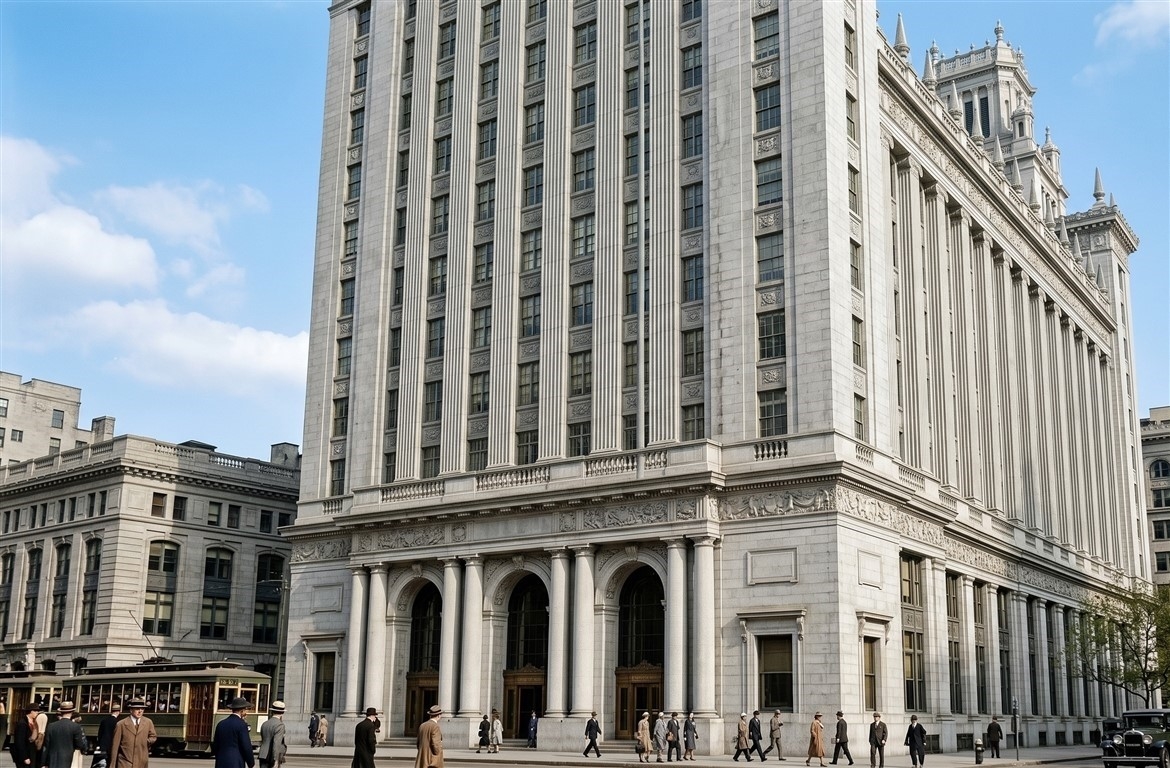
The granite exterior gives the whole building a pale, permanent feel. It’s durable and sophisticated. The vertical lines are designed to pull your gaze toward the clock, and the details at the bottom make the building approachable. It’s the kind of architecture that was meant to project an image of bulletproof reliability to every policyholder who walked through the front door.
You won’t find thin curtain walls here. This is masonry through and through. The building captures light in a way that glass towers never can, creating deep, dramatic shadows when the sun hits the stone in the late afternoon. It changes mood with the weather, which makes it a favorite subject for local artists.
The Clock and Viewing
The clock faces are essentially the face of the building. They turn a private office into a civic clock tower, giving the public a reason to check the time as they walk past. It’s a clever touch that makes the building feel like a community asset, even though it’s technically a private headquarters.
While people used to visit the observation deck for panoramic views of the river and the valley, that’s no longer an option for the general public. Don’t plan your day around getting to the top—you’ll be disappointed. Unless you have a business appointment inside, treat this as a ground-level experience only.
The Travelers Company Legacy
When you think of Hartford, you think of the insurance giants. The red umbrella logo is everywhere, and this tower was the company’s way of marking its territory for good. Its height allowed the firm to be visible across the horizon decades before the era of neon signs and digital billboards.
The tower was built to project stability. If you’re in the insurance business, you need people to believe you’ll be around for the long haul. A 500-foot stone monument is the best way to say that. It’s not just an office; it’s a promise of permanence.
That feeling of stability remains today. The building doesn’t look like a speculative project meant to be sold off in twenty years. It looks like it’s going to be there for another century, standing as a testament to one city and one specific era of the American dream.
Impact on the Hartford Skyline
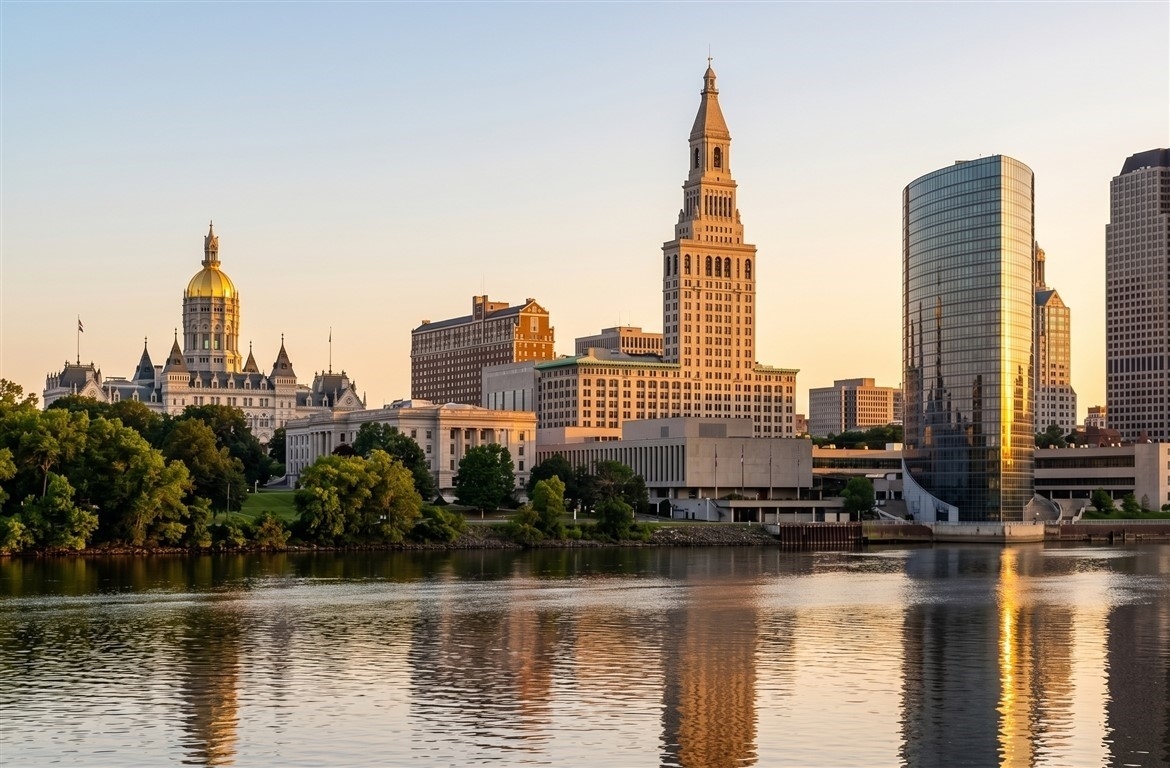
Hartford’s skyline is interesting because it’s so diverse. You have the State Capitol with its gold dome, the modern curves of the Boat Building, the height of City Place I, and the classic lines of Travelers Tower. It’s a compact, dense collection of different architectural ideas from different centuries.
The tower is the easiest point of reference because of that distinctive crown. When you’re lost, look for the clock. Photographers usually set up on the riverfront or near the Founders Bridge to capture the building nestled among its shorter neighbors. It is the perfect focal point for a shot of the city center.
Little-Known Tower Facts
The story of the building is about more than just numbers. It’s a story about a smaller city that had the guts to play in the big leagues. While New York and Chicago were building massive towers, Hartford was right there with them, proving that corporate wealth could change the landscape of any town.
If you really want to understand the city, compare the tower to the nearby Old State House or the Wadsworth Atheneum. Each building represents a different pillar of Hartford’s history. Combined, they create a skyline that feels deeply historical and incredibly layered.
- Completed in 1919, the tower marked its centennial in 2019.
- It once held the record as the tallest building in New England.
- Architect Donn Barber left his mark on various major civic projects.
- The floor count varies in records because of the tower’s unique structural levels.
- The prominent clock faces serve as a functional landmark for the whole downtown area.
- It remains one of the tallest structures in the region even a century later.
The Tower in the Modern Day
Don’t look for a museum here. The tower is still a working office space. It’s vital to keep this in mind: there are no tours and no public access. The experience is entirely external, and that’s honestly for the best—the view from the street is where you really appreciate the scale.
You can easily spend a couple of hours walking the area. Hit the art museum, walk past the old state building, and finish with a view of the tower from the riverfront. It’s a great walking tour that gives you a genuine feel for what makes this city tick.
Visiting Tips
To be clear: there are no public tours. If you read old blogs about visiting the observation deck, ignore them. You won’t be getting inside unless you have business to conduct. The best approach is to incorporate the tower into a broader architectural walking tour of downtown.
Try timing your walk for the golden hour, when the sun hits the stonework. It makes the facade glow, and the clock faces really pop against the sky. It’s a great way to snap some memorable photos without needing special access.
- Navigation: Plug One Tower Square, Hartford, CT 06183 into your map.
- Transit: Use the train to Union Station and walk from there.
- Airport: The Route 30 Bradley Flyer is a convenient way to get downtown.
- Subway: There isn’t one—bring comfortable walking shoes!
- Best pairings: Walk to the Wadsworth Atheneum or the Old State House.
- Note: It is a private office building; keep your visit to the public sidewalks.
Height Rankings
The tower is still near the top of the local list. While City Place I is the tallest at 535 feet, our 527-foot tower is a very close second. The height difference is negligible, but the difference in character is massive. The tower feels like it belongs to the soul of the city, whereas the modern glass structures feel like they belong to a spreadsheet.
In the wider state of Connecticut, it remains a titan. It is a piece of history that refuses to be ignored, holding its own against the modern steel-and-glass developments that have popped up around it over the last few decades.
Nearby Historic Sites
You’re in a great spot for a walk. Hartford has a high concentration of historical significance within just a few blocks. You can see the evolution of the city simply by walking from the Capitol to the river.
Start your trek at the train station or the riverfront. You’ll be able to hit all the major points of interest without ever needing to start your car. It’s a very pedestrian-friendly part of the state.
- Old State House: A perfect example of early political history.
- Wadsworth Atheneum: One of the premier art museums in the country.
- Hartford City Hall: A stunning, Beaux-Arts building.
- State Capitol: The gold dome is impossible to miss.
- Boat Building: A cool, modern contrast to the older stone architecture.
- Science Center: A fun, contemporary addition to the riverfront area.
Frequently Asked Questions
When Was Travelers Tower Built?
The tower was completed in 1919. While parts of the office complex around it were already standing, the iconic tower itself was finished that year.
How Tall Is Travelers Tower?
It stands at 527 feet, or 160.6 meters. It was a giant for its time and still commands plenty of respect on the skyline today.
Why Is Travelers Tower Famous?
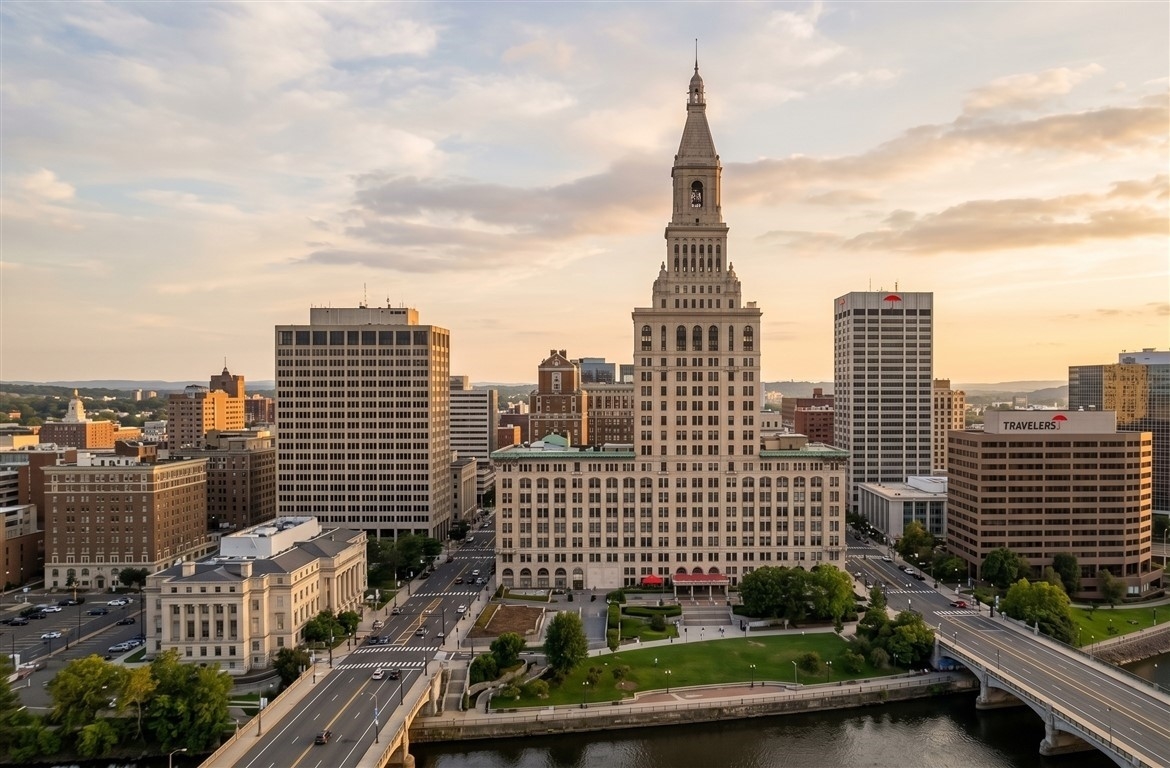
It’s a mix of history, height, and style. It put Hartford on the map as an ambitious city and has maintained its status as a premier regional landmark for a century.
Where Is Travelers Tower Located?
It sits at One Tower Square in downtown Hartford. You can’t miss it if you’re near Main Street or the river.
Is Travelers Tower Still Used Today?
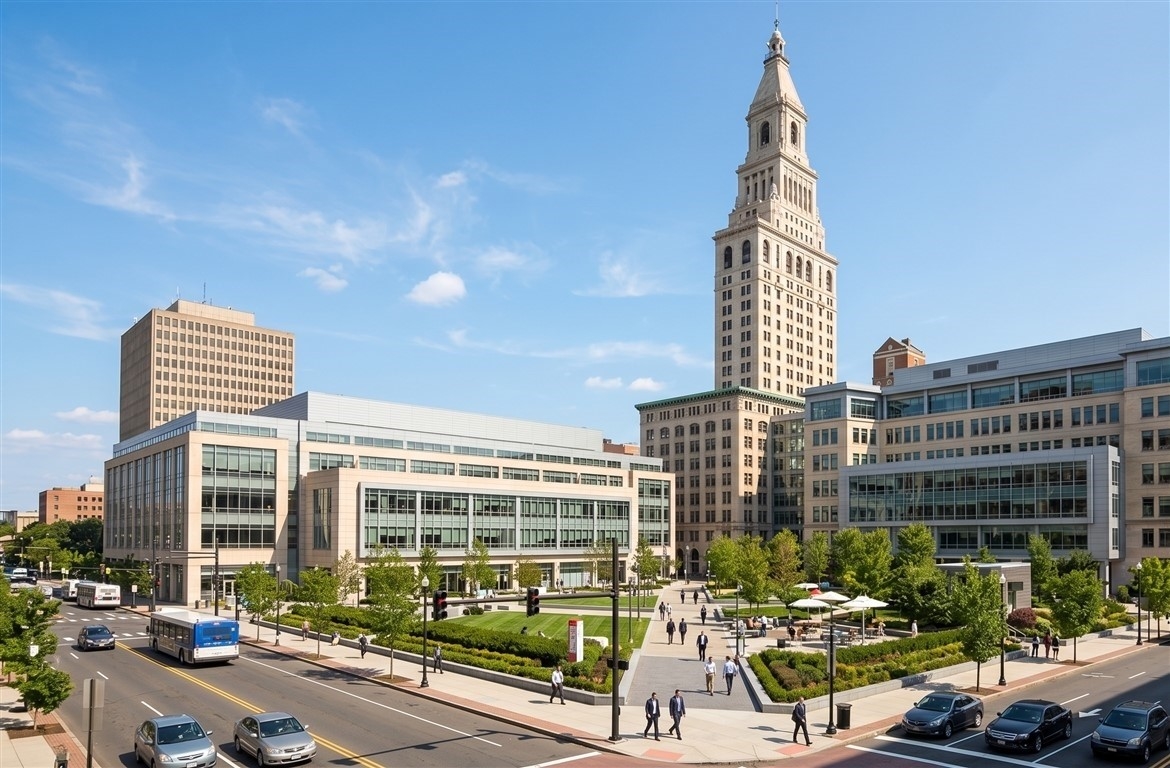
Yes, it is a fully functioning part of the Travelers campus. It is a private workspace, not a tourist site.
Think of the tower as the silent guardian of downtown Hartford. It’s private for the people who work inside, but it’s a public treasure for anyone who loves architecture and local history. Walking through the city, the tower serves as a constant reminder of the grit and ambition that turned this town into an insurance capital. It is a piece of history that refuses to just fade away.
0 Comment